Shotover River Facts: Flow, Canyon And Why It Rafts So Well
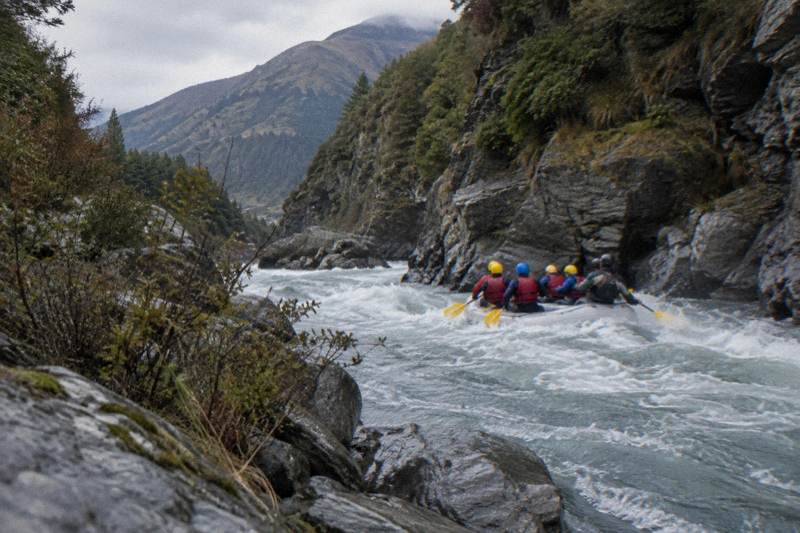
The Shotover River drops out of the Southern Alps through a canyon so tight that early road builders gave up on making it comfortable, and that same geography is why it carries some of the highest-graded commercial rafting on earth. Here is what is documented about the river itself: the 14 kilometres rafters run, the tunnel miners carved into its bank, and the canyon that frames the whole trip.
Short answer
The Shotover is rafted for 14 km, from a Deep Creek put-in reached by Skippers Canyon Road, through grade 3 to 5 rapids and the 170 m Oxenbridge Tunnel, finishing at Arthurs Point about a 10 minute drive from Queenstown. The total experience runs 4.5 hours and costs from NZ$299 per person.
Most Queenstown rafting conversations come back to one river. The Shotover rises in the Southern Alps, cuts a canyon behind Coronet Peak, and arrives at Arthurs Point having squeezed through some of the steepest commercially rafted water anywhere. The operator behind the flagship trip puts it plainly: "Grade 5 is the highest grade commercially rafted in the world," and the Shotover carries grade 3 to 5 rapids on its standard summer run. For the practical side of choosing a trip, the full Shotover rafting planning guide covers dates, meeting points and packing, while the focus here is the river itself: its numbers, its canyon and its remarkably loud history.
Shotover River Quick Facts
The documented basics read like a spec sheet: 14 km rafted, grade 3 to 5 water, a 170 m tunnel on the line, a put-in at Deep Creek reached by a 40 minute shuttle along Skippers Canyon Road, and a finish at the Arthurs Point raft base about a 10 minute drive from central Queenstown. The standard experience lasts 4.5 hours end to end. Every figure below comes from operator material or official records.
The river's fame is not new. An 1862 gold rush on the Shotover saw it dubbed "the richest river in the world" at the time, and thousands of prospectors poured into its canyon within months. That rush left the road, the bridge, the township ruins and the tunnel that rafts still pass through today, which is unusual: most rafting rivers carry scenery, while the Shotover carries abandoned infrastructure you float straight into.
| Fact | Figure | Note |
|---|---|---|
| Length rafted | 14 km | Deep Creek put-in to the Arthurs Point base |
| Rapid grades | 3 to 5 | Grade 5 is the highest grade commercially rafted in the world |
| Tunnel on the line | 170 m | Oxenbridge Tunnel, paddled through mid-trip |
| Shuttle to put-in | about 40 minutes | Skippers Canyon Road to Deep Creek |
| Base from town | about 10 minutes | Arthurs Point rafting base |
| Total experience | 4.5 hours | Flagship half day trip |
| Raft capacity | 8 including the guide | A safety kayaker travels on each trip |
| Price | from NZ$299 per person | Flagship half day trip |
Trips run depending on weather, river level and water temperature, and portages may be required, so the river sets the day's script rather than the calendar. Minimum guest numbers apply as well. No flow, depth or snowmelt figure is published, and none is needed to understand the trip: the operator's dependence on river level tells you the water is managed day by day.
Why The Shotover Rafts So Well
The Shotover works for commercial rafting because a tight canyon concentrates a steep drop into continuous, readable whitewater, and because a century of gold mining left a road into the canyon and a tunnel on the line. The gradient produces grade 3 to 5 rapids in quick succession, six of them on the standard run, with the 170 m Oxenbridge Tunnel as the centrepiece. Few rivers anywhere combine all of that within 10 minutes of a resort town.
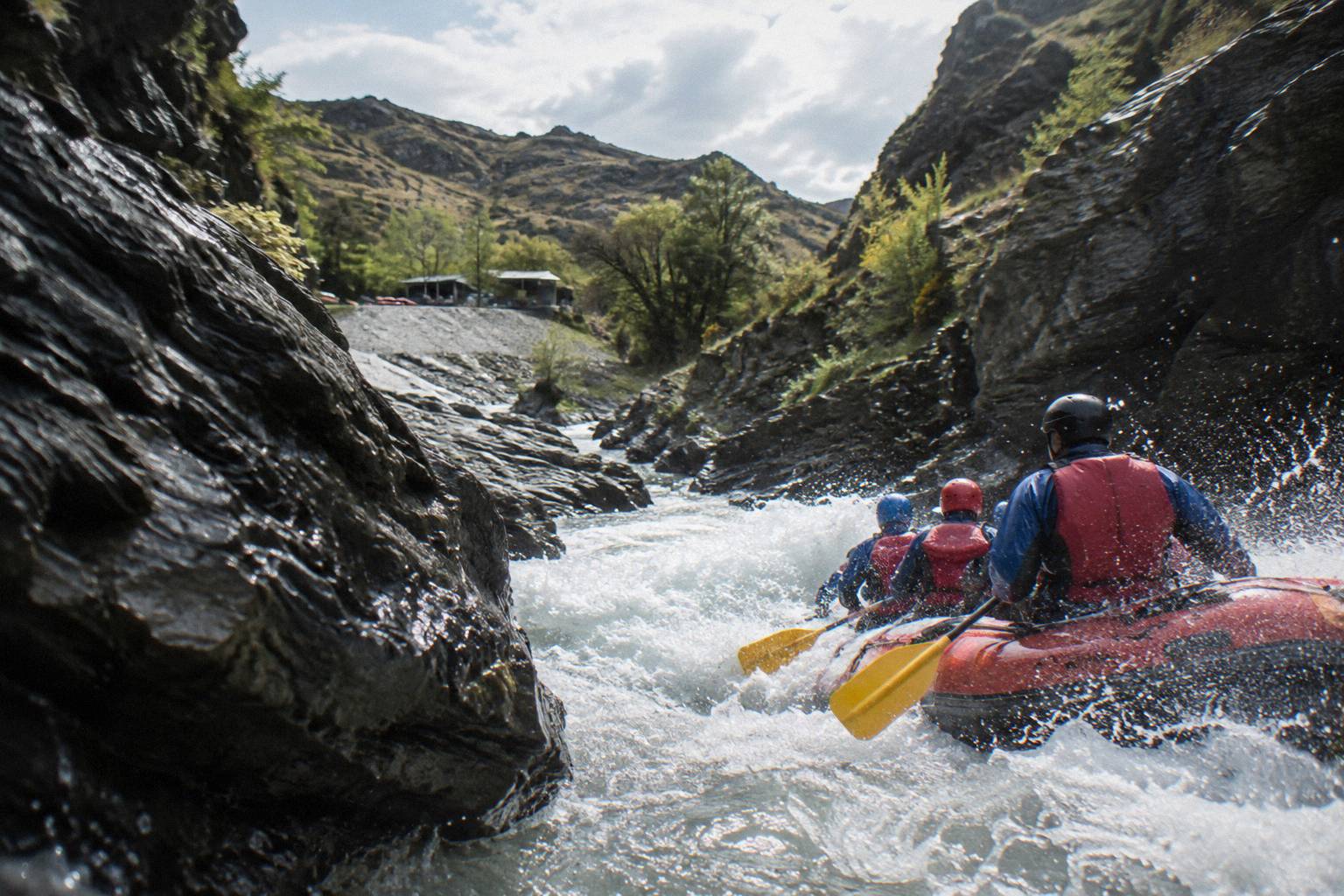
The canyon is the engine. Behind Coronet Peak, the river runs between schist walls that the operator's own description says the road "hugs" as sheer cliffs, and that confinement is what turns a mountain stream into a sequence of steep, back-to-back rapids. Rain or snowmelt upstream has nowhere to spread out, so the water stays powerful and the rapid names stay earned. A fuller explanation of the grading system is in the white water rafting grades explained companion piece.
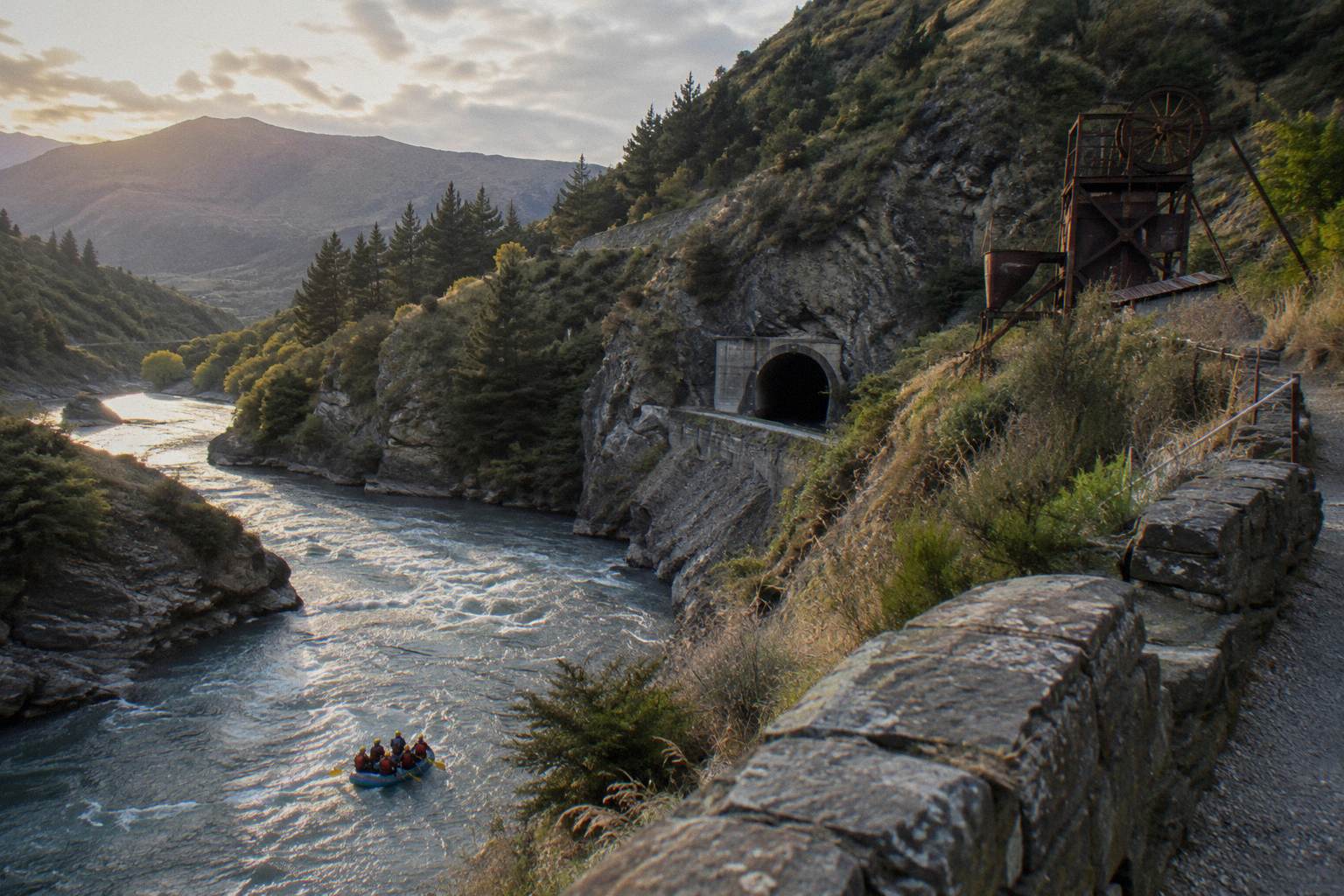
The infrastructure is the accident of history. The 1862 rush meant a road was carved into the canyon wall, which is how rafts get shuttled to Deep Creek today. Miners chasing gold in the riverbed above Arthurs Point then drove the Oxenbridge Tunnel to divert the flow, and more than a century later the Shotover still runs through it, with rafts as the tunnel's primary users. The river essentially inherited a ready-made commercial course.
Three very different ways to meet the river sit above, from the full grade 3 to 5 run to a gentle grade 1 to 2 float designed for ages three and up. The choice between them is mostly a choice about how much whitewater you want, since all three travel the same canyon system.
The 14 Km Line: Deep Creek To Arthurs Point
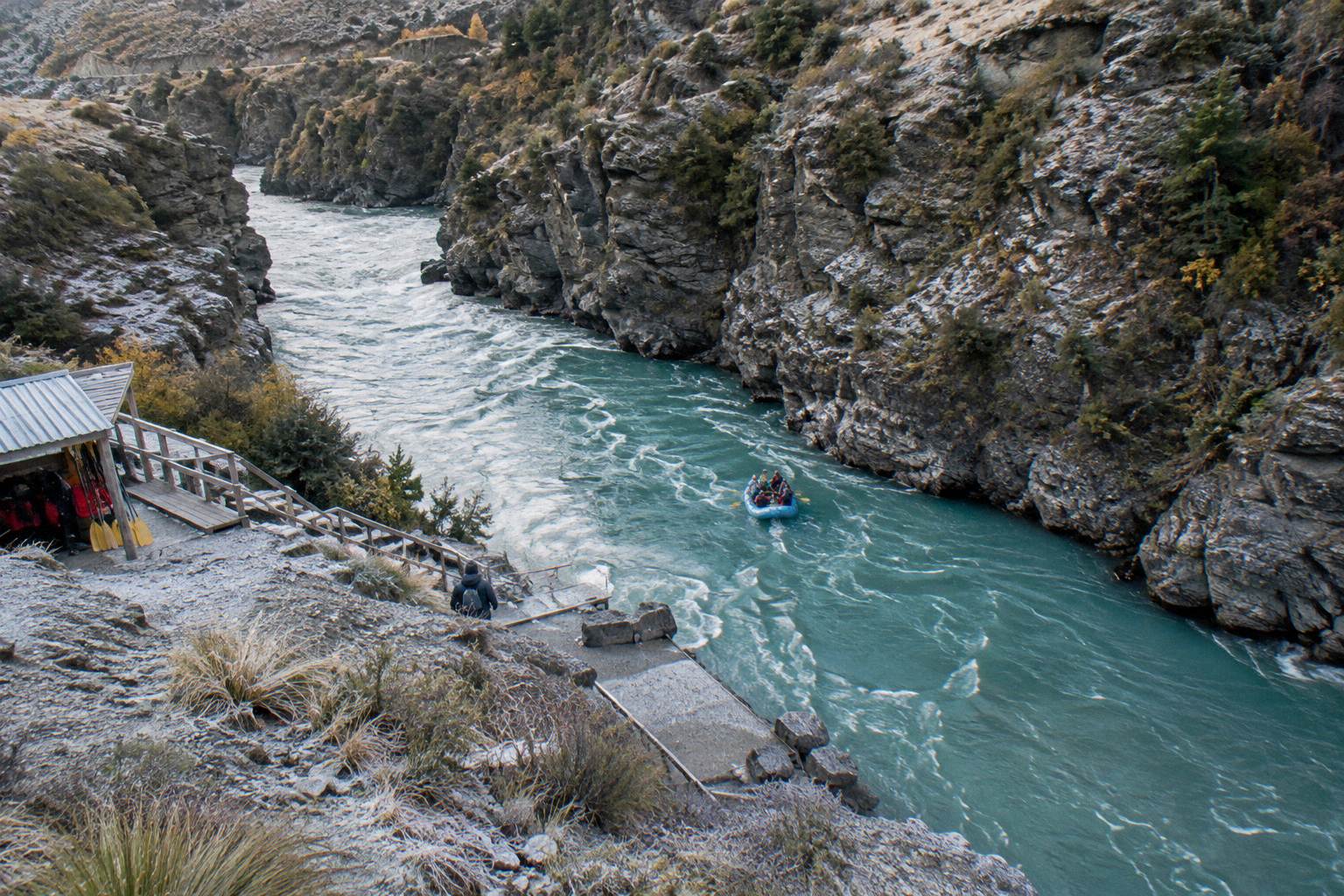
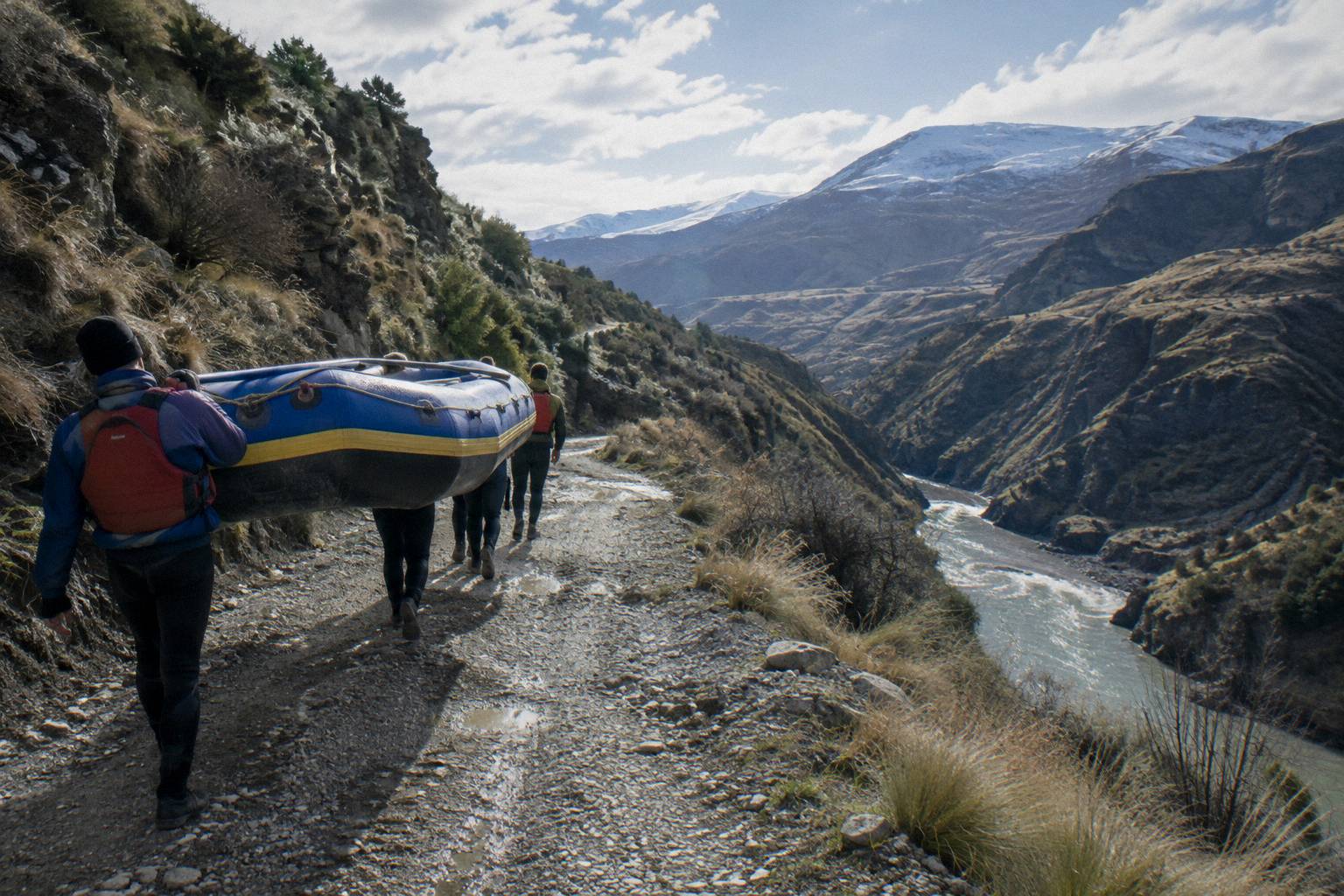
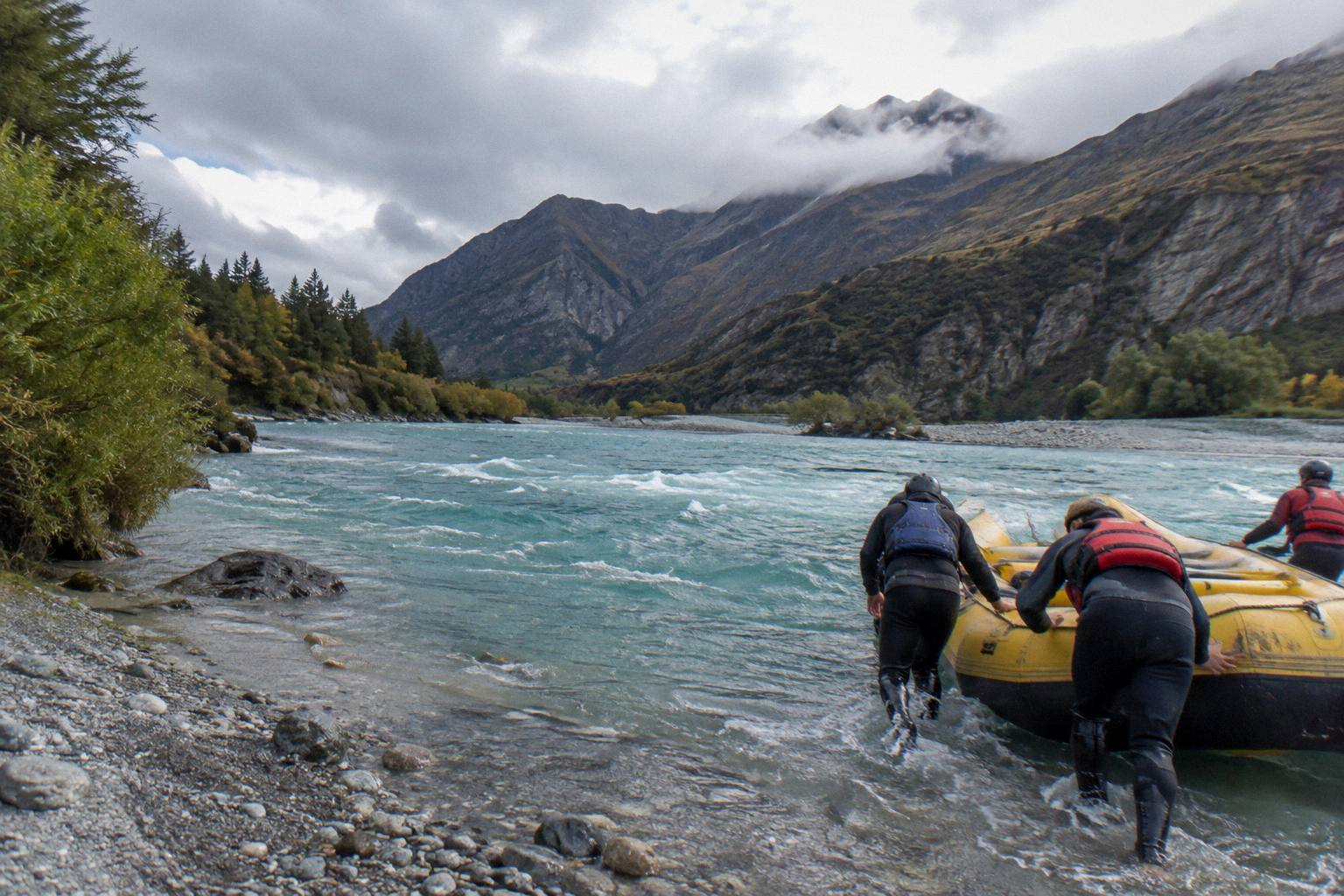
The rafted section begins at Deep Creek, reached by a shuttle bus along Skippers Canyon Road in about 40 minutes, and finishes 14 km downstream at the raft base on the Shotover bank at Arthurs Point, about a 10 minute drive from Queenstown. Along the way the raft passes six grade 3 to 5 rapids and paddles through the 170 m Oxenbridge Tunnel, with the trip ending after the rapids beyond it.
Put-in access matters more here than on most rivers. Skippers Canyon Road is unsealed, narrow and winding, and the Department of Conservation advises that only experienced drivers should attempt it, so arriving by the operator's shuttle is the standard approach. Toilets sit at both Deep Creek and the raft base, which is worth knowing before a 4.5 hour commitment. The base also has hot showers and a valuables locker for anything you cannot take on the water.
| Leg of the trip | What happens |
|---|---|
| Shuttle to Deep Creek | About 40 minutes along Skippers Canyon Road |
| On the water | 14 km, six grade 3 to 5 rapids, rafts of up to 8 with a safety kayaker |
| Oxenbridge Tunnel | 170 m paddled in darkness, mid-run |
| Final rapids and take-out | Rapids beyond the tunnel, finish at the Arthurs Point base |
| After | Hot showers and a locker at the base |
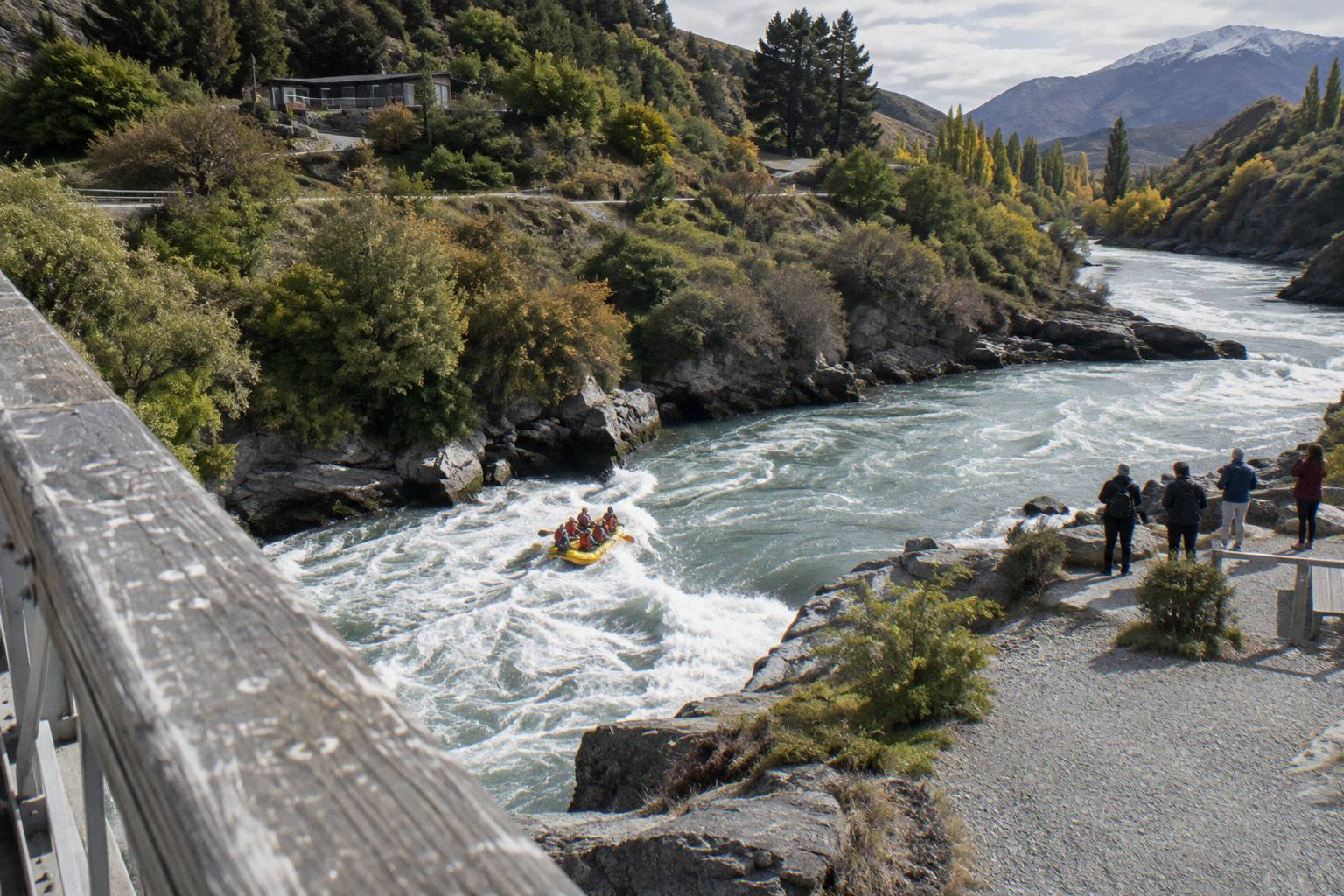
Nothing can be taken on the raft, cameras and GoPros included, which keeps the tunnel and the biggest rapids off your own memory card and on the operator's. Guests must be water-competent, meaning able to swim 25 m unaided, with moderate fitness, because the operator is direct that the Shotover carries a higher risk of falling out than the Kawarau. Spectators cannot access the river, though viewers can stand near the last rapid as rafts exit the tunnel, with timing varying by day.
The RealNZ flagship trip, "Queenstown: Shotover River Whitewater Rafting Adventure," runs exactly that 14 km line from NZ$299 per person and holds a 4.8 rating from 346 reviews. Check availability at the point where you know the itinerary fits, since departures are chosen on the booking calendar.
A second operator runs a tighter variant of the same water. "Queenstown: Shotover River Whitewater Rafting Trip" from Challenge Rafting runs 4 hours from NZ$299 per person, rated 4.9 from 80 reviews, and strings together the "Mother" rapids, a series of six grade 4 to 5 rapids including Aftershock, Squeeze, Toilet and Pinball, before the tunnel and the drop into Cascade Rapid. Challenge Rafting's own site says its Shotover trip is operated by RealNZ, though the two are sold as separate products with different check-ins and inclusions, professional photos included on the Challenge booking.
The Oxenbridge Tunnel Story
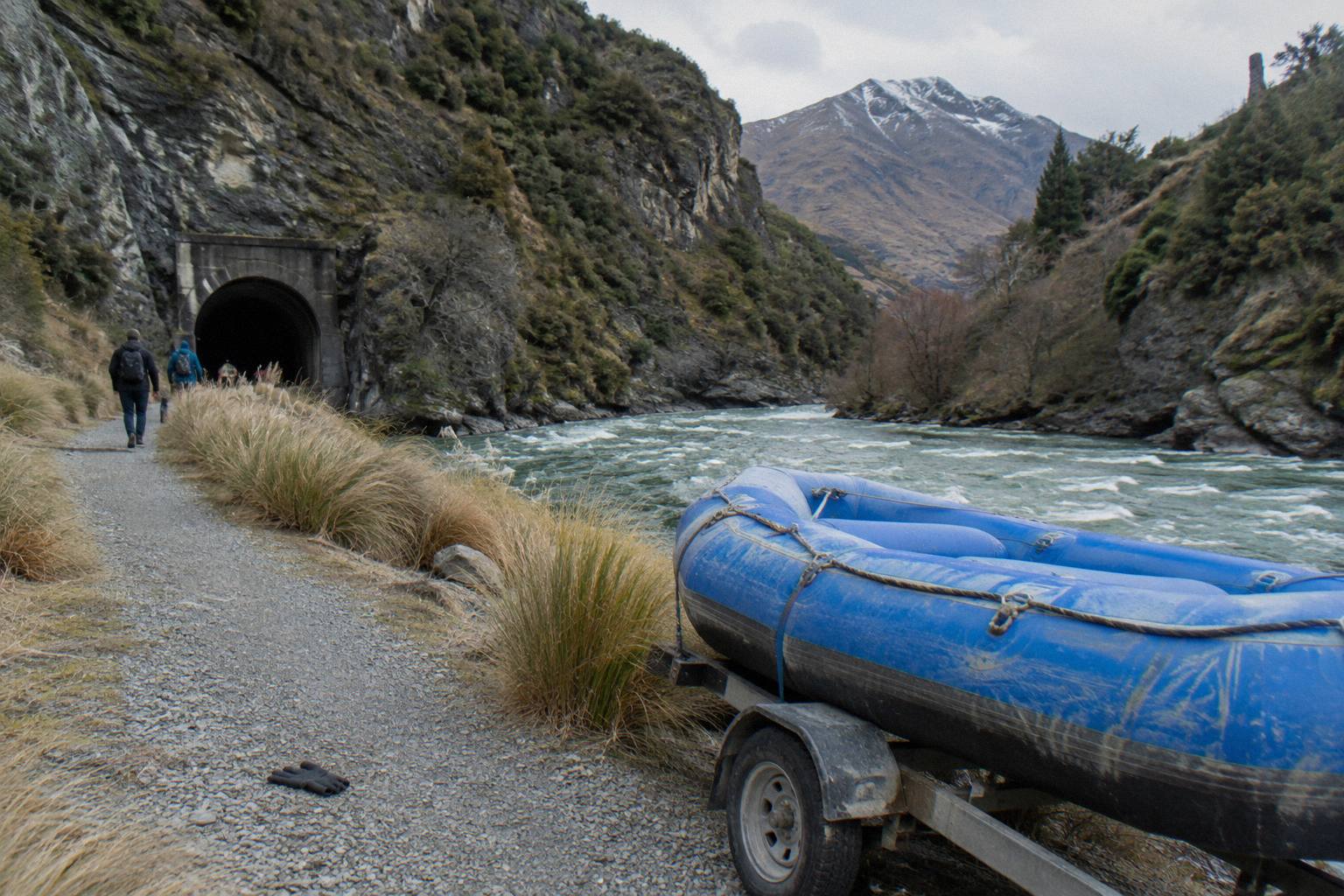
Brothers Bert and Edmund Oxenbridge began driving the tunnel in 1906 to divert a large part of the Shotover away from the "Jeweller's Shop" rapids above Arthurs Point, rapids fabled for the gold trapped in their bed. The company behind it was incorporated in October 1909, returned its first gold in 1911, was liquidated in August 1912, and left behind a 170 m hole in the canyon wall that rafts now paddle through as the signature moment of the run.
The engineering ambition outran the economics. The expected length was 550 ft, about 168 m, with 180 ft excavated by October 1907 and the original bore measuring 10 ft high and 12 ft wide before being widened and deepened by 1909. Gold returns never caught up with the cost of moving a river, and there is no evidence of mining use after 1912. A failed mine became permanent river infrastructure.
| Year | Event |
|---|---|
| 1906 | Oxenbridge Brothers begin the tunnel to bypass the Jeweller's Shop rapids |
| 1907 | 180 ft of the expected 550 ft excavated by October |
| 1909 | Arthurs Point Gold Mining Company incorporated in October; bore widened and deepened |
| 1911 | First gold return recorded |
| 1912 | Company liquidated in August; no mining use documented after |
| 1995 | A tourist death leads to the filling in of the "Toaster" outlet channel |
| 2023 | Tunnel still carries the Shotover flow, used primarily by rafting companies |
Heritage New Zealand records that the 1995 death of an American tourist led to the filling in of the "Toaster," the farthest north of the two original outlet channels, and that as of 2023 the tunnel still carries the Shotover flow and is used primarily by rafting companies. The register entry is Heritage New Zealand list entry 5607, worth reading for the full mining saga. For a non-rafting look, the Department of Conservation's Oxenbridge Tunnel Track is a short, easy 20 minute walk to a viewpoint over the diversion and an old steam engine, starting on the left just before the Edith Cavell Bridge at Arthurs Point.
The 1862 Gold Rush And The "Richest River In The World"
Gold was struck on the Shotover in 1862 and the river was quickly dubbed "the richest river in the world," a label that pulled thousands of prospectors into its canyon within a single season. The rush built Skippers Township, the suspension bridge and the canyon road, and its relic strewn landscape is still visible along the upper river today. Without that frenzy there would have been no road to Deep Creek and no tunnel on the run.
The phrase was earned, not invented by tourism. Heritage New Zealand's record of the tunnel project carries the gold rush context, and the Department of Conservation describes Skippers as part of the 9,100 ha Mount Aurum Recreation Reserve, an area that "saw much of Wakatipu's 1860s gold fever." Crossing the historic Skippers suspension bridge still lands you at the remains of Skippers Township, a ghost of the settlement that serviced the diggings.
The river's gold also explains its chemistry of fame. Prospectors disturbed and reworked the bed for decades, and the landscape they left, tailings, stone walls and rusted machinery, gives the upper canyon a texture that pure wilderness cannot match. One current trip leans into that deliberately, drifting past gold mining relics on a gentle grade 1 to 2 run.
That trip, "Queenstown: Shotover River Rafting & Skippers Canyon Tour" from Family Adventures, is a 5 hour experience from NZ$329 per person, rated 5.0 from 7 reviews, suitable from age 3 with no water confidence necessary. It pairs a 45 minute drive into the canyon with 1.5 hours of rafting and includes the "Ford of Bruinen" filming location from Lord of the Rings, plus snacks, starting and ending at Camp Street. The deeper background on the canyon itself is in the Skippers Canyon explained companion piece.
Skippers Road: Getting Into The Canyon
Skippers Road runs 13 km from Skippers Saddle to Skippers Bridge, unsealed, narrow and winding, and the Department of Conservation says only experienced drivers should attempt it. The route from Queenstown is Gorge Road to Arthurs Point, the Coronet Peak ski field turn-off, then left onto the unsealed Skippers road. DOC puts the area 25 minutes from Queenstown, with a full canyon drive taking one and a half to two hours.
The road is administered by Queenstown Lakes District Council and is itself a relic, hacked into the canyon wall in the mining era when a comfortable gradient was not on offer. The operator's shuttle drivers run it daily, which is one reason the standard rafting package includes round-trip bus transfer from the meeting point rather than inviting guests to drive themselves. Photography from the passenger seat is the smarter seat choice anyway.
Timing shapes the drive. The 40 minute shuttle to Deep Creek is part of the 4.5 hour total experience, and the return from the Arthurs Point base is short by comparison. Give the road respect even in summer: it is single lane in stretches with drop-offs the operators describe as sheer cliffs.
| Skippers Road fact | Detail |
|---|---|
| Length | 13 km from Skippers Saddle to Skippers Bridge |
| Surface | Unsealed, narrow and winding |
| Advice | Only experienced drivers should attempt it (DOC) |
| Administered by | Queenstown Lakes District Council |
| Route from Queenstown | Gorge Road to Arthurs Point, Coronet Peak turn-off, left onto Skippers road |
| Drive time | 25 minutes to the area, one and a half to two hours for the canyon |
Rapids, Grades And Who The Shotover Suits
The Shotover runs grade 3 to 5 water, with the flagship trip passing six rapids between Deep Creek and the tunnel, and the Challenge variant adding the named "Mother" rapids at grade 4 to 5 before finishing with the drop into Cascade Rapid. Guests need to be 13 or older, between 40 kg and 120 kg, water-competent and moderately fit, with a guardian involved for anyone under 18. It is a real whitewater trip, not a scenic float.
The operator's eligibility rules are specific because the river is. A heart condition or heart medication excludes, pregnancy excludes on grade 3 or above, under 17s on the Challenge trip need a guardian accompanying them and under 18s need a guardian-signed waiver, and weight is verified at check-in. Guests must be able to follow safety briefings in English. Wetsuits, booties, helmets and life jackets are provided, and swimwear, never cotton, is what goes underneath.
The contrast river is the Kawarau, grade 2 to 3, usually, though it can reach grade 4 at higher water levels, and recommended for first-timers and less confident swimmers. Where the Shotover demands a 25 m unaided swim and warns of a higher risk of falling out, the Kawarau asks only for water confidence, and its rapids carry names like the Dog Leg, 400 m long and billed by the operator as the longest commercially rafted rapid in New Zealand. The Kawarau River facts and flow guide covers that river in the same depth.
For readers who want gentle water but still fancy the Shotover valley, the Family Adventures trip from age 3 is the exception on the roster, grade 1 to 2 with no swimming requirement. For everyone else deciding between the two Shotover grade 3 to 5 products, the practical difference is duration, 4.5 hours against 4, check-in location and the included photos on the Challenge booking, with both at NZ$299 from price.
Jet Boats, Bungy And Sharing The River
RealNZ says its jet boat and rafting trips never share a stretch of river, with one exception: a 500 m stretch after the Oxenbridge Tunnel on the Shotover. The Shotover's neighbour, the Kawarau, hosts both the famous Kawarau Bridge Bungy, which Challenge Rafting calls New Zealand's first iconic bungy jumping site, and a jet boat combo that adds a 25 minute, 22 km ride at 95 km/h with 360-degree spins before its hour of rafting.
That single 500 m overlap is a genuinely useful planning detail, because it answers the question people ask at the raft base: will we see the jet boats? Beyond that brief shared stretch below the tunnel, the experiences keep to their own water. On the Kawarau, the combo product makes the crossover the point, running the jet transfer upriver to the rafting station and then paddling back down through the grade 2 to 3 water.
The bungy sits at the Kawarau Bridge in Gibbston, and the rafting day ends in the same valley, which is why the two are often stacked in one itinerary. Both rivers also carry film credentials: the Kawarau appears as the River Anduin in Lord of the Rings, while the Shotover canyon hosts the "Ford of Bruinen" scene location on the Family Adventures route.
If pairing rafting with a jet boat appeals more than pairings with heights, the Queenstown White Water Rafting roster includes the Kawarau combo from NZ$329 per person, rated 4.8 from 151 reviews. The raft-versus-jet-boat trade-offs, and who each suits, are set out in the rafting versus jet boat comparison.
That tile is the rafting-only version, "Queenstown: Kawarau River Whitewater Rafting" from NZ$249 per person, rated 4.7 from 48 reviews, for readers who decide the gentler river is the right call after weighing the Shotover's demands. Its itinerary is fully mapped: meet at 88 Beach Street, buses either side of a 30 minute briefing, an hour of rafting and a 30 minute break before the run back to town.
Mistakes People Make When Researching The Shotover
The most common research errors are treating the Shotover as a single product, expecting hotel pickup, assuming cameras are allowed, and conflating the river's two operators into one trip. The two grade 3 to 5 products differ in duration, check-in and inclusions, hotel pickup is excluded on both, nothing can be taken on the raft, and the two check-in addresses differ. Getting these wrong costs a morning, not just comfort.
| Mistake | What the record shows |
|---|---|
| Booking the trip and assuming pickup | Hotel pickup excluded on both grade 3 to 5 trips; meet at 88 Beach Street or self-drive to the base |
| Expecting to film the tunnel | Nothing, camera or GoPro, can be taken on the raft; photos come via the operator |
| Assuming winter availability | Challenge Rafting runs November through April and does not operate in winter |
| Thinking both trips are identical | Different durations, check-ins and inclusions; sold as separate products |
| Arriving without swimwear | Swimwear only under the wetsuit, no cotton |
| Turning up under 40 kg or over 120 kg | Weight limits apply and are verified at check-in |
Two more traps deserve a sentence each. First, the 40 kg minimum catches out lighter teenagers booked onto an adult trip, and proof of age may be requested for anyone near the 13 year floor. Second, people drive to Arthurs Point expecting to spectate, but there is no river access for spectators; the viewing spot is near the last rapid where rafts exit the tunnel, and timing varies with the day's water.
One regulatory point is worth knowing even though it applies industry-wide rather than to any named operator: adventure activity operators in New Zealand must be registered with WorkSafe and have passed a safety audit, and the public register is searchable by name, activity and location. The rafting-specific safety picture, from briefings to the safety kayaker on every Shotover trip, is unpacked in whether white water rafting is safe.
The river is the reason for all of it. A canyon that gold miners cracked open in 1862, a tunnel they abandoned in 1912, and 14 km of grade 3 to 5 water between the two: no other rafting run near Queenstown packs that much story into a half day, and the trips below are the three current ways to travel it.
Common Questions About Rafting The Shotover
What Grade Is The Shotover River?
The rafted section runs grade 3 to 5, with six grade 3 to 5 rapids on the flagship trip and the Challenge trip's "Mother" rapids at grade 4 to 5. Grade 5 is the highest grade commercially rafted in the world.
How Long Is The Shotover Rafting Experience?
The flagship trip lasts 4.5 hours in total, covering 14 km of river, while the Challenge trip is 4 hours. Time on the water is one part of that; shuttle, briefing and changes take the rest.
How Far Is The Shotover From Queenstown?
The raft base at Arthurs Point is about a 10 minute drive from Queenstown. The shuttle to the Deep Creek put-in takes about 40 minutes along Skippers Canyon Road.
What Is The Oxenbridge Tunnel?
A 170 m tunnel started in 1906 by the Oxenbridge brothers to divert the Shotover away from gold-bearing rapids above Arthurs Point. The mining company was liquidated in 1912, and the tunnel is now used primarily by rafting companies.
Can You Drive Skippers Road Yourself?
It is possible but discouraged: the 13 km road from Skippers Saddle to Skippers Bridge is unsealed, narrow and winding, and the Department of Conservation says only experienced drivers should attempt it. Rafting shuttles are the standard way in.
Can Spectators Watch The Rafting?
There is no river access for spectators. Viewers can stand near the last rapid where rafts exit the Oxenbridge Tunnel, though timing varies by day and water conditions.