Shotover River Rafting: Grade, Route, And What To Expect
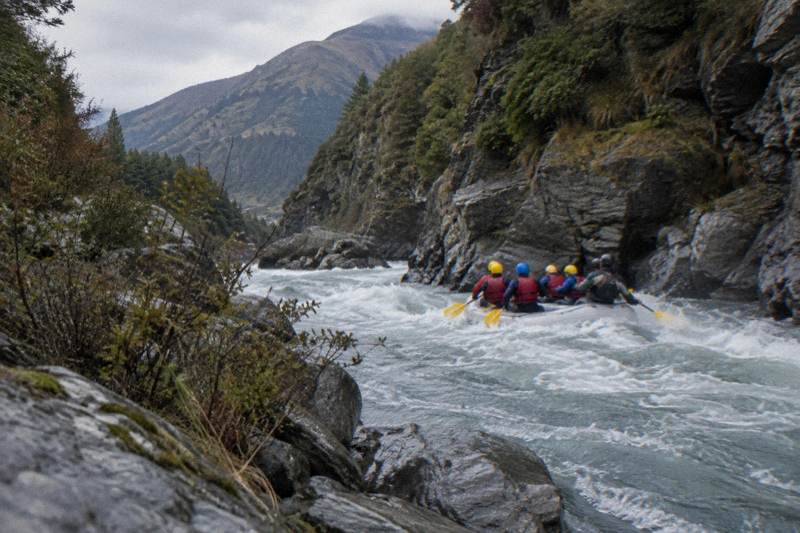
The Shotover squeezes 14 km of grade 3 to 5 white water through a narrow canyon behind Coronet Peak, and every commercial raft on it finishes by paddling through a 170 m gold-mining tunnel. Here is how the run works, which trip fits which swimmer, and what each one costs.
Short answer
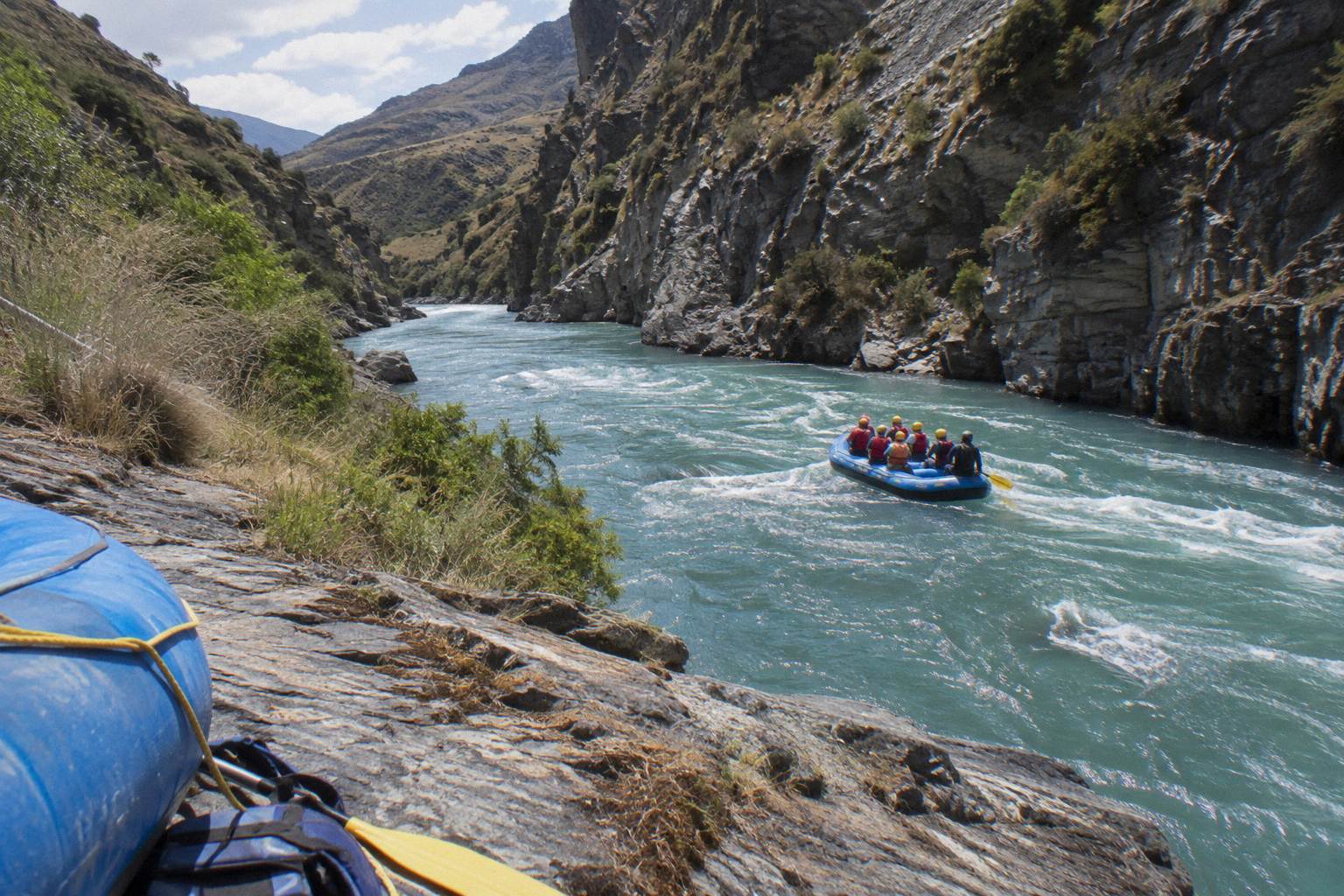
Shotover River rafting runs grade 3 to 5 over 14 km, finishing through the 170 m Oxenbridge Tunnel at Arthurs Point. The RealNZ half day costs from NZ$299 per person and lasts 4.5 hours; Challenge Rafting's 4-hour trip is also from NZ$299. Minimum age is 13, minimum weight 40 kg, maximum 120 kg, and swimmers must manage 25 m unaided.
The Shotover River drops out of the Southern Alps behind Coronet Peak, and the 1862 gold rush on its gravels was once dubbed the richest river in the world. Today the canyon that held thousands of prospectors holds rafts instead: 14 km of grade 3 to 5 white water, a 170 m tunnel paddle, and a finish at a base ten minutes' drive from Queenstown. Two operators sell the big-water run and a third sells a gentle family float in the same canyon, which makes the choice more interesting than most people expect. Everything below comes from operator pages, booking details and official heritage records, so the numbers hold up when you compare trips.
What Grade Is The Shotover River Rafting Run?
The Shotover runs grade 3 to 5, and grade 5 is the highest grade commercially rafted in the world, in the operator's own words. The RealNZ trip covers six grade 3 to 5 rapids across 14 km, while Challenge Rafting's booking page lists six grade 4 to 5 rapids and the operator grades the river 3 to 5 overall. First-timers are not excluded, but both operators ask for water competence and moderate fitness.
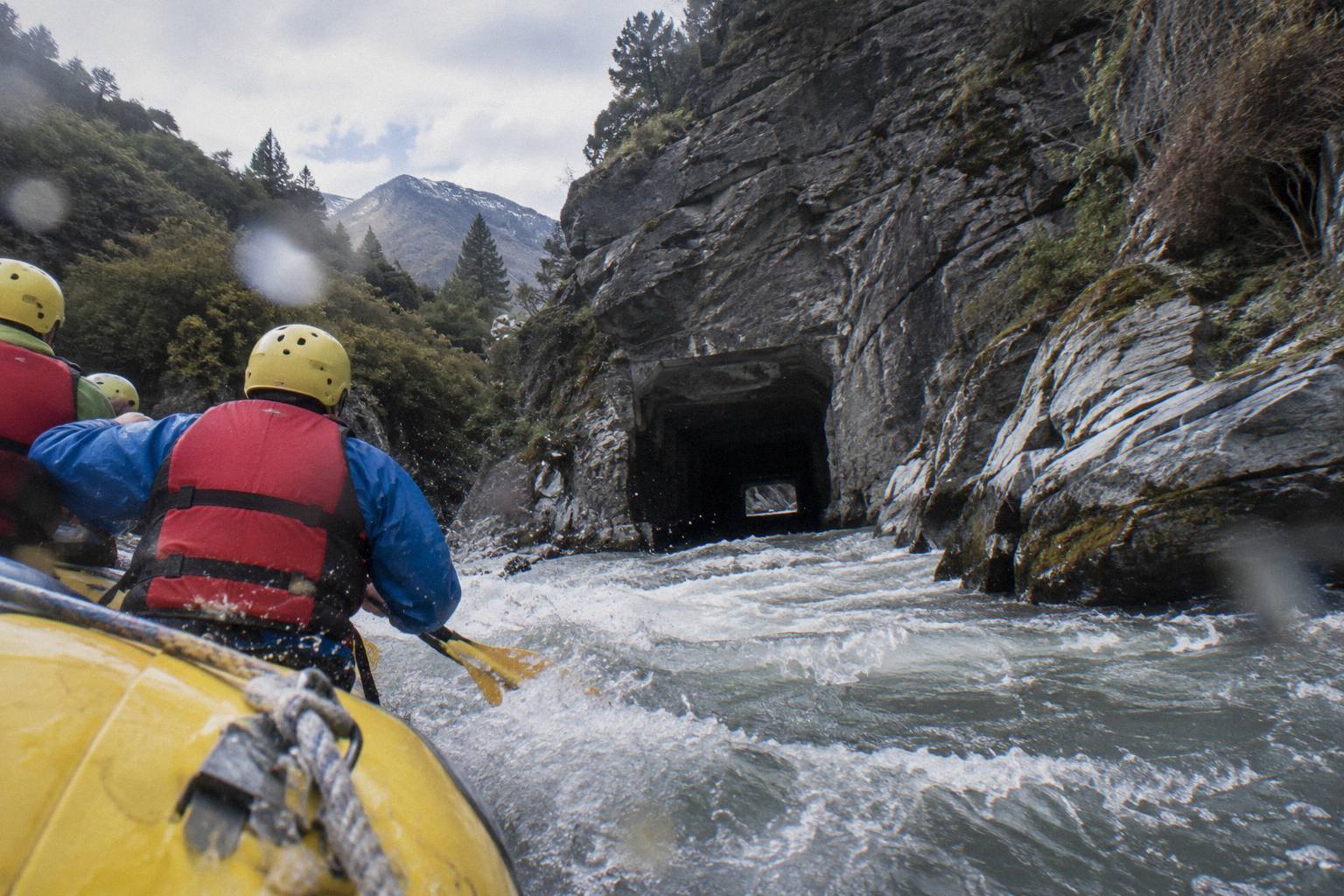
On the international scale, class 1 is easy moving water and class 6 is extreme, beyond commercial rafting. Class 3 means irregular waves that will soak you and push the raft around; class 4 means long, powerful rapids that need precise paddling in response to commands; class 5 means the whole package with little margin for error. The Shotover sits at the top of what a paying guest can book anywhere, which is exactly why its rapids carry names rather than numbers.
It helps to picture the scale as a ladder of consequences rather than a ladder of fear. A class 3 rapid can be swum by a competent swimmer and climbed back into the raft from; a class 4 rapid demands that the whole crew paddles together on command, because a missed stroke compounds through the rest of the rapid; a class 5 rapid is over before you have finished reacting to it. Guides shout short strokes and you execute them. Nobody on a commercial trip is expected to read the water themselves, but everybody is expected to hear, understand and act immediately, which is why the briefing matters and why it is given in English only.
If those descriptions make you pause, the gentle alternative exists on the same river. The Rafting And Skippers Canyon Combo runs grade 1 to 2 water in the upper canyon, welcomes children from three years upwards, and does not require water confidence at all. It is a different experience of the same river, and for families it is often the right one. For the full white-water run on either operator, guests must be able to swim 25 m unaided.
The grade also decides who cannot go. Pregnant guests are not allowed on grade 3 or above, a heart condition or heart medication excludes, and non-swimmers are directed to gentler water. If you want the full breakdown of the scale before committing, read the white water rafting grades explained in plain terms, and for the swimmer question specifically, our page on rafting if you cannot swim goes through the alternatives. The neighbour river is worth a glance too: the Kawarau runs grade 2 to 3, can reach grade 4 at higher water levels, and its comparison with the Shotover is a genuine decision for most visitors.
| Grade | What it means on the water | Shotover trips that use it |
|---|---|---|
| Grade 1 to 2 | Easy water, small regular waves, no manoeuvring needed | Rafting And Skippers Canyon Combo |
| Grade 3 | Irregular waves, paddling to commands, a real chance of getting wet | RealNZ Shotover trip (within its 3 to 5 range) |
| Grade 4 | Powerful, continuous rapids requiring precise teamwork | Challenge Rafting trip (4 to 5 on its booking page) |
| Grade 5 | The highest grade commercially rafted in the world | Both Shotover white-water trips at their hardest rapids |
Which Shotover Rafting Trip Should You Book?
Three trips run on the Shotover: the RealNZ half day at grade 3 to 5 from NZ$299 per person, the Challenge Rafting 4-hour trip at grade 4 to 5 also from NZ$299, and the Family Adventures Skippers Canyon combo at grade 1 to 2 from NZ$329. The RealNZ trip rates 4.8 from 346 reviews, the Challenge trip 4.9 from 80, and the combo 5.0 from just 7 reviews.
The two white-water trips share the same river, the same tunnel and the same finish, but they are separate products. Challenge Rafting's own site says its Shotover trip is operated by RealNZ, and both check in at 88 Beach Street, yet the experiences differ in shape: the RealNZ trip is a 4.5-hour half day that shuttles to a Deep Creek put-in, while the Challenge trip is 4 hours built around its named "Mother" rapids and includes professional photos in the booking. Treat them as two ways into the same canyon, not duplicates.
The choice usually comes down to confidence and children. Strong swimmers who want the hardest lines lean to the Challenge trip, whose booking page grades the run 4 to 5 and names six grade 4 to 5 rapids in a row. Guests who want the flagship canyon run with a slightly wider envelope choose the RealNZ half day. Families with anyone under 13 have exactly one Shotover option, the Skippers Canyon combo, suitable from three years upwards.
Money rarely settles the argument, because the two white-water trips cost the same from-price. What differs is what the day contains: the Challenge trip compresses more of its four hours around the hardest water and hands you photos at the end of it, while the RealNZ half day stretches to 4.5 hours and adds the long shuttle up Skippers Canyon Road to Deep Creek as a scenic prelude. Neither is the discount version of the other; they are two edits of the same canyon.
| Trip | Grade | Duration | Meeting point | From price | Rating |
|---|---|---|---|---|---|
| Shotover Rafting, Half Day (RealNZ) | 3 to 5 | 4.5 hours | RealNZ Visitor Centre, 88 Beach Street | NZ$299 per person | 4.8 from 346 reviews |
| Challenge Rafting, 4 Hours | 4 to 5 (3 to 5 overall) | 4 hours | Morning Star Reserve, Arthurs Point | NZ$299 per person | 4.9 from 80 reviews |
| Rafting And Skippers Canyon Combo | 1 to 2 | 5 hours | Camp Street, Queenstown | NZ$329 per person | 5.0 from 7 reviews |
Read the rating column honestly in context: 346 reviews and 80 reviews give a solid picture, while 7 reviews tell you almost nothing yet. Never rank trips by rating alone; the two 4.8-plus scores sit within a fraction of each other, and the combo's perfect score is a small-sample artefact rather than a verdict. What the bigger pools do show is that the canyon run satisfies people at scale, year after year, across all four seasons it operates in.
When you are ready, the Shotover Rafting Half Day trip page carries the live calendar, and you can check availability without committing. Booking dates are chosen on the calendar rather than printed as fixed departures, so morning and afternoon slots depend on the day. Free cancellation up to 24 hours before the start applies to every trip. Amounts are New Zealand dollars and change by date and group, so treat every figure here as a floor.
The Route From Deep Creek To Arthurs Point
The RealNZ shuttle reaches the put-in at Deep Creek via Skippers Canyon Road, about 40 minutes' drive to the start, then rafts 14 km of the Shotover, paddles through the 170 m Oxenbridge Tunnel and finishes after the rapids beyond it at the Arthurs Point rafting base, about a 10 minute drive from Queenstown. The full experience runs 4.5 hours, and the white water itself is one part of that.
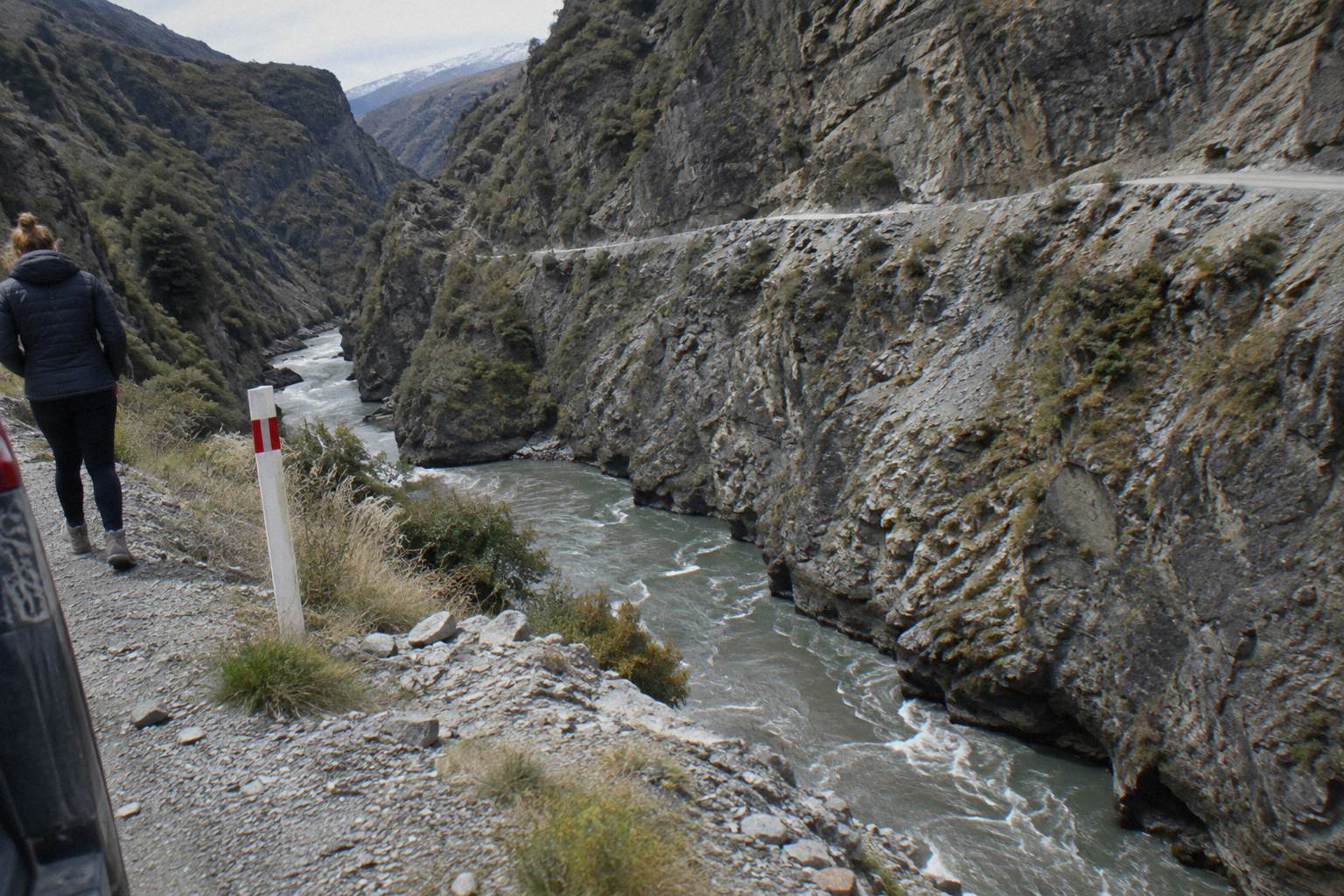
The drive in is part of the story. The shuttle climbs behind Coronet Peak and along Skippers Canyon Road, a narrow dirt road that, in the operator's wording, hugs the canyon's sheer cliffs. Skippers Road is 13 km of unsealed road from Skippers Saddle to Skippers Bridge, described by the Department of Conservation as narrow and winding, with only experienced drivers advised to attempt it. That reputation is exactly why every commercial trip uses a shuttle instead of letting guests self-drive to the put-in, and why the bus ride is a genuine part of the product rather than dead time.
The river itself was the prize of the 1862 gold rush. Heritage New Zealand records that the Shotover was dubbed the richest river in the world, and the canyon still carries the remains of that era, from the Oxenbridge Tunnel to the relics of Skippers Township across the historic suspension bridge inside what is now the Mount Aurum Recreation Reserve, 9,100 hectares of protected goldfield landscape. More canyon history is unpacked in our guide to Skippers Canyon and its gold road.
| Route stage | Detail |
|---|---|
| Put-in | Deep Creek, reached by Skippers Canyon Road, about 40 minutes' drive |
| River rafted | 14 km of the Shotover, grade 3 to 5 |
| Signature feature | Paddle-through of the 170 m Oxenbridge Tunnel |
| Finish | Rapids beyond the tunnel, landing at the Arthurs Point rafting base |
| Base location | Shotover bank at Arthurs Point, about a 10 minute drive from Queenstown |
| Raft size | Maximum eight people including the guide, plus a safety kayaker on each trip |
Spectators cannot follow the trip on the river, but viewers can stand near the final rapid as rafts exit the tunnel, with timing varying by trip and by day. Trips run subject to weather, river level and water temperature, portages may occasionally be required, and minimum guest numbers apply, so a booked date is always conditional on conditions. For the timing question in more detail, see how the whole rafting day is scheduled.
The Oxenbridge Tunnel And The Named Rapids
Challenge Rafting names its sequence: the Mother rapids, six grade 4 to 5 rapids including Aftershock, Squeeze, Toilet and Pinball, then the 170 m Oxenbridge Tunnel, then the drop into Cascade Rapid. RealNZ describes the same corridor more generally, six grade 3 to 5 rapids and the tunnel, and does not publish rapid names, so none are invented here.
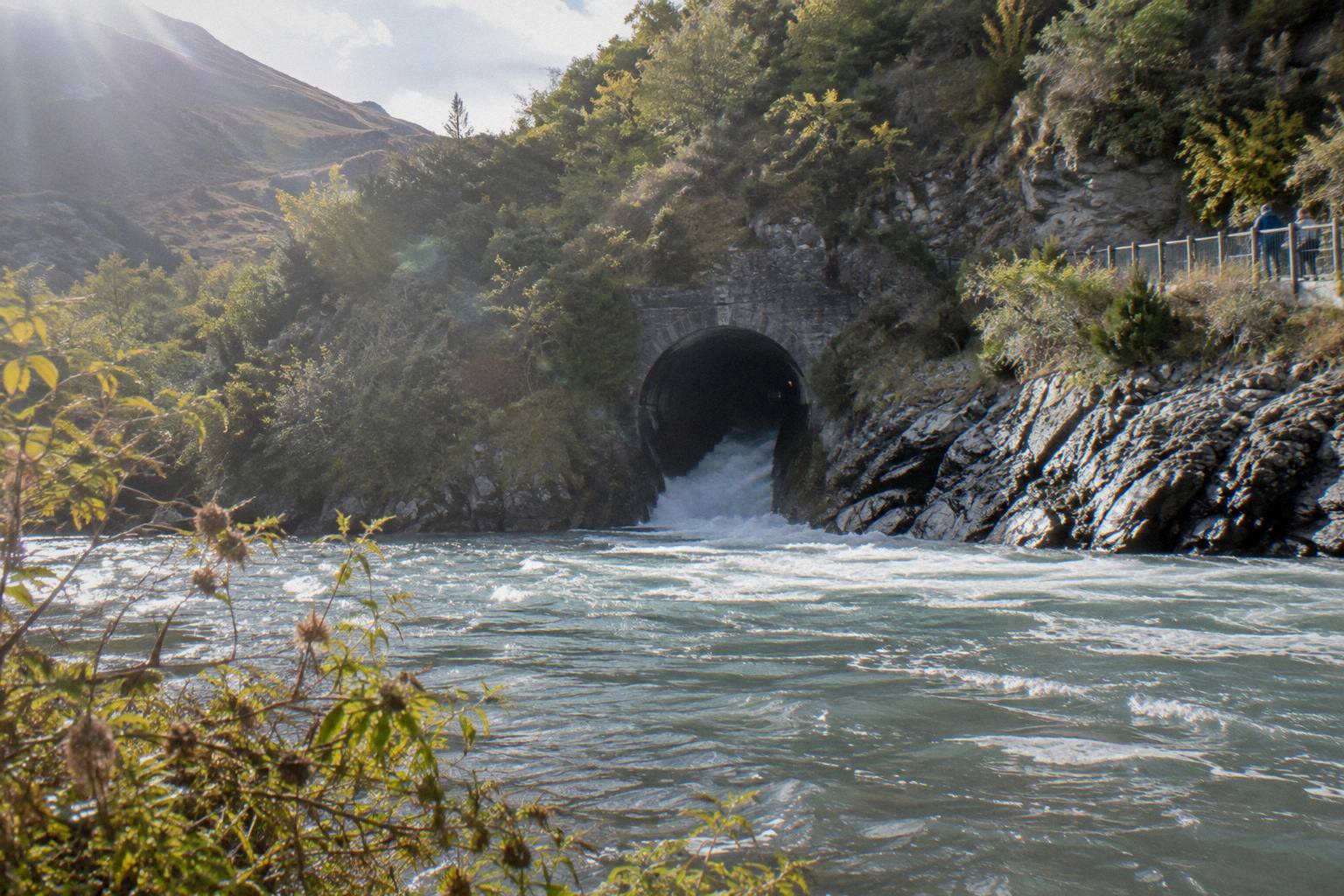
The tunnel was begun in 1906 by the Oxenbridge brothers, Bert and Edmund, to divert a large part of the Shotover away from the Jeweller's Shop rapids above Arthurs Point, gravels fabled for gold. The Arthurs Point Gold Mining Company was incorporated in October 1909, returned its first gold in 1911, was liquidated in August 1912, and there is no evidence of mining use after that year. The engineering outlived the business: as of 2023 the tunnel still carries the Shotover flow and is used primarily by rafting companies, according to the Heritage New Zealand list entry.
The story has a sombre chapter that explains the tunnel's present shape. Heritage New Zealand notes that the 1995 death of an American tourist led to the filling in of the Toaster, the farthest north of the two original outlet channels. The tunnel that remains is the survivors' version, widened and deepened by 1909 from its original ten-foot height and twelve-foot width, and the 170 m length operators give matches the 168 m the brothers originally planned. Paddling it is, in a real sense, paddling through a failed mine that found its second life as a thrill.
| Challenge Rafting rapid | Position on the run |
|---|---|
| Aftershock | Within the Mother rapids, a six-rapid grade 4 to 5 series |
| Squeeze | Within the Mother rapids |
| Toilet | Within the Mother rapids |
| Pinball | Within the Mother rapids |
| Oxenbridge Tunnel | 170 m paddle-through after the Mother rapids |
| Cascade Rapid | The drop after the tunnel, finishing the run |
You do not need to be on a raft to see it. The Department of Conservation's Oxenbridge Tunnel Track is a short, easy 20-minute walk to a viewpoint over the tunnel diversion and an old steam engine, starting on the left just before the Edith Cavell Bridge at Arthurs Point. It is the cheapest way to check the river before you book it, and it doubles as a wet-weather consolation if your trip date is portaged or rescheduled.
One safety note belongs here because the tunnel exit is where crowds and rafts meet. RealNZ says its jet boat and rafting trips never share a stretch of river except a 500 m stretch after the Oxenbridge Tunnel on the Shotover, the one place two crafts pass close. Guides manage it, but it explains the occasional queue of rafts at the last rapid.
Skippers Canyon: The Gentle Shotover Option
The Family Adventures Rafting And Skippers Canyon Combo runs grade 1 to 2 water in the upper canyon, is suitable for everyone from three years upwards, and needs no water confidence at all. It starts and ends at Camp Street in Queenstown, lasts 5 hours, includes snacks, and costs from NZ$329 per person, with free cancellation up to 24 hours before the start. Its 5.0 rating comes from just 7 reviews.
This is the trip that lets a family raft the Shotover without the grade 5 chapter. The itinerary is a 45-minute drive into the canyon, then 1.5 hours of rafting past gold mining relics and the Ford of Bruinen from Lord of the Rings, a filming location on this river. Guests wear a swimsuit under clothes rather than a full white-water wetsuit kit, and the whole tone is float and scenery rather than commands and foam. The rest of the planning pages sit on Queenstown White Water Rafting.
The combo also solves the age problem that the white-water trips cannot. Both grade 3 to 5 trips set a minimum age of 13 with proof possibly required, while the combo takes children from three years up, which makes it the only Shotover trip a family with young kids can book together. Grandparents fit here too: there is no maximum age anywhere in the eligibility rules, and a grade 1 to 2 float is a comfortable place to test how the family takes to a river. For the fuller age picture across Queenstown rivers, see minimum ages for rafting around Queenstown.
It is genuinely a different product, not a discount version. You will not paddle the tunnel, you will not swim a rapid, and you will come back with dry hair. What you get instead is canyon scenery most visitors never reach, on a river section where the worst that happens is a splash, plus the drive itself: the Department of Conservation puts Skippers at 25 minutes from Queenstown to the area and a one-and-a-half to two hour drive in total if you explore, and the tour hands that landscape to you with a driver who knows the road.
Meeting Points, Transfers And What Is Provided
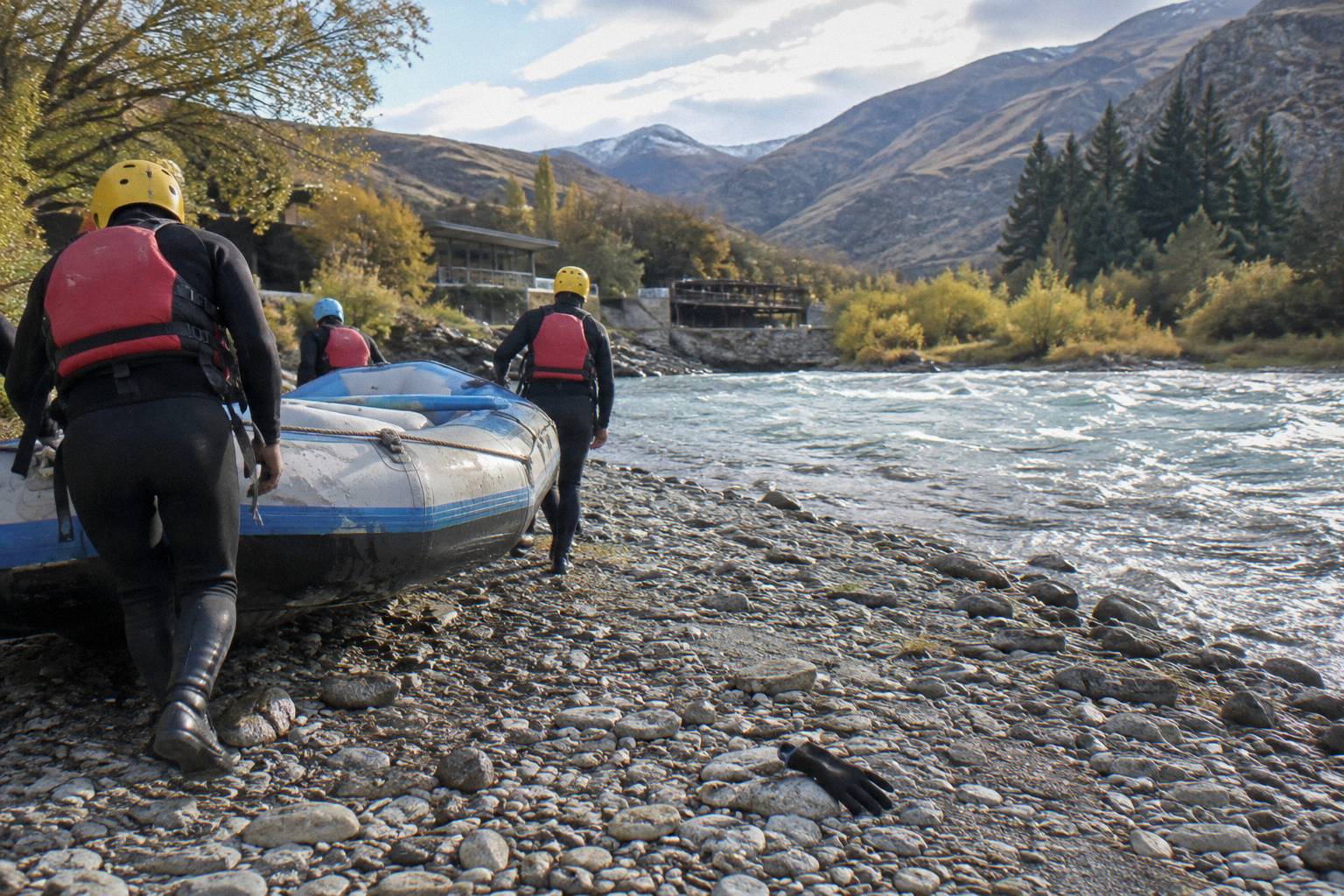
RealNZ trips meet at the Queenstown Visitor Centre, 88 Beach Street, at least 20 minutes before departure, with hotel pickup excluded; Challenge Rafting guests check in at 88 Beach Street or self-drive to the raft base at 1 Arthurs Point Road. Every trip includes a round-trip bus transfer from the meeting point, plus wetsuit, jacket, spray jacket, helmet, booties, life jacket and paddle. Hot showers and a valuables locker wait at the base.
The meeting-point detail catches people out because Queenstown is walkable and visitors assume everything collects from the door. It does not: hotel pickup is excluded on the white-water trips, so build in the walk to 88 Beach Street, opposite the Crowne Plaza Hotel, and arrive at least 20 minutes early because weights are verified at check-in and waivers are signed there. Challenge guests have a second option, self-driving to the raft base at 1 Arthurs Point Road, Arthurs Point 9371, which shares its street address with the Morning Star Reserve meeting point on the booking calendar.
The kit list matters because you wear swimwear only under the wetsuit, no cotton, and glasses need a sports strap or stay behind. Cotton holds water against skin and turns a cold river colder, which is the one clothing rule with no exceptions. Nothing can be taken on the raft, camera or GoPro included, which is why the Challenge trip's included professional photos are worth more than they look, and why the valuables locker at the RealNZ base earns its keep. For the full clothing breakdown, our page on what to wear white water rafting covers it in detail.
| Item | Provided on the trip | Bring yourself |
|---|---|---|
| Wetsuit and jacket | Yes, plus spray jacket | Swimwear only underneath, no cotton |
| Footwear | Wetsuit booties | Nothing |
| Safety gear | Helmet and life jacket | Nothing |
| Paddle | Yes | Nothing |
| Photos | Included in the Challenge trip booking | Not allowed on the raft: camera, GoPro |
| After the run | Hot showers and valuables locker at the base | Towel and dry clothes for after |
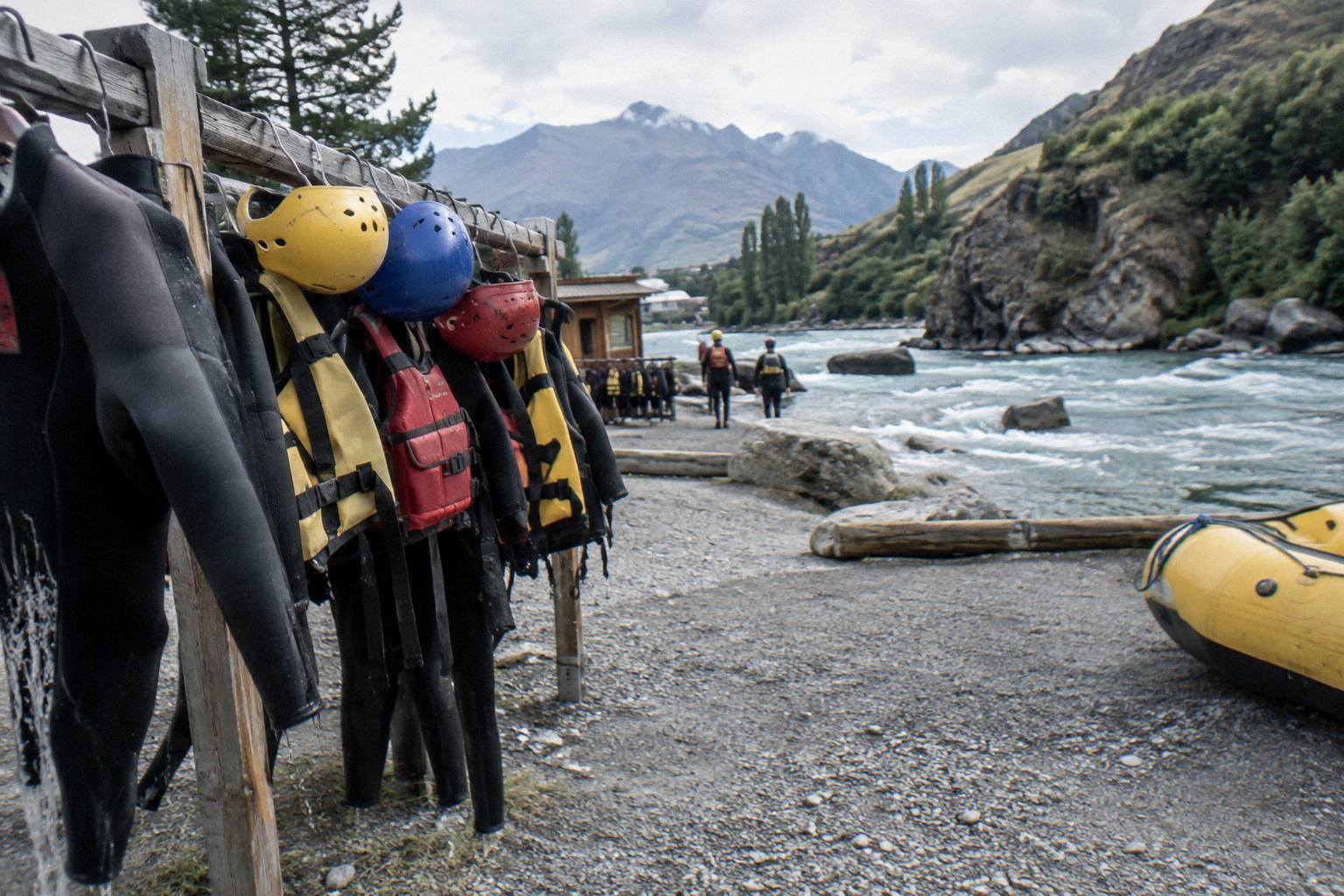
Toilets sit at the raft base and at Deep Creek, so the longest dry stretch is the shuttle and the run itself. Plan the post-trip hour rather than the pre-trip one: hot showers at the base or the Rafters Lodge are the difference between a comfortable evening in Queenstown and a cold one, and a towel plus dry clothes left in your day bag is the single most-forgotten item. Extra-large and child-size wetsuits exist, but the 40 kg and 120 kg limits on the white-water trips are firm. The weight and fitness rules are unpacked further in rafting weight and fitness limits.
Who Can Go: Age, Fitness And Safety Rules
Both white-water trips set a minimum age of 13, minimum weight 40 kg and maximum 120 kg, verified at check-in. RealNZ asks that under 16s travel with a guardian, under 18s need a guardian-signed waiver, and everyone signs a waiver. A heart condition or heart medication excludes, pregnancy excludes on grade 3 or above, and guests must understand the safety briefing in English. There is no maximum age.
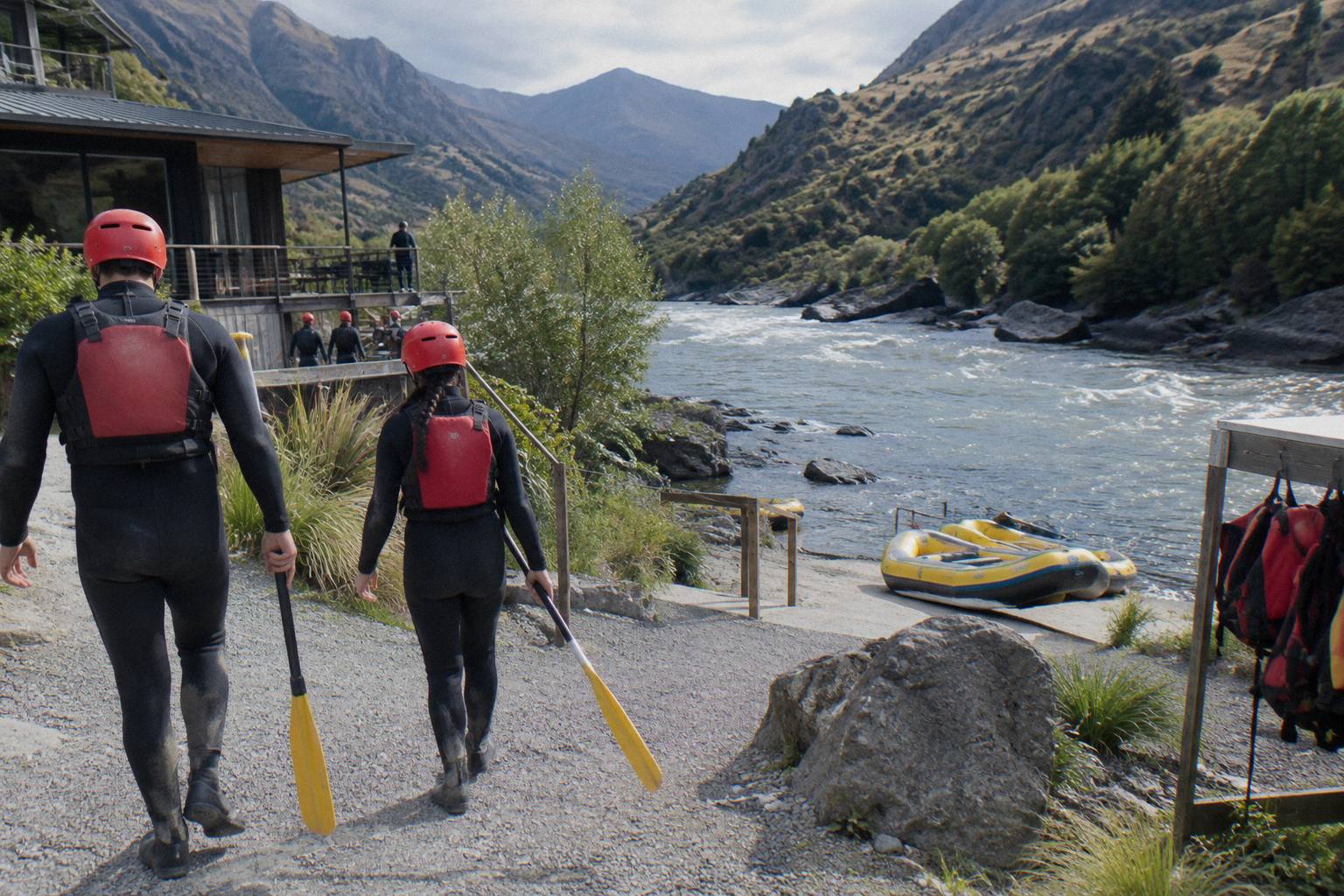
The medical list is shorter than people fear but stricter than people expect. Managed blood pressure with medication is the one heart exception. Beyond that, moderate fitness and water competence are the bar, which in practice means stairs without stopping and a 25 m swim. Challenge Rafting's booking text adds that its trip is not suitable for wheelchair users, guests with mobility impairments or non-swimmers, and that under 17s must be accompanied by a guardian. RealNZ assesses disabilities case by case, so a conversation with the operator before booking beats an assumption either way. The Family Adventures trip removes even that, stating water confidence is not necessary.
Regulation sits behind all of it. WorkSafe New Zealand runs a public register of adventure activity operators who have passed a safety audit and are authorised to provide adventure activities, and it is an offence to operate without registration. The register is searchable by name, activity and location, so anyone can look before booking any adventure activity in the country. On the water itself, the practical protections are concrete: a guide in every raft, a maximum of eight people per raft including that guide, a safety kayaker on every RealNZ trip, and a full safety briefing before anyone touches the river.
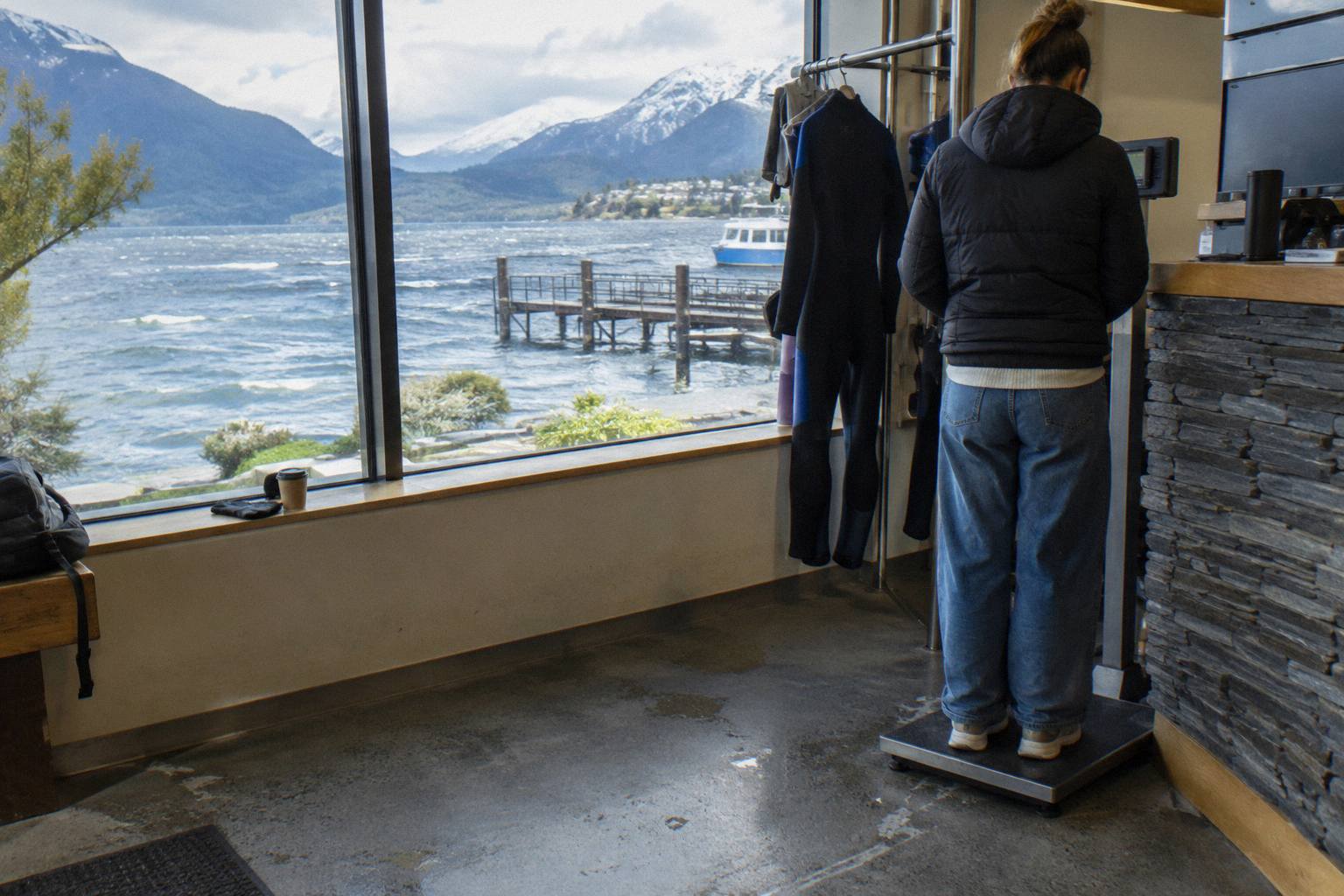
For the nerves that usually accompany these rules, our pages on whether white water rafting is safe and dealing with rafting fear walk through what the protections actually are. The honest summary is that the Shotover asks more of its guests than the Kawarau, in the operator's own framing it carries a higher risk of falling out, and that the grade rewards guests who arrive fit, rested and willing to paddle hard on command.
Common Mistakes When Booking A Shotover Trip
The recurring mistakes are booking the wrong river for the swimmer, ignoring the 40 to 120 kg weight window, expecting hotel pickup, and assuming summer availability year round. Challenge Rafting runs November through April only and states it does not raft in winter, which runs May to early September; no operating months are published for the RealNZ trips. Prices change by date and group, so the from-price is a floor, not a quote.
The first mistake is the most common: booking the Shotover when the Kawarau fits. The Kawarau runs grade 2 to 3, suits first-timers and less confident swimmers, and carries a lower risk of falling out; a side-by-side is in choosing between the Shotover and the Kawarau. The second is arriving with a phone plan for photos: nothing goes on the raft, so buy the photo package or accept memory only.
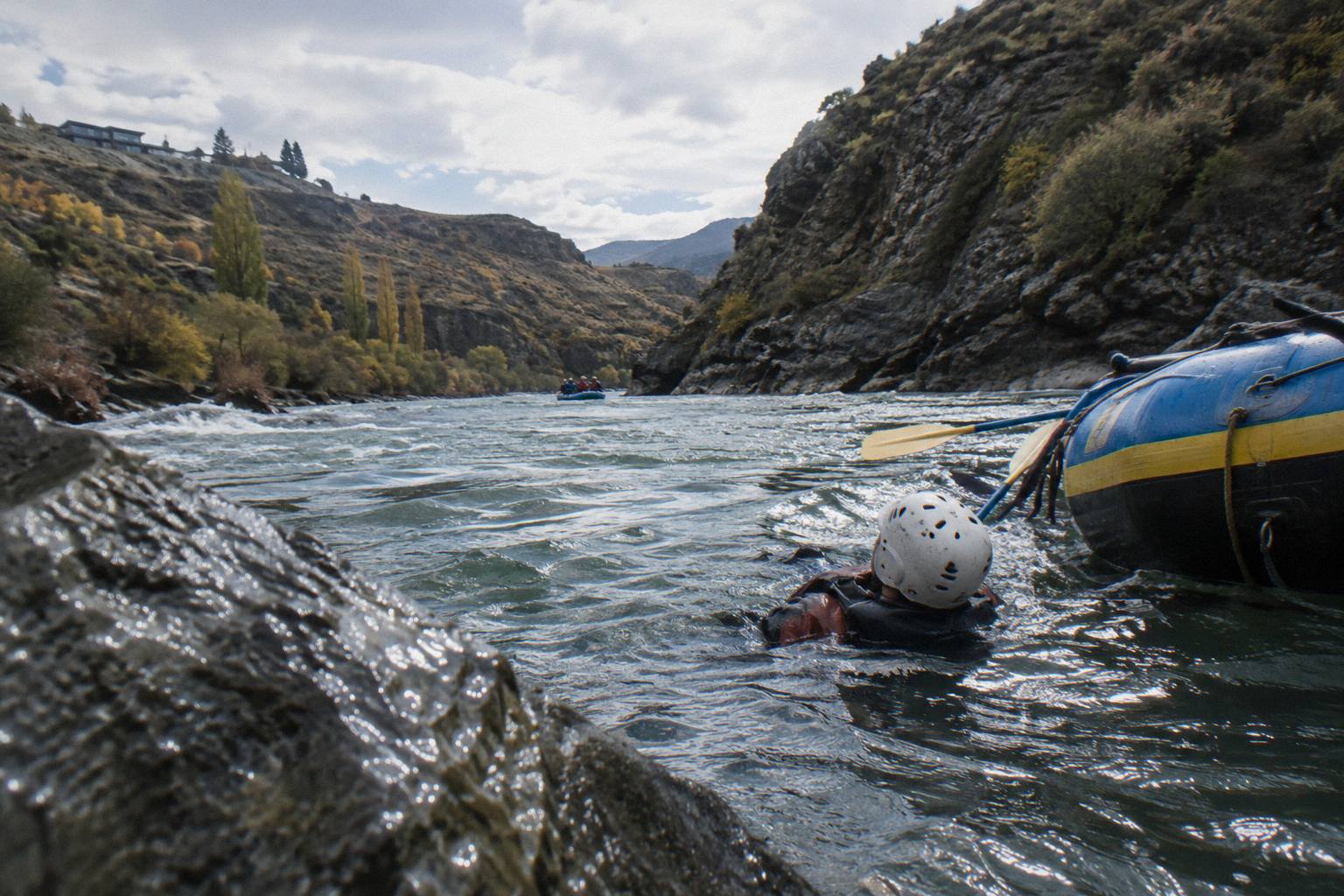
The third is logistics. Hotel pickup is excluded on both white-water trips and on the Challenge trip specifically, so plan the walk or drive to 88 Beach Street, and arrive at least 20 minutes early because weights are checked. The fourth is calendar maths: if your visit falls in the winter months, the Challenge trip simply will not be running, and the seasonal picture is laid out in the best time for rafting in Queenstown. A fifth, quieter one is minimum numbers: trips are subject to minimum guest numbers, so a midweek shoulder-season date carries more rescheduling risk than a busy summer one.
The last mistake is treating the two white-water trips as identical because they share a river and a check-in street. They are separate products with different durations, different rapid sequences and different inclusions, and the booking details differ accordingly. Read both before choosing; the money is the same, the day is not.
Common Questions About The Shotover Run
What Grade Is The Shotover River Rafting Run?
The RealNZ trip runs grade 3 to 5 across 14 km, and the operator notes that grade 5 is the highest grade commercially rafted in the world. Challenge Rafting's booking page grades its run 4 to 5 within a grade 3 to 5 trip, focused on its six grade 4 to 5 Mother rapids.
How Long Does A Shotover Rafting Trip Take?
The RealNZ half day lasts 4.5 hours in total, the Challenge Rafting trip 4 hours, and the Rafting And Skippers Canyon Combo 5 hours. Most of that time is shuttle and briefing; the rest is on the water.
How Much Does Shotover River Rafting Cost?
The RealNZ half day and the Challenge Rafting trip both start from NZ$299 per person, and the Rafting And Skippers Canyon Combo from NZ$329 per person. Amounts are New Zealand dollars and change by date and group, and the booking page shows the price for your chosen date.
Can Beginners Do The Shotover?
Yes, on the white-water trips, provided you can swim 25 m unaided, have moderate fitness and meet the 13-year, 40 to 120 kg limits. First-timers who want calmer water should look at the grade 1 to 2 Skippers Canyon combo, which needs no water confidence, or the grade 2 to 3 Kawarau trips.
Do You Paddle Through The Oxenbridge Tunnel?
Yes, the raft paddles through the 170 m Oxenbridge Tunnel on both white-water trips, then finishes in the rapids beyond it, including the drop into Cascade Rapid on the Challenge trip. The tunnel was built from 1906 as a gold-mining diversion and is still primarily used by rafting companies.
Can Children Go Shotover River Rafting?
The white-water trips set a minimum age of 13, with under 16s travelling with a guardian and under 18s needing a guardian-signed waiver. The Rafting And Skippers Canyon Combo is suitable for everyone from 3 years upwards, making it the family option in the same canyon.