Skippers Canyon: The Road, The River And The Raft Trip
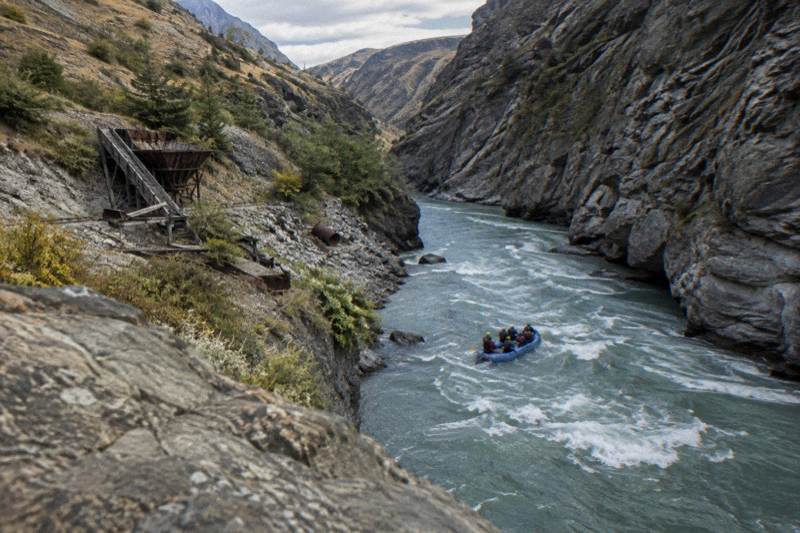
Skippers Canyon is the torn schist gorge behind Coronet Peak where the Shotover River carved its way through some of the richest gold ground in New Zealand. Today the same canyon carries a 13 km unsealed road, a gold-rush tunnel that rafts float through, and the drive to the put-in of Queenstown's biggest white water.
Short answer
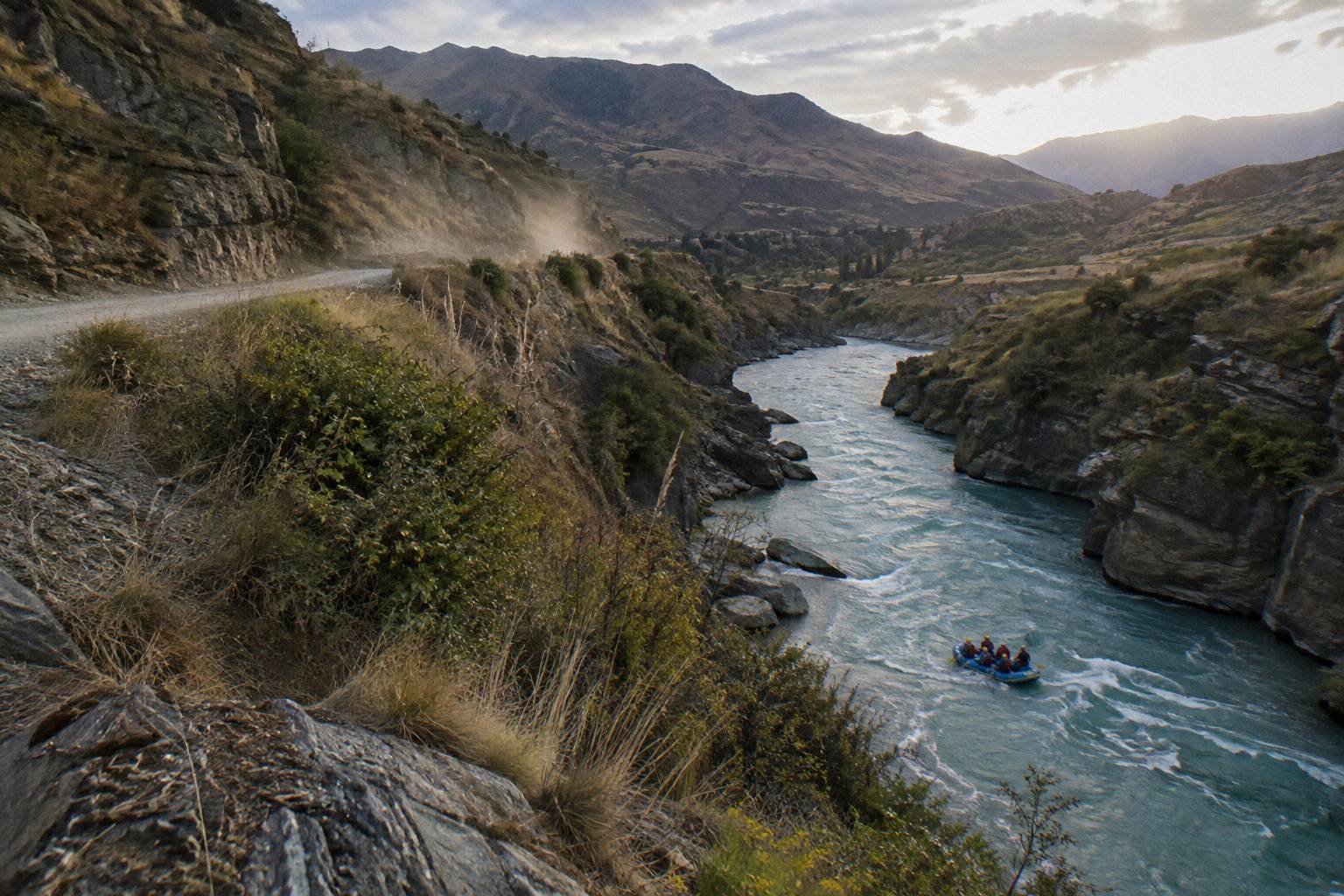
Skippers Canyon sits behind Coronet Peak, about 25 minutes from Queenstown, inside the 9,100 hectare Mount Aurum Recreation Reserve. Skippers Road is 13 km, unsealed and narrow, so rafters ride the operator shuttle. The Rafting And Skippers Canyon Combo runs grade 1 to 2 water from NZ$329, while the Shotover grade 3 to 5 rafts reach their put-in at Deep Creek via the same road.
Skippers Canyon is where Queenstown's white water actually lives. The Shotover River, the one with the grade 5 rapids and the 170 m tunnel, runs through it, and almost every commercial raft that touches the upper river gets there by the same dust-and-schist road the gold miners cut. The canyon has three stories braided together: a road that scares rental companies, a river that was once called the richest in the world, and a family of raft trips that use both in very different ways.
Where Is Skippers Canyon And Why Should Rafters Care?
Skippers Canyon is the gorge of the upper Shotover River, sitting behind Coronet Peak roughly 25 minutes' drive from Queenstown, inside the 9,100 hectare Mount Aurum Recreation Reserve. It matters because it is the access corridor for the upper Shotover: the grade 3 to 5 rafts launch at Deep Creek along Skippers Canyon Road, while gentler combo trips raft the same river system on grade 1 to 2 water.
The Department of Conservation manages the area as part of Mount Aurum, and its own summary of the place leans on one phrase: the reserve "saw much of Wakitipu's 1860s gold fever" in the words of the official page, which records that the area "saw much of Wakatipu's 1860s gold fever". Visitors cross the historic Skippers suspension bridge to reach the remains of Skippers Township, a ghost of the mining settlement that once served the gorge. The landscape is raw schist, bare and shattered, which is exactly why the road and the river squeeze together the way they do.
For a fuller picture of the river itself, the Queenstown White Water Rafting hub covers every run around town, and the Shotover River rafting guide goes deeper on the grade 3 to 5 section that finishes at Arthurs Point. Skippers is the upstream half of that story: the canyon road shadows the river from Skippers Saddle down toward the bridge, and the put-in at Deep Creek sits along it.
The basics worth knowing before any trip:
| Quick fact | Detail |
|---|---|
| Location | Behind Coronet Peak, upper Shotover River |
| Distance from Queenstown | About 25 minutes to the area |
| Reserve | Mount Aurum Recreation Reserve, 9,100 ha |
| Road | Skippers Road, 13 km from Skippers Saddle to Skippers Bridge, unsealed |
| Drive time in total | One and a half to two hours, per the Department of Conservation |
| River section | Upper Shotover, including the Deep Creek put-in used by rafts |
| Historic sites | Skippers suspension bridge, Skippers Township remains, Oxenbridge Tunnel |
Is Skippers Road Really That Difficult To Drive?
Yes, by official description: Skippers Road is narrow, winding, 13 km long from Skippers Saddle to Skippers Bridge, unsealed for its length, and the Department of Conservation advises that only experienced drivers should attempt it. The road is administered by Queenstown Lakes District Council, which is why raft operators run shuttle buses on it rather than leaving guests to drive themselves.
The route from Queenstown runs up Gorge Road to Arthurs Point, past the Coronet Peak ski field turn-off, then turns left onto the unsealed Skippers road. From there the surface is gravel the rest of the way. Operator wording for the drive is vivid: the narrow dirt road "hugs the canyon's sheer cliffs", with the drop going straight down to the Shotover in places. There is no bridge height, opening date or population figure attached to any part of it in the official record, just the road itself and the warnings that come with it.
Rafters rarely drive it themselves. The RealNZ Shotover trip reaches its Deep Creek put-in by shuttle bus along Skippers Canyon Road, about 40 minutes' drive to the start, and the operator handles the wheel. The Family Adventures canyon trip is a 45-minute drive into the gorge with the operator as well. Both remove the two hardest parts of a Skippers visit, the unsealed surface and the passing places, from the guest's to-do list. Anyone who does want to see the canyon independently should budget the Department of Conservation's one-and-a-half to two hour total drive time and treat it as the day's main activity, not a detour.
The road's character is the reason the canyon stayed quiet while Queenstown grew around it. Settlement was always hard here, mining was always expensive, and when the gold ran out the gorge reverted to scenery. Rafting and jet boating are the modern industries on the water, and both work around the road's limits rather than trying to change them.
What Happened Here In The 1862 Gold Rush?
The 1862 gold rush on the Shotover brought thousands of prospectors into the canyon, and the river was dubbed "the richest river in the world" at the time, a claim recorded in Heritage New Zealand's listing for the area. The gold gave the canyon its road, its township and eventually its tunnel, and the remnants of all three are still visible today.
The rush was short and violent in economic terms. Miners worked the Shotover's gravels from 1862 onward, and Skippers Township grew to serve them before fading into the remains visitors now cross the suspension bridge to see. The most ambitious relic is the Oxenbridge Tunnel: from 1906, brothers Bert and Edmund Oxenbridge drove a diversion tunnel, with an expected length of 550 ft (168 m), to pull a large part of the Shotover away from the "Jeweller's Shop" rapids above Arthurs Point, a stretch fabled for gold. The Arthurs Point Gold Mining Company, incorporated in October 1909, saw its first return in 1911, was liquidated in August 1912, and there is no evidence of mining use after 1912.
The tunnel failed as a mine and survived as a river feature. Operators describe it as 170 m long, matching the expected 168 m, and rafts now paddle through it on the Shotover run. Heritage New Zealand records that the 1995 death of an American tourist led to the filling in of the "Toaster", the farthest north of the two original outlet channels, and that as of 2023 the tunnel still carries the Shotover flow and is used primarily by rafting companies. That is a rare thing: a failed 1906 mining scheme that ended up as the centrepiece of a modern adventure trip.
| Year | Event in the canyon |
|---|---|
| 1862 | Gold rush on the Shotover; the river dubbed "the richest river in the world" |
| 1906 | Oxenbridge Brothers begin the diversion tunnel to bypass the Jeweller's Shop rapids |
| October 1907 | 180 ft (55 m) of the tunnel excavated |
| October 1909 | Arthurs Point Gold Mining Company incorporated |
| 1911 | The company's first mining return |
| August 1912 | Company liquidated; no evidence of mining use after 1912 |
| 1995 | A tourist death leads to the filling in of the "Toaster" outlet channel |
| 2023 | The tunnel still carries the Shotover flow, used primarily by rafting companies |
Anyone who wants to see the tunnel without a paddle can. The Department of Conservation's Oxenbridge Tunnel Track is a short, easy 20-minute walk to a viewpoint over the historic tunnel river diversion and an old steam engine, starting by turning left just before the Edith Cavell Bridge at Arthurs Point. The official pages for the Skippers area and the Heritage New Zealand list entry 5607 carry the full history.
The gold-rush layer is not decoration on the raft trips either. The Family Adventures canyon trip points out gold mining relics during its 1.5 hours on the water, so the canyon's first industry and its newest one share the same stretch of river.
Which Queenstown Raft Trips Actually Use Skippers Canyon?
Two kinds of trips touch the canyon: the Shotover grade 3 to 5 rafts, which ride Skippers Canyon Road by shuttle bus to the Deep Creek put-in and then paddle 14 km back to Arthurs Point, and the gentler canyon combo trip, which drives 45 minutes into the gorge and rafts grade 1 to 2 water among the mining relics. The Kawarau River trips do not use the canyon at all.
That split is the single most useful thing to understand when booking. Skippers is not one product, it is a place that different trips use at different intensities. The comparison below shows how each option interacts with the canyon, and every price shown is a from-price per person in New Zealand dollars; amounts change by date and group, and the booking page shows the price for the date you choose.
| Trip | How it uses Skippers Canyon | Grade | Duration | From price (per person) |
|---|---|---|---|---|
| Shotover Rafting, Half Day | Shuttle up Skippers Canyon Road to Deep Creek put-in, 14 km of river back to Arthurs Point, through the 170 m tunnel | 3 to 5 | 4.5 hours | NZ$299 |
| Challenge Rafting, 4 Hours | Same Shotover section: six grade 4 to 5 "Mother" rapids, the tunnel, then Cascade Rapid | 3 to 5 (Mother rapids 4 to 5) | 4 hours | NZ$299 |
| Rafting And Skippers Canyon Combo | 45-minute drive into the canyon, 1.5 hours rafting past gold mining relics | 1 to 2 | 5 hours | NZ$329 |
| Rafting Plus Jet Boat Combo | No canyon: Kawarau River, with a 25-minute jet boat transfer to the rafting station | 2 to 3 | 4.5 hours | NZ$329 |
| Kawarau Rafting Only, Base Fare | No canyon: 8 km of the Kawarau ending in the Gibbston Valley | 2 to 3 | 4 hours | NZ$249 |
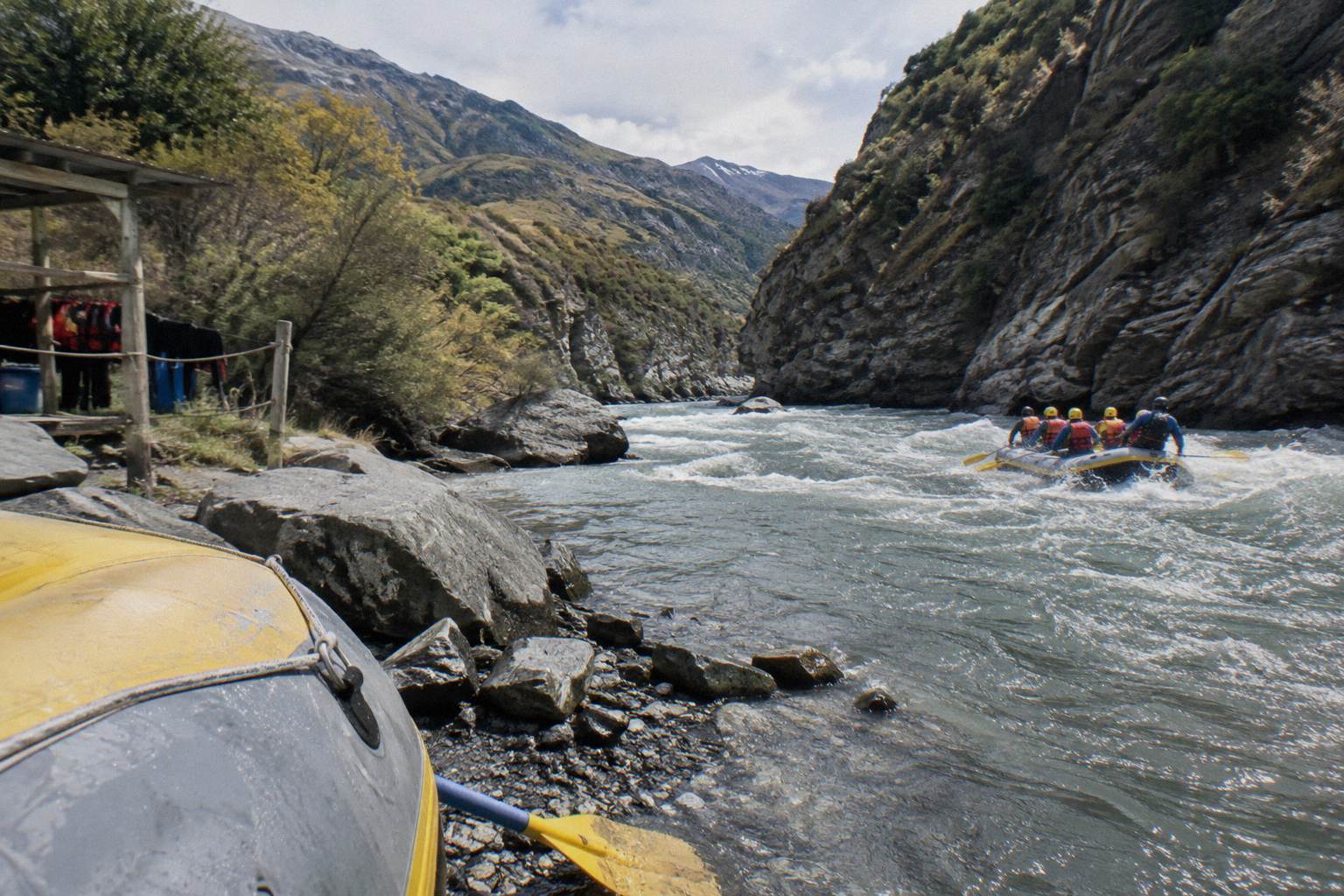
The two grade 3 to 5 operators are separate products even though they share a river. Challenge Rafting's own site says its Shotover trip is "operated by RealNZ", and both check in at 88 Beach Street, but the trips are sold and run as distinct experiences with different ratings and review pools: 4.8 from 346 reviews for Shotover Rafting, Half Day, and 4.9 from 80 reviews for Challenge Rafting, 4 Hours. The canyon combo, meanwhile, holds 5.0 from 7 reviews, a small count so far, and its appeal rests on access rather than adrenaline. For how the grades translate, the white water rafting grades explained guide breaks down each class.
What Is The Rafting And Skippers Canyon Combo Like?
The Rafting And Skippers Canyon Combo is a 5-hour Family Adventures trip from NZ$329 per person that takes riders from 3 years old into the canyon for a 45-minute drive and 1.5 hours of grade 1 to 2 rafting, with snacks included and free cancellation up to 24 hours before the start. It starts and ends at Camp Street, Queenstown.
The operator calls the trip suitable for everyone from 3 years upwards and says water confidence is not necessary, which puts it in a different category from every other option on the river. The rapids are grade 1 and 2, gentle by design, and the sell is the gorge itself: sheer walls, gold mining relics, and a stretch marketed as the "Ford of Bruinen" from Lord of the Rings. Film-location fans get a second thread on the wider river system, since the Kawarau appears as the River Anduin in the same franchise.
It works well as a family entry point. The rafting with kids in Queenstown guide covers the age logic in more depth, but the short version is that the other Queenstown trips all set a minimum age of 13, so this canyon trip is the realistic choice for anyone with younger children. Weight limits that constrain the bigger rafts are not published for it, and the operator's own text simply frames the day as a gentle one.
The trade-off is honest arithmetic rather than a flaw: less white water in exchange for a canyon drive and a float almost anyone can join. Guests wear a swimsuit under their clothes, per the booking text, and the snacks are part of the 5-hour package rather than an add-on.
How Do The Big Shotover Rafts Use The Canyon Road?
The grade 3 to 5 Shotover trips use Skippers Canyon Road purely as access: a shuttle bus ride of about 40 minutes to the Deep Creek put-in, then the rafting happens on the way out, 14 km of river through six grade 3 to 5 rapids and the Oxenbridge Tunnel, finishing at the Arthurs Point raft base. The drive is what makes the white water possible.
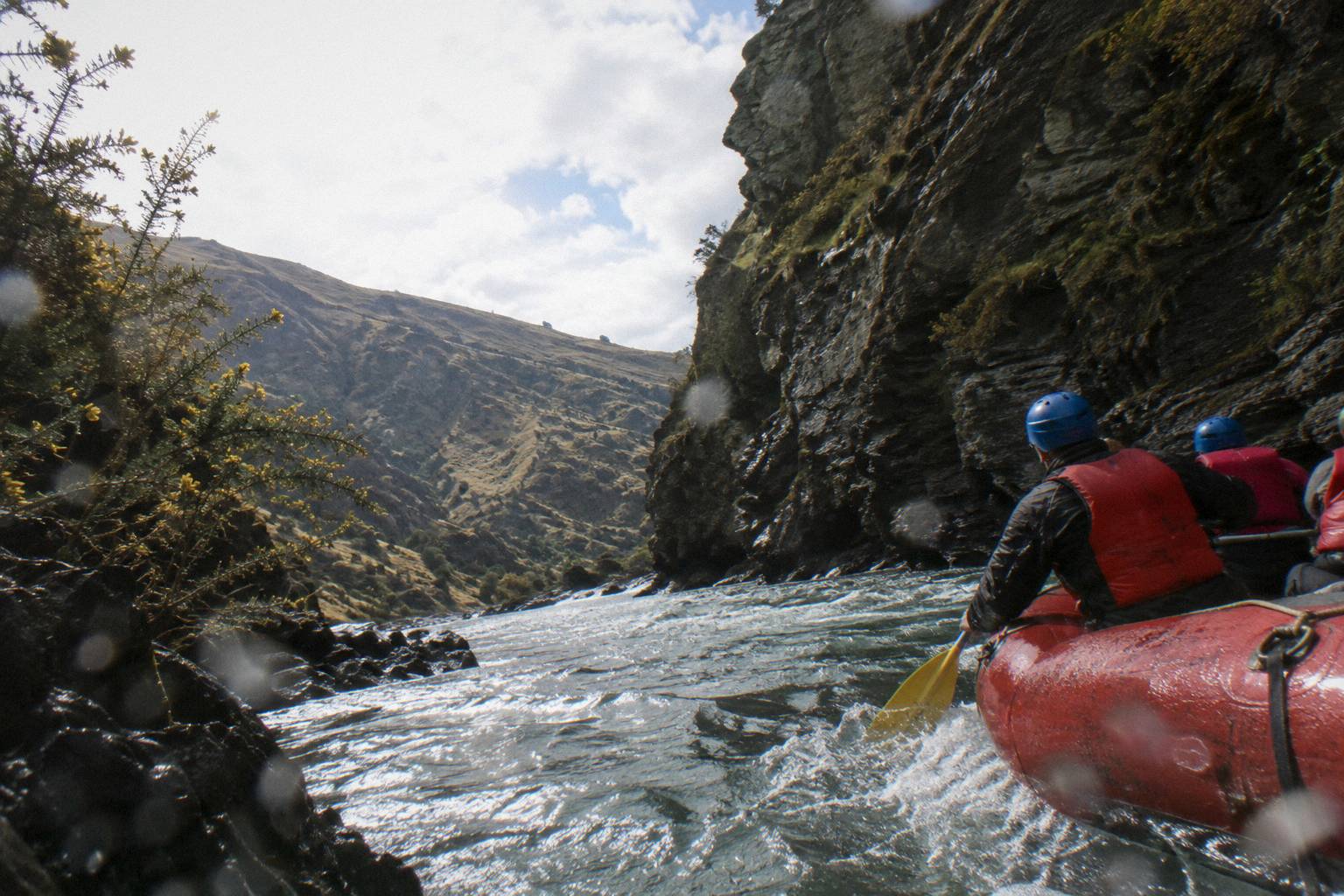
RealNZ describes the section plainly: grade 3 to 5, with "Grade 5 is the highest grade commercially rafted in the world", six grade 3 to 5 rapids, the 170 m tunnel, and rapids beyond it before take-out. Rafts carry a maximum of eight people including the guide, and a safety kayaker travels on each trip. Guests must be water-competent, able to swim 25 m unaided, with moderate fitness, and the operator says the Shotover carries a higher risk of falling out than the Kawarau. Trips depend on weather, river level and water temperature, portages may be required, and minimum guest numbers apply.
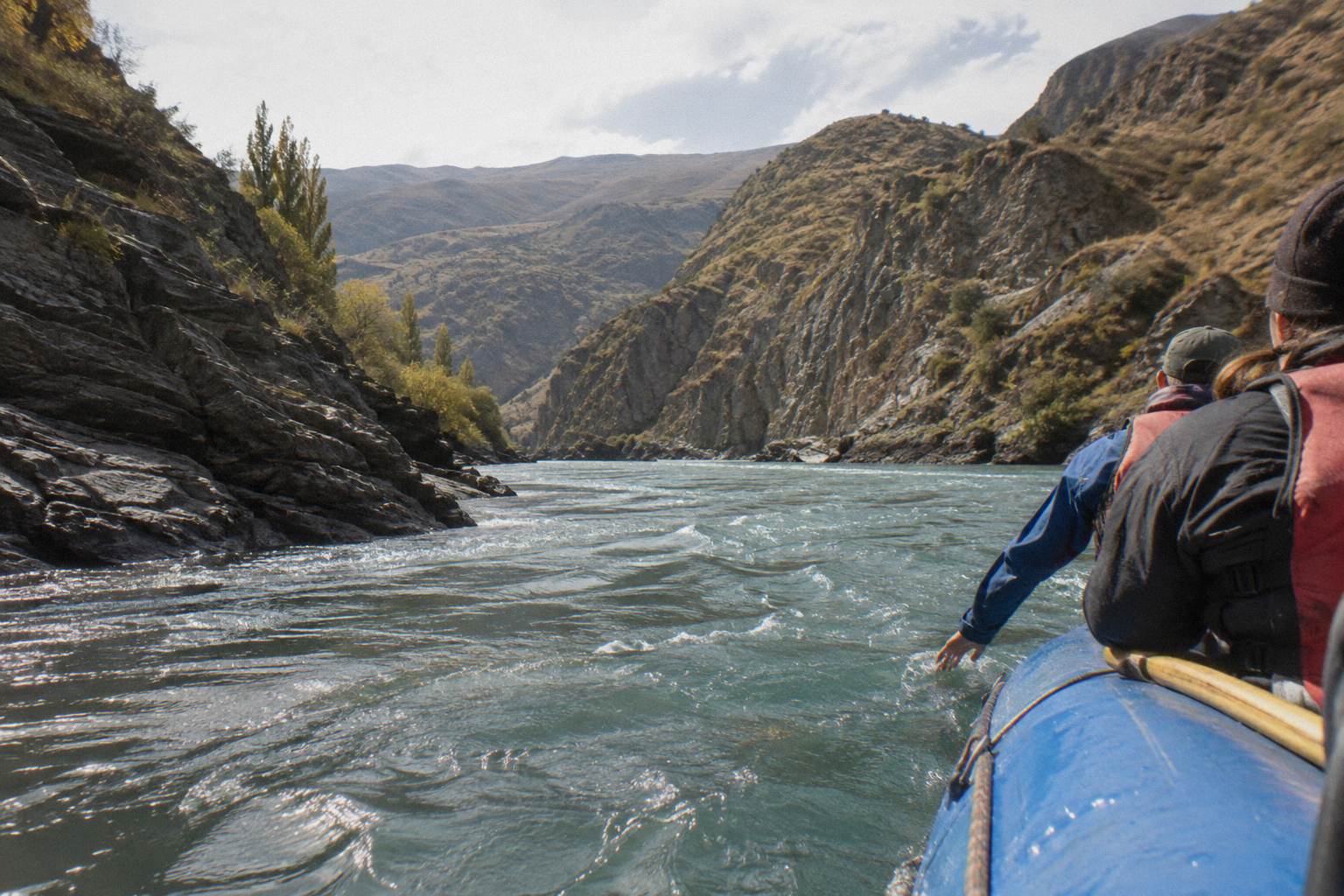
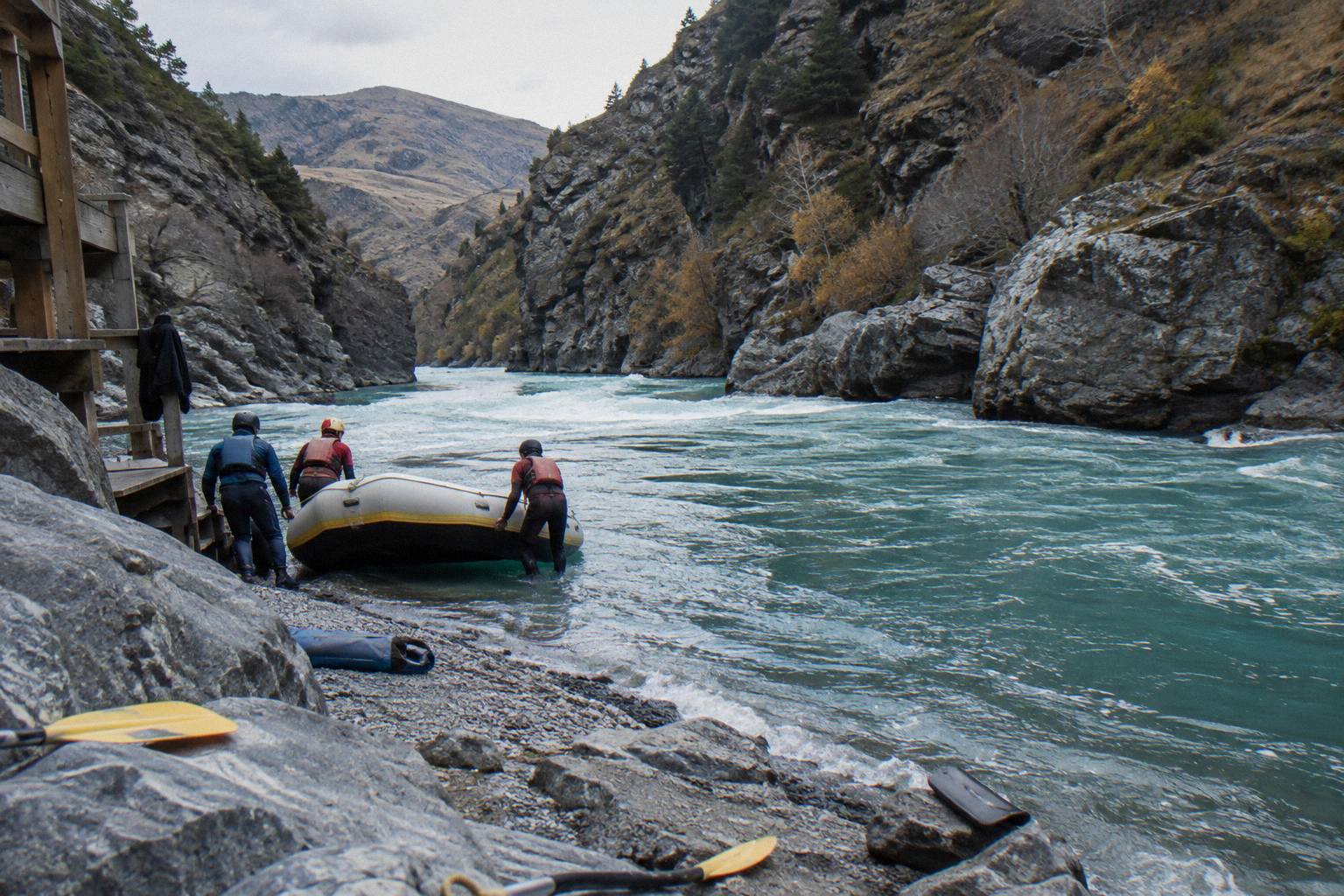
Nothing can be taken on the raft, no camera and no GoPro, which is worth knowing before the tunnel. Equipment is provided in full: wetsuit, wetsuit jacket, spray jacket, paddle, helmet, wetsuit booties and life jacket, with hot showers and a valuables locker at the base. There are toilets at the raft base and at Deep Creek. Spectators cannot follow on the river, but viewers can stand near the last rapid as rafts exit the tunnel, and the timing varies with the day.
The Challenge Rafting version strings the same canyon access into a rapid sequence with names: the "Mother" rapids, a series of six grade 4 to 5 drops including Aftershock, Squeeze, Toilet and Pinball, then the tunnel, then the drop into Cascade Rapid. Professional photos are included in its booking, which matters given the no-camera rule on the water. It runs November through April and does not operate in winter, which the operator defines as May to early September, a narrower season than many visitors assume.
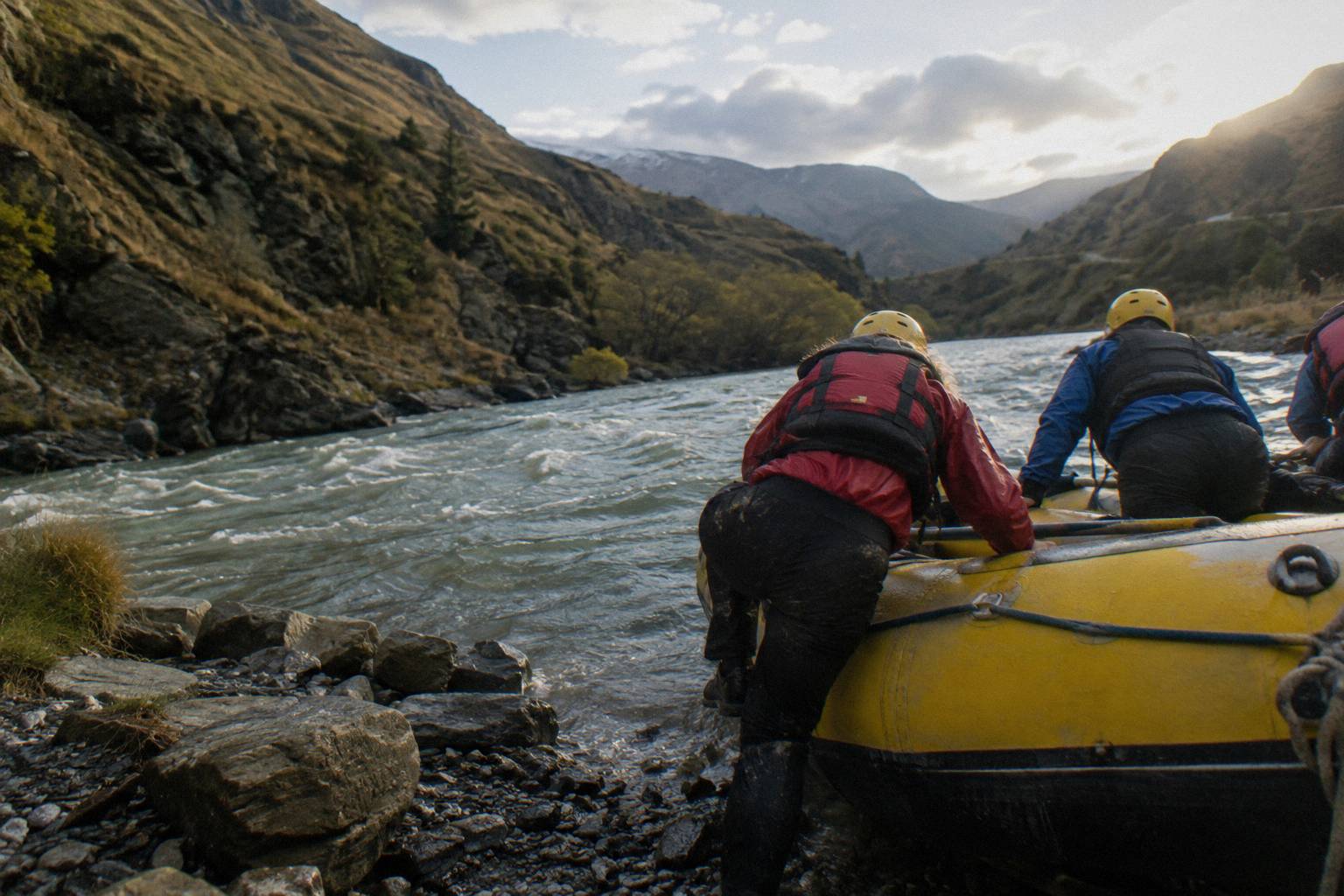
Both trips check in centrally rather than at the canyon. RealNZ guests meet at the RealNZ Queenstown Visitor Centre, 88 Beach Street, at least 20 minutes before departure, with hotel pickup excluded. Challenge Rafting guests check in at 88 Beach Street or may self-drive to the raft base at 1 Arthurs Point Road, Arthurs Point, which is about a 10 minute drive from Queenstown but is not the canyon put-in itself.
What Should You Know Before Booking Any Skippers Trip?
Know three things before booking: the eligibility rules are strict on the grade 3 to 5 water (minimum age 13, weight 40 to 120 kg verified at check-in, no pregnancy on grade 3 or above, heart conditions excluded), the meeting points are central Queenstown rather than the canyon, and prices are from-figures that move with date and group. The canyon combo relaxes the age rule to 3 and up.
The eligibility picture is where most booking friction lives, so it deserves its own table:
| Requirement | Shotover grade 3 to 5 trips | Canyon combo (grade 1 to 2) |
|---|---|---|
| Minimum age | 13 years | 3 years |
| Weight | 40 kg to 120 kg, verified at check-in | No limit published |
| Swimming | Must swim 25 m unaided | Water confidence not necessary |
| Guardianship | Under 16 with a guardian on RealNZ, under 17 on Challenge Rafting, guardian-signed waiver under 18 | Suitable from 3 years upwards |
| Health exclusions | Heart condition or heart medication excludes; pregnancy excluded on grade 3 or above | Gentle trip by operator description |
| Meeting point | 88 Beach Street, or self-drive to 1 Arthurs Point Road on Challenge Rafting | Camp Street, Queenstown |
| Included gear | Wetsuit, jacket, spray jacket, booties, helmet, life jacket, paddle | Snacks included on the 5-hour trip |
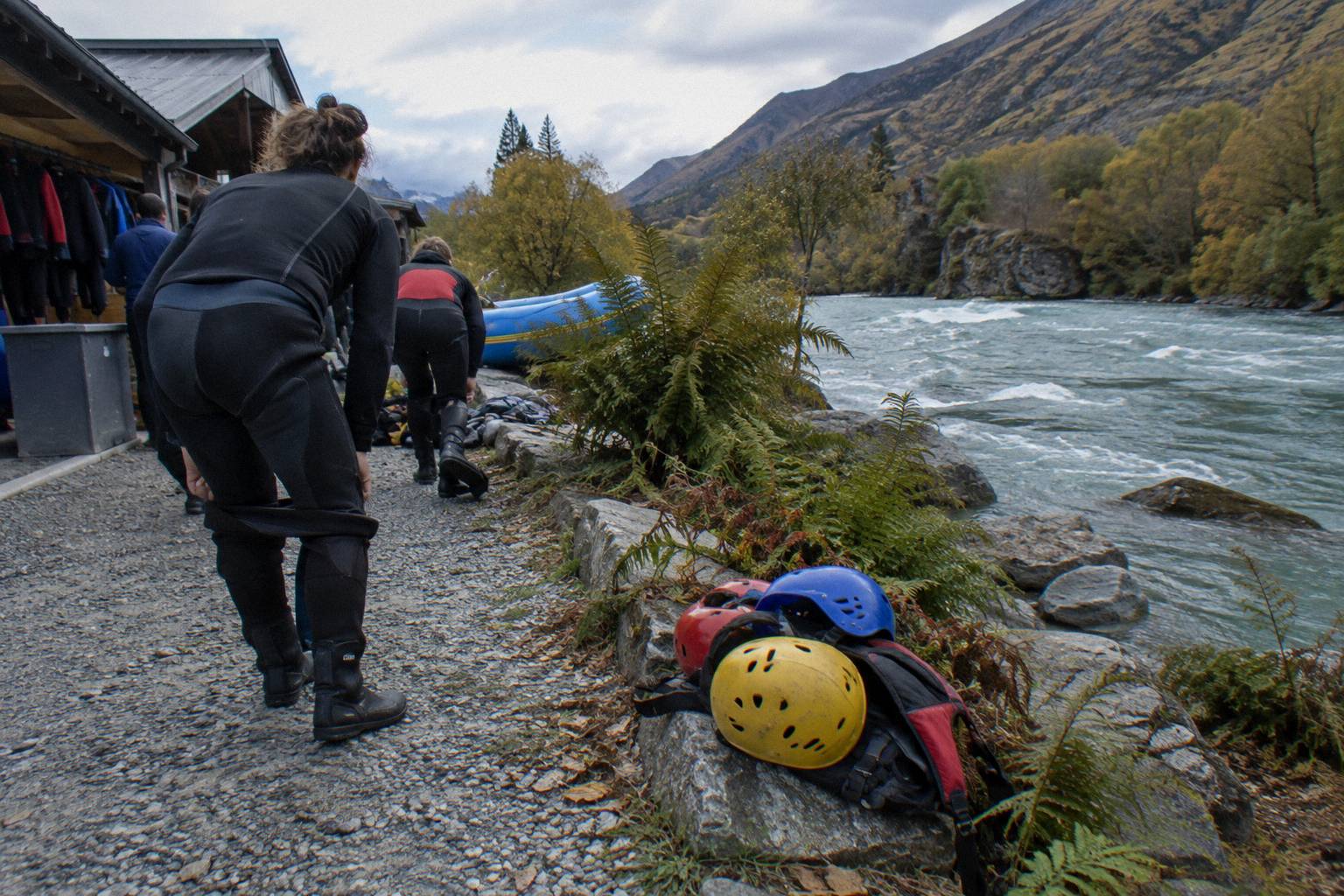
What to wear is simple and non-negotiable: swimwear only under the wetsuit, no cotton, and glasses need a sports strap or stay behind. Extra-large and child-size wetsuits are available, and safety briefings must be understood in English. The what to wear white water rafting guide covers the reasoning, and there is no maximum age; the operators ask for a good level of physical fitness and assess disabilities case by case.
One safety layer sits above all of it. Adventure activity operators in New Zealand must be registered with WorkSafe's public register, which lists operators that have passed a safety audit and are authorised to provide adventure activities; it is an offence to operate without registration. The register is searchable by name, activity and location, so anyone can look up an operator before booking any canyon trip.
For anyone comparing the family option against the grown-up one, the decision usually comes down to age and appetite, not price: the combo and the RealNZ half day are NZ$329 and NZ$299 respectively, close enough that the grade of water, not the fare, should decide it.
For the Challenge Rafting variant, the same canyon road, the same tunnel and a harder rapid sequence at the same from-price, with photos thrown in, its live availability is worth a look alongside the half day.
What Mistakes Do People Make With Skippers Canyon?
The common mistakes are self-driving Skippers Road without experience, expecting hotel pickup when every Shotover trip excludes it, booking a grade 3 to 5 trip for a non-swimmer or a 12-year-old, and assuming the canyon combo delivers big rapids because it shares the river's name. Each one is avoidable at booking time rather than on the day.
The first mistake is the road. Skippers Road is unsealed, narrow and winding for its 13 km, and the official advice is that only experienced drivers should attempt it. The raft shuttles exist to solve that problem, and using them costs nothing extra. The second is logistics: hotel pickup is excluded on the Shotover and Challenge trips, so the 88 Beach Street check-in, at least 20 minutes early, is the guest's responsibility, and Challenge guests can alternatively self-drive to the Arthurs Point base.
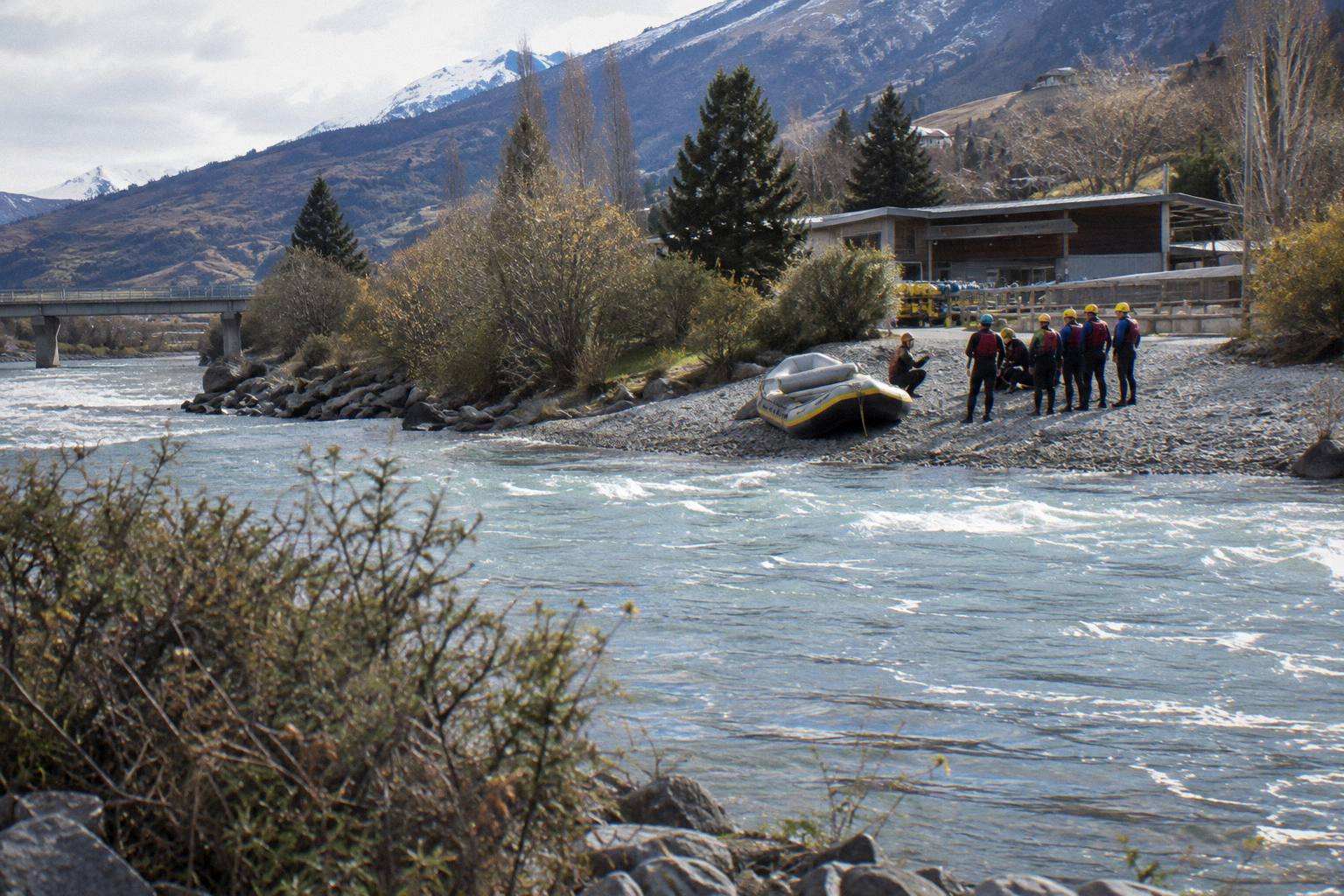
The third is mismatched expectations. The canyon combo is grade 1 to 2 and built for ages 3 and up; the half day is grade 3 to 5 with a real chance of falling out, in the operator's own comparison. Booking the wrong one for the group ruins a good trip. The fourth is timing: Challenge Rafting runs November through April only, while the RealNZ pages publish no operating months, so winter visitors should confirm what is running before building a day around it.
A final planning note: nobody carries a camera on the Shotover rafts, so photos come from the operator, and Challenge Rafting includes them in its booking. The glasses, cameras and valuables rafting guide runs through the locker logic if that matters to your group.
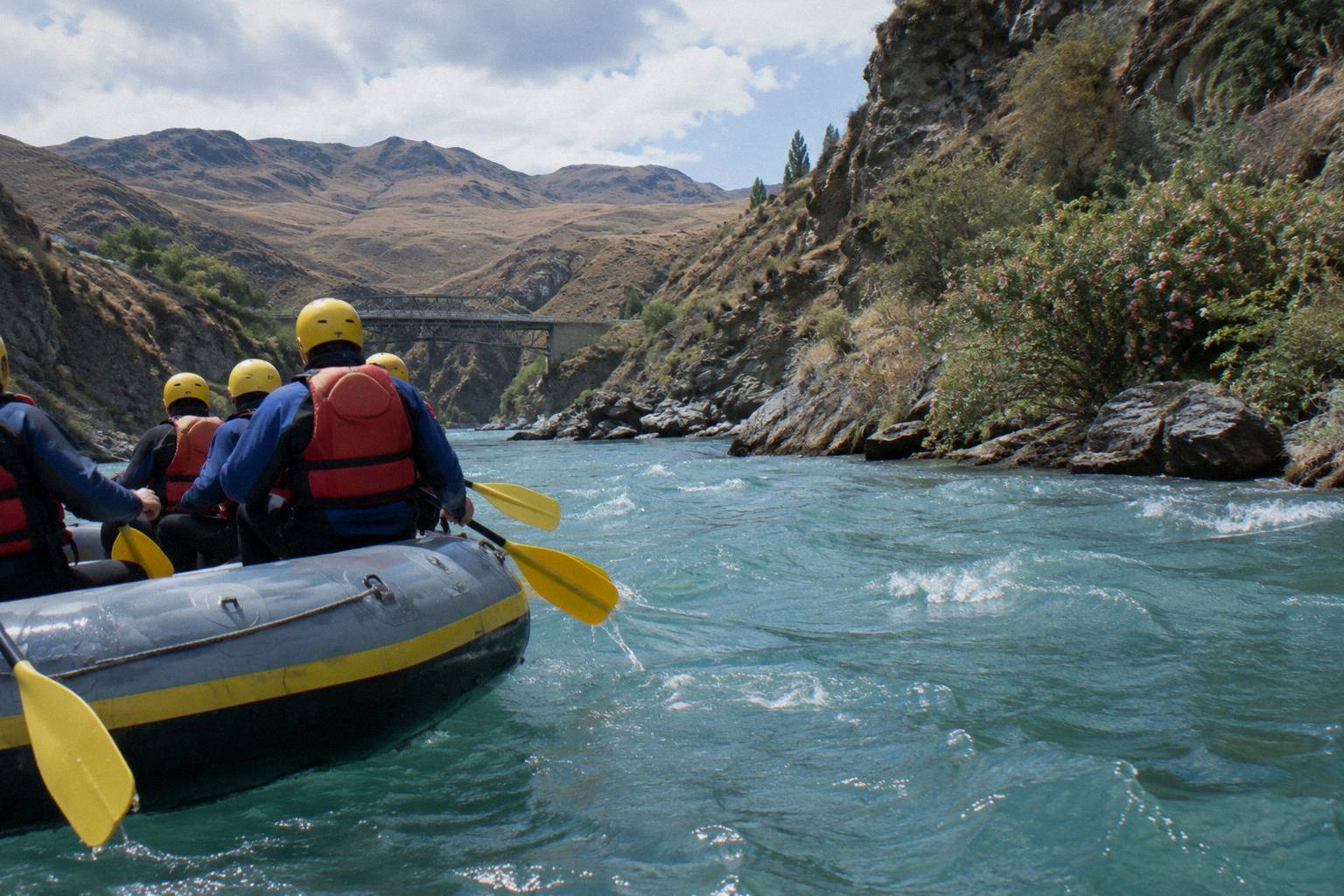
And if the canyon's road and grade 5 reputation feel like too much for your group, the Kawarau option above runs grade 2 to 3 from NZ$249, the friendlier entry to Queenstown white water.
Common Questions About Skippers Canyon
Where Is Skippers Canyon?
Behind Coronet Peak, about 25 minutes from Queenstown, in the 9,100 hectare Mount Aurum Recreation Reserve. The historic Skippers suspension bridge leads to the remains of Skippers Township.
Can You Drive Skippers Road Yourself?
Legally yes, but the Department of Conservation calls it narrow and winding, notes it is unsealed for its 13 km length, and advises only experienced drivers attempt it. Raft shuttles use the road for every trip.
Which Raft Trips Go Through Skippers Canyon?
The Shotover grade 3 to 5 rafts reach the Deep Creek put-in by Skippers Canyon Road, and the Rafting And Skippers Canyon Combo drives 45 minutes into the gorge for grade 1 to 2 water. Kawarau River trips do not use the canyon.
How Old Do You Have To Be For Skippers Canyon Rafting?
Three years for the canyon combo, which the operator calls suitable for everyone from 3 years upwards. Every grade 3 to 5 Shotover trip sets the minimum at 13.
What Grade Is The Rafting In Skippers Canyon?
It depends on the trip: grade 1 to 2 on the family combo, grade 3 to 5 on the RealNZ half day, and grade 4 to 5 on the Challenge Rafting sequence through rapids named Aftershock, Squeeze, Toilet and Pinball.
What Did The Oxenbridge Tunnel Do?
Built from 1906 to divert the Shotover away from the gold-fabled Jeweller's Shop rapids, it failed as a mine by 1912 but still carries the river, and rafts now paddle its 170 m length on the way to the take-out.