What To Bring Rafting, And What To Leave On The Bus
Bring swimwear and a towel-free mindset: the operators supply the wetsuit, booties, helmet and life jacket, a locker holds your valuables at the base, and nothing, not even a camera, rides the raft with you.
Short answer
Bring swimwear to wear under the wetsuit, a sports strap if you wear glasses, and a change of clothes for after, since hot showers wait at the raft base. Everything technical is provided: wetsuit, jacket, helmet, booties, paddle and life jacket. Cameras, GoPros and phones stay behind, and snacks are included only on the Rafting And Skippers Canyon Combo.
The shortest packing answer for a Queenstown rafting trip is also the strictest: swimwear under the wetsuit, a sports strap for glasses, and nothing else that has to survive the river. Every technical item, the wetsuit, wetsuit jacket, spray jacket, helmet, booties, paddle and life jacket, is supplied by the operators, and a valuables locker sits at the Arthurs Point raft base for whatever you cannot take on the water. Cameras and GoPros are ruled out entirely on the raft, so the phone stays on the bus.
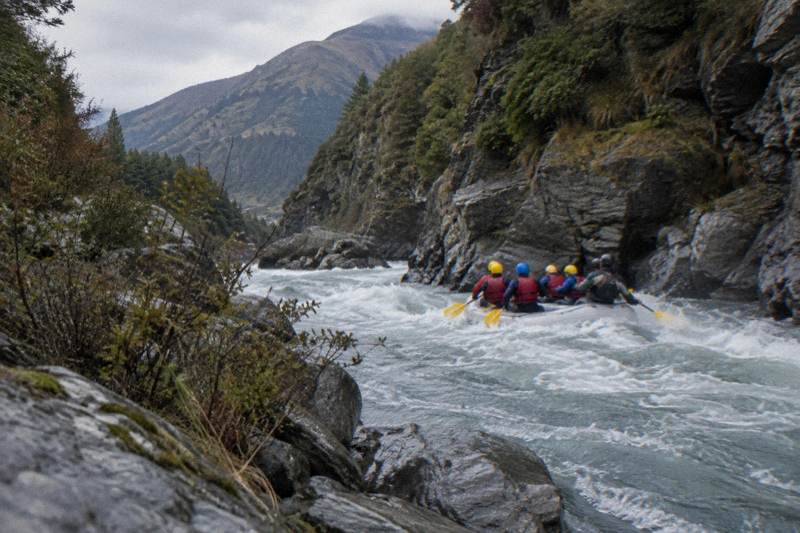
That discipline surprises people. A grade 3 to 5 run down the Shotover, 14 km through six rapids and the 170 m Oxenbridge Tunnel, gives you nowhere to stow things, and the operator's rule is flat: nothing goes on the raft. Everything you genuinely need to think about happens before check-in and after the take-out. Queenstown White Water Rafting trips are supplied, staffed and geared from the base, so your packing job is small but it has to be right.
The mental shift is the hardest part. Most activities reward you for bringing more: a daypack for a hike, a camera bag for a tour, extra layers for a ski field. Rafting inverts that instinct completely, because every additional item you carry is either a risk on the water or dead weight on the bus. The people who enjoy the day most are usually the ones who turned up with one small bag and nothing in their hands.
| Quick fact | Detail |
|---|---|
| Wear under the wetsuit | Swimwear only, no cotton |
| Glasses | Sports strap, or leave them behind |
| On the raft | Nothing: no camera, no GoPro, no phone |
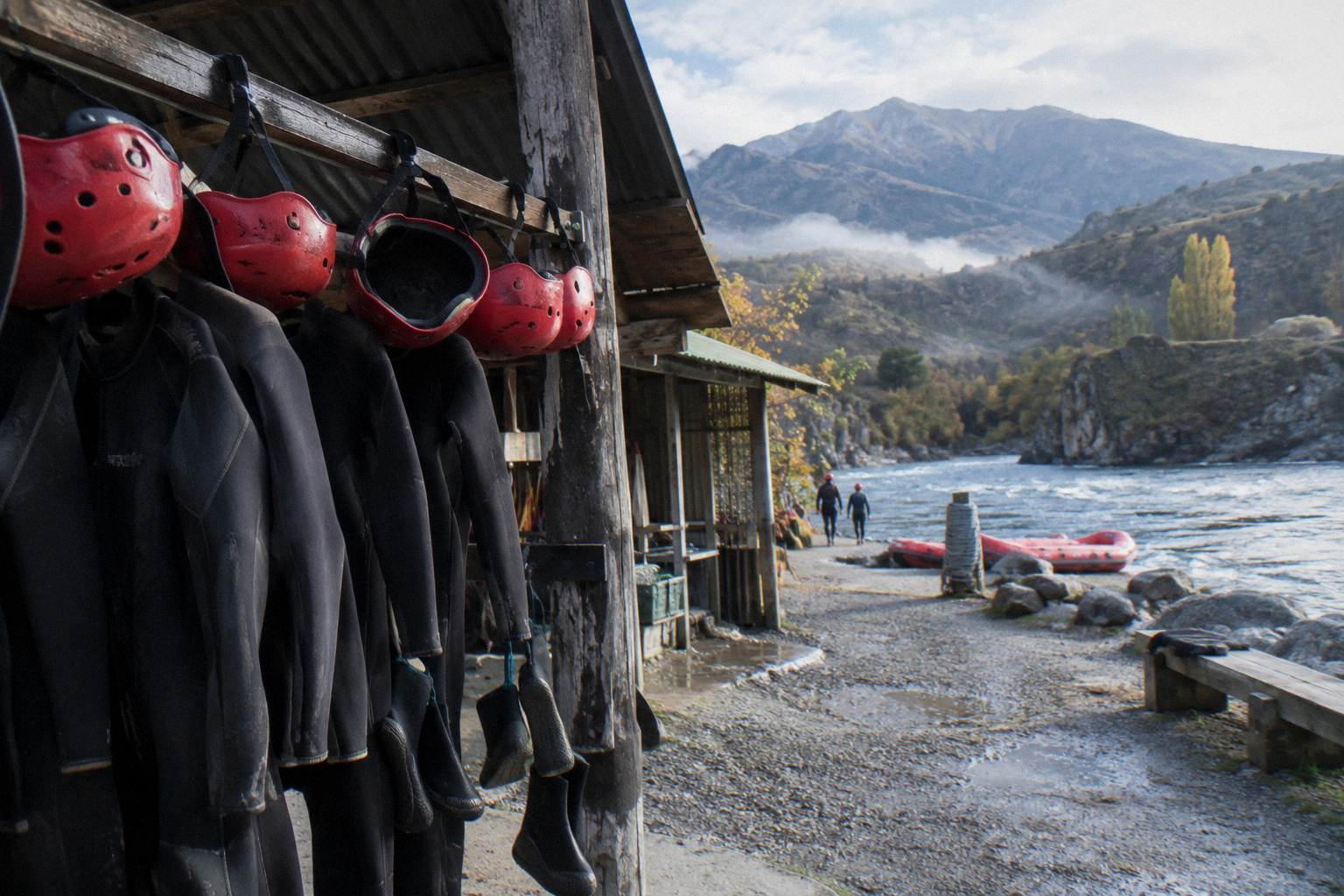
| Supplied | Wetsuit, wetsuit jacket, spray jacket, helmet, booties, paddle, life jacket |
| After the trip | Hot showers at the raft base |
| Valuables | Locker at the raft base |
| Snacks | Included only on the Rafting And Skippers Canyon Combo |
If you want the deeper background on rivers and grades before you pack, start with the rafting grades explained in plain words or the full Shotover River rafting guide.
What Should You Actually Bring Rafting?
You should bring swimwear, a towel-free attitude and very little else: the operators supply every technical item from wetsuit to life jacket, a locker protects your valuables at the base, and the only personal items that matter are the swimwear under your suit and a sports strap for glasses. Hot showers wait at the end. Pack as if everything you carry either gets soaked or gets locked up.
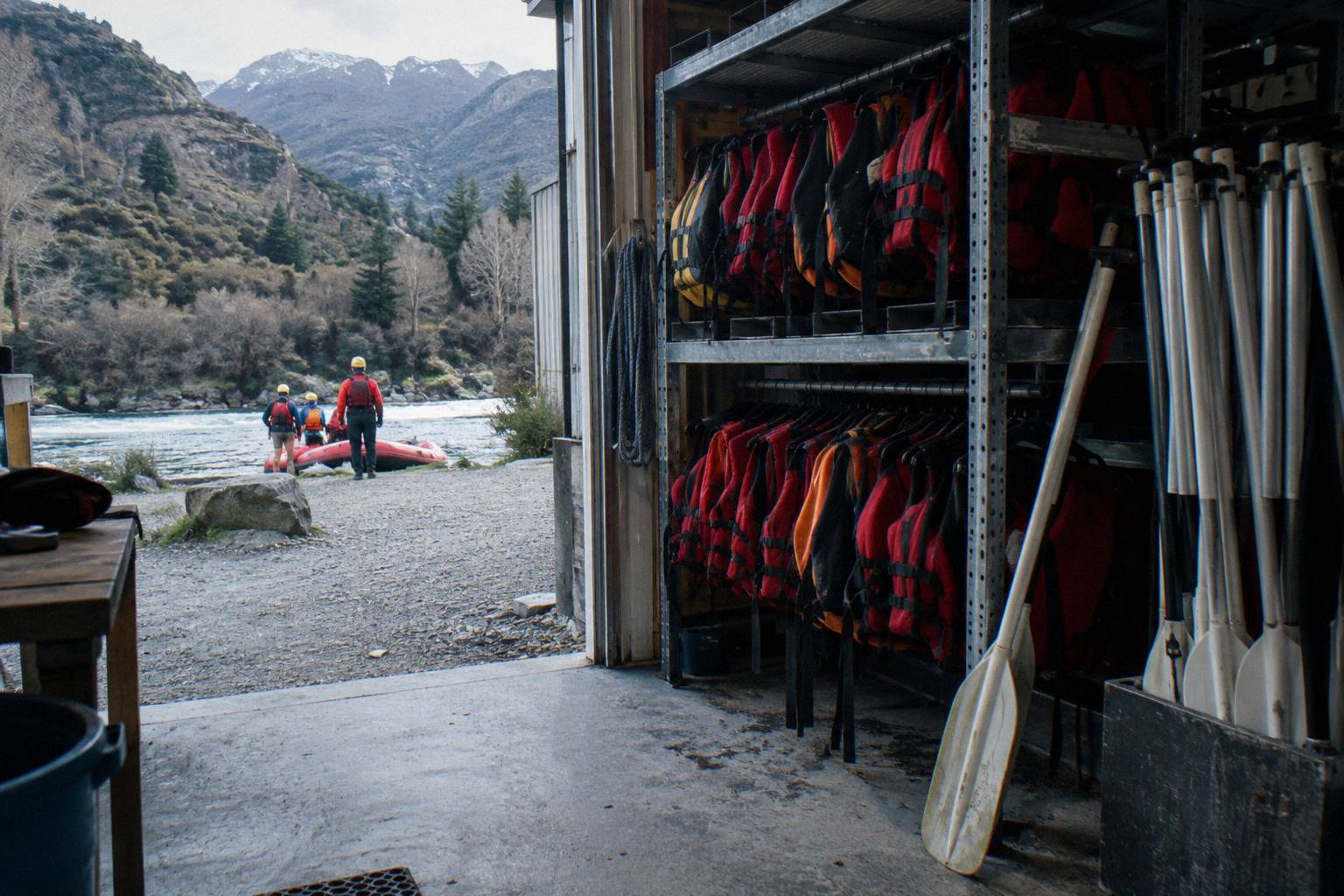
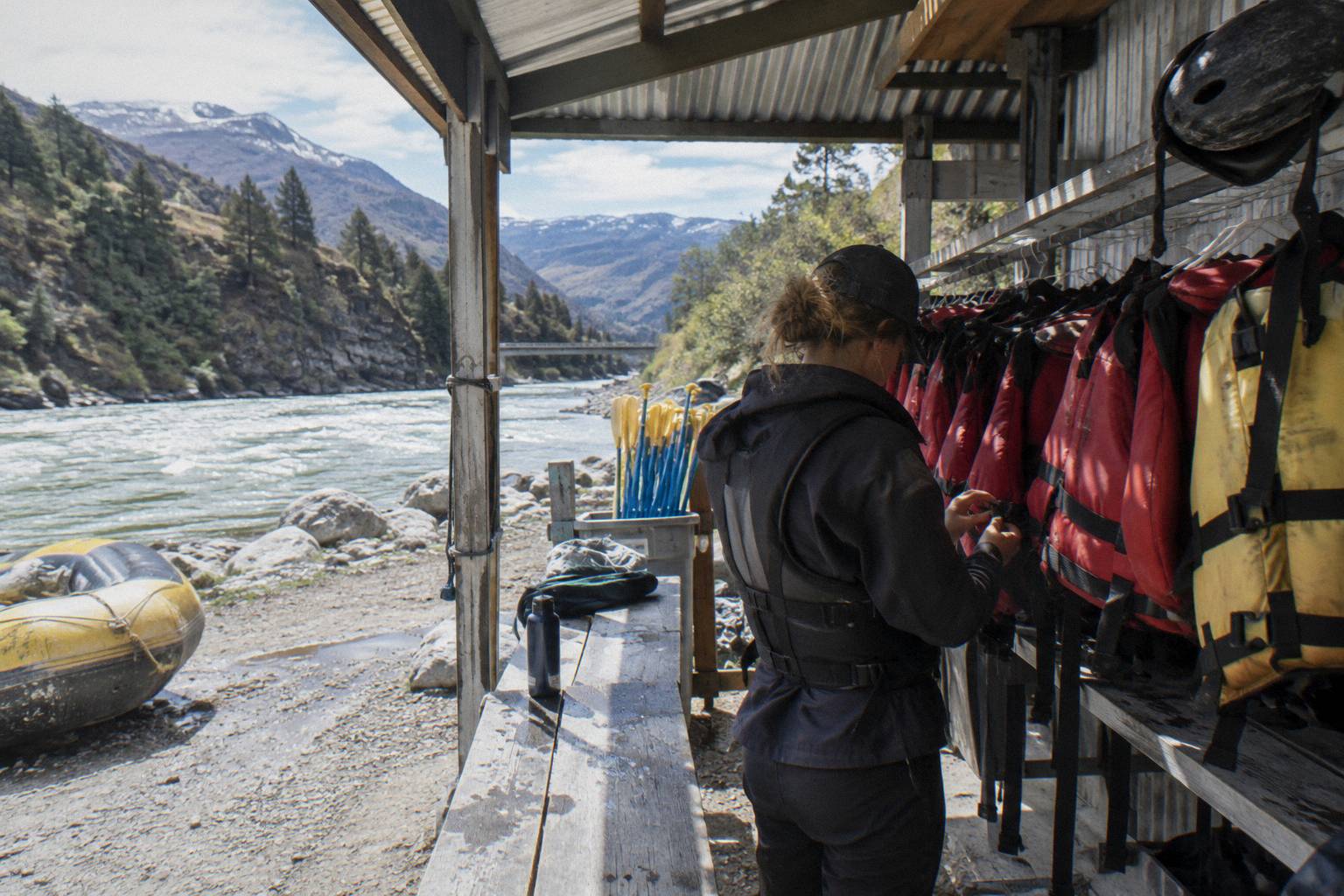
The reason the list is short is that the gear list on the operator side is long. RealNZ provides a full wetsuit, wetsuit jacket, spray jacket, paddle, helmet, wetsuit booties and a life jacket on both its Shotover and Kawarau trips, and hot showers at the raft base afterwards. Challenge Rafting matches that on its Shotover trip: the booking includes a safety briefing, full wetsuit, booties, life jacket and equipment. You are not assembling a kit, you are wearing one.
That distinction changes how you pack the night before. Instead of laying out equipment, you are laying out a base layer and an after-bag, then double-checking that nothing electronic made its way into a pocket out of habit. The checklist is short enough to run in a minute, and every item on it earns its place.
The one clothing decision that is genuinely yours is the base layer. Operators are explicit: swimwear only under the wetsuit, and no cotton. Cotton soaks, holds water against your skin and defeats the point of the suit, so a cotton t-shirt is the single most common item people bring that they should not. A swimsuit, board shorts or similar is all the operator wants next to your skin.
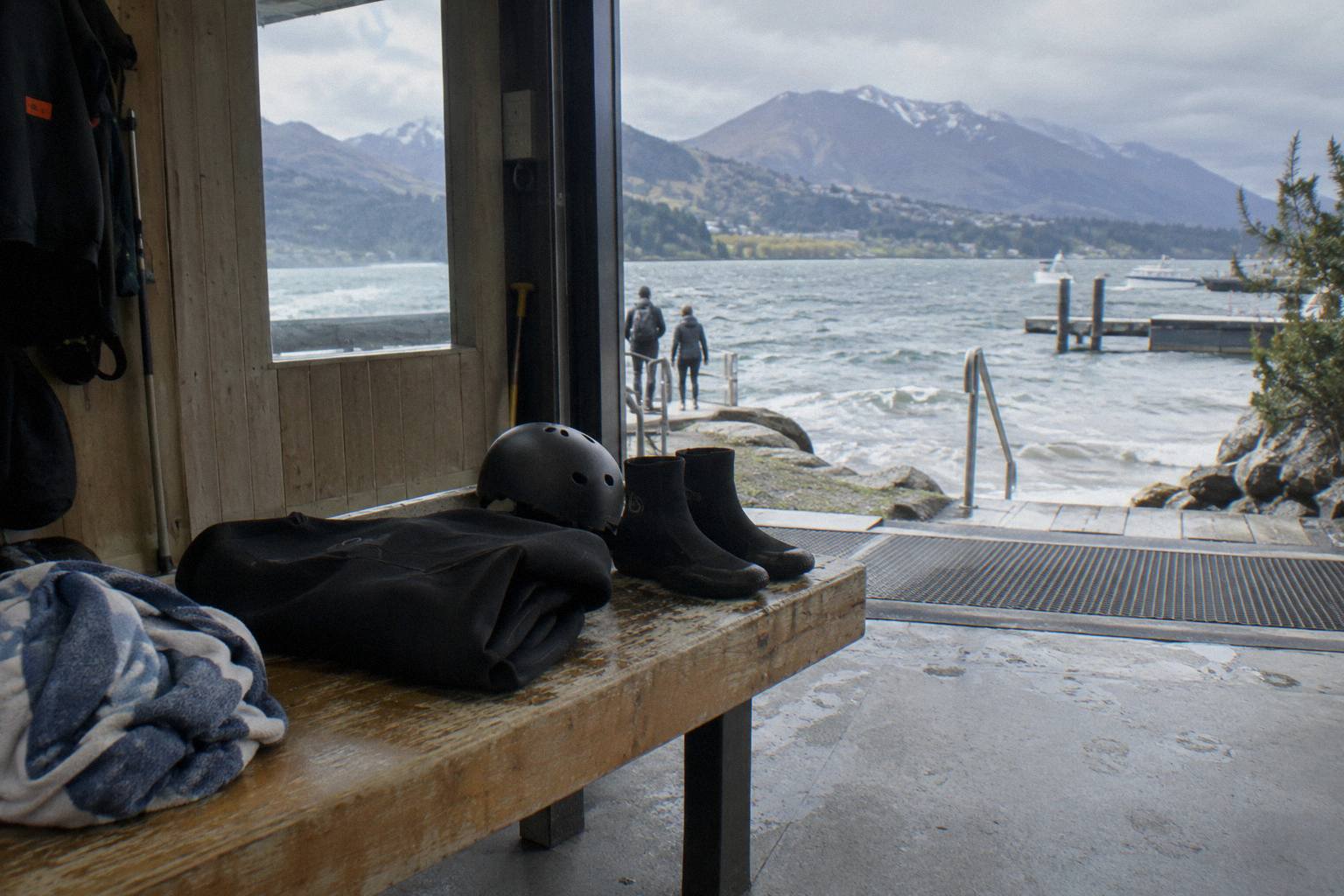
Footwear is decided for you: wetsuit booties are part of the kit, so there is no shoe question to answer and no footwear to pack. Extra-large and child-size wetsuits exist for fit, so sizing is handled at the base rather than planned at home. The full clothing picture, including what happens in cold months, is covered in the what to wear white water rafting rundown.
What Do The Operators Provide On Every Trip?
Every commercial Queenstown rafting trip provides the complete technical kit: wetsuit, wetsuit jacket, spray jacket, helmet, wetsuit booties, paddle and life jacket, plus hot showers at the base afterwards. Challenge Rafting adds professional photos included in its booking, and the Rafting And Skippers Canyon Combo adds snacks. There is no scenario where you supply your own gear.
The provision is uniform enough that you can plan against it. On the Shotover River Whitewater Rafting Adventure, a 4.5 hour experience from NZ$299 per person, everything from the spray jacket down to the booties is handed over at the base, and rafts carry at most eight people including the guide, with a safety kayaker on each trip. The Shotover River Whitewater Rafting Adventure is the reference point most people book against. The operator's own gear page spells out the full kit, which you can read on the RealNZ Shotover rafting page.
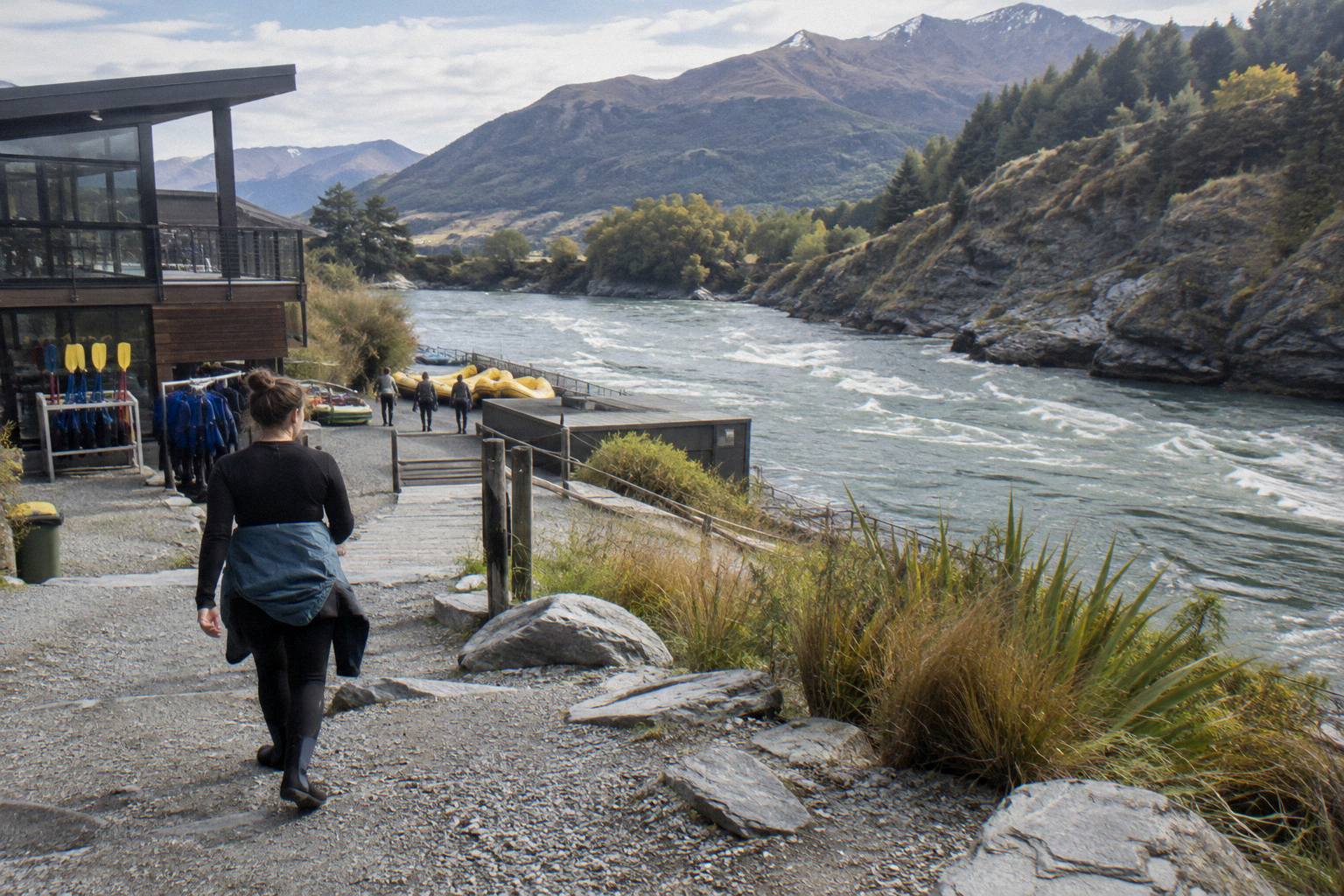
It is worth pausing on what that kit actually replaces. A wetsuit, jacket and booties bought privately would cost a significant sum and need fitting, drying and hauling between trips; here the operator absorbs all of it, and the spray jacket over the wetsuit does the work of the rain shell you might otherwise have considered. The paddle is supplied too, so even the tool of the activity is in the issued kit.
| Item | Shotover Rafting, Half Day | Rafting Plus Jet Boat Combo | Challenge Rafting, 4 Hours | Kawarau Rafting Only, Base Fare | Rafting And Skippers Canyon Combo |
|---|---|---|---|---|---|
| Wetsuit and jacket | Included | Included | Included | Included | Included |
| Helmet, booties, life jacket, paddle | Included | Included | Included | Included | Included |
| Hot showers | At the raft base | At the raft base | At the Rafters Lodge | Included | Included |
| Photos | Not taken on the raft | Not taken on the raft | Included in the booking | Not taken on the raft | Not taken on the raft |
| Snacks | Not included | Not included | Not included | Not included | Included |
| Free cancellation | Free up to 24 hours before start | Free up to 24 hours before start | Free up to 24 hours before start | Free up to 24 hours before start | Free up to 24 hours before start |
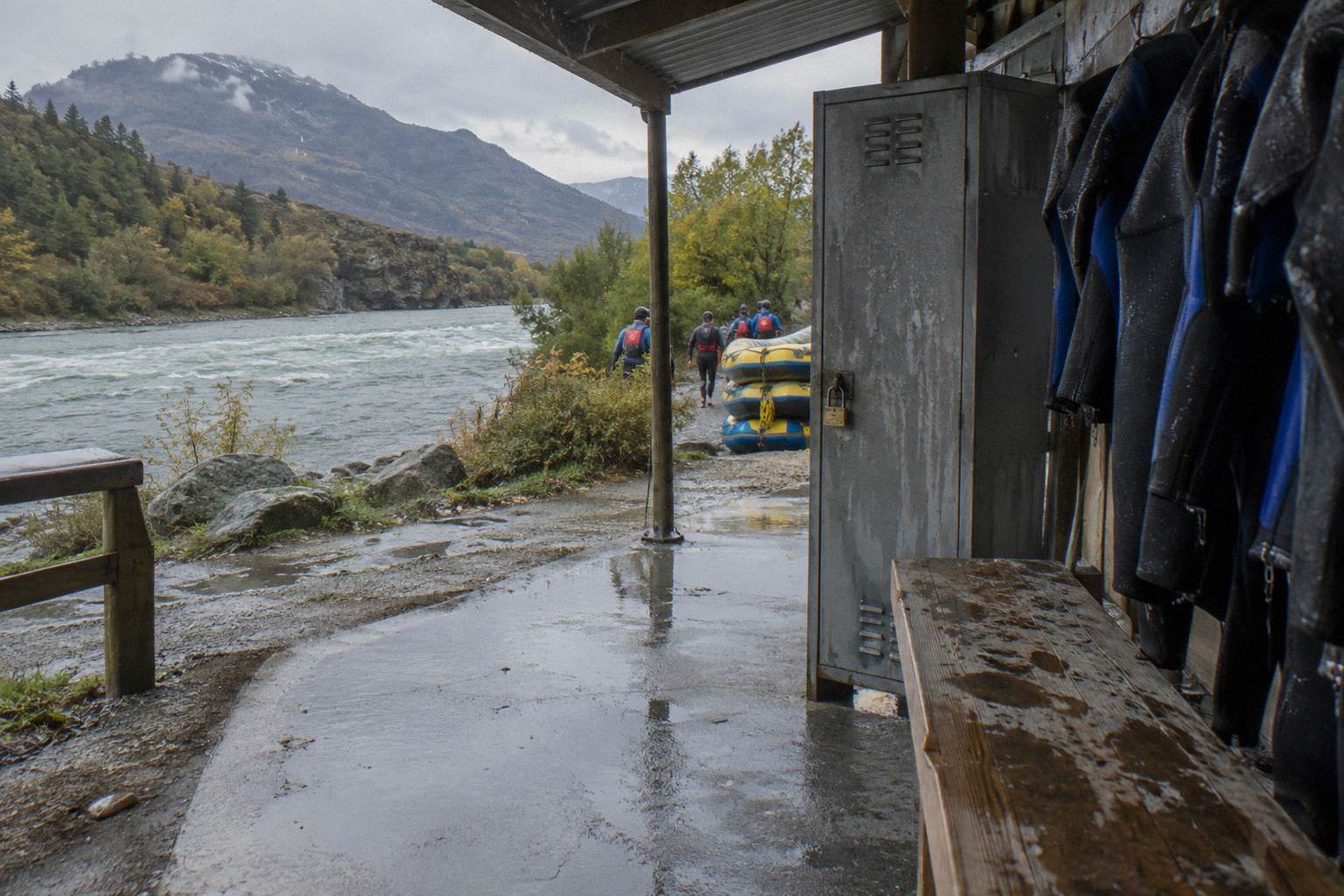
One practical note sits behind the showers: the base at Arthurs Point, about a 10 minute drive from Queenstown, is where the trip ends and where you change back, so dry clothes for after are worth leaving on the bus rather than carrying to the river. The trip itself ends after the rapids beyond the tunnel, and the bus returns you to where you started, which means your bag completes a full loop without ever touching the water.
Where Do Glasses, Cameras And Valuables Go?
Glasses need a sports strap or they stay behind, cameras and GoPros are banned from the raft outright, and everything else valuable goes in the locker at the raft base. There is no waterproof pocket, no dry bag on the raft and no exception, so the packing rule is simple: if it cannot get wet and cannot get locked up, do not bring it on the trip.
The camera rule is stated plainly by the operator: nothing, camera or GoPro included, can be taken on the raft. That kills the usual plan of clipping an action camera to the front tube. Your options are the photos sold or included on some trips, Challenge Rafting includes professional photos in its booking, or the spectator spot near the last rapid where rafts exit the tunnel, though no spectators travel on the river and timing varies.
The ban is less of a loss than it first appears. A guide-focused trip gives you something a helmet-mounted camera rarely does: the actual experience rather than a recording of it, and on the Challenge Rafting trip the professional photos come with the booking, so the memory is captured by someone whose hands are free. Between the included photos on that trip and the spectator vantage point on the Shotover, there are workable answers for almost everyone.
Glasses are the item most people get wrong. The operator's guidance is a sports strap or leaving them behind, and on water where the operator itself notes a higher risk of falling out than on the Kawarau, a strap is the only way a pair of spectacles survives the first rapid. Contact lenses are the quieter workaround most swimmers choose.
The full run of small-item decisions, straps, screens and locker logistics, is expanded in the glasses, cameras and valuables on rafting trips companion.
What Should You Leave On The Bus?
Leave behind anything cotton, anything electronic, your wallet beyond what check-in needs, and any shoe you care about, because the bus or the base locker is the only dry storage and the operator supplies booties for the water. Spectators cannot ride along, so travelling companions who are not rafting wait in Queenstown. The bus is your cupboard for the day.
Cotton tops the leave-behind list for a functional reason: it traps water against your skin under the wetsuit and makes you colder, not warmer. Electronics follow because of the raft ban on cameras and the sheer soak risk on a grade 3 to 5 river. Jewellery and watches go the same way, into the valuables locker at the raft base rather than onto your wrist.
| Bring | Leave on the bus or in the locker |
|---|---|
| Swimwear (worn under the wetsuit) | Cotton t-shirts or socks |
| Sports strap for glasses | Phones, cameras, GoPros |
| Towel and dry clothes for after | Jewellery and watches |
| Any medication check-in should know about | Street shoes and sneakers |
| Proof of age if you look under 13 | Spectacles without a strap |
One document belongs in your pocket rather than the locker: proof of age, if there is any chance you or a family member looks under the 13-year minimum, since the operator may ask for it at check-in. Weight is verified at check-in against the 40 kg minimum and 120 kg maximum, which needs nothing from your bag, only from you. It is also worth remembering the eligibility screens that no packing can fix: any heart condition other than blood pressure managed with medication excludes, pregnancy excludes from grade 3 water and above, and guests must understand the safety briefing in English.
A useful framing is to split your bag into two zones. Zone one is what touches your body: swimwear, worn or folded flat, plus the glasses strap. Zone two is what waits for you: towel, dry clothes, warm layers for the drive back. Anything that fits neither zone, chargers, keys beyond the set you need, souvenirs bought that morning, should not have come at all.
How Does Packing Change For Showers And The Trip Home?
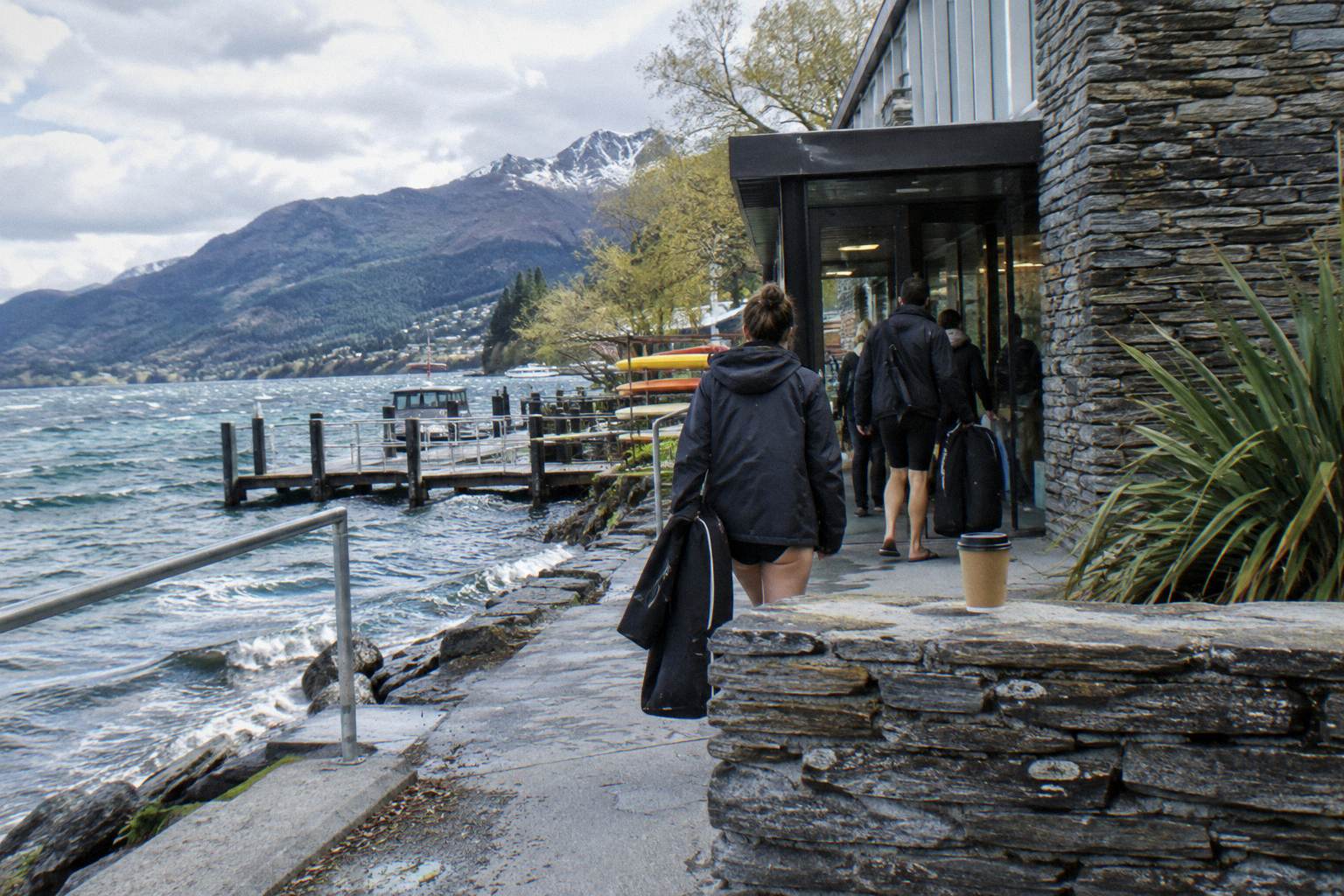
Pack a small post-river kit, towel, dry underwear and warm layers, and leave it on the bus or at the base, because hot showers and changing facilities wait at the Arthurs Point raft base and the Rafters Lodge. The Kawarau itinerary even builds a 30 minute break into the day. You will be wet, then clean, then cold, in that order.
The shower detail is the most under-used fact in rafting packing. RealNZ provides hot showers at the raft base on the Shotover and lists hot showers on both Kawarau trips; Challenge Rafting's guests shower at the Rafters Lodge. None of that helps if your dry clothes are at your hotel, and hotel pickup is excluded on most trips, so the bus is the place for the after-bag.
The Kawarau Rafting Only day has a built-in rhythm worth packing around: meet at 88 Beach Street, bus 20 minutes to the base, a 30 minute safety briefing, bus 20 minutes to the river, an hour of rafting, a 20 minute bus ride, a 30 minute break, and a 20 minute ride back to town. The 30 minute break is the natural window for the after-kit. The Kawarau Rafting Only base fare runs from NZ$249 per person, the lowest entry price on the water.
Toilets exist at the raft base and at Deep Creek, so the pre-raft logistics question is answered too. The broader shape of the day, meeting 20 minutes early at 88 Beach Street and the drive times to each river, is mapped in the rafting trip timeline and pickup explained guide. The return leg of the Kawarau day runs about 30 minutes back through the Gibbston Valley wineries, which is a pleasant place to be sitting in warm clothes rather than a damp wetsuit.
What Do Families With Small Children Need To Bring?
Families with children as young as three should pack swimsuits under clothes rather than full base layers, skip the water-confidence worry, and bring snacks only if they are not on the Rafting And Skippers Canyon Combo, which includes them. The gentle grade 1 to 2 Skippers Canyon trip has no published weight limit and welcomes everyone from three years upwards.
The Family Adventures trip is the outlier in every packing dimension. Its booking text says to wear a swimsuit under clothes, water confidence is not necessary, and the rapids are grade 1 and 2, a gentle trip through gold mining relics and a Lord of the Rings filming location. At 5 hours from Camp Street with a 45 minute drive into the canyon and 1.5 hours of rafting, it is also the only trip that includes snacks, which changes what parents carry.
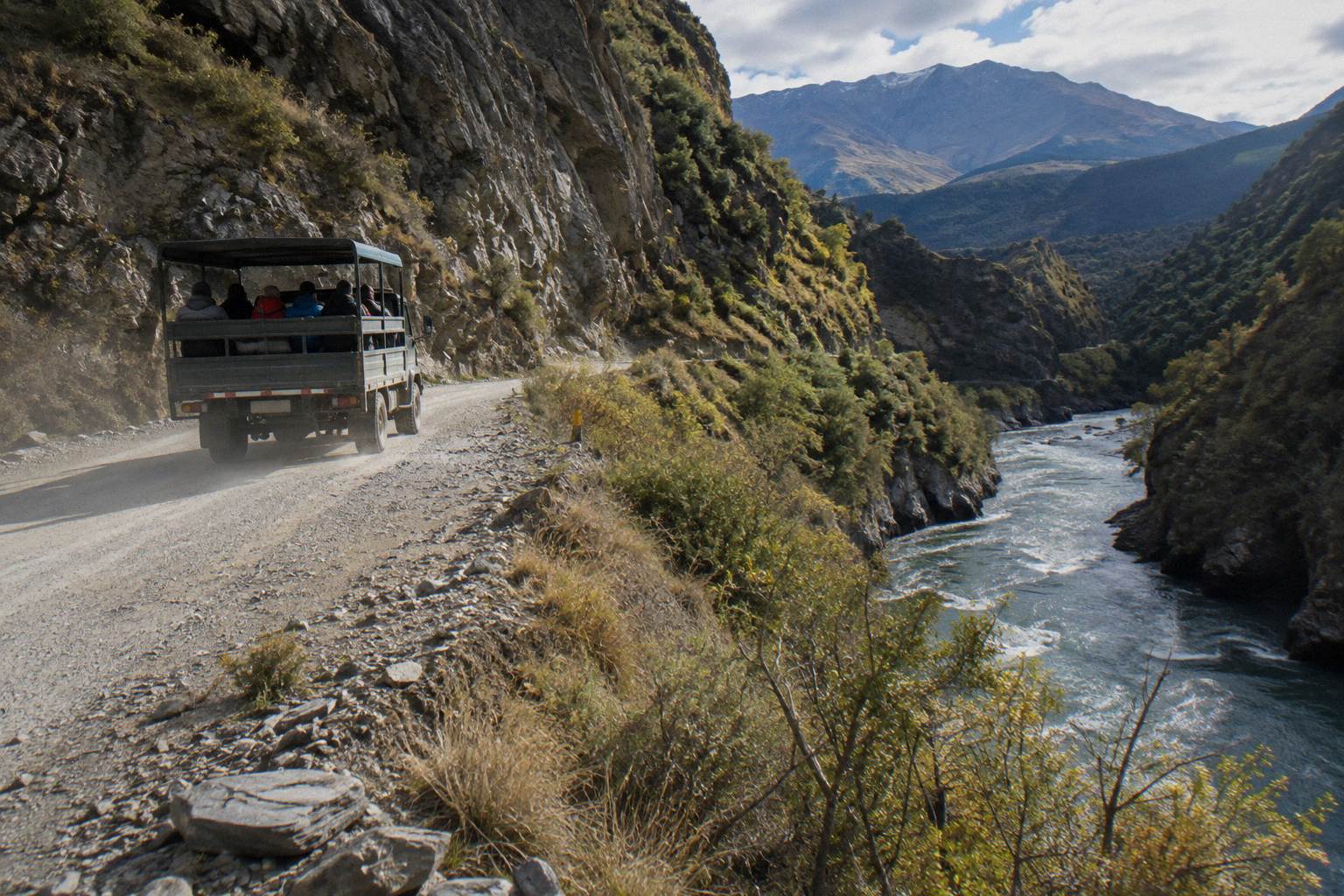
The canyon drive itself deserves respect in your planning. Skippers Road is narrow, winding and unsealed, 13 km from Skippers Saddle to Skippers Bridge, and the Department of Conservation advises that only experienced drivers should attempt it; the area sits inside the 9,100 hectare Mount Aurum Recreation Reserve, per the DOC Skippers area page. The operator's bus handles it, so families arrive as passengers, not drivers. Ages and suitability are compared properly in the minimum ages for Queenstown rafting guide.
For parents used to hauling a day's worth of supplies, the family trip flips the arithmetic in your favour. With snacks included, gear issued at the base and a 5 hour window door to door, the bag shrinks to swimwear, after-clothes and whatever keeps a three-year-old content on a canyon road. The same canyon that makes the road slow makes the water calm, so nothing in the kit needs to be survival-grade.
What Are The Most Common Packing Mistakes?
The recurring mistakes are cotton under the wetsuit, phones and cameras brought to the river with nowhere dry to keep them, glasses without a strap, no dry clothes for after the showers, and arriving at 88 Beach Street with less than 20 minutes to spare. Every one of them is avoidable with a bag packed the night before that is smaller than you expect.
The 20 minute buffer deserves its own sentence: RealNZ trips meet at the Visitor Centre at 88 Beach Street at least 20 minutes before departure, and hotel pickup is excluded, so a late bag search in your hotel room becomes a missed bus. Challenge Rafting guests check in at the same address or self-drive to the raft base at 1 Arthurs Point Road, and its season runs November through April with no winter rafting, per the Challenge Rafting FAQ page.
| Mistake | Why it costs you |
|---|---|
| Cotton base layer | Holds water under the wetsuit and chills you |
| Phone or camera in hand | Banned on the raft, no dry storage on the water |
| Glasses with no strap | A swim in a rapid ends the trip for the spectacles |
| No dry clothes for after | Hot showers at the base, then a cold drive back |
| Underestimating check-in | 20 minutes before departure, no hotel pickup |
| Wearing your own shoes | Booties are provided and your pair stays dry |
A secondary mistake is treating the trip like a hike and over-packing. Space on the shuttle matters less than speed at check-in, and everything you bring that is not on your body or in the locker sits on the bus for roughly four and a half hours on the flagship trip. One small bag beats one large one every time.
A third mistake is quieter: assuming you can adapt on the day. There is no shop at the put-in at Deep Creek and no opportunity to fetch a forgotten strap or a dry layer once the bus leaves 88 Beach Street, so the night-before check is the only check. Five minutes with the table above saves the most common regrets.
Is The Gear And Packing Setup Regulated?
Yes: New Zealand adventure activity operators must be registered with WorkSafe and have passed a safety audit before they may legally run trips, and the provided-gear model is part of that audited operation. The public register is searchable by name, activity and location. The wetsuit and helmet handed to you are the operator's responsibility, not a consumer product you chose.
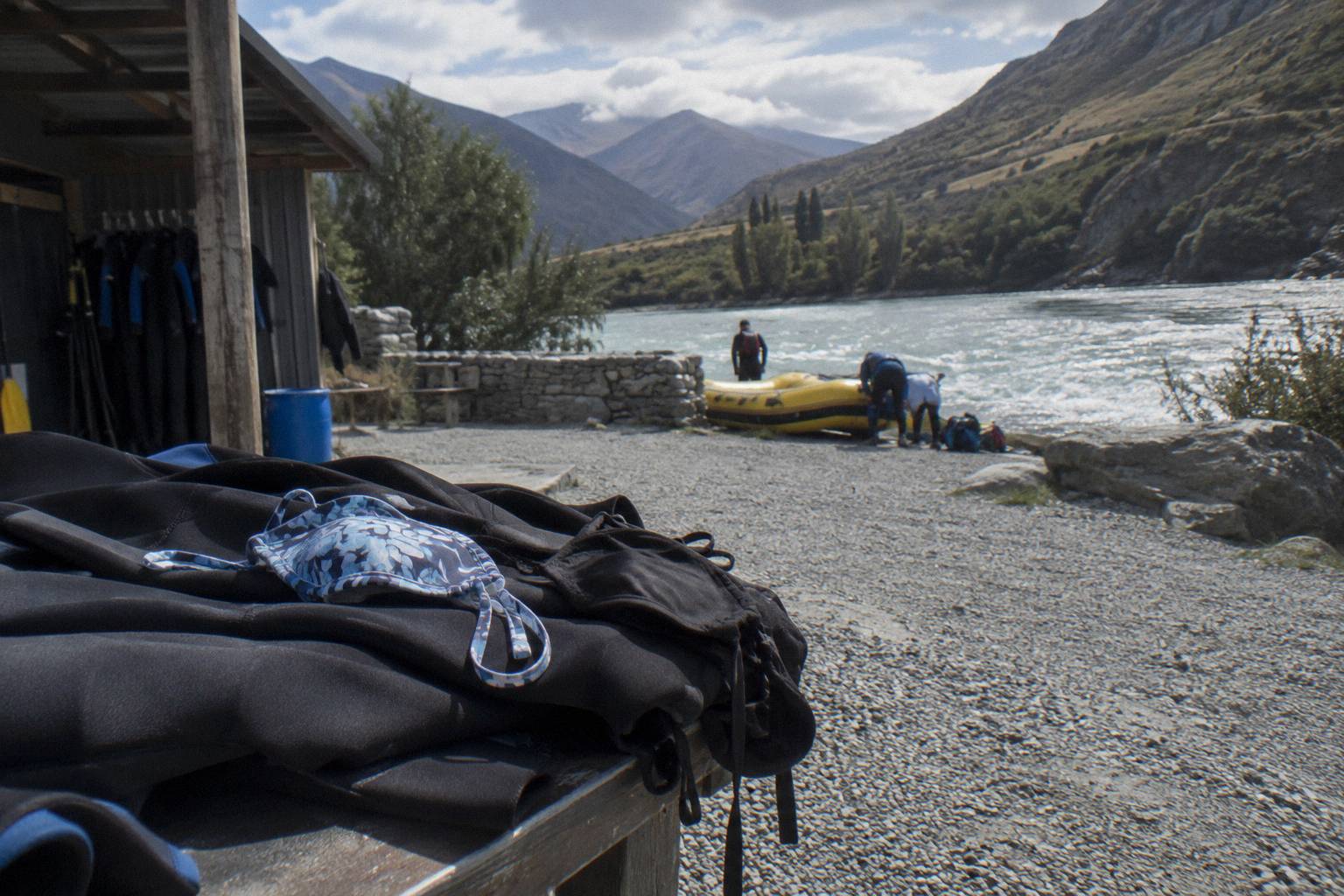
That regulatory frame explains why the packing list is so short and so strict. When gear is issued, fitted and checked by the operator, the items that would otherwise be personal decisions, footwear, flotation, head protection, are removed from your bag and placed in the operator's kit room. The WorkSafe adventure activities register is public, so anyone can see how the regime works.
It also explains why the rules feel non-negotiable rather than merely advised. An operator whose kit, briefing and river operation are audited has every reason to keep the raft clear of loose objects and every reason to insist on the right base layer, and the guest-facing rules, no cotton, no cameras, strap your glasses, are the visible edge of that system.
For nervous first-timers the same logic applies to anxiety: the gear, the briefing and the guide are the operator's job, and your job is swimwear and a strap. The beginner's white water rafting primer covers the rest of that mental packing.
Which Trip Should Your Bag Be Packed For?
Pack the same small bag whichever water you choose: swimwear, a glasses strap and an after-kit. The difference between trips is the water, grade 3 to 5 on the Shotover against grade 2 to 3 on the Kawarau, and the price spread runs from NZ$249 to NZ$329 per person. The bag does not change; the day does.
The Challenge Rafting Shotover trip at NZ$299 per person grades 4 to 5 and includes photos, a fair trade for anyone whose camera disappointment would otherwise be the story of the day. The Rafting Plus Jet Boat Combo at NZ$329 adds a 25 minute jet boat transfer covering 22 km of the Kawarau at 95 km/h with 360-degree spins before an hour of rafting, which means the after-bag matters even more: you will get wet twice. Whether that combo beats rafting alone is weighed in the rafting versus jet boat comparison.
Whichever trip you pick, departures are chosen on the booking calendar rather than fixed, so the bag can be packed the night before without checking a timetable. That flexibility is the final gift of the supplied-gear model: since nothing about your packing depends on the departure you choose, you can decide between the Shotover and the Kawarau, or between the flagship and the challenge trip, at leisure and pack identically either way.
Common Questions About Rafting Packing
What Should I Bring White Water Rafting?
Swimwear to wear under the wetsuit, a sports strap if you wear glasses, and dry clothes for after the hot showers at the raft base. Everything technical, the wetsuit, jacket, helmet, booties, paddle and life jacket, is provided on every trip.
Can I Take A Camera Or GoPro On The Raft?
No. Nothing, camera or GoPro included, can be taken on the raft. Challenge Rafting includes professional photos in its booking, and spectators can stand near the last rapid where rafts exit the Oxenbridge Tunnel, though timing varies.
Can I Wear My Own Shoes Rafting?
There is no need to: wetsuit booties are part of the supplied kit on every trip. Your own shoes stay dry on the bus or in the locker.
What Do I Wear Under The Wetsuit?
Swimwear only, with no cotton anywhere in the base layer. Cotton soaks and holds water against your skin. On the family Skippers Canyon trip, wear a swimsuit under your clothes.
Where Do I Leave My Valuables?
In the valuables locker at the raft base at Arthurs Point, about a 10 minute drive from Queenstown. Anything you leave on the bus stays there while you are on the water.
Is Food Provided On The Trip?
Snacks are included only on the Rafting And Skippers Canyon Combo. On the other trips, bring nothing that needs to survive the water and plan to eat in Queenstown afterwards.