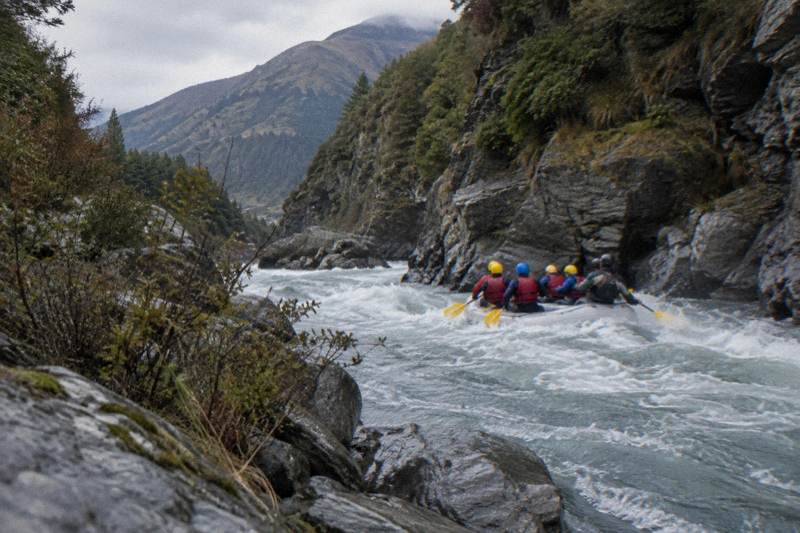
Class 4 Rapids: Can A Beginner Raft Them?
Class 4 rapids are powerful, unpredictable water that demands real manoeuvring, and in Queenstown they sit in the middle of the Shotover trips and at the top end of the Kawarau. Whether a beginner can raft them comes down to the setup: a guide in the raft, a full safety briefing, and the swimming and fitness requirements every operator enforces before you paddle.
Short answer
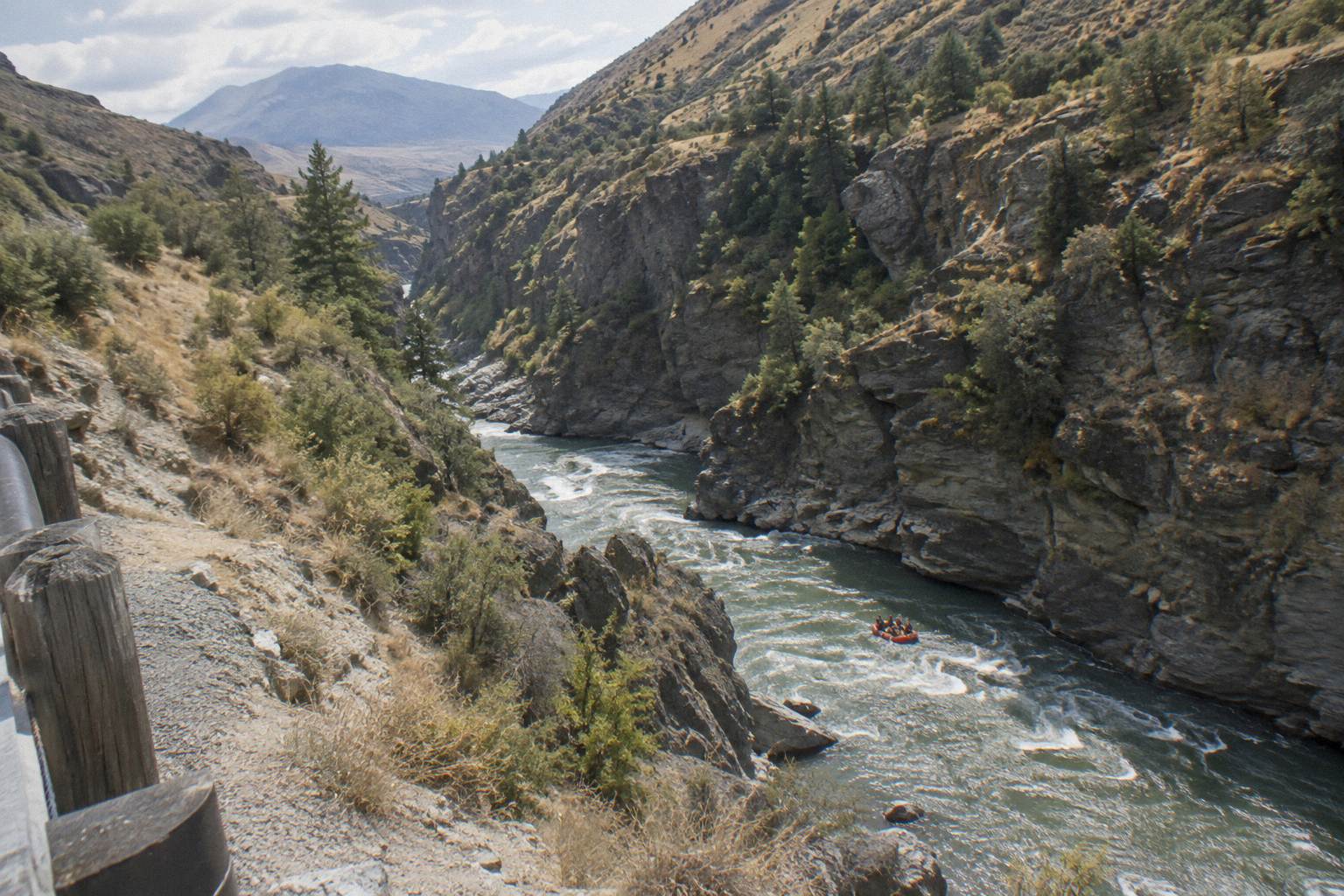
Yes, within limits. Queenstown's class 4 water is rafted in guided crews of up to eight with a safety kayaker on the Shotover, a full briefing, and provided gear. Beginners must be 13 or over, 40 to 120 kg, water-competent (able to swim 25 m unaided) and moderately fit. The Kawarau, usually grade 2 to 3 but reaching grade 4 at higher water, is the operators' own first-timer river.
Class 4 water is where a river stops being a float and starts being a decision. The international difficulty scale runs from class 1, easy moving water, to class 6, extreme rapids that are never commercially rafted, and class 4 sits in the upper half: powerful, fast, demanding precise paddling and a crew that listens. In Queenstown that water is not a remote expert prospect. It is the middle of the Shotover River runs and, at higher water levels, the ceiling of the Kawarau, both rafted daily in guided crews.
The operators are unusually direct about who belongs there. RealNZ asks that guests be water-competent, meaning able to swim 25 m unaided, with moderate fitness, and says plainly that the Shotover carries a higher risk of falling out than the Kawarau. Challenge Rafting lists its Shotover trip as unsuitable for non-swimmers. None of that is a wall against beginners; it is a filter, and it works in the beginner's favour, because everyone in the raft has met the same bar and heard the same briefing.
What Class 4 Actually Means On The Difficulty Scale
The international river difficulty scale grades rapids from class 1, easy water with small ripples, to class 6, extreme and never commercially rafted, and class 4 is the first grade where a guided raft stops being a passenger ride and becomes a crew. Class 2 is straightforward, open channels with small waves. Class 3 adds bigger waves and the need to follow paddle commands around obstacles. Class 4 is powerful, unpredictable water with constricted passages and precise manoeuvring required, and a mistake matters. Class 5 pushes further into violent, complex rapids where consequences are severe. The scale is descriptive, not technical: no flow figures or drop heights define a class, river graders read the water, and one rapid can change grade with the level.
Two things follow from the scale that matter to a nervous first-timer. First, class 4 is not the top: class 5 exists, it is commercially rafted, and RealNZ's own wording is that "Grade 5 is the highest grade commercially rafted in the world", which its Shotover trip includes. Second, grades describe the hardest rapid on a run, not every metre of it. A trip graded 3 to 5 contains long stretches of easier water between the named rapids, which is exactly why commercial operators can take mixed crews down it. If you want the scale unpacked rapid by rapid, read the white water rafting grades explained in full, and for the sharp end of it, what level 5 rapids really involve.
Can A Beginner Raft Class 4 Rapids?
Yes, in a guided commercial raft, provided you meet the operators' stated requirements: age 13 or over, weight between 40 kg and 120 kg, able to swim 25 m unaided, moderately fit, and able to understand the safety briefing in English. That is the RealNZ standard, and Challenge Rafting applies the same 13 years, 40 kg and 120 kg limits to its Shotover trip. What makes it work is not the rafter's experience but the setup: a trained guide in every raft calling the paddle strokes, a full wetsuit, helmet, booties and life jacket provided, a safety briefing before the water, and on the RealNZ Shotover trip a safety kayaker travelling with each raft. A beginner does not steer, read the river or make the line choices; the guide does all three.
The honest framing is conditional, and the operators give it themselves. RealNZ positions its Kawarau trips, usually grade 2 to 3, as suited to first-timers and less confident swimmers, and reserves the Shotover, grade 3 to 5, for guests who are water-competent with moderate fitness. Challenge Rafting goes further and lists non-swimmers among those its Shotover trip does not suit, excludes any heart condition or heart medication, and does not allow pregnant guests on grade 3 water or above. So the decision rule is simple. If you can swim, you are comfortable being briefly underwater in a wetsuit and life jacket, and you can paddle on command for a sustained stretch, guided class 4 water is within reach. If any of those three fails, the Kawarau or the gentle Skippers Canyon trip is the right first run. For the nerves side of it, handling rafting fear as a first-timer is worth ten minutes before you book.
Where Class 4 Water Appears On Queenstown Trips
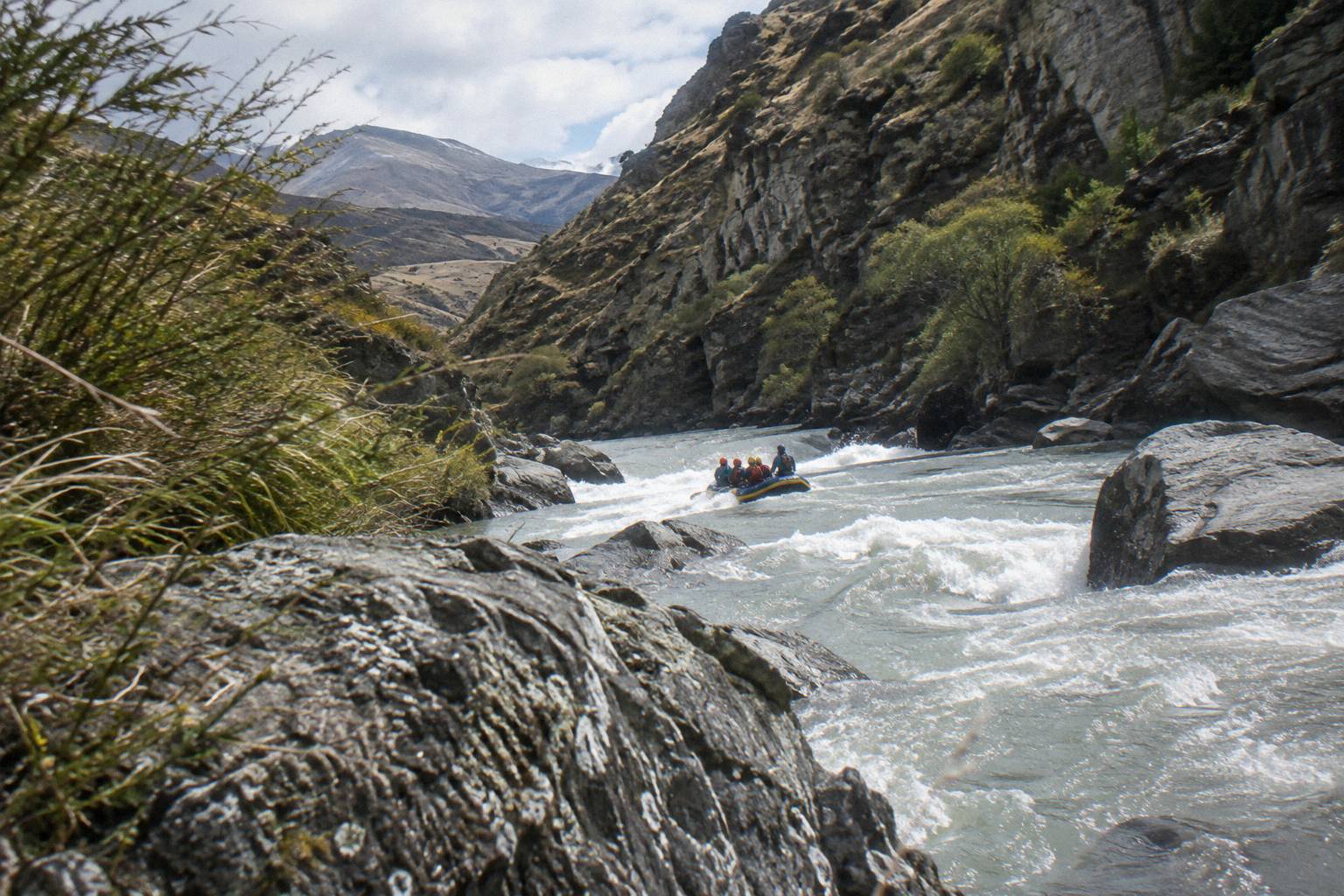
Grade 4 appears in three places: in the six-rapid grade 4 to 5 "Mother" series and Cascade Rapid on the Challenge Rafting Shotover trip, somewhere within the six grade 3 to 5 rapids of the RealNZ Shotover trip, and at the top end of the Kawarau, which is usually grade 2 to 3 but, in the operator's own words, "can reach grade 4 at higher water levels". The Kawarau's Dog Leg rapid, 400 m long and called the longest commercially rafted rapid in New Zealand, is described by the operator as grade 3/4, which is the closest a first-timer gets to class 4 water with an easy exit. The Shotover, by contrast, guarantees it: both operators' trips run the same 170 m Oxenbridge Tunnel and finish in the rapids beyond it.
| Trip | River | Operator grade statement | Where class 4 fits |
|---|---|---|---|
| Shotover Rafting, Half Day | Shotover | Grade 3 to 5 | Within six grade 3 to 5 rapids, 14 km run, tunnel finish |
| Challenge Rafting, 4 Hours | Shotover | Grade 3 to 5, six grade 4 to 5 "Mother" rapids | Aftershock, Squeeze, Toilet and Pinball named, then Cascade Rapid |
| Rafting Plus Jet Boat Combo | Kawarau | Grade 2 to 3 | Grade 4 possible at higher water; Dog Leg is grade 3/4 |
| Kawarau Rafting, Base Fare | Kawarau | Grade 2 to 3 | Same water as the combo, 8 km run, The Dog Leg |
| Rafting and Skippers Canyon | Shotover | Grade 1 to 2 | No class 4 water; gentle family trip from age 3 |
The table reads as a ladder. The bottom rung has no class 4 at all, the middle two rows hold class 4 as a possibility rather than a promise, and the two Shotover rows place it in the middle of the trip where it cannot be skipped. One nuance worth knowing: river grades move with the water. The Kawarau's climb to grade 4 happens at higher levels, and on the Shotover the operators say trips run depending on weather, river level and water temperature, and portages, carrying past a rapid, may be required. Nobody guarantees you a specific rapid on a specific day. For a fuller river-by-river breakdown, see the Shotover versus Kawarau comparison.
The Readiness Checklist The Operators Actually Enforce
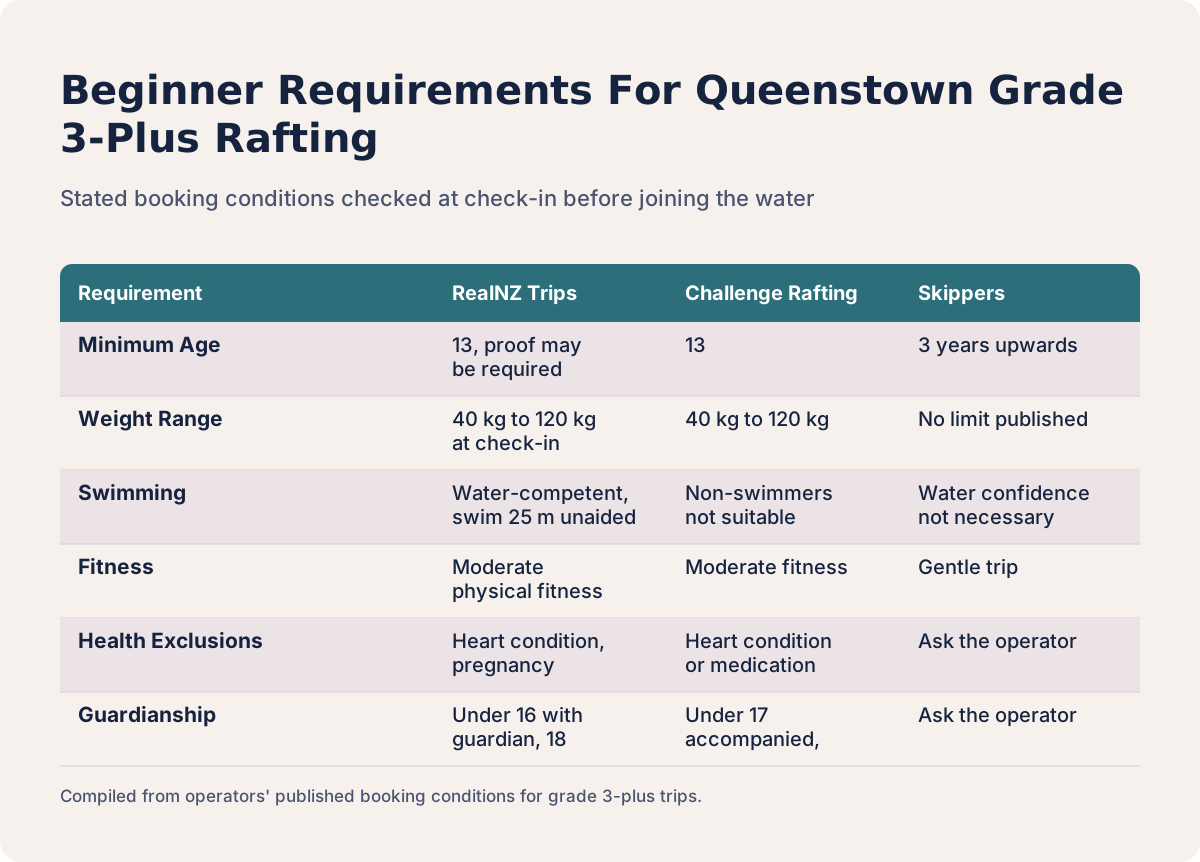
Before anyone joins a grade 3-plus trip, Queenstown operators check age, weight, swimming ability, fitness and health. These are not informal judgments made at the riverbank on the day; each requirement comes from the operator's published booking conditions, so guests who arrive at check-in must already meet every stated standard or they will not be allowed on the water. RealNZ sets minimum age 13 with proof possibly required, minimum weight 40 kg and maximum 120 kg verified at check-in, and requires that guests understand safety briefings in English. Under 16 must travel with a guardian on RealNZ trips, under 17 accompanied by a guardian on the Challenge Rafting booking text, and under 18 needs a guardian-signed waiver either way. Challenge Rafting excludes any heart condition or heart medication, and both operators exclude pregnant guests from grade 3 water or above.
| Requirement | RealNZ trips | Challenge Rafting Shotover | Family Adventures Skippers trip |
|---|---|---|---|
| Minimum age | 13, proof may be required | 13 | 3 years upwards |
| Weight range | 40 kg to 120 kg, verified at check-in | 40 kg to 120 kg | No limit published |
| Swimming | Water-competent, swim 25 m unaided | Water competence required, non-swimmers not suitable | Water confidence not necessary |
| Fitness | Moderate, good level of physical fitness asked | Moderate fitness | Gentle trip |
| Health exclusions | Heart condition excludes, pregnancy excludes | Heart condition or heart medication excludes, no grade 3-plus in pregnancy | Ask the operator |
| Guardianship | Under 16 with guardian, under 18 waiver | Under 17 accompanied, under 18 waiver | Ask the operator |
Note what is absent from that list: any requirement for prior rafting experience. There is none, on any trip, because the guide carries the experience for the raft. The checks exist because class 4 water asks your body to do specific things: hold a paddle position under a wave, keep swimming in current if you come out, and climb back into a raft with gear on. The weight band matters for real reasons, which is why it is verified rather than self-declared, and why operators weigh you before rafting explains the mechanics. If swimming is the sticking point, the picture is more forgiving than you might fear on the Kawarau, and less so on the Shotover; rafting when you cannot swim well separates the two rivers cleanly.
What Happens On The Water When A Beginner Runs Grade 4
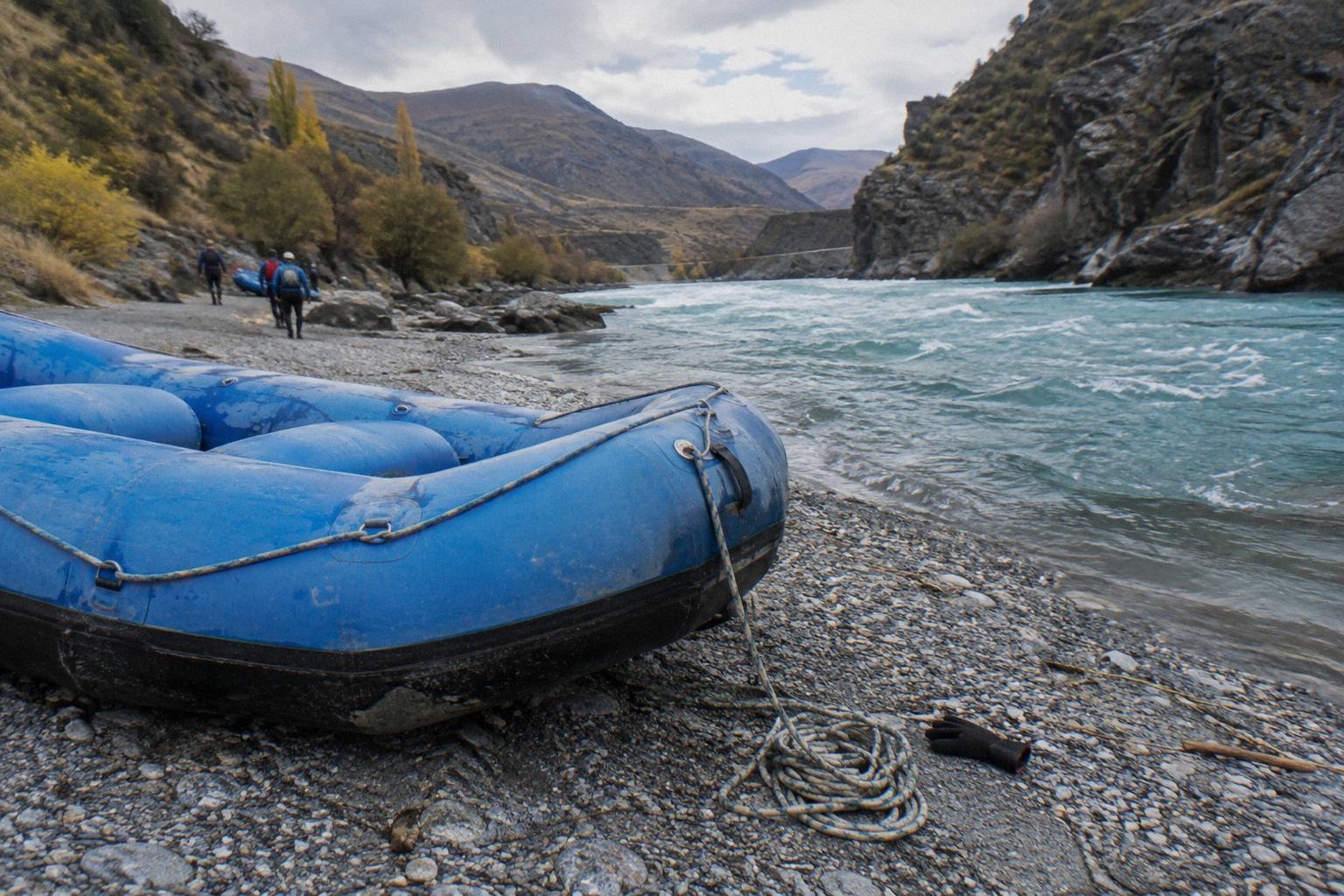
The trip is built so that a beginner meets class 4 water late, briefed, dressed and rehearsed: on the RealNZ Shotover run the shuttle takes about 40 minutes to the Deep Creek put-in, gear and briefing come before the raft, and the six grade 3 to 5 rapids are spread along 14 km that finishes at the Arthurs Point rafting base. The Kawarau itinerary is even more explicit in its shape: meet at 88 Beach Street, a 20-minute bus to the base, a 30-minute safety briefing, another 20-minute bus to the river, then one full hour of rafting before the returns and a break. The briefing is not a formality. It covers paddle commands, what to do in the raft, and what to do if you are not in the raft, and it is delivered before there is any water under the hull.
Rafts carry a maximum of eight people including the guide, and a safety kayaker travels on each RealNZ Shotover trip, an extra set of hands on the water whose only job is the crew. Nothing can be taken on the raft, no camera and no GoPro, which removes one more thing to hold. The operator's own comparison is the most useful sentence a nervous beginner can read: the Shotover carries a higher risk of falling out than the Kawarau. Falling out is not the failure case it sounds like; it is an expected, planned-for event with a rehearsed response, and what happens if you fall out of a raft walks through the sourced protections in detail. What no operator will promise is that you stay dry or in the boat. More of these guides are collected on Queenstown White Water Rafting.
Choosing Your First Trip: A Decision Rule
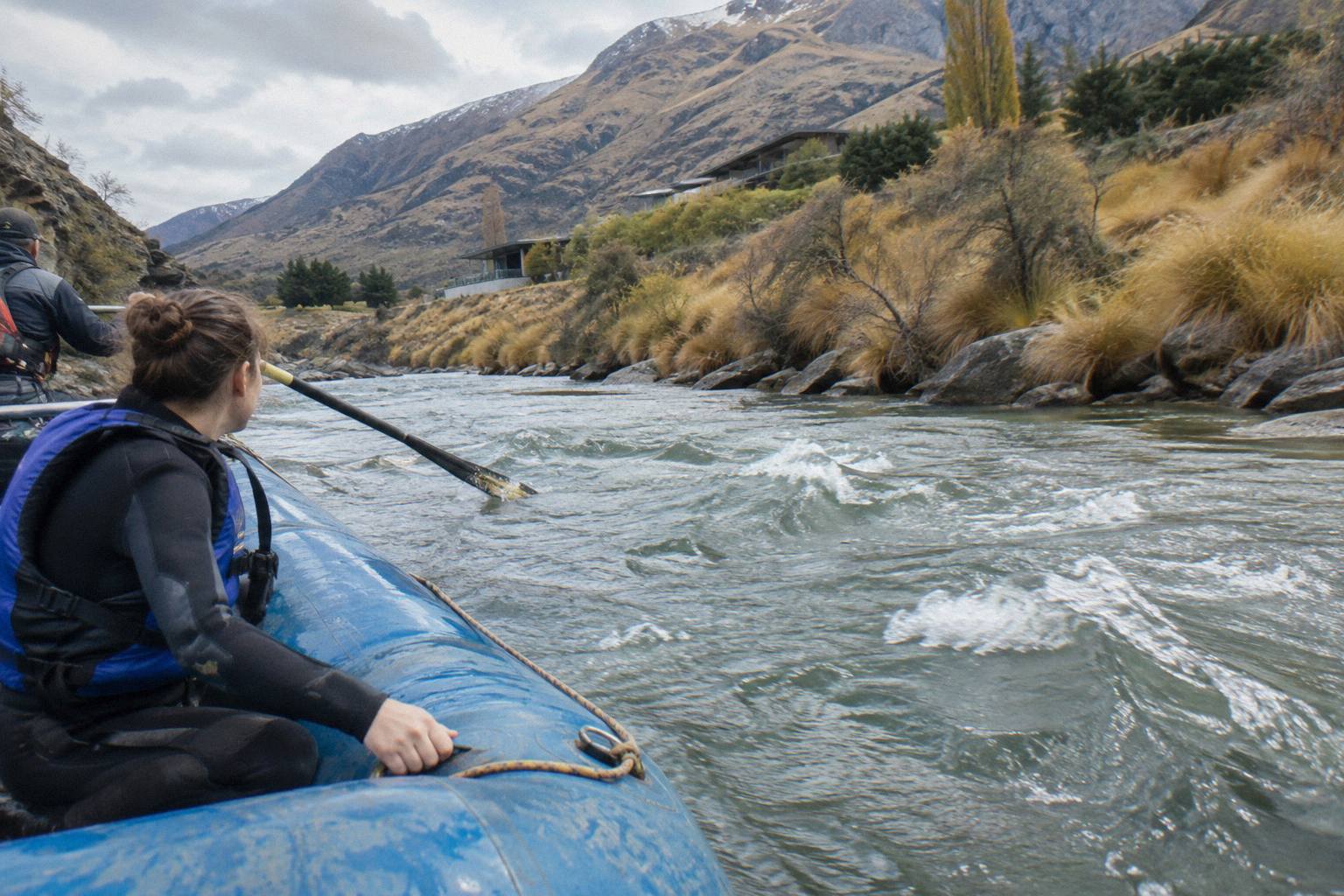
If you have never rafted, start on the Kawarau, grade 2 to 3, and treat its Dog Leg rapid as your controlled first taste of grade 3/4 water; step up to a Shotover trip, grade 3 to 5, only if you can swim 25 m unaided and the idea of falling out reads as unpleasant rather than frightening. That is not caution for its own sake; it maps directly onto how the operators themselves describe their rivers. RealNZ calls the Kawarau suited to first-timers and less confident swimmers, and it gives that river an optional cliff-jumping section and a swim-a-rapid segment, both depending on weather and water level, so you can add intensity by choice. The Shotover has no dial. Its grade 4 to 5 rapid series is the trip.
Price differences are small enough that they should not drive the choice. Kawarau Rafting, Base Fare starts from NZ$249 per person, both Shotover rafting trips start from NZ$299, and the jet boat and rafting combo and the Skippers Canyon trip each start from NZ$329. Duration varies more than price: four hours for the Kawarau base fare and the Challenge Rafting trip, 4.5 hours for the RealNZ Shotover half day and the combo, five hours for the canyon trip. The real currency you are spending is confidence, and it is cheaper to buy it on grade 2 to 3 water. The full cost picture, including what is and is not included in each fare, is in what a Queenstown rafting trip costs, and if two rivers are tugging at you, rafting versus jet boating in Queenstown covers the combo logic.
| Trip | From, per person | Duration | Meets | Class 4 exposure for a beginner |
|---|---|---|---|---|
| Kawarau Rafting, Base Fare | NZ$249 | 4 hours | RealNZ Visitor Centre, 88 Beach Street | Possible at high water; Dog Leg at grade 3/4 |
| Shotover Rafting, Half Day | NZ$299 | 4.5 hours | RealNZ Visitor Centre, 88 Beach Street | Guaranteed, within six grade 3 to 5 rapids |
| Challenge Rafting, 4 Hours | NZ$299 | 4 hours | Morning Star Reserve, Arthurs Point | Guaranteed, six grade 4 to 5 rapids |
| Rafting Plus Jet Boat Combo | NZ$329 | 4.5 hours | RealNZ Visitor Centre, 88 Beach Street | Possible at high water, plus 25-minute jet boat transfer |
| Rafting and Skippers Canyon | NZ$329 | 5 hours | Camp Street, Queenstown | None; grade 1 to 2 |
Gear, Briefings And The Setup That Makes It Work
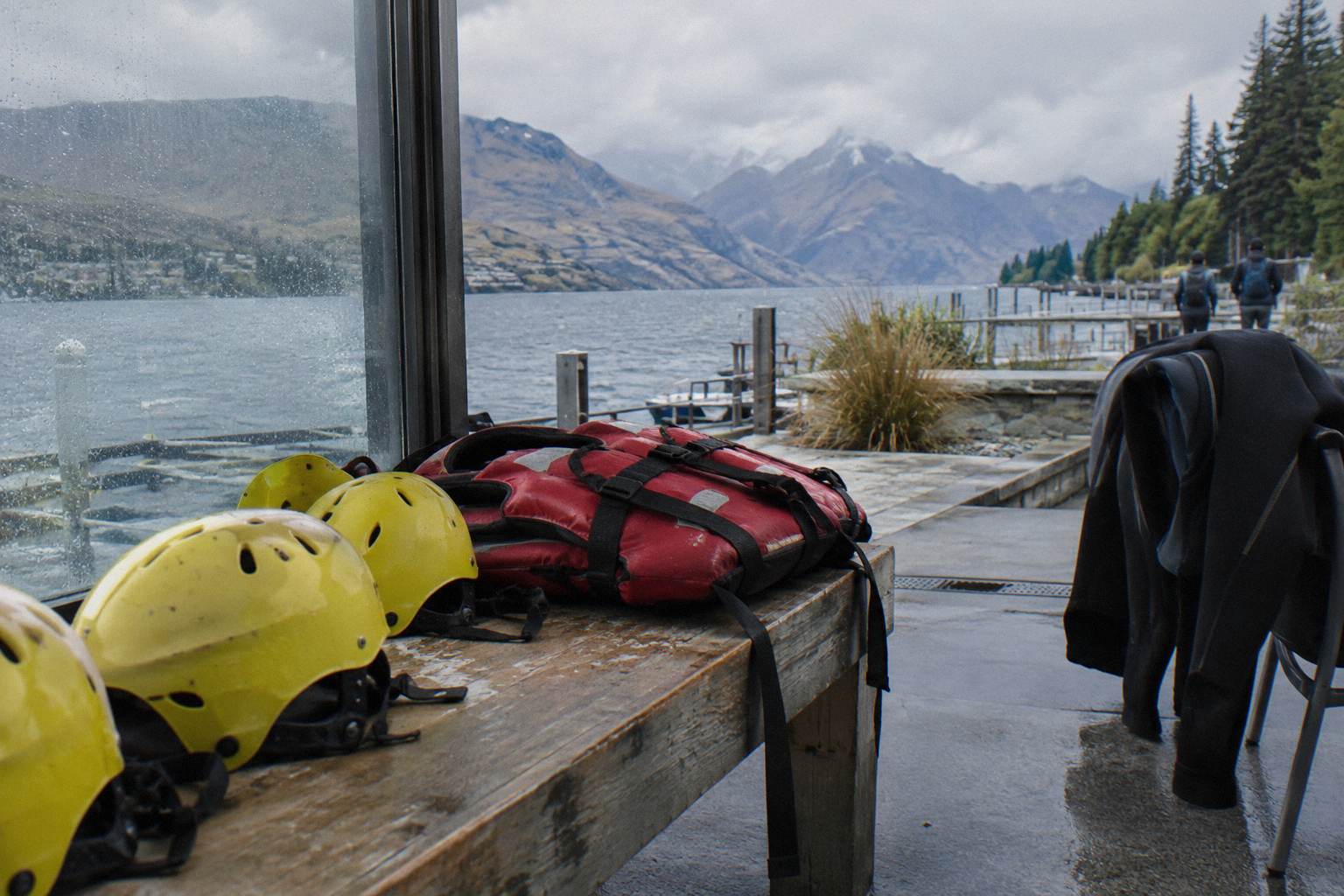
Every grade 3-plus trip supplies the full kit: wetsuit, wetsuit jacket, spray jacket, paddle, helmet, wetsuit booties and life jacket, with hot showers at the base and a valuables locker on the RealNZ Shotover run, and Challenge Rafting's fare includes professional photos. You bring almost nothing onto the water, and in fact you are not permitted to bring a camera or GoPro onto the Shotover raft at all. Under the wetsuit, swimwear only, and no cotton, because soaked cotton loses the insulation the wetsuit is there to provide. Glasses need a sports strap or stay behind. Extra-large and child-size wetsuits exist, so the size range is broader than people fear before asking. The full clothing logic, including footwear, is in what to wear white water rafting and the deeper dive on what goes under a rafting wetsuit.
The regulatory floor beneath all of it is worth knowing. Adventure activity operators in New Zealand must be registered with WorkSafe's public register of adventure activities, described as operators who have passed a safety audit and are authorised to provide adventure activities, and it is an offence to run an adventure activity unless registered, excluded or exempted. The register is searchable by name, activity and location, so a cautious reader can look up any operator before booking. That does not replace personal readiness; it means the company side of the risk has been audited, and the swimmer side is yours to answer honestly.
The River Behind The Grade: Shotover History In One Run
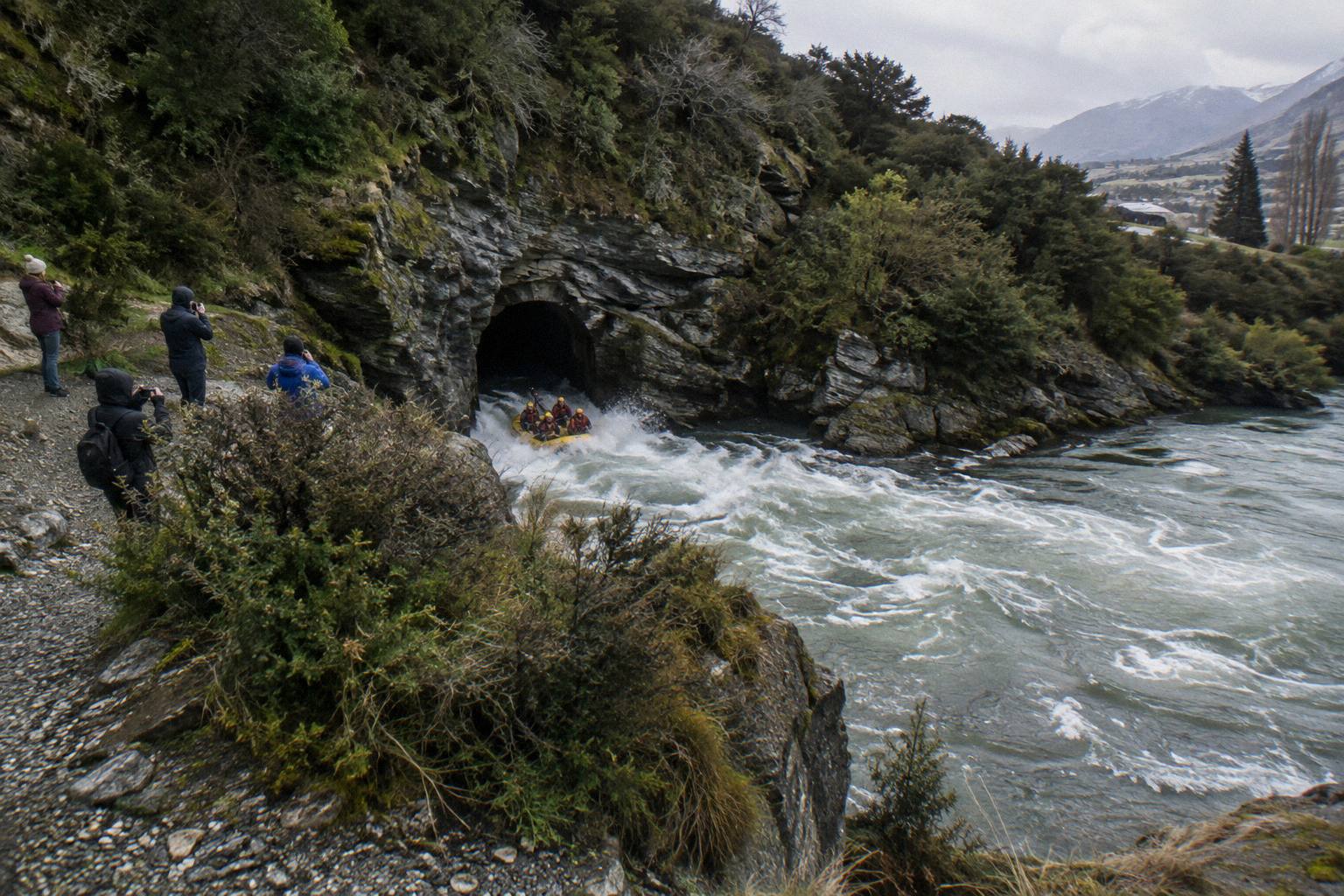
The class 4 water a Queenstown beginner rafted through has a strange provenance: the 170 m Oxenbridge Tunnel was dug from 1906 by the Oxenbridge Brothers, Bert and Edmund, to divert the Shotover away from the gold-fabled Jeweller's Shop rapids above Arthurs Point, and it failed as a mine, the Arthurs Point Gold Mining Company being liquidated in August 1912 with no evidence of mining use after. The tunnel, expected at 550 ft, still carries the Shotover flow today and is used primarily by rafting companies, which is why two separate commercial trips paddle into a dead gold miner's drainage scheme as their finale. Heritage New Zealand's list entry 5607 records the whole arc, including the 1862 gold rush that saw the Shotover dubbed "the richest river in the world".
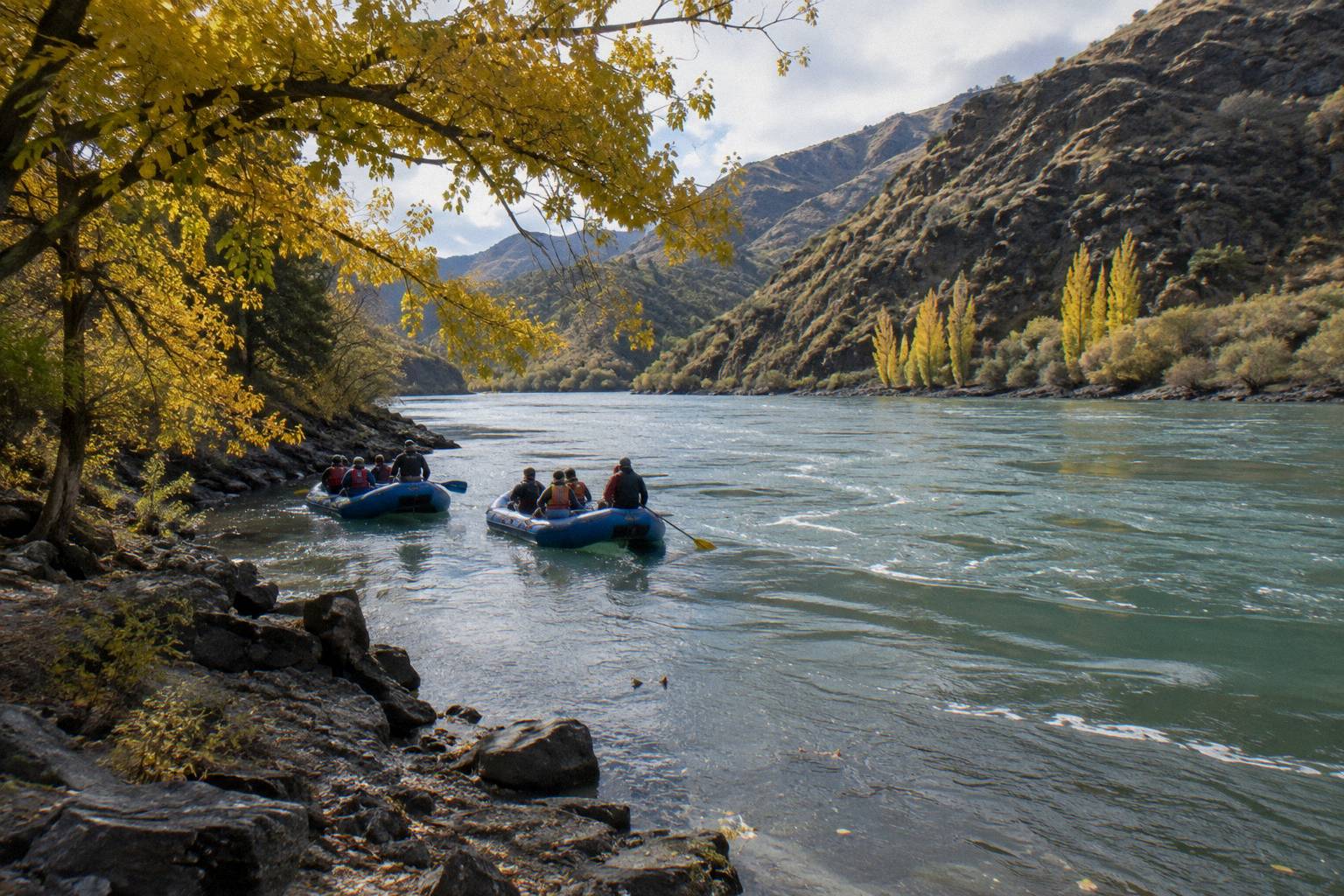
The canyon around it is just as layered. Skippers is part of the 9,100 ha Mount Aurum Recreation Reserve, which the Department of Conservation notes saw much of Wakatipu's 1860s gold fever, and the shuttle to the Shotover put-in at Deep Creek travels Skippers Canyon Road, an unsealed 13 km stretch from Skippers Saddle to Skippers Bridge that the council administers and only experienced drivers should attempt, which is one reason every trip runs its own shuttle bus. Spectators cannot follow onto the river, but viewers can stand near the last rapid as rafts exit the tunnel, timing varies. For the gentler version of the same canyon, Skippers Canyon explained covers the road, the bridge and the grade 1 to 2 family trip that runs it.
Timing, Season And Booking Windows
Class 4 water in Queenstown is seasonal, and the only published season among the grade 3-plus trips is Challenge Rafting's, which runs November through April and states it does not operate in winter, taken as May to early September. RealNZ publishes no operating months, so do not plan a mid-winter Shotover run around assumptions; check the calendar when booking. Trips also depend on weather, river level and water temperature, portages may be required, and minimum guest numbers apply, which means a class 4 rapid you booked in March can be a portage path in April. Departure times are chosen on the booking calendar rather than published as fixed slots, and RealNZ guests meet at 88 Beach Street at least 20 minutes before departure.
Practical scheduling notes worth fixing early: hotel pickup is excluded on the Shotover half day, both Kawarau RealNZ trips and the Challenge Rafting run, though each includes a round-trip bus transfer from the meeting point, and the Rafting Plus Jet Boat Combo adds a free shuttle from town to the base. The Arthurs Point raft base is about a 10-minute drive from Queenstown if you are self-driving or staging spectators. The seasonal picture is unpacked in the best time for rafting in Queenstown, including what winter rafting looks like and how to weigh morning against afternoon departures.
| Logistics detail | Shotover Rafting, Half Day | Challenge Rafting, 4 Hours | Kawarau Rafting, Base Fare |
|---|---|---|---|
| Check-in | 88 Beach Street, 20 minutes before departure | 88 Beach Street, or self-drive to 1 Arthurs Point Road | 88 Beach Street, 20 minutes before departure |
| Hotel pickup | Excluded | Excluded | Excluded |
| Bus transfer | Round trip, about 40 minutes to Deep Creek put-in | Round trip from check-in | About 25 minutes to the start via Arrowtown |
| Season published | No | November through April | No |
| Photos | Ask the operator | Included | Ask the operator |
| Cancellation | Check when booking | Check when booking | Check when booking |
Common Questions About Rafting Class 4 Rapids
Can A Beginner Raft Class 4 Rapids?
Yes, on a guided commercial trip, provided you meet the operators' requirements: at least 13 years old, between 40 kg and 120 kg, able to swim 25 m unaided, moderately fit, and able to understand the safety briefing in English. A trained guide controls the raft, all gear is provided, and a safety kayaker travels on each RealNZ Shotover trip.
What Class Rapids Are On The Shotover River?
The operators grade the Shotover trips 3 to 5 overall. Challenge Rafting's run features six grade 4 to 5 "Mother" rapids, including Aftershock, Squeeze, Toilet and Pinball, then the 170 m Oxenbridge Tunnel and the drop into Cascade Rapid. RealNZ describes six grade 3 to 5 rapids across 14 km.
Can The Kawarau River Reach Class 4?
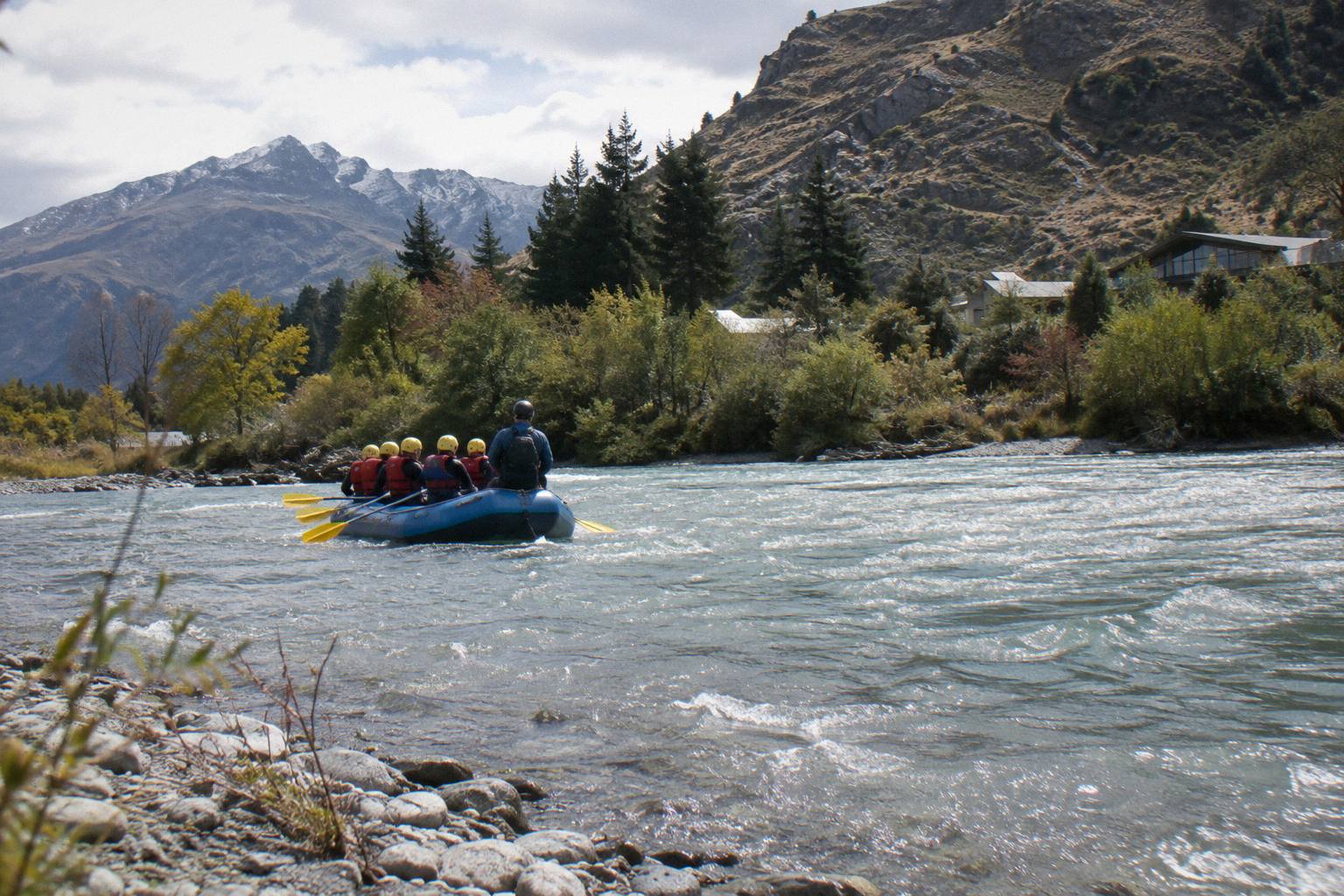
It can. The operator grades it 2 to 3 usually, but states it can reach grade 4 at higher water levels, and describes The Dog Leg, 400 m and the longest commercially rafted rapid in New Zealand, as grade 3/4. It remains the river the operator recommends for first-timers and less confident swimmers.
Do You Need To Be Able To Swim To Raft Class 4 Water?
Yes. RealNZ requires water competence, defined as being able to swim 25 m unaided, plus moderate fitness, and Challenge Rafting lists its Shotover trip as unsuitable for non-swimmers. The gentle Skippers Canyon trip, grade 1 to 2 from age 3, is the one option where water confidence is stated as not necessary.
Which Queenstown Trip Is Best For A Nervous First-Timer?
The Kawarau trips, grade 2 to 3 and described by the operator as suited to first-timers and less confident swimmers, with the possibility of grade 4 water only at higher levels. The Rafting Plus Jet Boat Combo runs the same river with a 25-minute jet boat transfer covering 22 km at 95 km/h before the rafting.
What Disqualifies You From A Grade 4 Rafting Trip?
Published exclusions include any heart condition or heart medication, pregnancy on grade 3 or above water, being under 13, and weights outside 40 kg to 120 kg. Non-swimmers are not suitable on the Shotover trips, and guests must be able to understand the safety briefing in English.