What Are Level 5 Rapids?
Level 5 rapids explained in plain words, where grade 5 whitewater runs on the Shotover River near Queenstown, and who is allowed to book a grade 5 rafting trip.
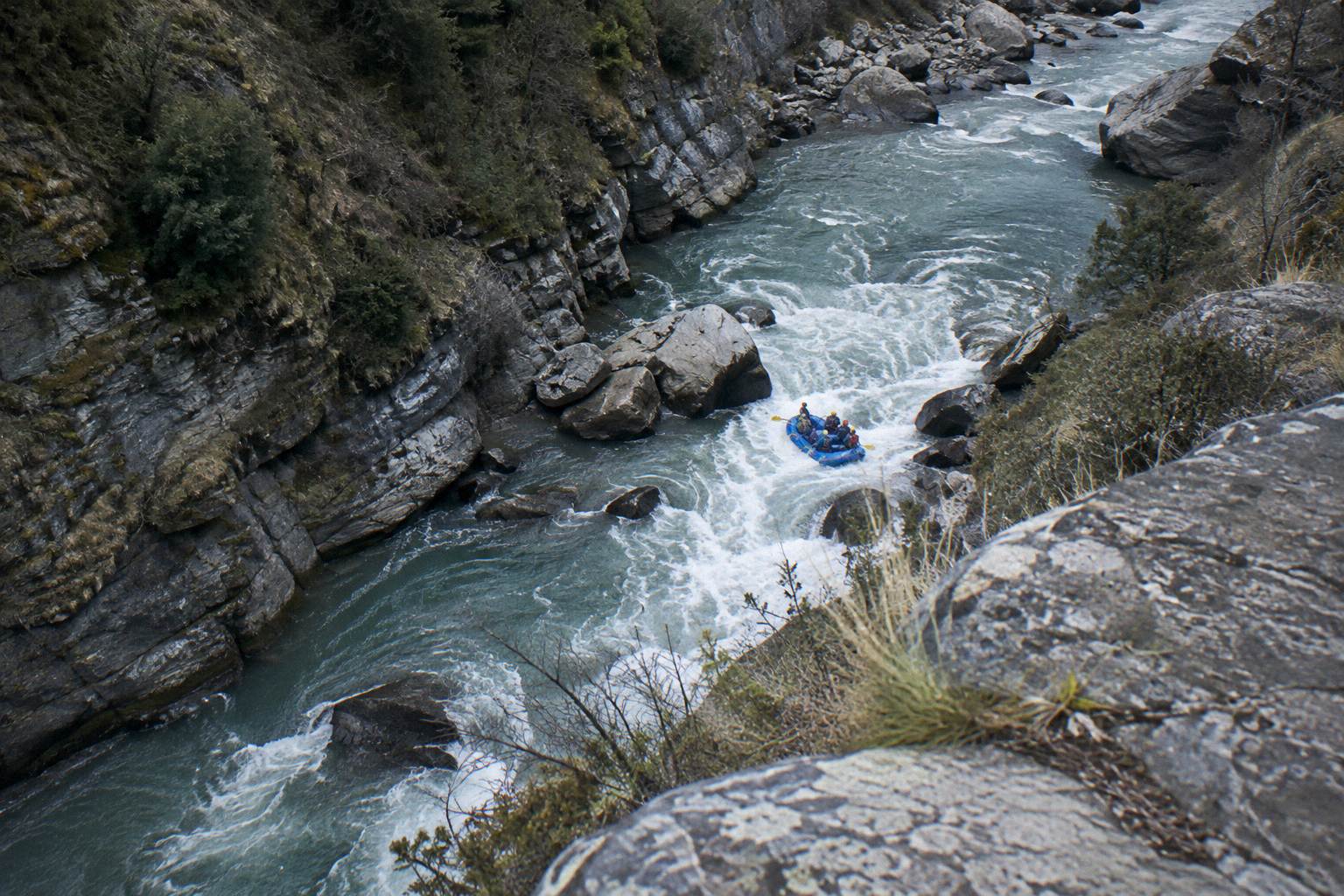
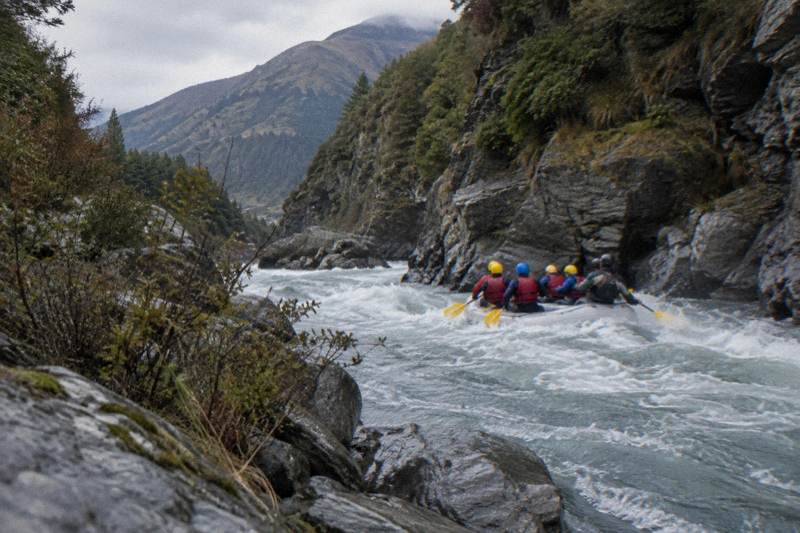
Level 5 rapids are the second hardest whitewater on the international river difficulty scale, which runs from class 1 (easy) to class 6 (extreme). A class 5 rapid is long, violent and technically demanding, with drops, holes and narrow passages that demand continuous, precise paddling from a guide who reads the water in real time. Class 6 is not commercially rafted at all. Grade 5 is the ceiling.
That ceiling is not marketing talk. RealNZ, the operator behind the main Shotover River rafting trip, puts it in exactly those terms on its own trip page: grade 5 is the highest grade commercially rafted in the world, and its Shotover trip runs grade 3 to 5 water through six rapids between Skippers Canyon and Arthurs Point. So when a Queenstown booking page says "grade 5", it is describing something genuinely at the commercial limit of the sport, not a stretch of bumpy water dressed up with a number.
The scale itself, usually called the international scale of river difficulty, exists so that paddlers can compare rivers across countries without seeing them. A rapid's grade is judged by a cluster of things at once: how steep the drop is, how much water is moving, how continuous the turbulence is, how many obstacles sit in the channel, and how hard it would be to rescue someone mid-rapid. Grade 5 checks every one of those boxes hard. The water does not give you a rest eddy between features; it links one violent section into the next and asks the crew to keep up.
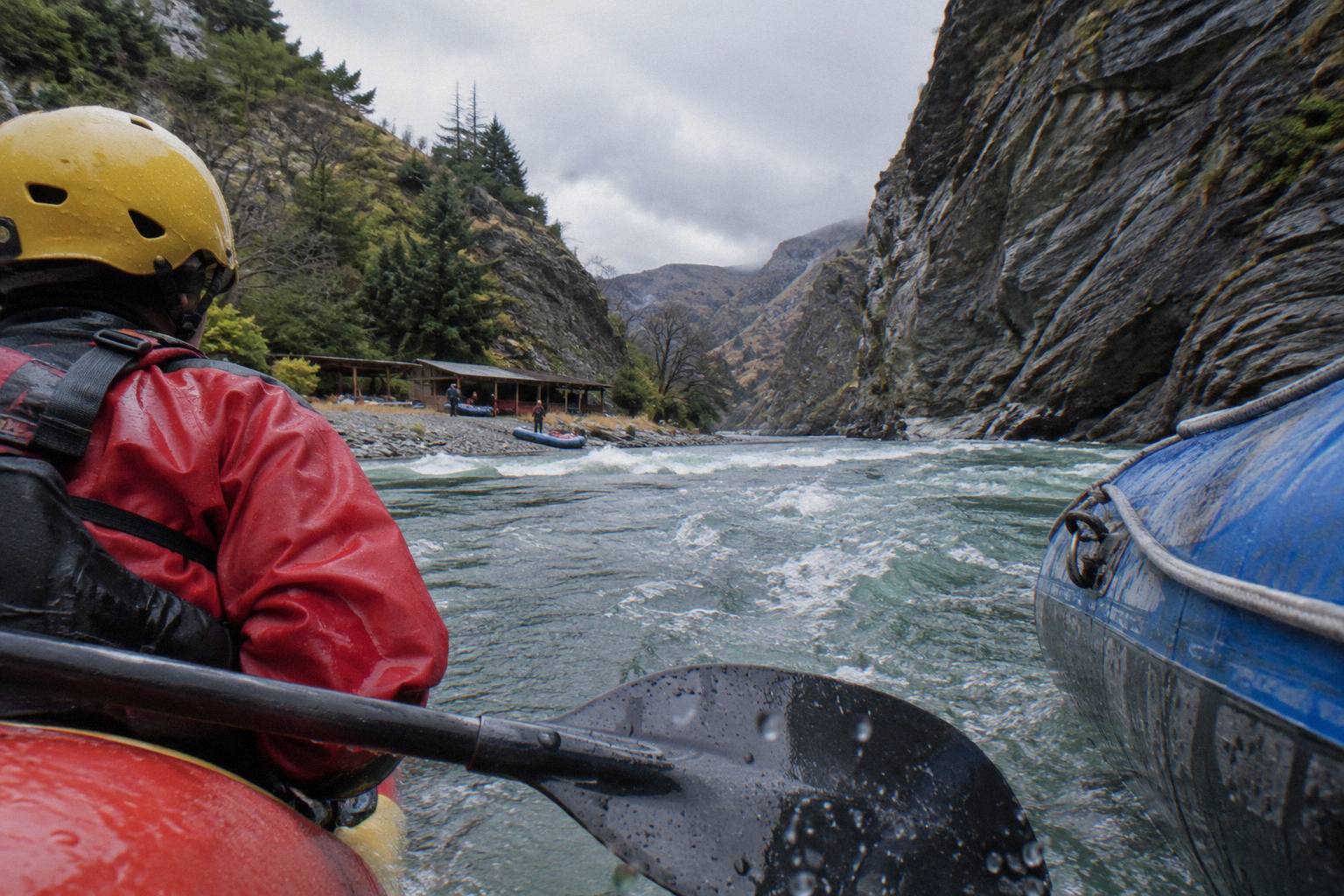
It helps to see where grade 5 sits against everything a Queenstown visitor might actually book. The gentle Family Adventures trip on the upper Shotover runs grade 1 and 2 water and takes children from three years old. The Kawarau trips run grade 2 to 3, which the operator describes as suited to first-timers. The Shotover trips sit at the opposite end of that spread. Our white water rafting grades explained guide walks the whole scale if you want the full run-down, and for the narrower question of how grade 5 differs from the grade below it, the class 5 rapids explained guide goes deeper on rapid features.
If you already know you want the top grade, these are the trips that run it:
How Does The International River Grading Scale Work?
The scale runs from class 1 to class 6. Class 1 is moving flat water with small ripples, class 2 is easy rapids with a clear path, class 3 needs manoeuvring around rocks and waves, class 4 demands precise handling in powerful water, class 5 is long and violent with mandatory technical lines, and class 6 is extreme water that commercial rafts do not run. Each step is a real jump, not a nudge.
Two things surprise people about the scale. First, it is descriptive rather than scientific: there is no measuring device that spits out a grade, it is a consensus judgement made by the paddling community and, on commercial rivers, by the operators who run them daily. Second, a river's grade is not fixed. The Kawarau is the local example: RealNZ grades it 2 to 3 but notes it can reach grade 4 at higher water levels. The same rapid can be a different animal in March than in January, which is one reason operators watch river levels and water temperature and may portage around features, or require minimum guest numbers, before a trip runs at all.
| Grade | What the water is like | What it asks of a paddler |
|---|---|---|
| Class 1 | Easy, moving water, small ripples, no obstruction | Basic boat control |
| Class 2 | Straightforward rapids, wide clear channels, small waves | Occasional steering |
| Class 3 | Moderate rapids, waves, rocks that need avoiding | Guided manoeuvring, some paddling fitness |
| Class 4 | Powerful, irregular water, narrow passages, precise lines needed | Confident paddling, fast commands |
| Class 5 | Long, violent, continuous rapids, steep drops, mandatory routes | Expert-level handling; commercially the top grade run |
| Class 6 | Extreme, effectively unrunnable | Not commercially rafted |
The grade attached to a whole river is really a summary of its hardest section. A trip described as grade 3 to 5, like the Shotover, will spend much of its time on mid-grade water and hit the big stuff at named points. That matters for buyers: a grade 3 to 5 trip and a grade 4 to 5 trip are both serious whitewater, but neither one is five solid grades of terror from put-in to take-out. There is a rhythm to these rivers, calm stretches between the rapids, time to breathe, paddle hard, then breathe again.
Grade is also not a difficulty promise. Operators in New Zealand describe their water with the grades they judge it to be on the day and across the season, and the official guidance comes with them, not against them. If you want the safety picture around commercial rafting generally, read is white water rafting safe, which covers the audit and registration regime every New Zealand adventure activity operator must satisfy.
Where Does Grade 5 Water Run Near Queenstown?
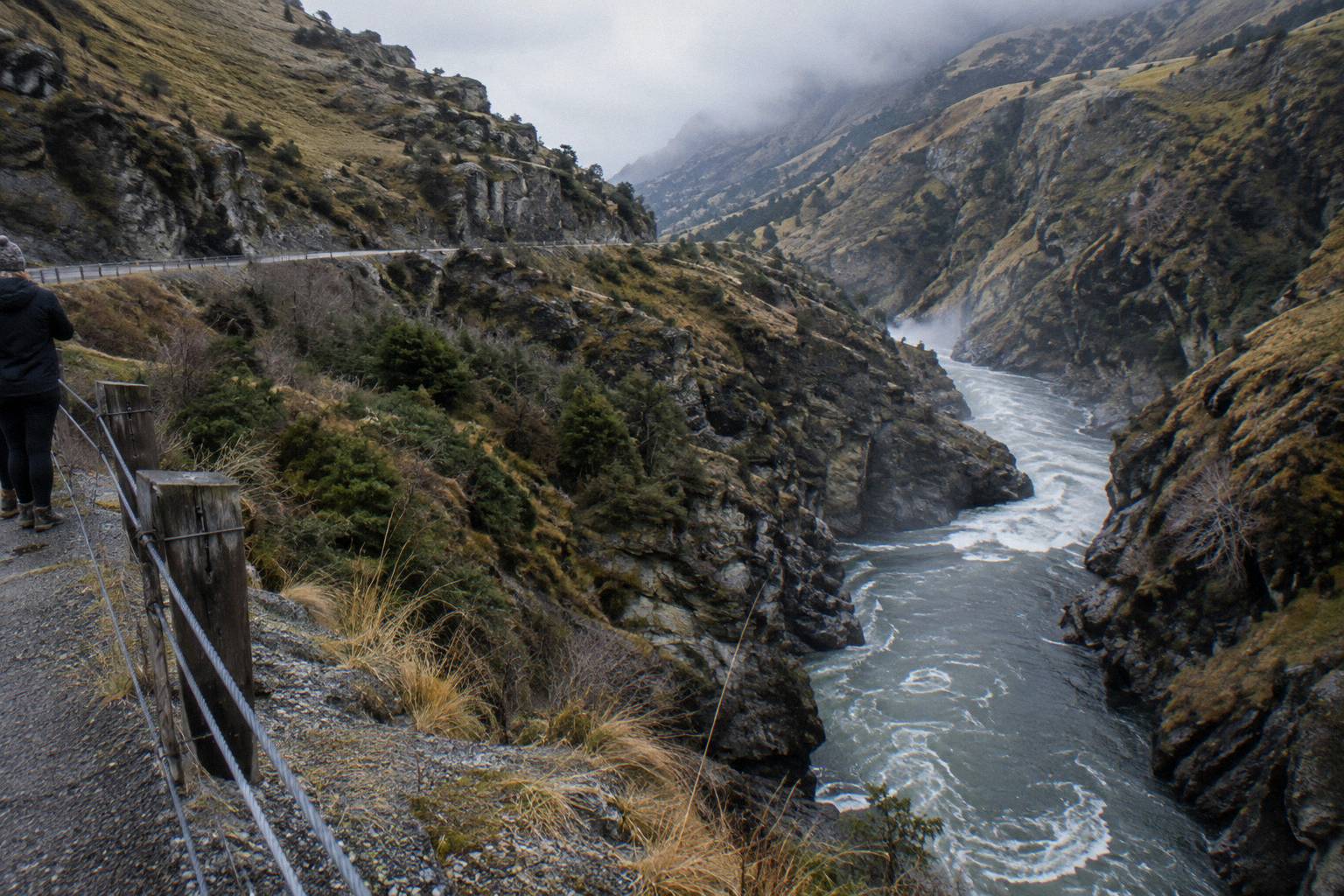
All of the grade 5 whitewater that commercial rafts run around Queenstown sits on the Shotover River, in the stretch below Skippers Canyon that ends at Arthurs Point. RealNZ grades its Shotover trip 3 to 5 through six rapids; Challenge Rafting grades its Shotover trip 3 to 5 overall, built around a series of six grade 4 to 5 rapids and finishing with the drop into Cascade Rapid.
The two Shotover products are separate trips and should not be treated as the same thing, even though Challenge Rafting's own site states its Shotover trip is operated by RealNZ. The RealNZ "Queenstown: Shotover River Whitewater Rafting Adventure", rated 4.8 from 346 reviews, runs 14 km of the Shotover over about 4.5 hours from NZ$299 per person. The shuttle bus reaches the put-in at Deep Creek via Skippers Canyon Road, roughly 40 minutes' drive to the start, and the raft base sits on the Shotover bank at Arthurs Point about a 10 minute drive from Queenstown. Rafts carry at most eight people including the guide, and a safety kayaker travels on each trip.
Challenge Rafting's "Queenstown: Shotover River Whitewater Rafting Trip", rated 4.9 from 80 reviews and also from NZ$299 per person, takes about 4 hours. Its signature section is what the operator calls the Mother rapids: a series of six grade 4 to 5 rapids with names like Aftershock, Squeeze, Toilet and Pinball, followed by the 170 m Oxenbridge Tunnel and then the drop into Cascade Rapid. It runs November through April and does not operate in winter. Professional photos are included in that booking.
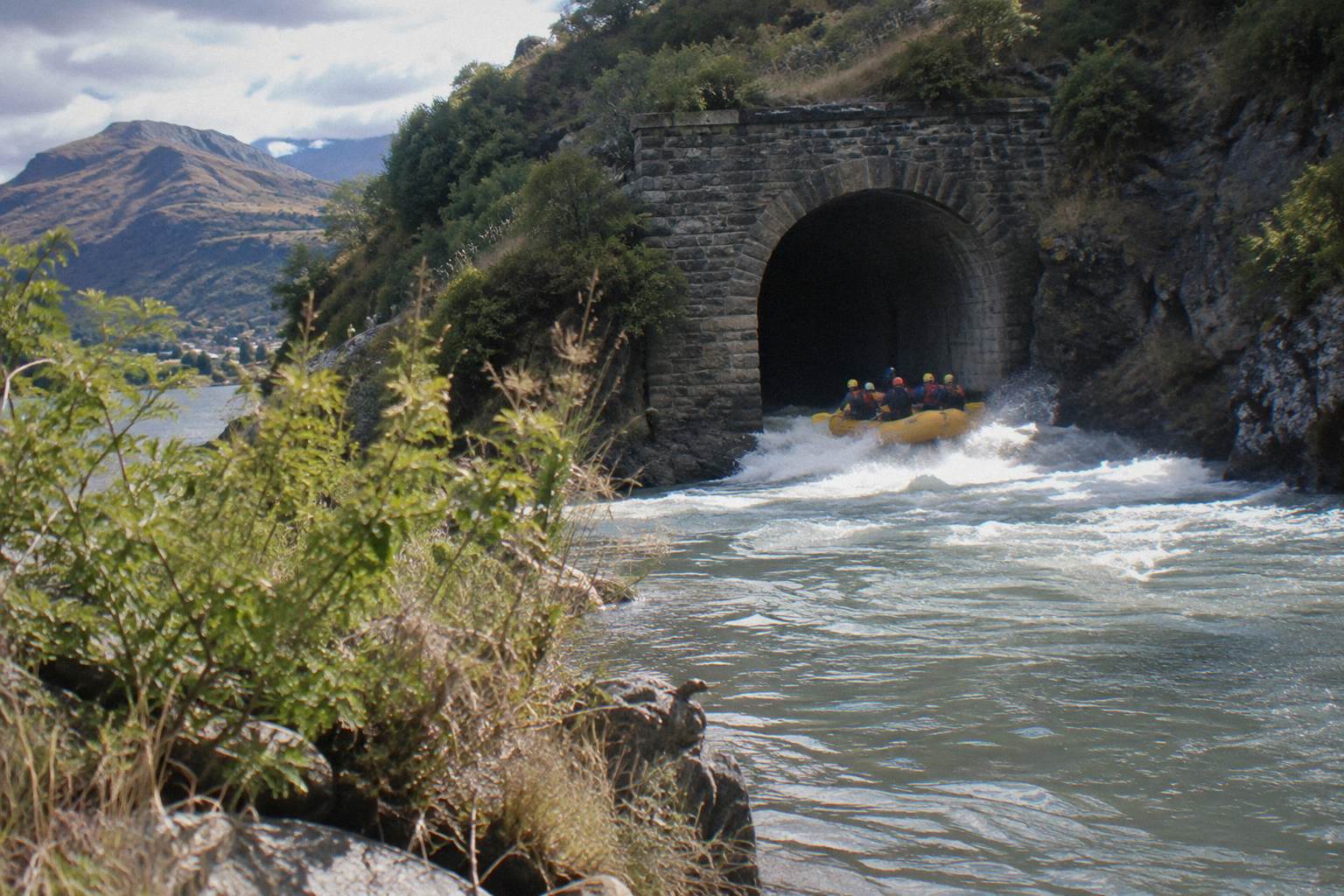
The signature shared feature of both trips is the Oxenbridge Tunnel, a 170 m dead-straight dark section the rafts paddle through before the final rapids. Both operators make a point of it, and for good reason: rafting through a tunnel bored into a canyon wall is a strange, loud, pitch-black minute that no other Queenstown experience copies. After the tunnel the water keeps coming, and the trip ends after the rapids beyond it, back at the Arthurs Point base where hot showers and a valuables locker wait.
One detail worth knowing before you commit:
Can you handle grade 5 water as a first-timer? That depends on which grade 5 trip you mean, and the answer is more forgiving than most people expect. The full eligibility picture is in the next section.
Who Is Actually Allowed On A Grade 5 Shotover Trip?
The bar is fitness and water competence, not rafting experience. RealNZ asks that guests be water-competent, able to swim 25 m unaided, with moderate fitness, and states plainly that the Shotover carries a higher risk of falling out than the Kawarau. Minimum age is 13, weight must sit between 40 kg and 120 kg, pregnancy excludes on grade 3 or above, and any heart condition except managed blood pressure excludes too.
The weight range is verified at check-in, so it is worth being straight with yourself about it before booking rather than at the counter. Under 18s sign a guardian-approved waiver, and under 16s (under 17s on the Challenge Rafting trip) must travel with a guardian on the RealNZ trips; Challenge Rafting asks that under 17s be accompanied by a guardian. Guests must be able to understand the safety briefing in English, because on grade 5 water the guide's commands are the difference between a line and a swim. There is no maximum age, and disabilities are assessed case by case.
| Requirement | RealNZ Shotover | Challenge Rafting Shotover | Family Adventures Shotover |
|---|---|---|---|
| Minimum age | 13 | 13 | 3 |
| Weight range | 40 kg to 120 kg | 40 kg to 120 kg | No limit published |
| Swimming | Water-competent, 25 m unaided | Water competence required | Water confidence not necessary |
| Grade of water | 3 to 5 | 3 to 5 overall | 1 to 2 |
| Pregnancy | Excluded on grade 3 or above | Excluded on grade 3 or above | Suitable from 3 years |
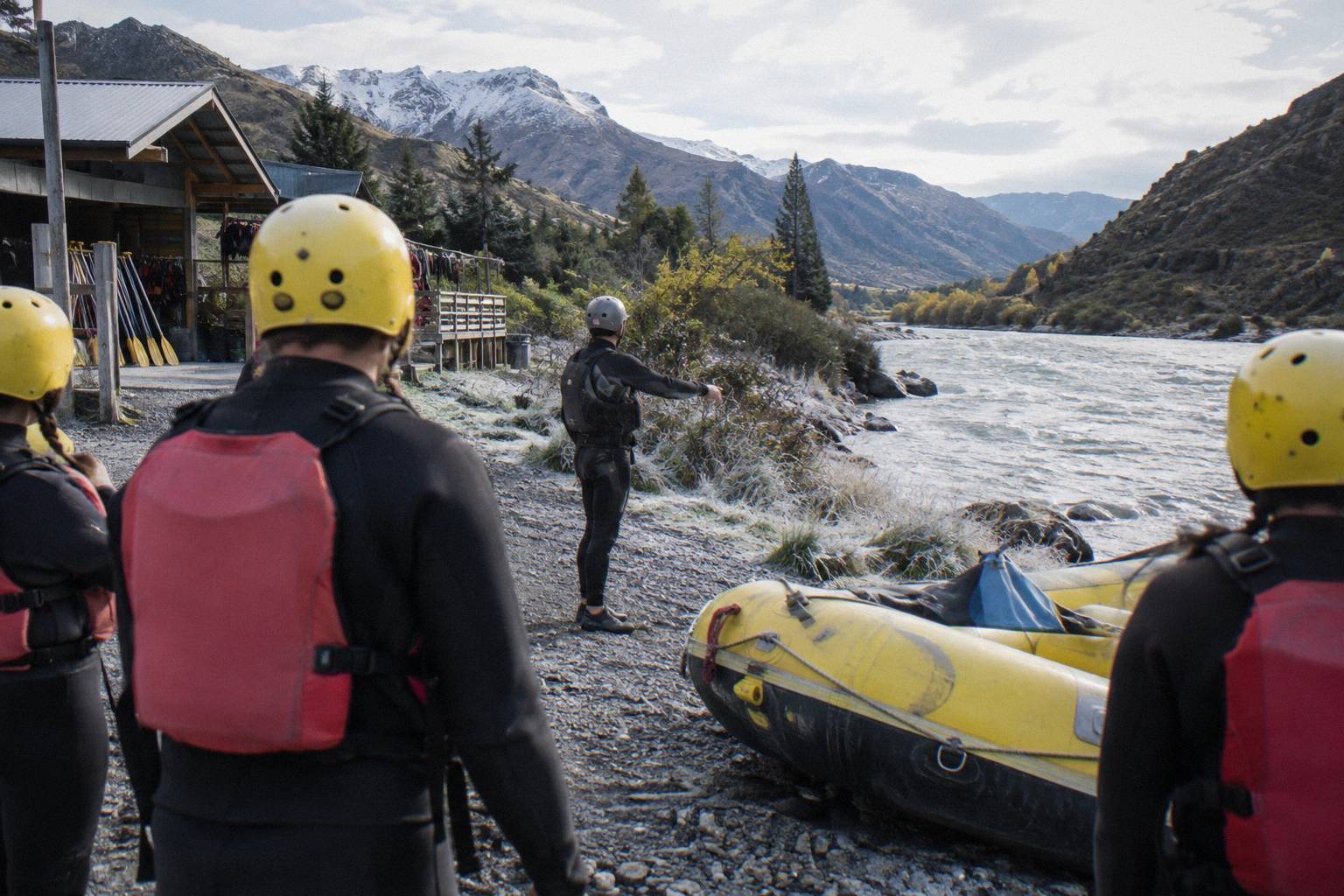
Notice the third column. The same river hosts a grade 1 to 2 float trip that takes children from three years old, runs gentle rapids, and asks for no water confidence at all. The Shotover is not one experience; it is several, stacked from family float to commercial ceiling within a few kilometres of canyon. That is why the grade number on a booking page matters more than the river name under it. Families weighing up options should read rafting with kids in Queenstown before deciding which end of the river belongs in their week.
If grade 5 sounds like a step too far this trip, the honest middle ground exists: the Kawarau runs grade 2 to 3 water suited to first-timers and less confident swimmers, from NZ$249 per person, rated 4.7 from 48 reviews. It even carries an optional cliff-jump section and a chance to swim a rapid, so nervous paddlers can choose their own ceiling within the one trip.
What Separates Grade 4 From Grade 5 In Practice?
Grade 4 is powerful water with a defined line: hard work, big waves and precise moves, but with recoverable margins and room for small errors. Grade 5 removes those margins. The rapids are longer, the drops steeper, the consequences of a missed stroke more serious, and the route must be run rather than chosen. On commercial trips the difference mostly lands on the guide, not the crew, but the crew's job stops being optional.
On a grade 4 rapid the guide may have two workable lines and pick one based on the water that day. On grade 5 there is typically one line, scouted or known from hundreds of previous runs, and the crew's job is to hold pace and hit the guide's commands instantly. That is why operators stress the English-language briefing requirement so heavily on the Shotover trips: "forward" and "get down" are not suggestions at the top of a grade 5 tongue of water. Beginners do run grade 4 water on Queenstown rivers, and the question of whether that is sensible has its own treatment in can a beginner do class 4 rapids.
Grade 5 also changes what "falling out" means, and operators are refreshingly direct about it. RealNZ says the Shotover carries a higher risk of falling out than the Kawarau, which is the same thing as saying: on the grade 5 river, the swim is a real scenario you should be ready for, not a theoretical one. What the rafting script looks like from the swimmer's end is covered in what happens if you fall out of a raft, and the protection stack on the Shotover trips is concrete: full wetsuit, wetsuit jacket, spray jacket, helmet, booties and life jacket are all provided, rafts are capped at eight people including the guide, and a safety kayaker rides along on every RealNZ trip.
The 170 m Oxenbridge Tunnel deserves a paragraph of its own here, because it is the moment a grade 5 trip feels least like rafting. The rafts paddle into a rock-cut tunnel, the light disappears, the sound triples, and the only instruction that matters is to keep paddling until the wall of daylight returns. Heritage New Zealand records that the tunnel was started in 1906 by the Oxenbridge Brothers to divert the Shotover away from the gold-fabled Jeweller's Shop rapids, that the company behind it was liquidated in 1912, and that today it is used primarily by rafting companies. A mining failure from over a century ago is now the most famous 170 m in New Zealand whitewater.
Common Mistakes People Make When Booking Grade 5 Trips
The most frequent error is treating the grade number as a thrill rating rather than a description of the water, then choosing the biggest number available without checking the eligibility rules attached to it. The second is comparing trips by price alone when the differences that matter are the meeting point, what gear is provided, and whether photos are included. A grade 5 booking rewards ten minutes of reading before payment.
| Mistake | What goes wrong | The fix |
|---|---|---|
| Booking grade 5 without reading the swim requirement | Turned away at check-in, or a frightening day on the water | Check you can swim 25 m unaided and have moderate fitness |
| Ignoring the weight range | Weight is verified at check-in, and the trip may be refused | Confirm 40 kg to 120 kg before booking |
| Assuming hotel pickup is included | Pickup is excluded; you meet at a central point | Plan to reach 88 Beach Street or Arthurs Point yourself |
| Expecting to take a camera | Nothing can be taken on the raft on the RealNZ trip | Use the operator's included or purchasable photos |
| Mixing up the two Shotover trips | Different operators, inclusions and seasons | Compare the named trips, not the river name |
The pickup point trips people up most. The RealNZ trips and the Challenge Rafting trip all exclude hotel pickup: RealNZ guests meet at the Visitor Centre at 88 Beach Street at least 20 minutes before departure, and Challenge Rafting guests check in at 88 Beach Street or self-drive to the raft base at 1 Arthurs Point Road. None of this is hidden, it simply is not at the top of most people's reading list, and the morning of a grade 5 trip is a bad time to discover you need to be somewhere in ten minutes. The full logistics picture, including what to bring and what stays behind, is laid out in what to bring rafting.
The camera rule deserves emphasis because it surprises almost everyone. On the RealNZ Shotover trip, nothing, camera or GoPro included, can be taken on the raft, which sounds harsh until you picture a loose object in a grade 5 rapid. A valuables locker at the base covers what you would otherwise leave on a bus. Challenge Rafting takes the opposite route and includes professional photos in its booking, so if images matter to you, that difference alone can decide between the two grade 5 products. The wider question of photos on Queenstown trips has its own write-up in do you get photos on a Queenstown rafting trip.
Season matters too, and it is not symmetric across operators. Challenge Rafting runs November through April and states plainly that it does not operate in winter. For the RealNZ trips no operating months are published on the pages read, so assume nothing either way and check the calendar when booking rather than planning around a season nobody has confirmed. Trips on the Shotover also depend on weather, river level and water temperature, portages may be required, and minimum guest numbers apply, which is the operator's way of saying the river gets a vote.
Common Questions About Grade 5 Rapids
What Are Level 5 Rapids?
Level 5 rapids are the hardest whitewater that commercial rafts run anywhere in the world, sitting just below class 6, which is not commercially rafted at all. They are long, violent and technically complex, with steep drops and mandatory routes. Near Queenstown, grade 5 water runs on the Shotover River, and both Shotover rafting trips include it in their grade 3 to 5 range.
Can A Beginner Raft Grade 5 Water In Queenstown?
Yes, provided you meet the operator's requirements. RealNZ asks that guests be water-competent, able to swim 25 m unaided, with moderate fitness, and does not require previous rafting experience. The guide handles the line-reading; the crew provides power and follows commands instantly. If that sounds like too much, the Kawarau runs grade 2 to 3 water suited to first-timers.
Is Grade 5 Harder Than Grade 4?
Yes, and by a wide margin. Grade 4 is powerful water with defined lines and some margin for error. Grade 5 removes those margins: rapids run longer, drops steepen, and the route must be executed rather than chosen. Commercial grade 5 trips compensate with experienced guides, small rafts and a safety kayaker on the water.
What Is The Highest Grade Anyone Can Commercially Raft?
Grade 5. The international scale runs to class 6, but class 6 is not commercially rafted. RealNZ states it directly: grade 5 is the highest grade commercially rafted in the world, and its Shotover trip reaches it.
Do The Queenstown Grade 5 Trips Run All Year?
Challenge Rafting runs November through April and does not operate in winter. For the RealNZ trips, no operating months are published, so check the booking calendar for your dates. All Shotover trips also depend on weather, river level and water temperature on the day, and portages may be required.
What Happens If You Fall Out On A Grade 5 Rapid?
You float, the life jacket holds you up, and you follow the briefing you were given before the trip: feet up and pointing downstream, hold your paddle if you can, and let the guide or safety kayaker come to you. RealNZ notes the Shotover carries a higher risk of falling out than the Kawarau, which is why the swim requirement and the safety briefing are taken seriously at check-in.
Choosing between the grade 5 Shotover trips and the gentler Kawarau water comes down to your own swim confidence and fitness, not to bravery. Whichever way you lean, the river that Queenstown White Water Rafting is built around delivers both ends of the scale within a quarter hour of town, and the grade number on the booking page is the most reliable single piece of information you have: