Class 5 Rapids Explained: Where Queenstown Fits
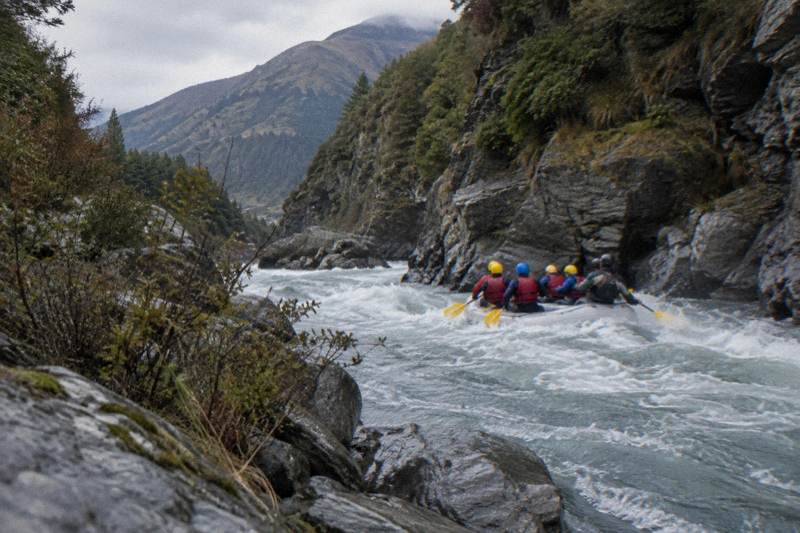
Class 5 sits near the top of the international river difficulty scale, and Queenstown is one of the few places where a commercial rafting trip can take you through it. The Shotover River's grade 5 sections, the Oxenbridge Tunnel and Cascade Rapid explain what that label means in practice.
Short answer
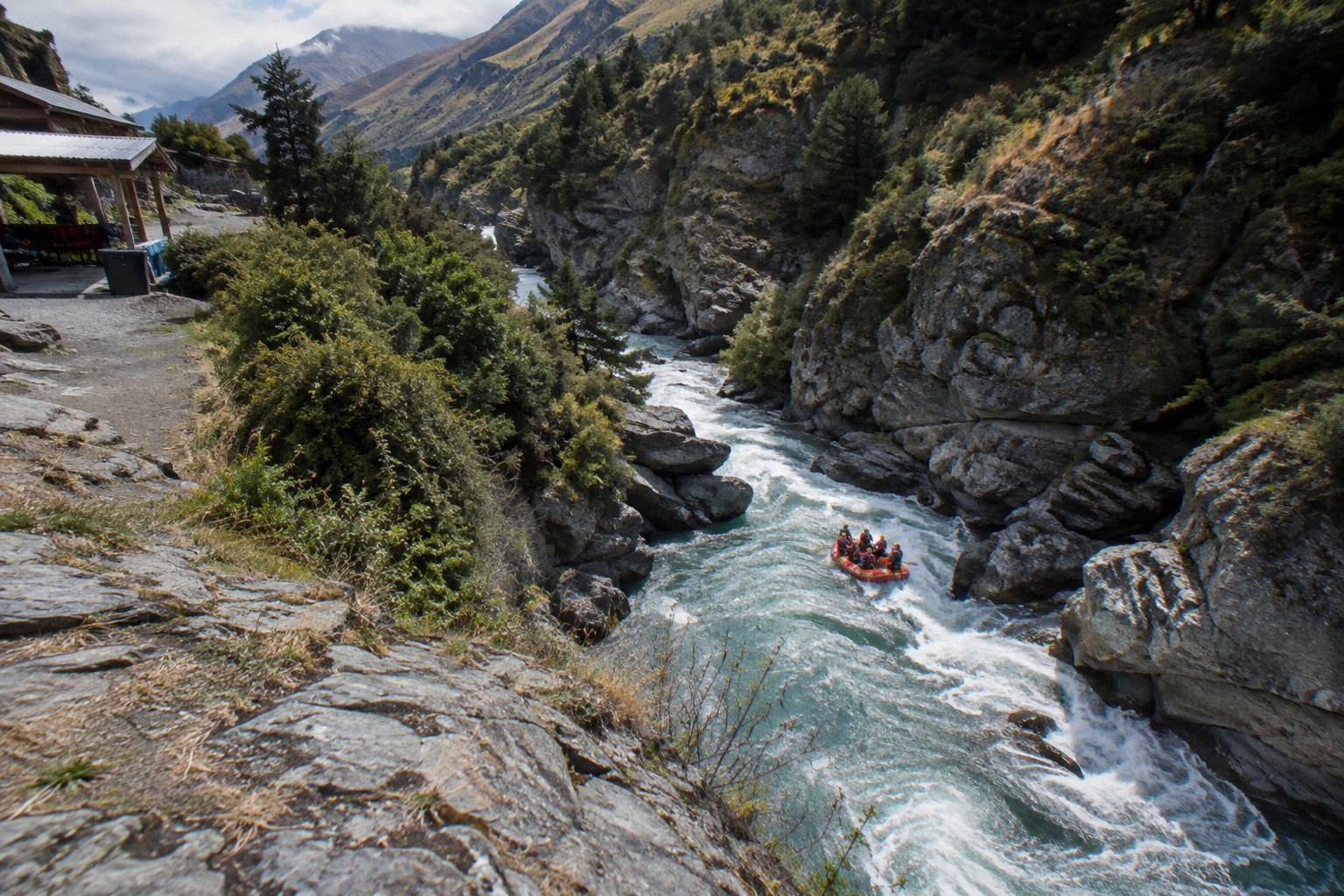
Class 5 is the highest grade commercially rafted in the world, on the international scale that runs from class 1 to class 6. In Queenstown, Shotover River trips from NZ$299 per person run grade 3 to 5, including the 170 m Oxenbridge Tunnel and Cascade Rapid. The Kawarau River runs a gentler grade 2 to 3.
Grade 5 is the ceiling of commercial rafting. RealNZ puts it plainly on its own Shotover page: "Grade 5 is the highest grade commercially rafted in the world." Everything above it, class 6, is left to private expeditions, and everything below it steps down in difficulty until you reach the flat, easy water of class 1. Queenstown happens to be one of the rare towns where a visitor can book a seat on a raft that runs grade 5 water in the same afternoon, on the Shotover River through Skippers Canyon country, and then compare it directly against a gentler grade 2 to 3 float on the Kawarau.
If you are new to how rivers are graded, start with the broader picture in the Shotover River rafting guide, which covers the full 14 km trip, the shuttle into Deep Creek and what the rapids beyond the Oxenbridge Tunnel involve. For a wider look at where New Zealand's hardest commercial water sits, the best white water rafting in New Zealand guide places the Shotover in national context.
What Does Class 5 Actually Mean?
On the international river difficulty scale, water runs from class 1, which is easy, moving water with almost no obstacles, up to class 6, which is extreme and not commercially rafted at all. Class 5 sits just below that ceiling: long, powerful rapids with steep drops, irregular waves and complex routes that demand precise manoeuvring from the guide. Commercial operators do run class 5, but only with trained guides, safety kayakers and strict guest requirements.
The scale is qualitative rather than mathematical. There is no formula that converts wave height or gradient into a grade number. Instead, graders look at how continuous the rapid is, how much of it could trap or flip a raft, how hard the route is to read from the water, and what happens if something goes wrong. A single short steep drop might only be class 4, while a long boulder garden with several consequential moves in a row pushes into class 5 territory.
One useful mental model: class 3 is fun and splashy, class 4 is exciting and requires real teamwork, and class 5 is where the guide's judgement matters more than your paddle stroke. Guests on Queenstown's grade 5 water are there to paddle hard and follow instructions instantly, not to steer. That division of labour is exactly why commercial grade 5 rafting exists at all.
It also explains why the grade is attached to a stretch of river rather than a whole river. When an operator says a trip is "grade 3 to 5", the honest reading is that most of the day is spent on moderate water, and the top-end rapids arrive in concentrated bursts. The grade range, not the single number, tells you what your day will feel like.
| Class | Plain-words description | Commercially rafted? |
|---|---|---|
| Class 1 | Easy, calm moving water, no obstacles | Yes, gentle scenic floats |
| Class 2 | Small waves, clear channels, occasional manoeuvring | Yes, beginner friendly |
| Class 3 | Moderate waves, narrow passages, needs guided steering | Yes, the classic first rafting trip |
| Class 4 | Powerful waves, steep drops, precise manoeuvring required | Yes, with experienced guides |
| Class 5 | Long, violent rapids, complex routes, high consequence | Yes, but rare, with strict limits |
| Class 6 | Extreme, considered unraftable commercially | No |
Class 4 Versus Class 5: How They Feel Different
Class 4 rapids are exciting but forgiving: waves are big, the drop is real, yet there is usually time and space to correct a mistake. Class 5 rapids compress everything, longer rapids, steeper water, harder reads, so a single missed paddle call compounds fast. The practical difference for a guest is that class 4 leaves room to be a passenger, while class 5 asks for total attention from the first briefing to the last eddy.
In plain words, class 4 water usually comes in discrete chunks. You run one rapid, catch your breath in calm water, then line up the next. Class 5 water tends to link features together, so a wave train feeds straight into a hole, which feeds into a rock garden, with the guide calling commands continuously. On the Shotover, that linking character is exactly what the operators describe: RealNZ runs six grade 3 to 5 rapids in sequence before the raft enters the 170 m Oxenbridge Tunnel, and Challenge Rafting calls its hardest stretch the "Mother" rapids, a series of six grade 4 to 5 rapids with names like Aftershock, Squeeze, Toilet and Pinball, before the tunnel and the drop into Cascade Rapid.
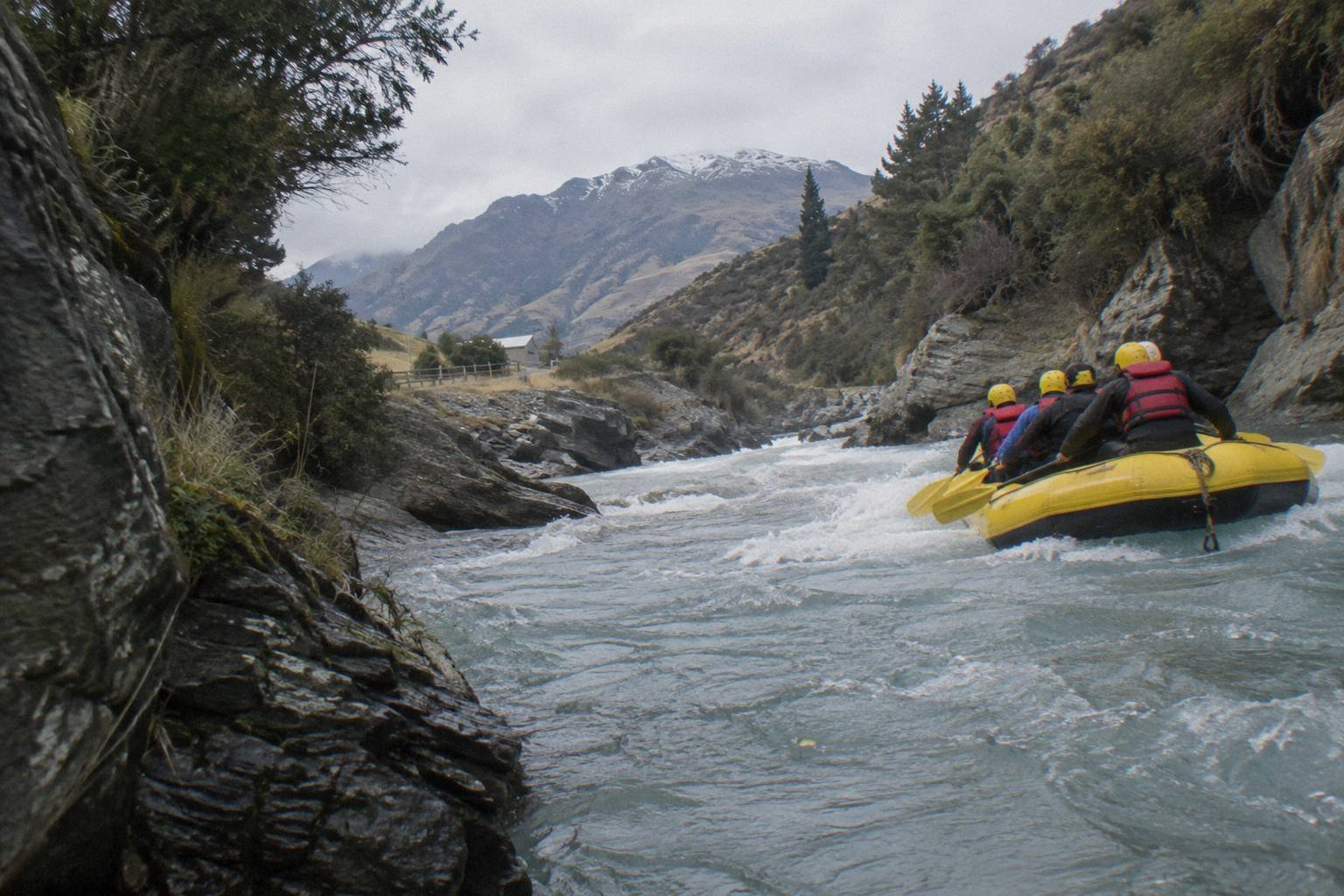
The Tunnel deserves its own mention because it is unusual in world rafting. Built from 1906 by the Oxenbridge Brothers to divert a large part of the Shotover away from the gold-fabled "Jeweller's Shop" rapids above Arthurs Point, it failed as a mining scheme, the company behind it was liquidated in August 1912, and it now carries the Shotover's flow and rafting trips through a 170 m black passage. Heritage New Zealand's list entry 5607 records the whole story. Running a rapid inside a tunnel is part of why the Shotover's top-end grade feels distinct from anything else on offer around Queenstown.
The gold history is not a side note, it is the reason the rapids exist where they do. The 1862 gold rush on the Shotover, dubbed "the richest river in the world" at the time, brought thousands of prospectors into the canyon, and the mining works they left behind still shape the river channel that rafts run today.
| Feature | Class 4 in plain words | Class 5 in plain words |
|---|---|---|
| Rapid length | Short to medium, with recovery pools between | Long, features linked end to end |
| Waves | Big and punchy but readable | Irregular, powerful, hard to read ahead |
| Route | Usually one clear line | Complex lines, guide decides in the moment |
| Guest role | Paddle hard, enjoy the ride | Paddle hard, react instantly to every call |
| Room for error | Some, water gives you a second chance | Little, one missed move compounds |
| Where in Queenstown | Grade 4 to 5 "Mother" rapids top end, Shotover | The same "Mother" rapids at high end, Cascade Rapid |
Readers weighing whether the jump from grade 4 water is too far will find a fuller discussion in whether beginners can handle class 4 rapids, which steps down one level and works upward.
Which Queenstown Trips Reach Class 5 Water?
Only the Shotover River carries grade 5 commercial rafting in Queenstown. RealNZ's Shotover trip runs grade 3 to 5, from NZ$299 per person, 4.5 hours door to door, and Challenge Rafting's Shotover trip also runs grade 3 to 5, from NZ$299 per person over 4 hours, with a November to April season. The Kawarau River trips stay at grade 2 to 3, from NZ$249 per person, and are the standard choice for first-timers.
RealNZ's Shotover trip checks in at 88 Beach Street; the Challenge Rafting booking meets at Morning Star Reserve, 1 Arthurs Point Road, Arthurs Point. Both finish at the Arthurs Point rafting base after running the rapids beyond the tunnel. RealNZ's rafts carry at most eight people including the guide, and a safety kayaker travels on each trip. Challenge Rafting's version includes professional photos in the booking, and its own site states that its Shotover River rafting is "operated by RealNZ", though the two remain separate products with different seasons, durations and inclusions.
| Trip | River | Grade | Duration | From (per person) | Rating |
|---|---|---|---|---|---|
| Shotover Rafting, Half Day | Shotover | 3 to 5 | 4.5 hours | NZ$299 | 4.8 from 346 reviews |
| Challenge Rafting, 4 Hours | Shotover | 3 to 5 (Mother rapids 4 to 5) | 4 hours | NZ$299 | 4.9 from 80 reviews |
| Kawarau Rafting Only, Base Fare | Kawarau | 2 to 3 | 4 hours | NZ$249 | 4.7 from 48 reviews |
| Rafting Plus Jet Boat Combo | Kawarau | 2 to 3 | 4.5 hours | NZ$329 | 4.8 from 151 reviews |
The interesting detail in that comparison is that grade 5 water does not cost more. Both Shotover trips start at NZ$299, the same ceiling as the Kawarau combo, so price is a poor guide to difficulty here. What you are choosing between is adrenaline level, not quality. The featured Shotover River half day rafting trip is the fullest version of the grade 5 experience, while the Kawarau base fare trip covers a gentler river at the lowest from-price. Full details for both rivers sit in the deeper Kawarau River rafting guide.
The Shotover's Grade 5 Sections, Rapid By Rapid
The Shotover's hardest water comes in two blocks: the "Mother" rapids above the tunnel, a series of six grade 4 to 5 rapids named Aftershock, Squeeze, Toilet and Pinball among them, and then the drop into Cascade Rapid immediately after the raft exits the 170 m Oxenbridge Tunnel. The trip ends after the rapids beyond the tunnel, back at the Arthurs Point rafting base, about a 10 minute drive from Queenstown.
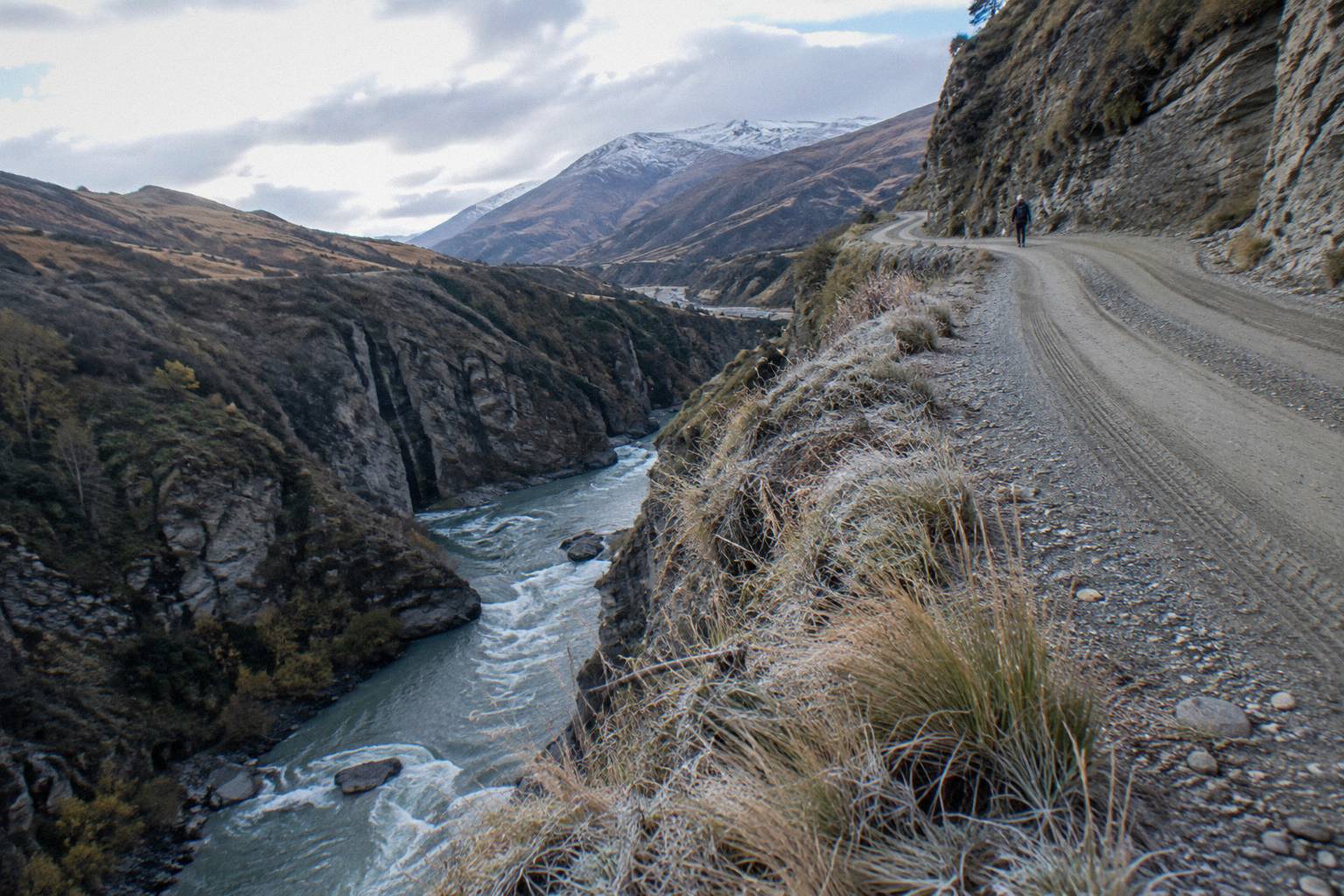
The geography shapes the grading. The shuttle bus reaches the put-in at Deep Creek via Skippers Canyon Road, about a 40 minutes' drive to the start, and from there 14 km of the Shotover run through a narrow canyon whose rock walls compress the river into steep, constricted channels. The operator describes that narrow dirt road as one that "hugs the canyon's sheer cliffs", and the road itself is part of the adventure. Skippers Road is unsealed, narrow and winding, 13 km from Skippers Saddle to Skippers Bridge, and the Department of Conservation advises that only experienced drivers should attempt it, which is one reason guests travel in by shuttle rather than self-driving.
After the Mother rapids, the tunnel changes the character of the run completely. The raft paddles into darkness, floats through 170 m of rock, and then drops into Cascade Rapid in daylight on the other side. RealNZ notes that its jet boat and rafting trips never share a stretch of river, except a 500 m stretch after the Oxenbridge Tunnel, so that final section is the only place both crafts appear on the same water. Spectators cannot access the river itself, but viewers can stand near the last rapid as rafts exit the tunnel, with timing varying by trip.
Challenge Rafting runs its Shotover season November through April and does not operate rafting in winter, which runs May to early September. RealNZ's pages do not publish operating months, and its trips run depending on weather, river level and water temperature, with portages sometimes required and minimum guest numbers applying. Anyone wanting to walk off some of the anticipation can take the DOC Oxenbridge Tunnel Track, a short easy 20 minute walk from just before the Edith Cavell Bridge at Arthurs Point to a viewpoint over the tunnel diversion and an old steam engine.
Can A Beginner Raft Class 5 In Queenstown?
Yes, with conditions. Operators do not require prior rafting experience for the Shotover trips, but they do require water competence, meaning the ability to swim 25 m unaided, moderate fitness, and minimum age 13 with weight between 40 kg and 120 kg. RealNZ says outright that the Shotover carries a higher risk of falling out than the Kawarau, so a nervous first-timer is usually pointed toward the grade 2 to 3 river instead.
The eligibility rules are the operator's way of matching guests to water. Any heart condition, except blood pressure managed with medication, excludes, as does pregnancy on grade 3 water or above. Under 16 must travel with a guardian on RealNZ trips, under 17 accompanied by a guardian on the Challenge Rafting version, and under 18 needs a guardian-signed waiver either way. Weight is verified at check-in, guests must understand safety briefings in English, and disabilities are assessed case by case. There is no maximum age, and the operators ask for "a good level of physical fitness".
| Requirement | Shotover trips (grade 3 to 5) | Kawarau trips (grade 2 to 3) |
|---|---|---|
| Minimum age | 13 | 13 |
| Weight range | 40 to 120 kg | Up to 120 kg |
| Swimming | Must swim 25 m unaided | Water confidence recommended |
| Fitness | Moderate | Suited to first-timers |
| Guardians | Under 16 or 17 with guardian, under 18 waiver | Same limits apply |
| Falling-out risk | Higher, per operator | Lower |
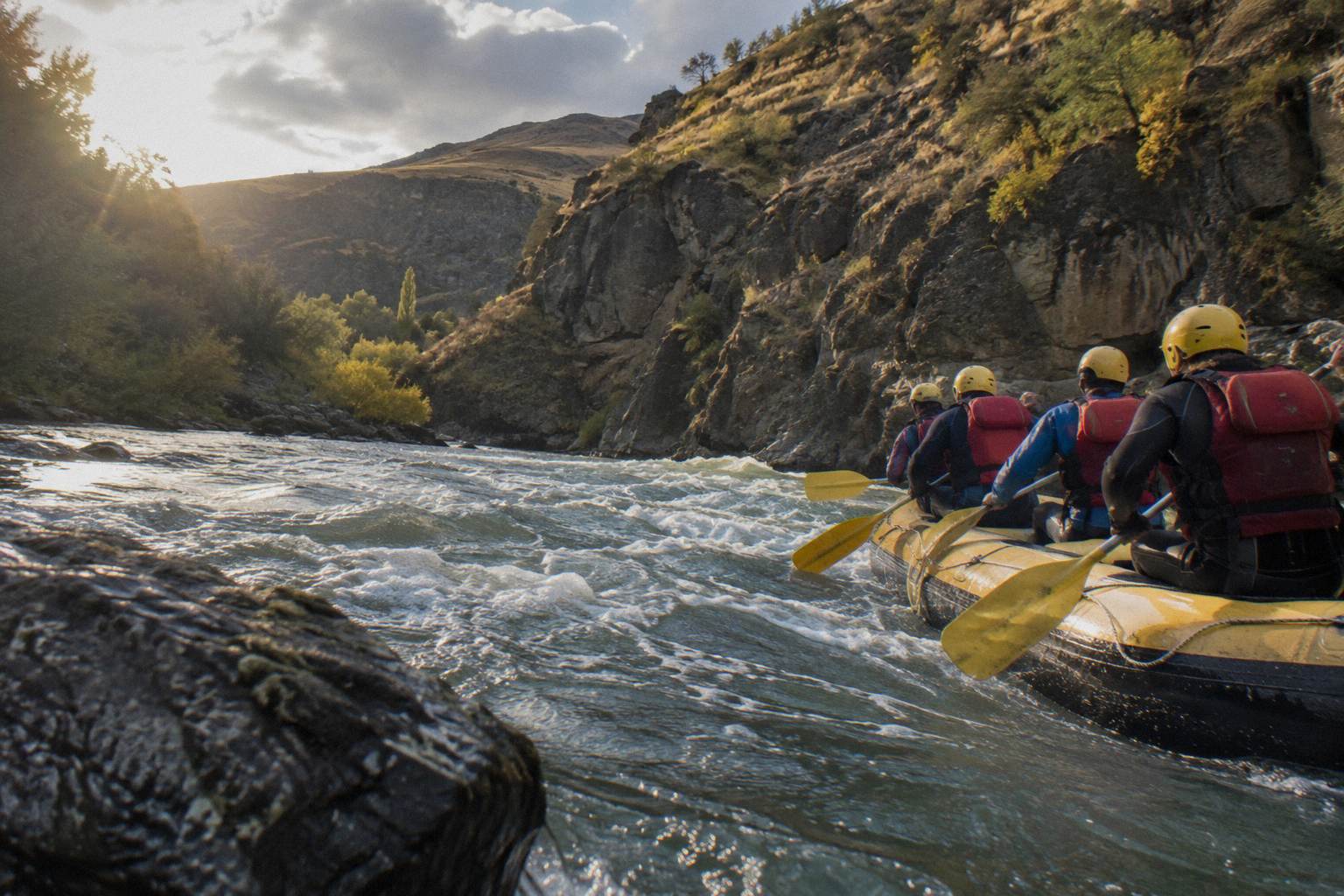
For anyone reading that table and feeling doubt, the plain summary is simple: the Kawarau is the river operators themselves recommend for less confident swimmers, while the Shotover rewards guests who want the top of the scale. The full reasoning is laid out in the beginners white water rafting guide, and for the gentler end of the spectrum there is also a family-oriented Shotover option. Nerves are normal too, and the rafting fear and nerves guide addresses them directly.
If You Want Big Water Without Grade 5
The Kawarau River offers that middle path: grade 2 to 3 water that can reach grade 4 at higher levels, an optional cliff-jumping section, and the Dog Leg, a 400 m rapid the operator calls the longest commercially rafted rapid in New Zealand. The Rafting Plus Jet Boat Combo, from NZ$329 per person, adds a 25-minute jet boat transfer covering 22 km of the river at 95 km/h with 360-degree spins before the rafting.
The combo shows how Queenstown stacks adrenaline in layers rather than grades. You get speed and spins on the jet leg, then an hour of rafting on water that is punchy without being class 5. It is a useful pick for groups split between thrill-seekers and the merely brave, since everyone gets wet, everyone gets sprayed, and nobody has to swim 25 m unaided through a canyon to earn it. The jet leg races to the rafting station along 22 km of the Kawarau, the river that also plays the River Anduin in Lord of the Rings and the only outlet of Lake Wakatipu, flowing east from Queenstown.
For families with younger children, there is also a gentle Shotover Canyon option, grade 1 to 2, suitable from age 3. For anyone who wants deep background before choosing, the Queenstown White Water Rafting collection covers every grade band the region offers.
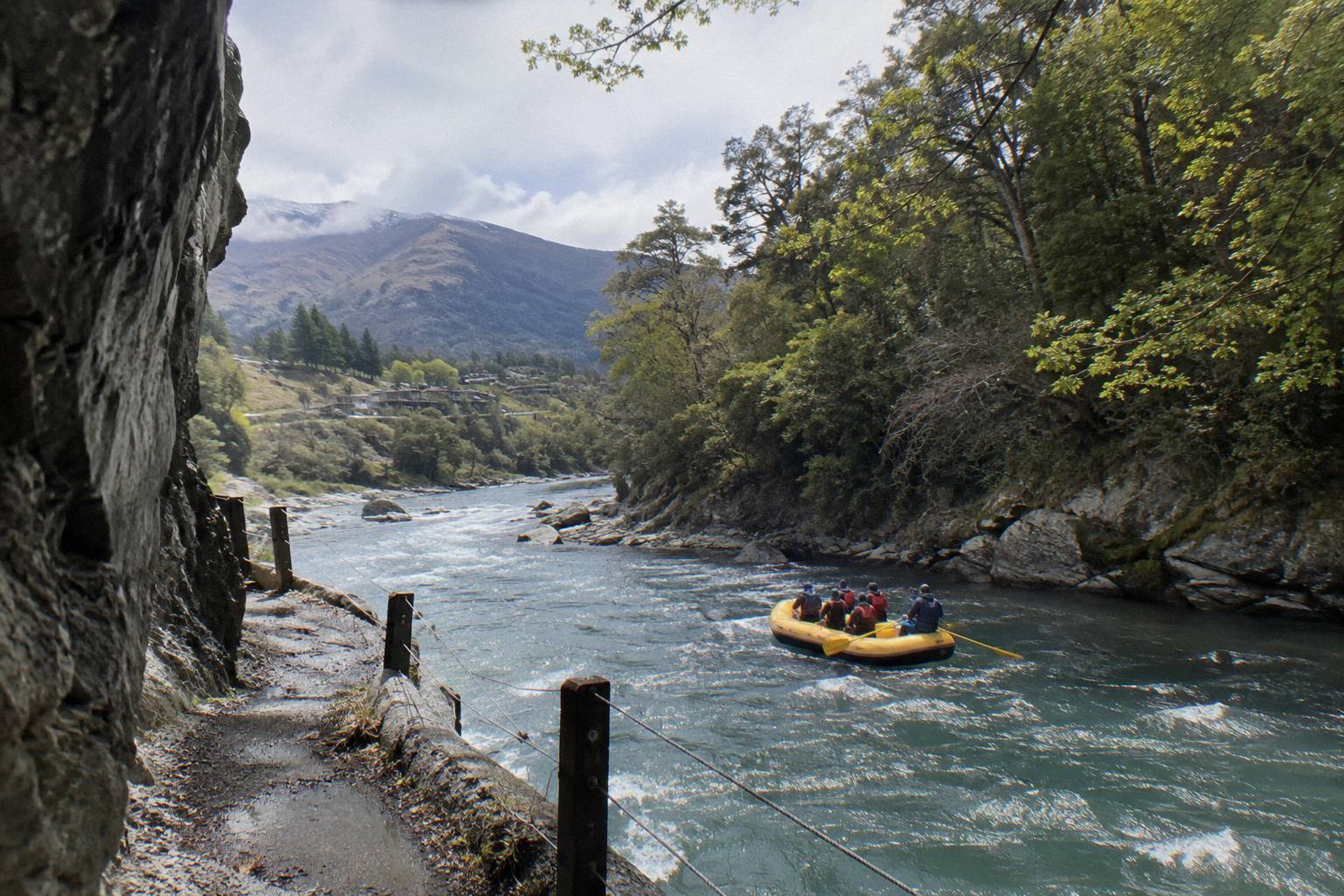
Common Mistakes People Make About Class 5
The biggest mistake is treating the grade number as a promise. River grades shift with water levels, the Kawarau is usually grade 2 to 3 but can reach grade 4 at higher water, and the Shotover trips sometimes require portages when conditions demand it. The second biggest is assuming class 5 is only for experts, when in practice the entry requirements are about swimming ability, age, weight and health rather than rafting history.
A short list of the errors that come up again and again:
- Judging a whole river by one number. Both Shotover trips run grade 3 to 5 overall, meaning most of the 14 km is calmer water between the headline rapids.
- Ignoring the falling-out factor. RealNZ explicitly says the Shotover has a higher risk of falling out than the Kawarau. That sentence should weigh more heavily than any grade number.
- Planning around a hard schedule. No departure time is fixed in advance; you choose it on the booking calendar, and trips run depending on weather, river level and water temperature.
- Assuming winter availability. Challenge Rafting's Shotover season runs November through April only, with no rafting from May to early September.
- Bringing a camera. Nothing, camera or GoPro, can be taken on the raft on the RealNZ Shotover trip; there is a valuables locker at the base. Challenge Rafting instead includes professional photos in its booking.
- Wearing the wrong layers. Swimwear only under the wetsuit, no cotton, and glasses need a sports strap or stay behind. The gear rundown is in the what to wear rafting guide.
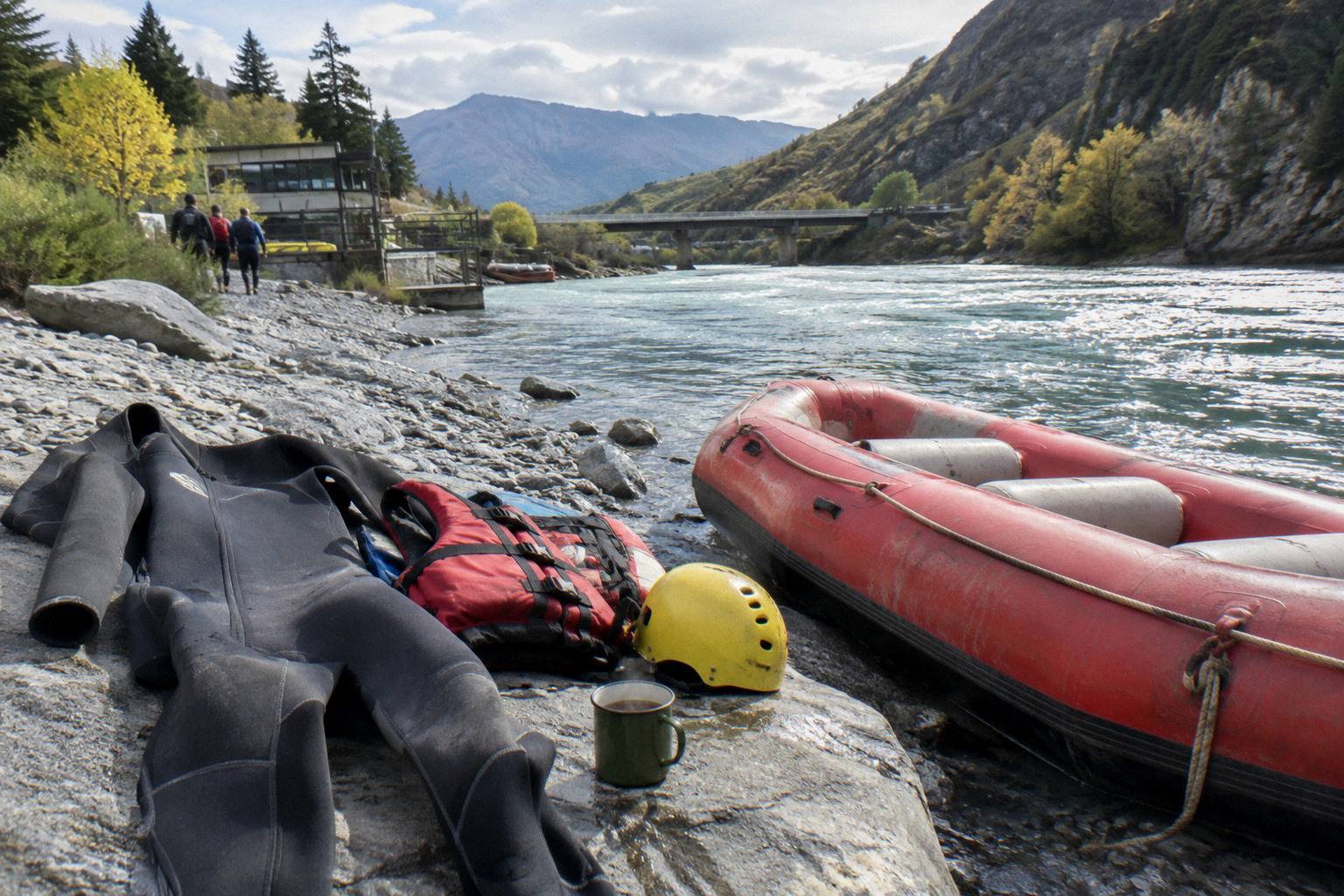
A quieter mistake is comparing the two Shotover products as if they were identical. They overlap on the river, the tunnel and Cascade Rapid, but the Challenge Rafting trip is 4 hours against RealNZ's 4.5, it includes photos rather than locking cameras away, and its season stops dead in early May. Choosing between them on grade alone misses the differences that will actually shape your day.
Booking, Safety Oversight And What You Get
Both Shotover grade 5 trips include the full kit: wetsuit, wetsuit jacket, spray jacket, helmet, booties, life jacket and paddle, plus a safety briefing, hot showers afterwards and round-trip bus transfers from the meeting point. Prices start at NZ$299 per person, and New Zealand law requires adventure activity operators to be registered and to have passed a safety audit before they may legally offer trips.
The regulatory point matters more than most visitors realise. WorkSafe New Zealand runs a public register of adventure activity operators, described as operators who have passed a safety audit and are authorised to provide adventure activities, and it is an offence to provide an adventure activity unless registered. The register is searchable by name, activity and location. That is the framework every commercial rafting departure in this country sits inside, alongside the on-water safeguards like the safety kayaker who travels on each RealNZ Shotover trip.
Check-in is at the RealNZ Visitor Centre, 88 Beach Street, Queenstown, at least 20 minutes before departure, with hotel pickup excluded on all of the grade 3 to 5 options, though Challenge Rafting guests may self-drive to the raft base at 1 Arthurs Point Road, Arthurs Point. The meeting point given on the booking calendar for that trip is Morning Star Reserve, the same street address as the raft base. Family Adventures' gentle canyon trip starts and ends at Camp Street, includes snacks and runs 5 hours, with pickup arrangements to confirm when booking.
Common Questions About Class 5 Rapids
What Does Class 5 Mean In White Water Rafting?
Class 5 is the second highest grade on the international river difficulty scale, which runs from class 1, easy, to class 6, extreme and not commercially rafted. RealNZ's wording is that grade 5 is the highest grade commercially rafted in the world: long, powerful, complex rapids requiring precise guiding and full attention from the crew.
Can You Raft Class 5 Rapids In Queenstown?
Yes. Both Shotover River trips run grade 3 to 5 water, including the six rapid "Mother" stretch and the drop into Cascade Rapid after the 170 m Oxenbridge Tunnel. Prices start at NZ$299 per person, with durations of 4 and 4.5 hours.
Is Class 5 Dangerous For Beginners?
Operators do not require rafting experience, but they do require guests to swim 25 m unaided, have moderate fitness, be at least 13 and weigh between 40 kg and 120 kg. RealNZ states the Shotover has a higher risk of falling out than the Kawarau, and a safety kayaker travels on each trip.
What Is The Difference Between Class 4 And Class 5 Rapids?
Class 4 rapids are big but discrete, with recovery water between features. Class 5 links steep, irregular features end to end, leaving little room for error. Queenstown's Shotover trips span both: grade 3 water between rapids, grade 4 to 5 in the Mother rapids and Cascade Rapid.
Which Queenstown River Is Class 5, The Shotover Or The Kawarau?
The Shotover. It runs grade 3 to 5. The Kawarau runs grade 2 to 3, can reach grade 4 at higher water levels, and is the river operators recommend for first-timers and less confident swimmers. Its trips start at NZ$249 per person.
When Can You Run The Grade 5 Shotover Trips?
Challenge Rafting runs its Shotover trip from November through April and does not raft in winter, May to early September. RealNZ does not publish operating months, and all trips depend on weather, river level and water temperature, with portages sometimes required. Pick your departure on the booking calendar.