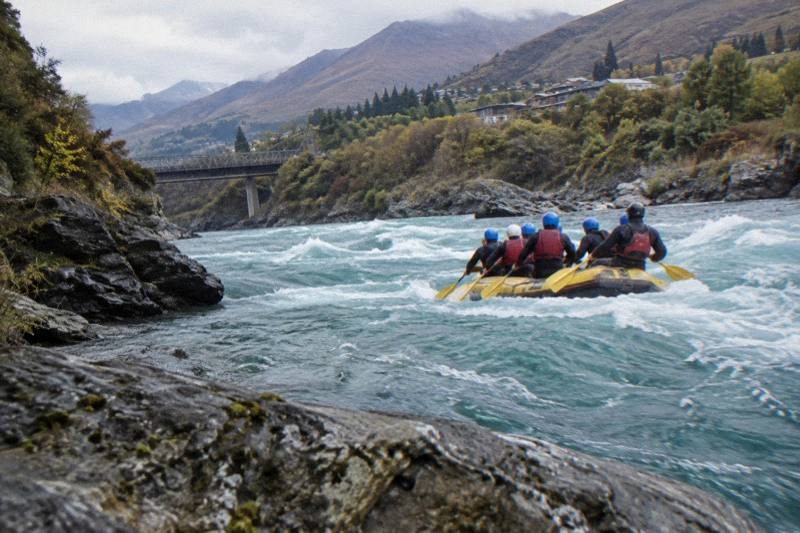
Nervous About Rafting? How The Trip Actually Feels
Most people who book a Queenstown rafting trip have never held a paddle. The difficulty depends almost entirely on which river you choose: the Kawarau runs grade 2 to 3 and welcomes beginners, the Shotover runs grade 3 to 5 and demands more. Here is how to match the trip to your nerves.
Short answer
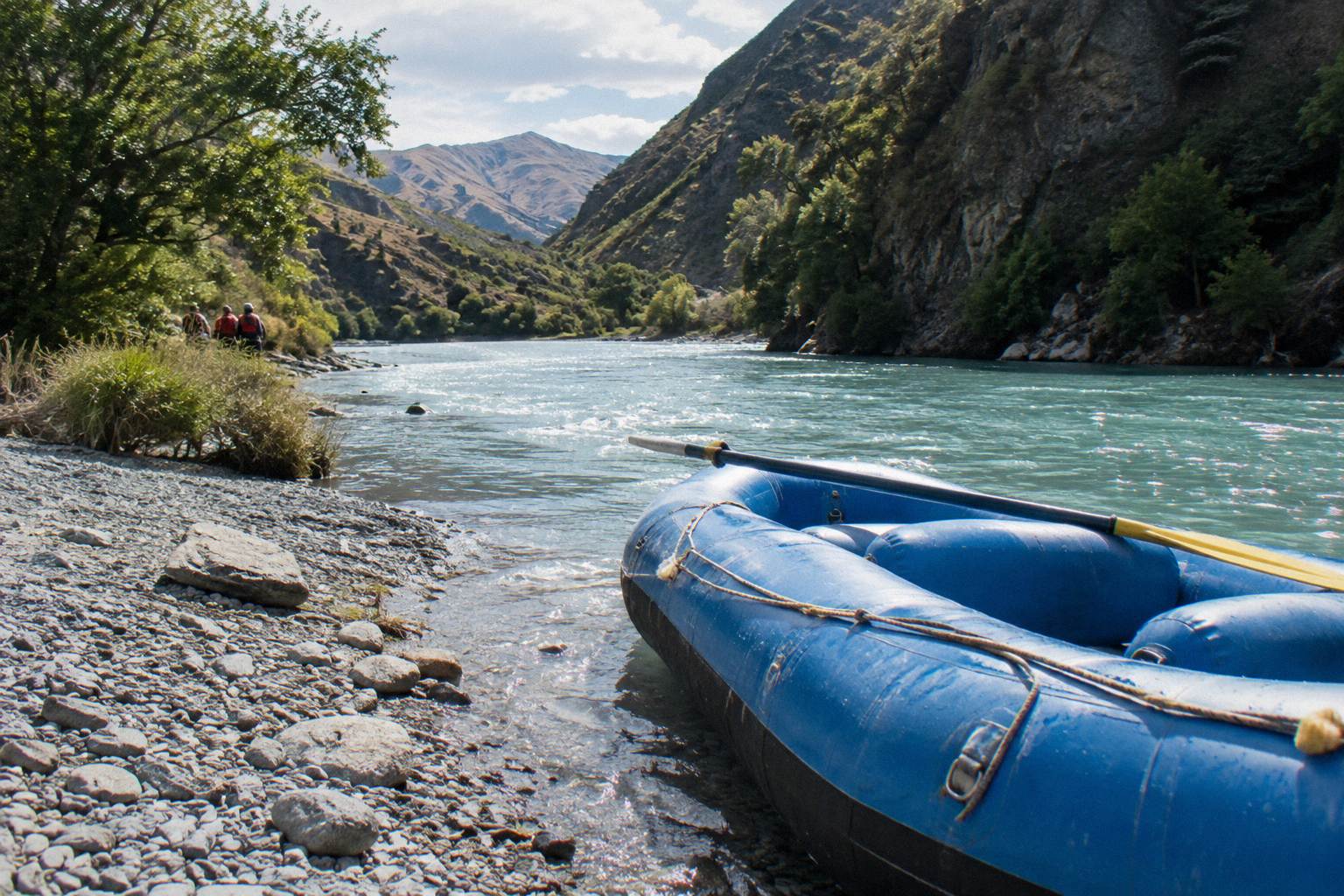
Whitewater rafting difficulty scales with river grade. The Kawarau trip runs grade 2 to 3 and suits first-timers and less confident swimmers, from NZ$249 per person. The Shotover runs grade 3 to 5, needs water competence and moderate fitness, from NZ$299. A gentle grade 1 to 2 Skippers Canyon option from NZ$329 takes children from age 3.
The most common person on a Queenstown raft is someone who has never rafted before. Nearly every trip here is built for that person: full wetsuit gear supplied, a half-hour safety briefing before anyone touches water, and a guide in the raft who does the thinking. What varies is the river. The Kawarau moves along at grade 2 to 3, which the operator describes as suited to first-timers and less confident swimmers. The Shotover runs grade 3 to 5, and the operator itself says that trip carries a higher risk of falling out. Choose between those two and you have already done the hard part of managing your nerves. For a fuller map of the rivers see our Queenstown White Water Rafting home page, and for the grade scale itself read what the river grades actually mean.
Nerves also respond to information in a way that is easy to underestimate. The unknowns that gnaw at people overnight, the water, the boat, the falling, the cold, are all answered in operator documentation, and every answer is plainer than the fear suggests. Water confidence is not necessary on the gentlest trip. Gear is carried for you. The scariest single feature on the hardest river, the 170 metre tunnel, is over in minutes and has been run commercially for decades. The sections below set out each of these answers in order, so by the end you can point at a trip, a river and a grade with a steady hand.
How Difficult Is Whitewater Rafting, Really?
On the international scale, commercial rafting runs from grade 1 (moving water, almost flat) to grade 6 (extreme, and not commercially rafted at all). Everything sold in Queenstown sits between grade 1 and grade 5. Grade 5 is the highest grade commercially rafted in the world, and only one Queenstown trip reaches it. For most beginners the honest measure is not strength or skill, it is which grade you point the raft at.
Difficulty in rafting is mostly about the water, not about you. A grade 2 rapid asks you to paddle when told and stay seated. A grade 5 rapid asks for quick reactions, a firm paddle stroke and the willingness to be thoroughly soaked and shaken. Nobody expects technique on day one: the guide calls every command, and the briefing covers what each command means before the bus leaves town. The gap between grades is bigger than the gap between beginners, which is why the choice of river matters more than any amount of pre-trip training.
Physical demands are lower than most people fear. Operators here ask for moderate fitness and water competence on the harder rivers, and "a good level of physical fitness" on the RealNZ trips, but the paddle work comes in short bursts between calmer stretches. If you can swim 25 metres unaided and climb into a raft, you meet the physical bar for the grade 3 to 5 Shotover. The gentler rivers drop even that requirement: the Family Adventures Skippers Canyon trip states water confidence is not necessary at all. That is a remarkable sentence for an adventure product, and nervous families should read it twice.
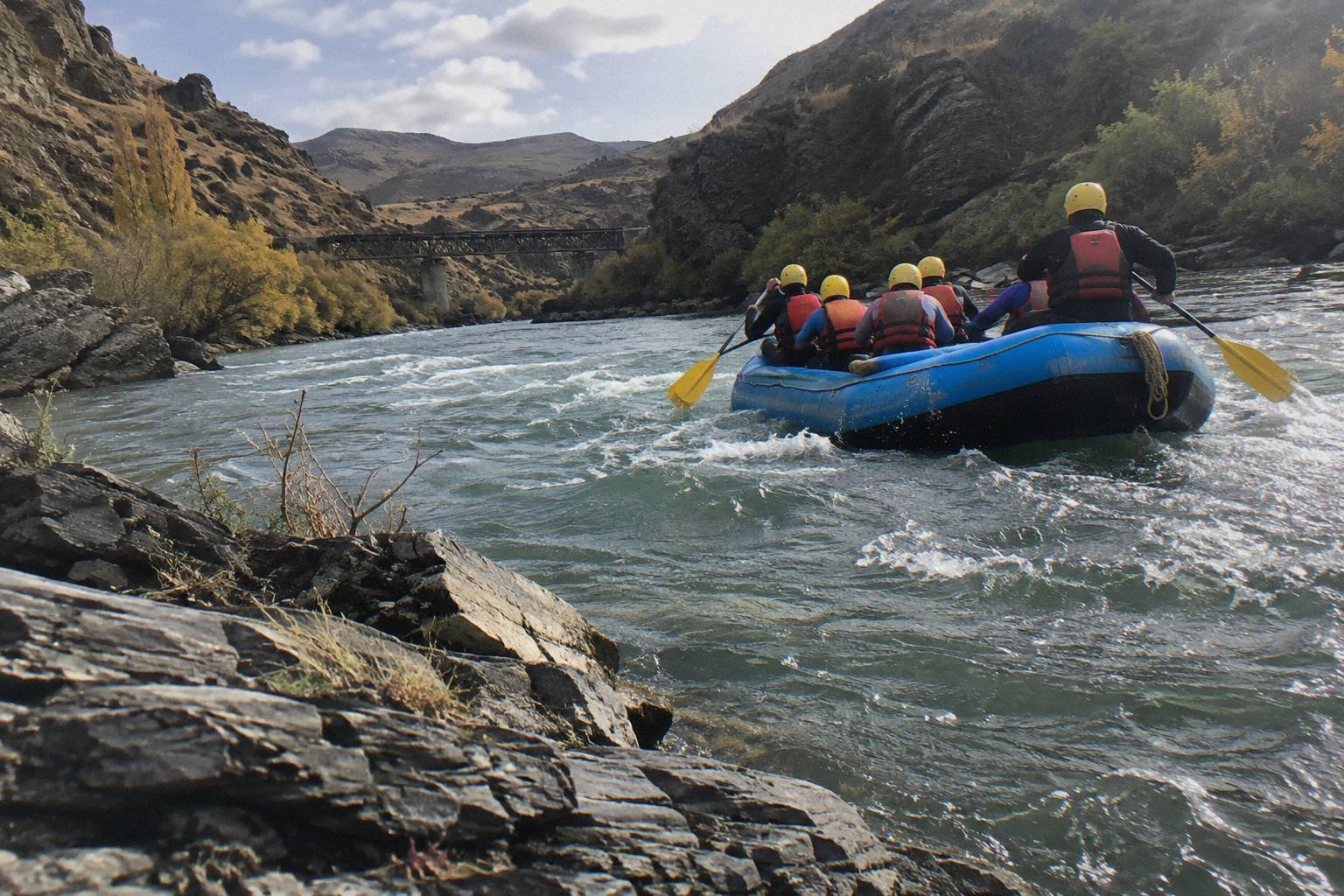
The psychological difficulty is the part nobody can grade for you. What the record does show is structure around you: rafts on the RealNZ Shotover trip carry at most eight people including the guide, and a safety kayaker travels on every trip. Adventure activity operators in New Zealand must be registered with WorkSafe and have passed a safety audit before they may legally run trips, a requirement you can read about on the WorkSafe adventure activities public register. Fear shrinks when you can see the scaffolding. It shrinks further when you remember that trips only depart when weather, river level and water temperature cooperate, and that portages around rapids are a normal tool rather than a failure.
A useful reframe is to compare rafting to things you have already done. The bus ride to the Shotover put-in along Skippers Canyon Road is, by several accounts, more unsettling than the river: a narrow dirt road that hugs the canyon's sheer cliffs for about 40 minutes. The rafting itself is an hour of water between long stretches of drifting, talking and looking at canyon walls. Most nervous first-timers report the anticipation was the hardest single element of the entire four or five hours, and the operators structure their days around exactly that fact.
Which Trip Should A Nervous First-Timer Choose?
For most nervous beginners the answer is the Kawarau: grade 2 to 3, described by the operator as suited to first-timers and less confident swimmers, from NZ$249 per person for four hours. If even that sounds like a lot, the Skippers Canyon trip runs grade 1 to 2, takes children from age 3, needs no water confidence, and costs from NZ$329 for five hours. Save the Shotover, grade 3 to 5, for when the bug has bitten.
The ladder below ranks every Queenstown trip from gentlest to hardest using the operators' own grade statements. Work down it until you feel the flutter start, then stop one rung above that. That rung is your trip. Nothing here is a judgement of you: plenty of confident swimmers choose the Kawarau because they want wine country scenery and a swim, and plenty return the following year for the Shotover.
| Trip | Grade | Why it sits here | From (per person) | Duration | Minimum age |
|---|---|---|---|---|---|
| Rafting And Skippers Canyon Combo | 1 to 2 | Gentle trip, water confidence not necessary, ages 3 up | NZ$329 | 5 hours | 3 |
| Kawarau Rafting Only, Base Fare | 2 to 3 | Built for first-timers, can reach grade 4 at higher water | NZ$249 | 4 hours | 13 |
| Rafting Plus Jet Boat Combo | 2 to 3 | Same rafting plus a 25-minute jet boat transfer at speed | NZ$329 | 4.5 hours | 13 |
| Shotover Rafting, Half Day | 3 to 5 | Six hard rapids, higher risk of falling out | NZ$299 | 4.5 hours | 13 |
| Challenge Rafting, 4 Hours | 4 to 5 | The Mother rapids series, grade 4 to 5 | NZ$299 | 4 hours | 13 |
The Kawarau makes sense for nervous paddlers because of what surrounds the rapids. The itinerary is unhurried: meet at 88 Beach Street, a 20-minute bus ride to the base, a 30-minute safety briefing, another 20 minutes to the river, an hour of rafting, then breaks and buses on the way back. Eight kilometres of river carry you to the Gibbston Valley, and the drive home wanders back through wine country in about 30 minutes. There is even an optional cliff jump and a chance to swim a rapid, both of which you can simply decline. The full picture is in our Kawarau River rafting guide.
Families with small children, or adults whose nerves say "not yet" to any grade 3 water, have a genuine option in the Skippers Canyon trip. It runs grade 1 to 2 rapids on the upper Shotover, drives 45 minutes into the canyon past gold mining relics and a Lord of the Rings filming location, and includes snacks. Its 5.0 rating comes from a small pool of 7 reviews, so treat that number as an early signal rather than a verdict. The canyon itself is half the draw, as our Skippers Canyon explainer lays out: Skippers sits inside the 9,100 hectare Mount Aurum Recreation Reserve and carries the remains of an 1860s gold town.
The comparison between the two Shotover products also matters once nerves are in play. The half day trip and the Challenge Rafting trip run the same river at slightly different grades and with different endings, and one includes photos while the other locks cameras away. The table below separates them on the points a nervous paddler actually weighs.
| Question a nervous paddler asks | Shotover Rafting, Half Day | Challenge Rafting, 4 Hours |
|---|---|---|
| What grade is the water? | Grade 3 to 5 | Grade 3 to 5, with the Mother rapids at grade 4 to 5 |
| How long is the whole experience? | 4.5 hours | 4 hours |
| Where do I check in? | RealNZ Visitor Centre, 88 Beach Street | 88 Beach Street, or self-drive to the raft base at 1 Arthurs Point Road |
| Photos afterwards? | Nothing can be taken on the raft; locker at the base | Professional photos included in the booking |
| Showers after? | Hot showers at the raft base | Hot showers at the Rafters Lodge |
| Rating and pool | 4.8 from 346 reviews | 4.9 from 80 reviews |
What Actually Happens Before You Touch The Water?
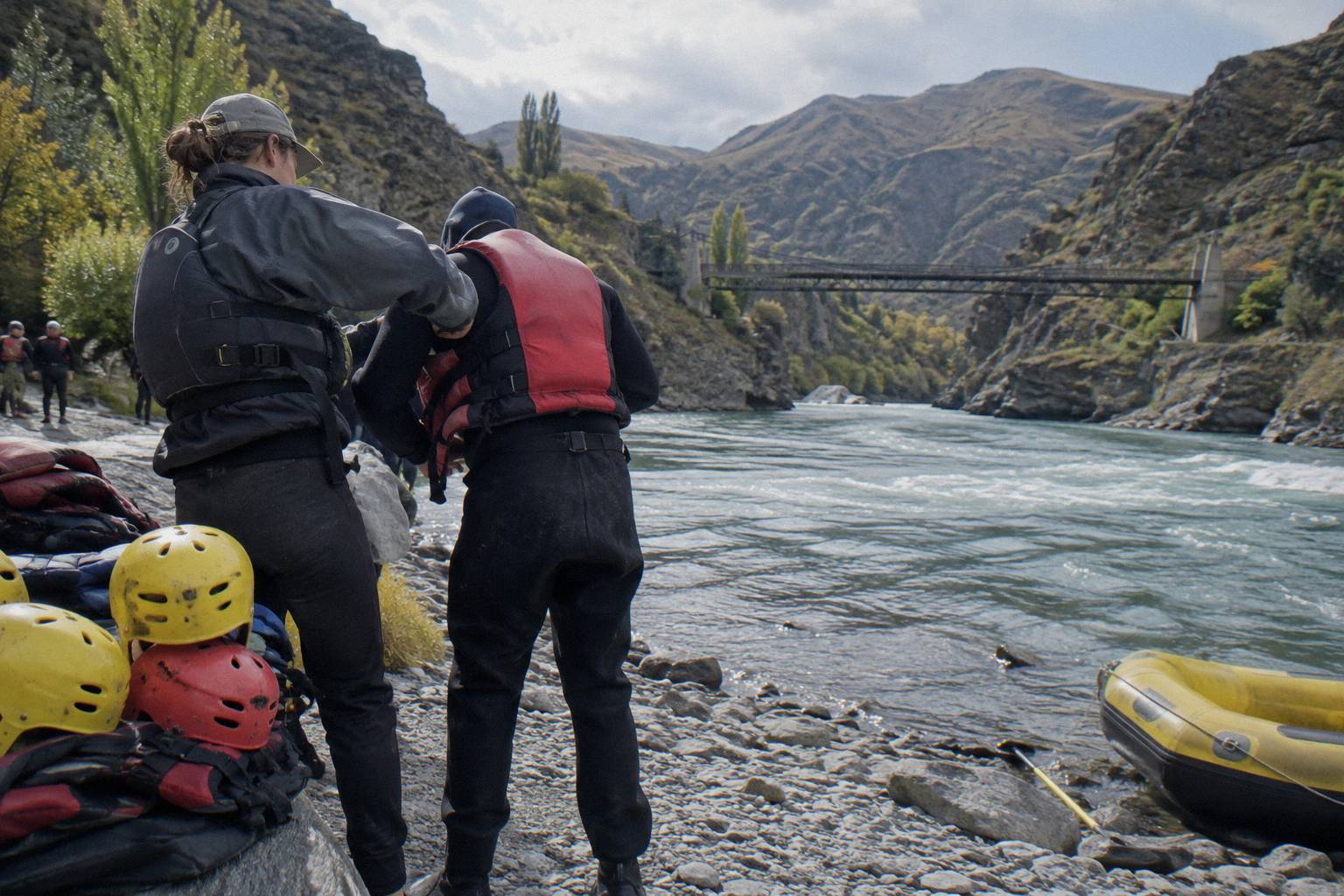
Every Queenstown trip follows the same calming shape: check in, gear up, brief, bus, then raft. On the Kawarau Rafting Only trip the briefing alone runs 30 minutes, longer than some of the rapids that follow. You are handed a wetsuit, wetsuit jacket, spray jacket, helmet, booties, paddle and life jacket before you ever see the river, and a guide walks the whole crew through every command. Nerves peak in the car park, not the rapids.
Knowing the sequence in advance removes most of it. On the Kawarau trip you meet at the RealNZ Visitor Centre at 88 Beach Street at least 20 minutes before departure, ride 20 minutes to the base, get the 30-minute briefing, ride 20 more minutes to the river, and only then does the hour of rafting begin. That is close to 90 minutes of settling in, asking questions and watching the guides work before your paddle hits water. Anyone who wants a longer account can read our rafting trip timeline and pickup walkthrough.
| Stage of the Kawarau day | What happens | What nerves should know |
|---|---|---|
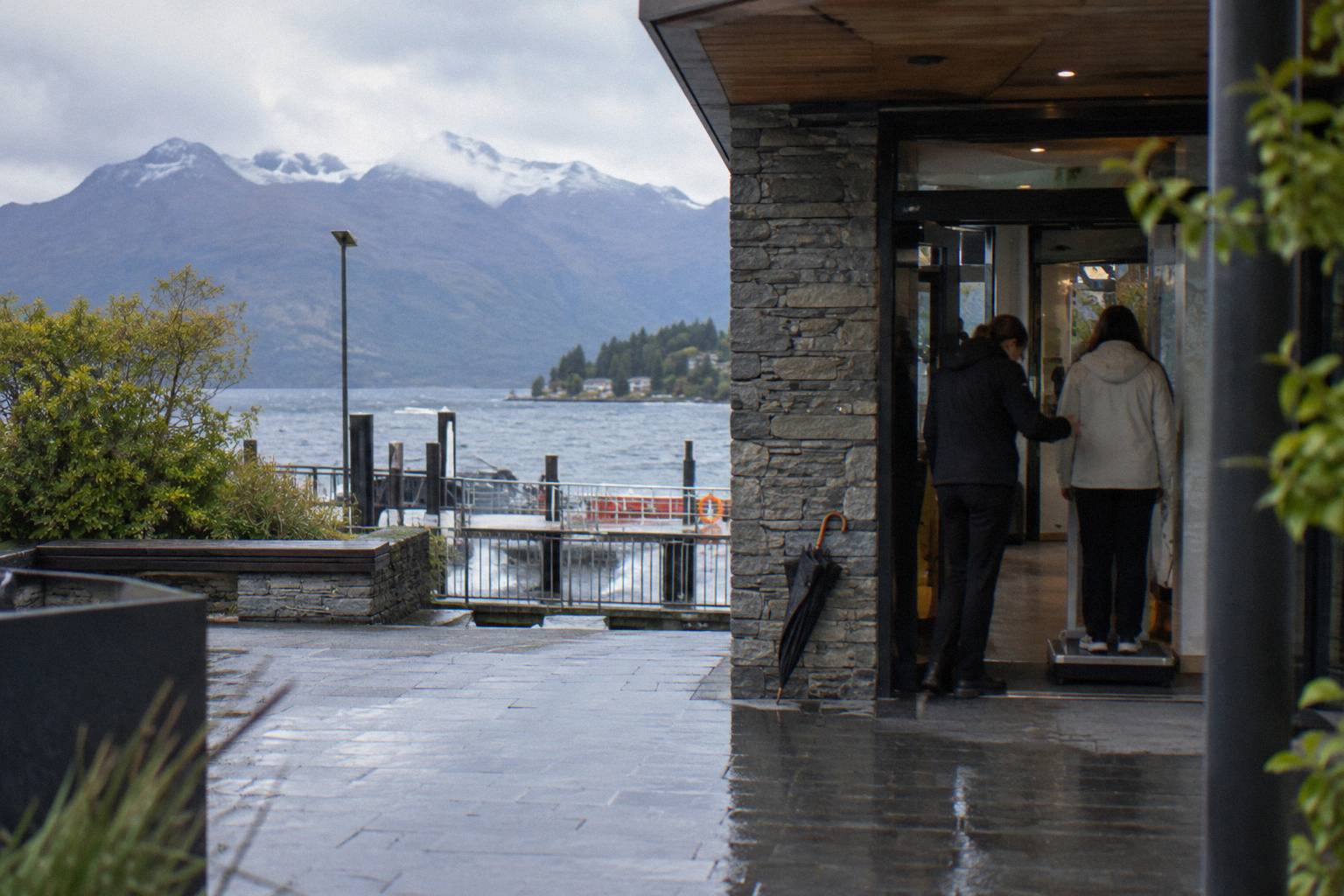
| Check in, 88 Beach Street | Arrive at least 20 minutes before departure, hotel pickup excluded | Weights are verified at check-in, a quick formality |
| Bus to the base, 20 minutes | Short ride, toilets available at the base | Last comfortable minute before wetsuits |
| Safety briefing, 30 minutes | Every paddle command explained, gear fitted | Ask to sit where the ride is calmest |
| Bus to the river, 20 minutes | Drive via Arrowtown, about 25 minutes total to the area | Preview of the scenery, not a dread window |
| One hour of rafting | 8 km of grade 2 to 3 water, The Dog Leg rapid | Cliff jump and rapid swim are optional |
| Return | 30-minute break, then buses back via the Gibbston Valley wineries | Time to decompress before town |
The Shotover trips front-load the same way, with a twist: the shuttle to the Deep Creek put-in takes about 40 minutes along Skippers Canyon Road, a narrow dirt road the operator says hugs the canyon's sheer cliffs. If heights in buses bother you more than rapids, that drive is the part to brace for. Toilets wait at both the raft base and Deep Creek, so there is a last exit before the river. The raft base itself sits on the Shotover bank at Arthurs Point, about a 10 minute drive from Queenstown, which means help, warmth and dry clothes are never far from the water.
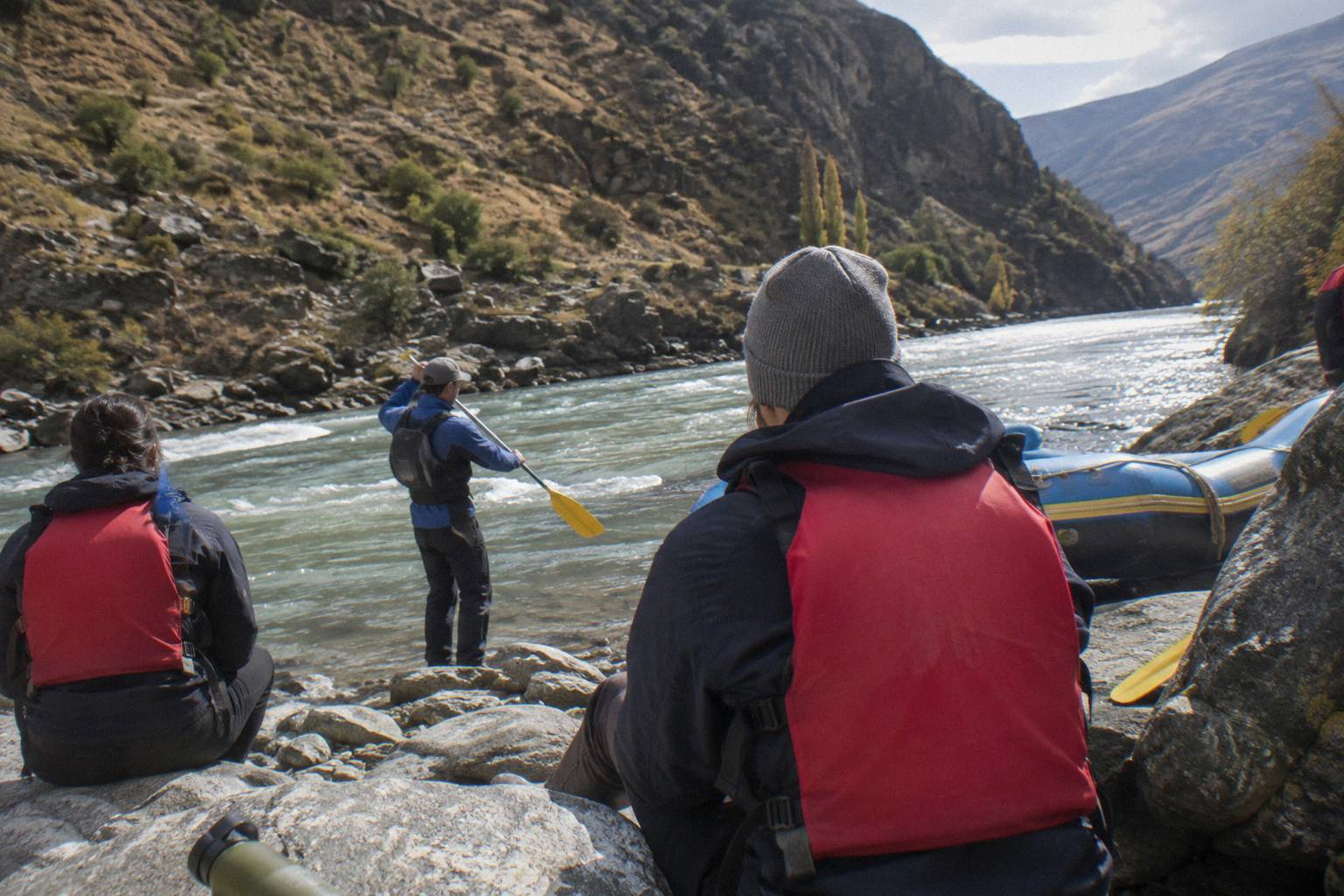
Kit is supplied on every trip, which matters more than it sounds. Struggling into a proper wetsuit, booties and life jacket is itself reassuring: by the time you reach the river you are padded, dressed for the water and indistinguishable from the confident people beside you. Our wetsuit and gear rundown lists every item operator by operator, and the clothing rules are simple: swimwear only under the wetsuit, no cotton, and glasses need a sports strap or stay behind. Extra-large and child-size wetsuits are available, so the fitting room is not quietly judging anybody either.
One point of friction worth knowing early: nothing can be taken on the raft, no camera and no GoPro, on the RealNZ Shotover trip. A valuables locker and hot showers wait at the base. The Challenge Rafting Shotover trip includes professional photos in the booking, so if proof-you-did-it matters to your morale, that detail may sway your choice of Shotover operator. For the broader question of cameras, glasses and everything else you might pocket, our valuables on the river guide has the details.
Where The Shotover Earns Its Grade 5 Reputation
The hard water on the Shotover is concentrated, not continuous. Fourteen kilometres are rafted, but the difficulty spikes in six grade 3 to 5 rapids, the run through the 170 metre Oxenbridge Tunnel, and the drop into Cascade Rapid at the end. The operator itself flags a higher risk of falling out than on the Kawarau, and requires guests to be water-competent, able to swim 25 metres unaided.
On the Challenge Rafting version, the six hardest rapids come in a series the operator calls the Mother rapids, with names like Aftershock, Squeeze, Toilet and Pinball, each graded 4 to 5. Then comes the tunnel, a 170 metre black run under the hill where the sound of the river doubles, then the drop into Cascade. It is a real commitment, and the eligibility rules reflect it: minimum age 13, weight 40 to 120 kg verified at check-in, no heart conditions, no pregnant guests on grade 3 or above, and a guardian-signed waiver for anyone under 18.
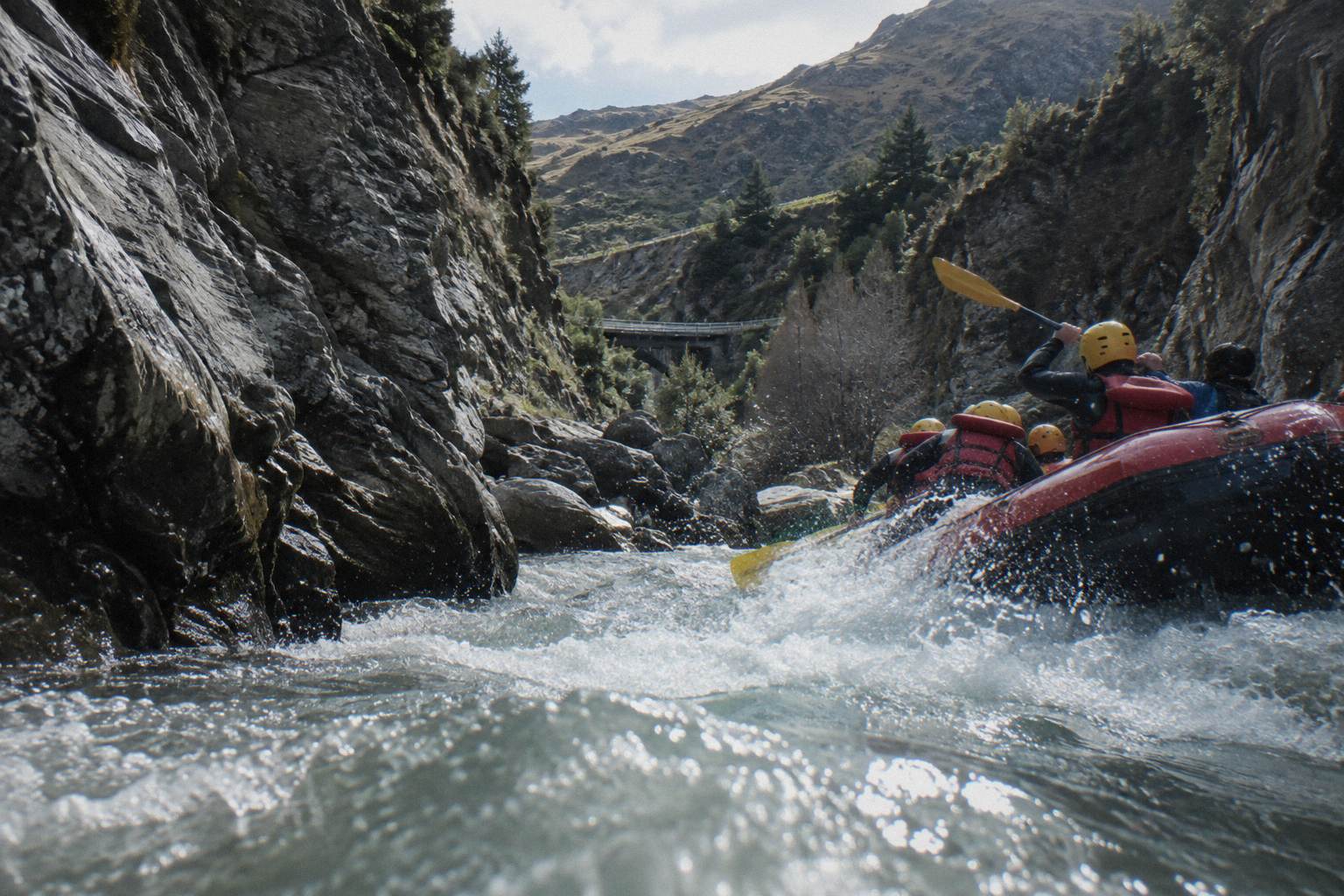
The tunnel is not scenery invented for tourists. It was dug from 1906 by the Oxenbridge Brothers to divert the Shotover away from the Jeweller's Shop rapids, rapids fabled for the gold the 1862 rush brought to what was then called the richest river in the world, and Heritage New Zealand records that it is now used primarily by rafting companies. You can read the history in Heritage New Zealand's listing for the tunnel, or walk the Department of Conservation's Oxenbridge Tunnel Track, a 20-minute stroll to a viewpoint, if you would rather inspect the outlet dry-shod before running it wet.
Nervous Shotover-bound paddlers should also know what backs them up. Rafts carry at most eight people including the guide, a safety kayaker travels on each trip, and spectators can even watch from near the last rapid as rafts exit the tunnel. Trips only run when weather, river level and water temperature allow, and portages may be required if conditions demand it. For a wider comparison see how the Shotover stacks up against the Kawarau, and for the grade itself our class 5 rapids explained page.
One middle path exists for the torn. The Rafting Plus Jet Boat Combo runs the same grade 2 to 3 Kawarau rafting but swaps a bus leg for a 25-minute jet boat transfer covering 22 km at 95 km/h with 360-degree spins. Some nervous rafters find the fast, dry, seated jet section burns off adrenaline so the gentle rafting feels calm by comparison. Others should skip it entirely. Both reactions are reasonable.
Can You Be Too Nervous, Too Old Or Too Unfit To Raft?
The published limits are age and weight, not courage. RealNZ and Challenge Rafting both set minimum age 13, weight 40 to 120 kg verified at check-in, require understanding of the safety briefing in English, and exclude heart conditions and pregnancy. There is no maximum age. Disabilities are assessed case by case, extra-large and child-size wetsuits exist, and the gentle Skippers trip takes everyone from age 3 up with no water confidence needed.
Fear itself is not a disqualifier anywhere in the published rules. What does exclude you is medical: any heart condition except blood pressure managed with medication, pregnancy on grade 3 or above, and non-swimmers on the harder rivers. Under 16s must travel with a guardian on the RealNZ trips, under 17s on the Challenge Rafting trip, and every guest signs a waiver. The full breakdown, including the weighing question, is in our weight and fitness limits guide and our piece on rafting when you cannot swim well.
| Requirement | RealNZ Shotover | RealNZ Kawarau | Family Adventures Skippers |
|---|---|---|---|
| Minimum age | 13 | 13 | 3 |
| Weight range | 40 to 120 kg, verified at check-in | 40 to 120 kg | No limit published |
| Swimming | Water-competent, 25 m unaided | Water confidence recommended | Not necessary |
| Fitness | Moderate | Moderate | Gentle trip |
| Guardians | Under 16 with a guardian, under 18 waiver signed | Under 16 with a guardian, under 18 waiver signed | Ages 3 up welcome |
| Medical exclusions | Heart conditions, pregnancy | Heart conditions, pregnancy | A gentle grade 1 to 2 trip |
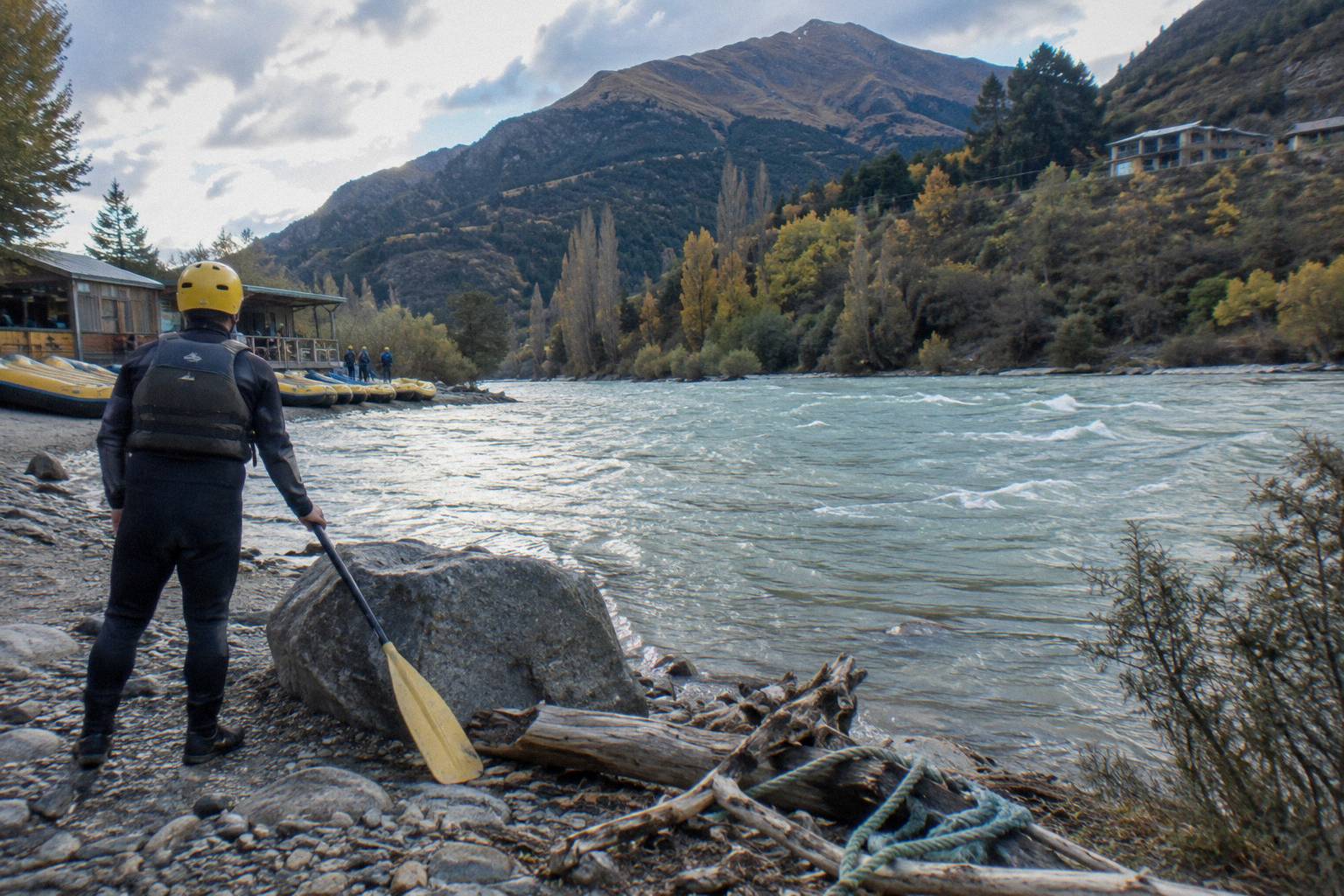
Fitness anxiety deserves its own answer. Moderate fitness is the stated bar on the Shotover, and the practical test is whether you can haul yourself back over the tube of a raft, a move the briefing practises. Paddling itself is intermittent. Between rapids the raft drifts, the canyon opens up, and the guide points at scenery. The demanding minutes are short and they arrive announced, which is the whole design philosophy of commercial rafting: no surprises, just sequenced effort.
Five Mistakes Nervous First-Timers Make
Most rafting nerves come from avoidable errors: booking a grade above the fear, wearing cotton under the wetsuit, turning up dehydrated or hungover, hiding a medical issue from the waiver, and gripping the paddle so tight the arms lock. None of these is a character flaw, and every one is fixed by a small decision before the bus leaves. The table below pairs each mistake with its plain correction.
| Mistake | Why it backfires | What to do instead |
|---|---|---|
| Booking the Shotover because friends did | Grade 5 water with a higher fall-out risk can sour rafting for life | Start on the Kawarau, grade 2 to 3, built for first-timers |
| Wearing cotton or a t-shirt under the wetsuit | Cotton stays cold and heavy when wet | Swimwear only under the wetsuit, per the operator's own clothing rules |
| Skipping food or water all morning | Low blood sugar turns nerves into wobbles | Eat normally; the Kawarau itinerary even builds in a 30-minute break |
| Not disclosing a heart condition on the waiver | It is a stated exclusion, and weight and health are checked at check-in | Declare it; the gentle grade 1 to 2 trip may still be open to you |
| Clenching the paddle and tensing arms | Locked arms tire in minutes and hurt on impact | Loose grip, bent elbows, listen for the guide's commands |
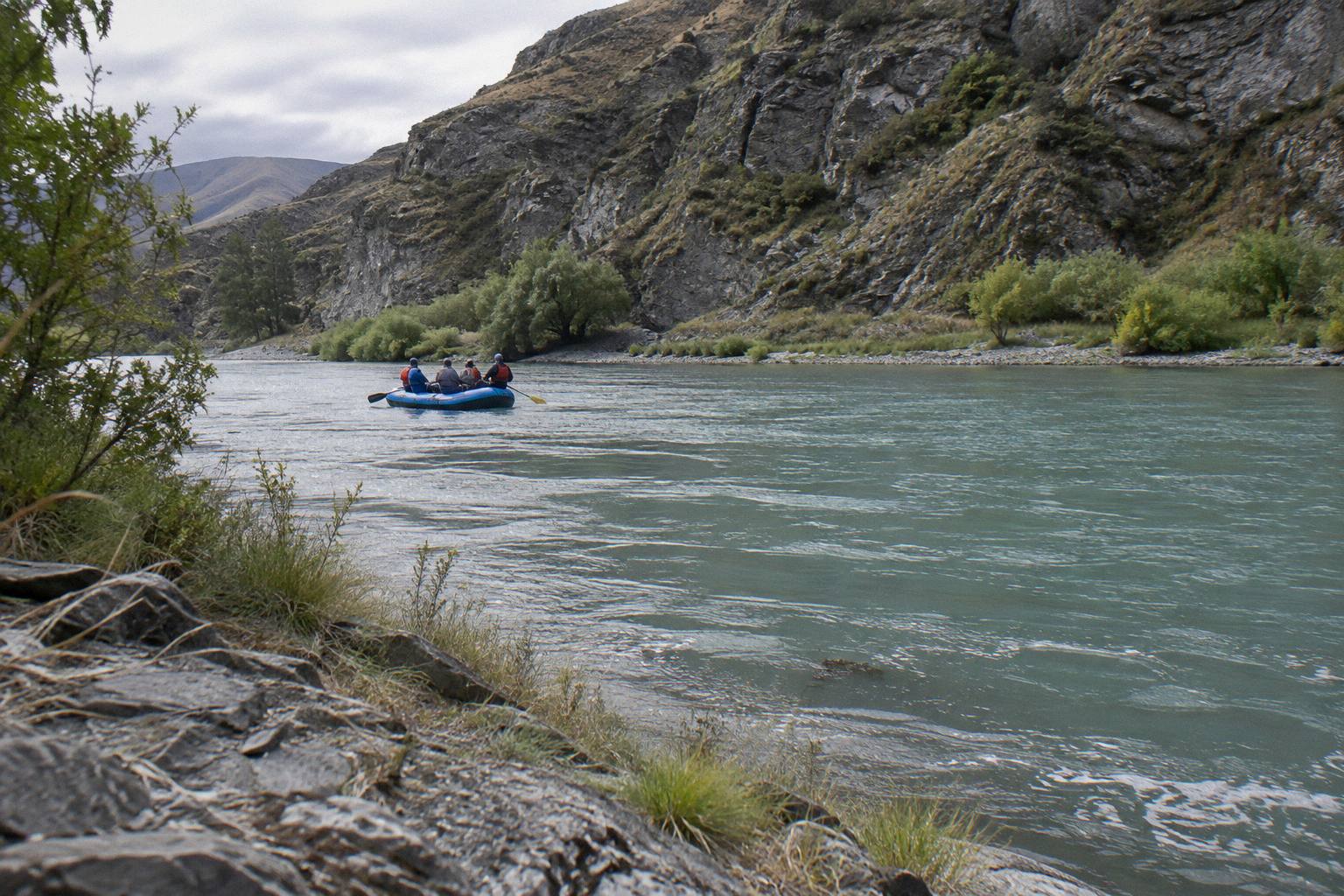
A sixth, quieter mistake is refusing the exit ramps built into the day. The optional cliff jump on the Kawarau is optional. Swimming a rapid is optional. Sitting near the front or the back of the raft changes how wet and how wild the ride feels, and guides will place nervous guests where the ride is softest if asked. The trip is adjustable in a dozen small ways, but only for people who say something. Silence reads as confidence on a river, so one quiet sentence to the guide at the briefing buys you a softer seat and a closer eye for the whole run.
Timing also plays with nerves. A morning departure means less of the day spent anticipating; the afternoon gives you a slower breakfast and a longer worry window. Both exist on every trip, and the choice is made on the booking calendar. Our morning or afternoon comparison walks through the trade-offs, and what to bring on the day covers the bag you leave in the locker. Book for the slot that shortens your dread, not the one that sounds impressive.
One last mistake deserves its own paragraph: treating the rating as a fear meter. The Kawarau Rafting Only trip holds 4.7 from 48 reviews, the half day Shotover 4.8 from 346 reviews, and the numbers measure satisfaction, not terror. People who were scared and delighted rate their trips highest of all. Read the reviews for how scared people felt and how glad they were afterwards, a habit our reading Queenstown rafting reviews guide formalises, and you will find hundreds of former nervous first-timers describing exactly the day you are about to have.
Common Questions About Rafting Nerves
How Difficult Is Whitewater Rafting For A Beginner?
On the right river, not very. The Kawarau runs grade 2 to 3 and the operator describes it as suited to first-timers and less confident swimmers. Difficulty scales with grade: grade 2 is moving water with small waves, grade 5, the highest commercially rafted, is the Shotover's territory and demands water competence and moderate fitness.
Which Queenstown Rafting Trip Is Best If I Am Scared?
The Kawarau Rafting Only trip, grade 2 to 3 from NZ$249 for four hours, is the standard answer. If you want gentler still, the Skippers Canyon trip runs grade 1 to 2, requires no water confidence, takes ages 3 and up, and costs from NZ$329 for five hours.
Will I Fall Out Of The Raft?
On the Shotover the operator says there is a higher risk of falling out than on the Kawarau, and being water-competent, able to swim 25 metres unaided, is a stated requirement there. On the grade 2 to 3 Kawarau the risk is lower and the trip is aimed at first-timers.
Do I Need To Be Able To Swim To Go Rafting?
On the Shotover and Kawarau trips, yes in the sense that water competence is required on the Shotover and water confidence is recommended on the Kawarau. Everyone wears a life jacket on every trip. The grade 1 to 2 Skippers Canyon trip states water confidence is not necessary.
What If I Panic Halfway Down The River?
Tell the guide at the briefing, before the raft launches, so you can be seated where the ride is calmest and watched more closely. The briefing on the Kawarau runs 30 minutes and covers every command before the water. Optional challenges like the cliff jump can simply be skipped.
Is The Safety Briefing Enough For Someone Who Has Never Rafted?
It is designed for exactly that person. On the Kawarau Rafting Only itinerary the briefing lasts 30 minutes, gear is fully supplied, and on the RealNZ Shotover trip rafts carry at most eight people including the guide with a safety kayaker on every departure.