
Can A Beginner Do Class 4 Rapids?
A clear answer for first-time rafters on class 4 rapids in Queenstown: what the grade means, which rivers suit beginners, and what the operators require before you paddle.
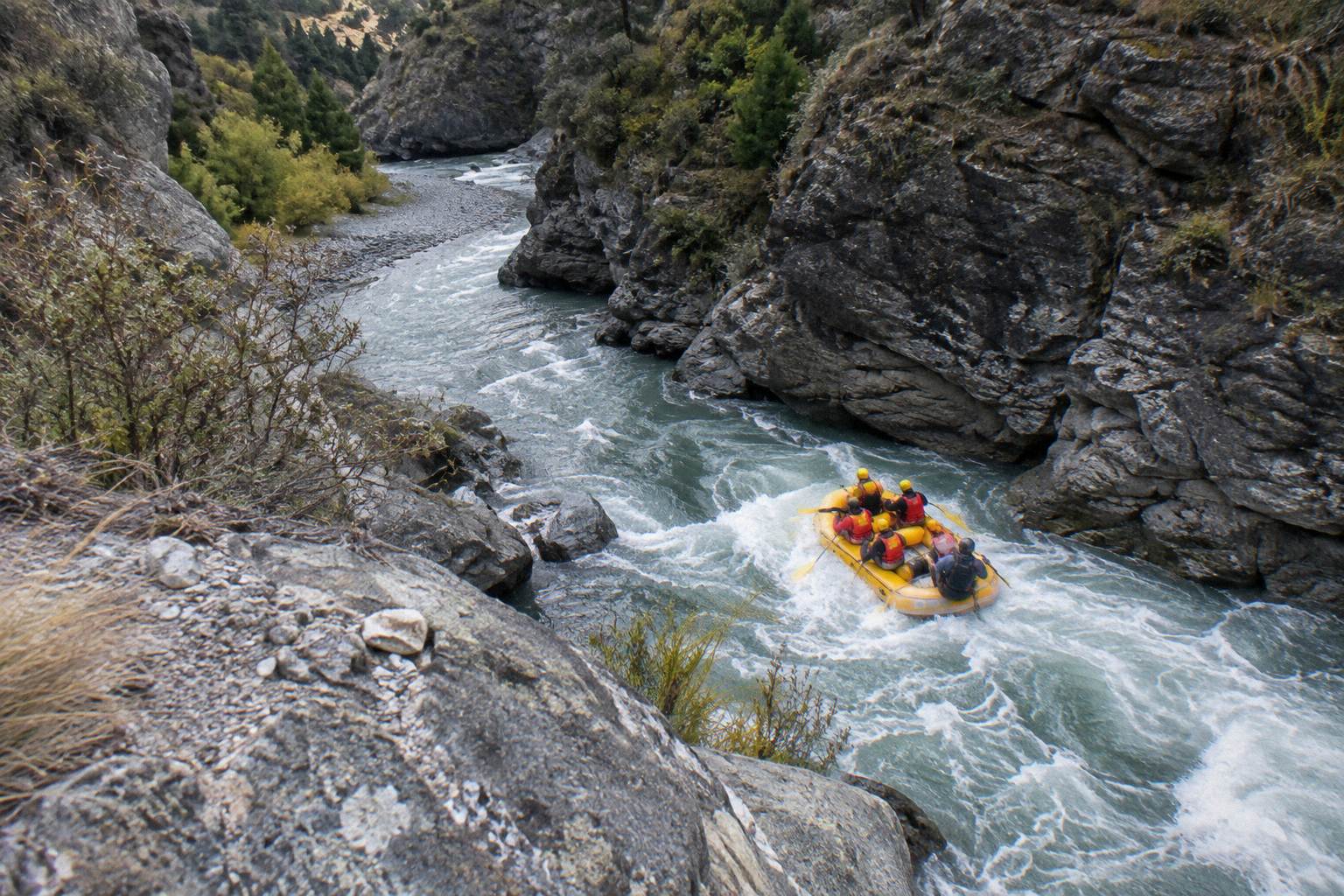
Yes, a beginner can run class 4 rapids in Queenstown, but only on a guided commercial trip with a professional guide and full safety gear. Operators on the Shotover River's hardest sections require water competence, meaning the ability to swim 25 m unaided, plus moderate fitness. A confident swimmer who listens to the briefing can book a grade 4 to 5 trip; a nervous or non-swimming beginner should start on gentler water.
The international river difficulty scale runs from class 1, easy moving water, up to class 6, extreme rapids that are never commercially rafted. Class 4 sits near the top of what a commercial trip will take customers down: powerful, turbulent water that needs precise manoeuvring and a crew paddling together on command. Nobody runs class 4 alone as a beginner. On a commercial raft the guide does the reading of the river and the steering, and your job is to paddle hard when told, hold on when told, and stay in the raft.
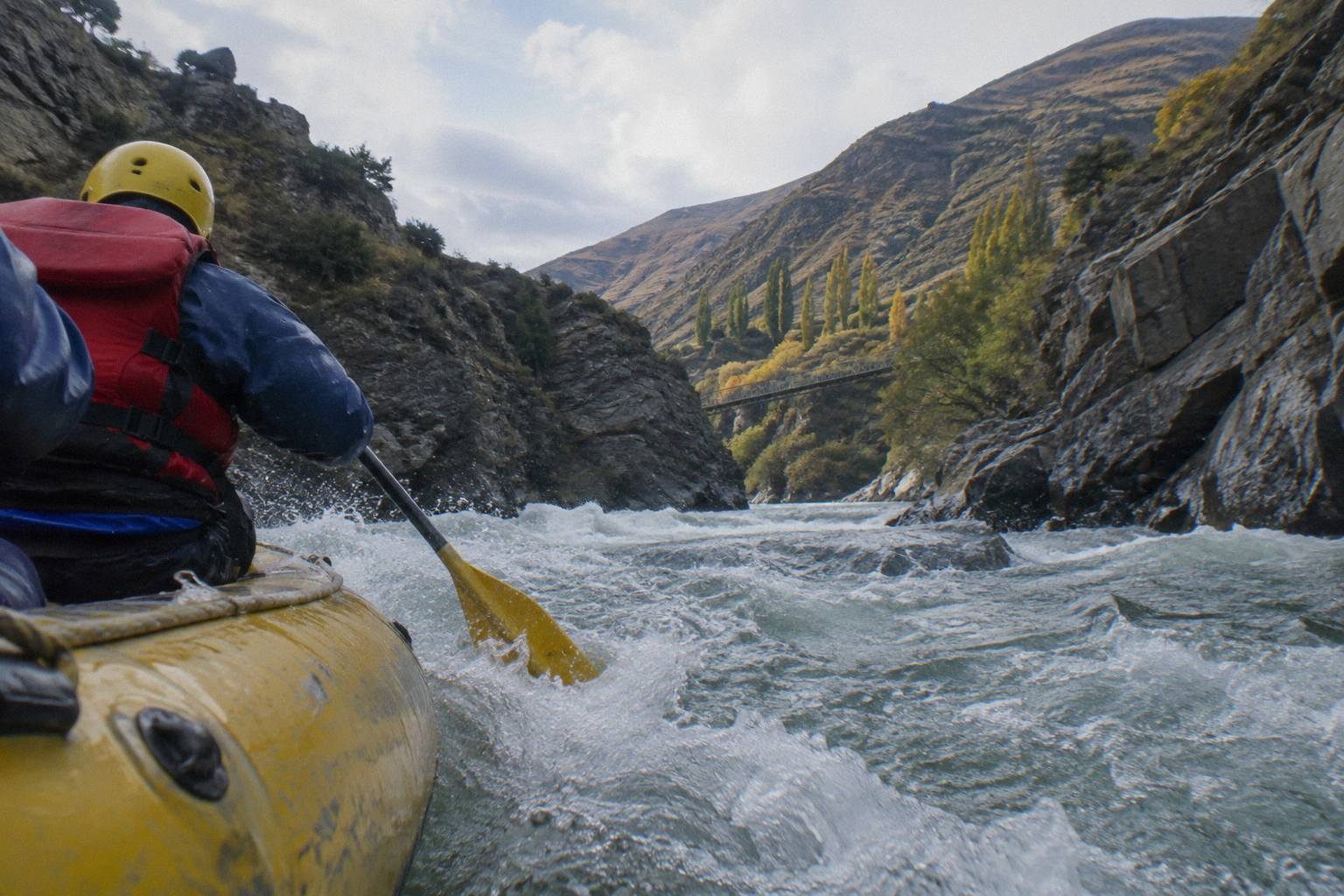
Queenstown is one of the few places in the world where a beginner can sit in the same raft as genuinely big water on the same day they first hold a paddle. The Shotover River trips run sections graded 4 to 5, including the 170 m Oxenbridge Tunnel and the drop into Cascade Rapid, and they carry first-time rafters through them every day of the season. The catch is the entry bar: minimum age 13, weight between 40 kg and 120 kg, no heart conditions, no pregnancy on grade 3 or above, and real swimming ability. Our companion guide to white water rafting grades explained breaks the full scale down class by class.
The honest decision, then, is not whether a beginner is allowed on class 4, but which beginner you are. If you can swim 25 m unaided, you are comfortable being splashed and bounced, and you want the biggest day available, the Shotover trips are open to you. If the words "higher risk of falling out" make your stomach drop, and the operator uses exactly that phrase for the Shotover against the Kawarau, there is a gentler and still thrilling alternative on grade 2 to 3 water.
What Does Class 4 Water Actually Feel Like?
Class 4 water feels loud, fast and continuous, with waves hitting the raft from unexpected angles and holes that stop the boat for a beat before it punches through. You will be drenched within the first minute, your guide will shout commands over the roar, and your arms will do real work. Most beginners call it controlled chaos, terrifying in the moment and exhilarating for hours afterwards.
In plain terms, the scale works like a ladder. Class 1 is easy drifting water with small ripples. Class 2 adds regular waves and simple manoeuvres, the kind of water where mistakes are easily corrected. Class 3 brings bigger waves, narrow passages that need real steering, and the first genuine consequences of a missed line. Class 4 is powerful water with large, unavoidable waves, precise manoeuvring through congested channels, and a margin for error that shrinks to feet rather than boat lengths. Class 5 extends that to long, violent rapids where a commercial trip only survives because the guide knows the route intimately. Class 6 is extreme and is not commercially rafted at all.
| Grade | What the water is like | What it asks of a beginner |
|---|---|---|
| Class 1 | Easy, calm, small ripples | Nothing beyond sitting in the raft |
| Class 2 | Regular small waves, open channels | Basic paddling on command |
| Class 3 | Bigger waves, narrow passages, real steering | Solid paddling, willingness to get wet |
| Class 4 | Powerful, continuous, precise lines needed | Swimming ability, fitness, full attention to the guide |
| Class 5 | Long, violent, steep and technical | Same as class 4, with bigger consequences and total trust in the guide |
| Class 6 | Extreme, not commercially rafted | Not offered to the public |
The jump from class 3 to class 4 is the one that matters for a first-timer, because it is the point where the guide stops being able to rescue every situation casually and starts needing the crew to perform. That is exactly why the operators set a swimming requirement rather than a bravery requirement. A rafter who falls out in class 4 needs to float on their back, keep their feet up, and hold the paddle, while the safety kayaker or the raft picks them up. Panic is the real hazard, and the screening questions exist to filter it out before anyone reaches the water.
One useful reframe: on a commercial trip you are not rafting class 4, the guide is, and you are the engine. The operator's description of its own Shotover trip notes that rafts carry at most eight people including the guide and a safety kayaker travels on each trip, so there is always a second craft on the water whose only job is recovery. If you want to go deeper on the top end of the scale, read what level 5 rapids really involve and our breakdown of class 5 rapids in Queenstown, because the Shotover's grade 5 sections sit right at that ceiling.
Which Queenstown River Should A Beginner Choose?
The Kawarau River is the beginner's river: grade 2 to 3, suited to first-timers and less confident swimmers, from NZ$249 per person for the rafting-only trip, rated 4.7 from 48 reviews. The Shotover River is the step up, graded 4 to 5 on its headline trips from NZ$299 per person, for beginners who are strong swimmers. The choice comes down to water confidence, not courage, because both rivers supply the same gear, guides and briefings.
The Kawarau is the only outlet of Lake Wakatipu, flowing east from Queenstown, and its commercial trips run 8 km of river finishing in the Gibbston Valley. The operator describes it as usually graded 2 to 3, though it can reach grade 4 at higher water levels, which means a beginner booking the Kawarau may still touch class 4 water without choosing to. The signature feature is The Dog Leg, 400 m long and described by the operator as the longest commercially rafted rapid in New Zealand, graded 3/4. There is an optional cliff-jumping section depending on conditions, plus the chance to swim a rapid. For a film-location bonus, the Kawarau appears as the River Anduin in Lord of the Rings.
The day runs on rails. You meet at 88 Beach Street in central Queenstown, take a 20-minute bus to the base for a 30-minute safety briefing, drive 20 minutes to the river, raft for about an hour, then ride back with a break in the middle. Everything is provided: wetsuit, wetsuit jacket, spray jacket, paddle, helmet, booties and life jacket, with hot showers at the end. The Kawarau River rafting trip is the natural first booking for anyone asking the class 4 question with a wobble in their voice, and you can check availability at the same time. Our full Kawarau River rafting guide covers the river in detail.
If you want a bigger engine for the same gentle learning curve, the Kawarau also runs as a combo with a 25-minute jet boat transfer, 22 km of river at 95 km/h with 360-degree spins, before you swap to the raft, from NZ$329 per person. It is the same grade 2 to 3 rafting at the core, so it does not change the beginner calculus, it just front-loads the adrenaline.
How Does A Beginner Handle The Shotover's Class 4 And 5?
Beginners handle the Shotover's grade 4 and 5 water through structure: a shuttle to the put-in, a full briefing, a guide in every raft, a safety kayaker on every trip, and all gear from helmet to booties included. That structure is not immunity, though, and the operator says plainly that the Shotover carries a higher risk of falling out than the Kawarau.
The headline trip runs six grade 3 to 5 rapids on 14 km of the Shotover, punching through the 170 m Oxenbridge Tunnel and finishing after the rapids beyond it, with the whole experience lasting 4.5 hours. The rafts hold at most eight people including the guide. You meet at 88 Beach Street, the shuttle bus climbs Skippers Canyon Road to the put-in at Deep Creek about 40 minutes away, and the trip ends at the raft base at Arthurs Point, roughly a 10 minute drive from Queenstown. Cameras and GoPros cannot be taken on the raft, so the memories are yours alone unless the trip includes photos.
The second Shotover trip is run by Challenge Rafting, whose own site states its Shotover trip is operated by RealNZ, though the two remain separate products. Its route is the connoisseur's version: the "Mother" rapids, a series of six grade 4 to 5 runs with names like Aftershock, Squeeze, Toilet and Pinball, then the tunnel, then the drop into Cascade Rapid. Professional photos are included in that booking. It runs November through April and does not operate in winter, which in Queenstown means May to early September. Check-in is at 88 Beach Street or you can self-drive to the raft base at 1 Arthurs Point Road, Arthurs Point.
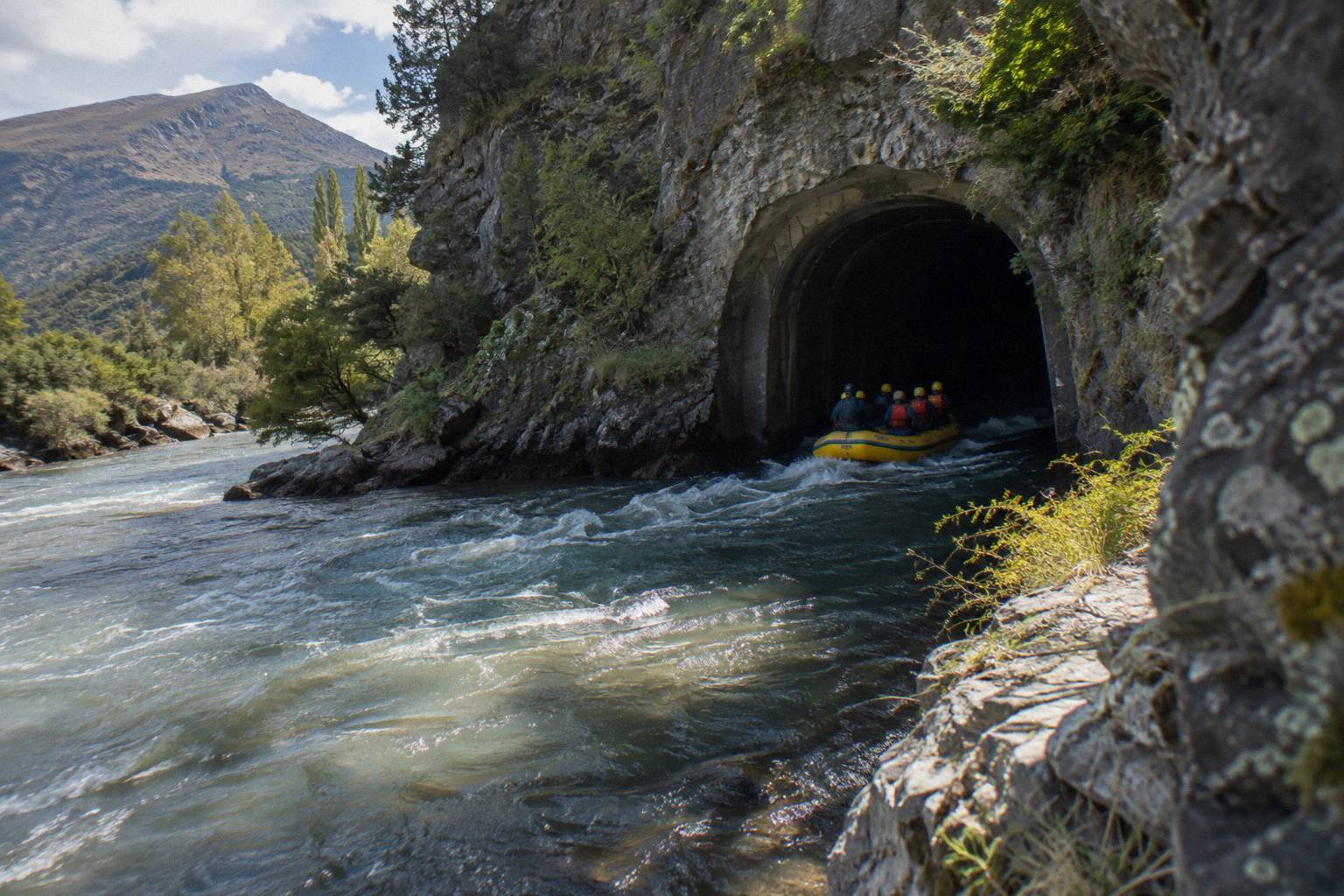
Neither trip is a place to learn the basics. They are places to apply basics you already have: swim 25 m unaided, understand the briefing in English, paddle on command without hesitating. A beginner who meets those bars is exactly who these trips are built for, and the review scores suggest plenty of first-timers finish soaked, thrilled and already planning a return. For the full picture of the harder river, see our Shotover River rafting guide and the head-to-head in Shotover versus Kawarau rafting.
Who Is Actually Barred From Class 4 Water?
The operators bar anyone under 13, anyone under 40 kg or over 120 kg, anyone with a heart condition or on heart medication, and anyone pregnant on grade 3 water or above. Anyone who cannot swim 25 m unaided is also excluded. Weight is verified at check-in, under 18s need a guardian-signed waiver, and under 16s (under 17s on the Challenge Rafting trip) must travel with a guardian. There is no maximum age, and disabilities are assessed case by case.
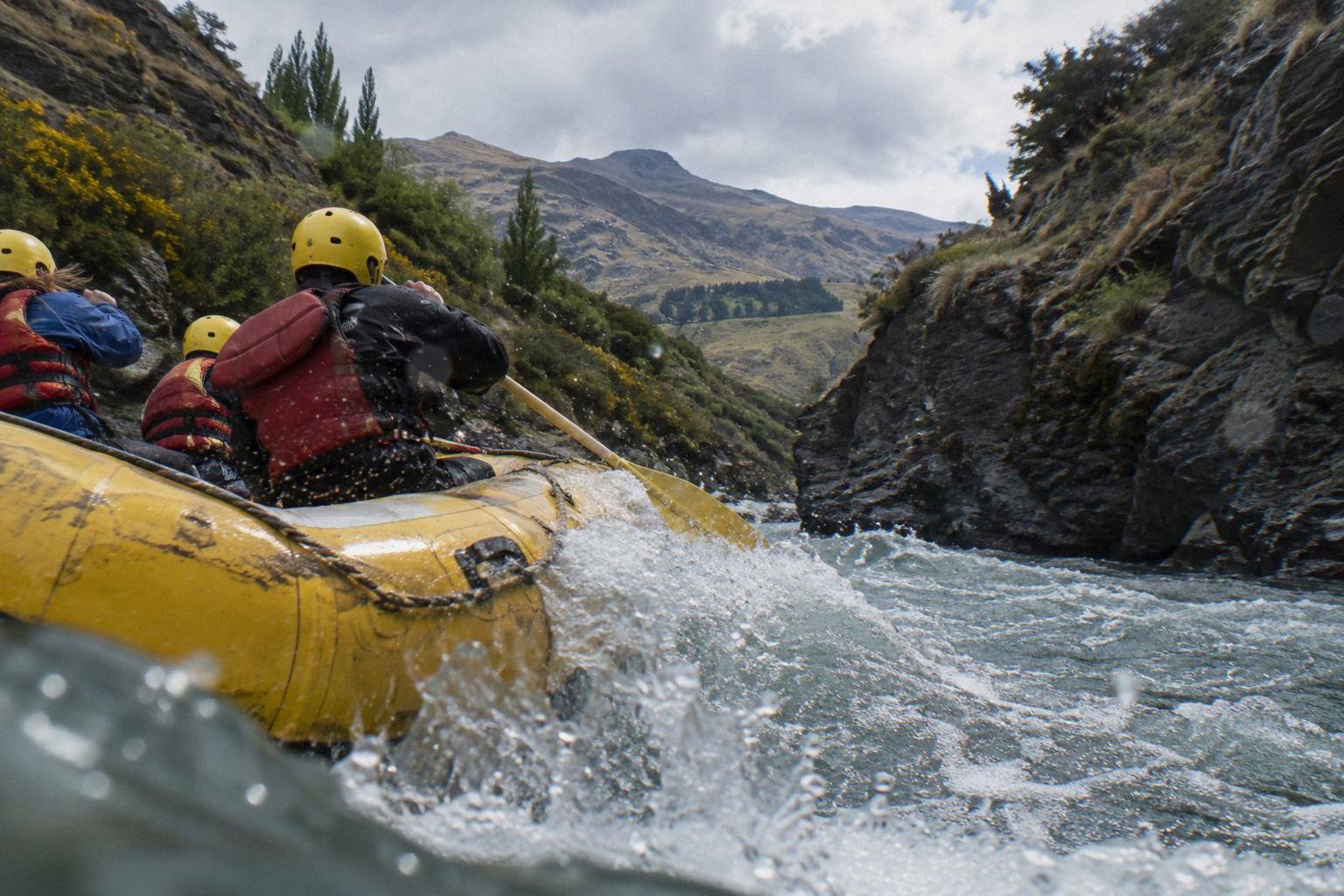
These are not insurer's small print, they are the practical physics of big water. A person in the water in class 4 needs to float, breathe and hold position while a kayaker reaches them. A heart that spikes badly under cold shock and maximum exertion is a genuine emergency risk in a gorge where help takes time to arrive. Weight limits exist because a life jacket and a raft's self-bailing floor behave differently across the published range, and because hauling a swimmer back over the tube is a two-person lift.
| Requirement | RealNZ trips | Challenge Rafting Shotover |
|---|---|---|
| Minimum age | 13 | 13 |
| Weight range | 40 kg to 120 kg | 40 kg to 120 kg |
| Swimming | 25 m unaided, water competent | Water competence required |
| Heart conditions | Excluded | Heart condition or medication excludes |
| Pregnancy | Excluded | Not allowed on grade 3 or above |
| Minors | Under 16 with a guardian, under 18 waiver signed | Under 17 with a guardian, under 18 waiver |
| Fitness | Good level of physical fitness | Moderate fitness |
Note the one gap in the table that matters: the Family Adventures trip on the Shotover is a different animal altogether, graded 1 to 2, suitable from age 3 with no water confidence needed, from NZ$329. If your beginner is a child, or an adult whose swimming is weak, that gentle trip through Skippers Canyon is the correct answer to the class 4 question, which is no, not yet. We cover the age question in full in rafting minimum ages in Queenstown, and the non-swimmer side in rafting if you cannot swim.
What Happens If You Fall Out On Class 4?
If you fall out on Class 4, you float on your back with your feet up and pointed downstream, hold your paddle if you can, and wait for the safety kayaker or raft to reach you, usually within seconds. Every commercial trip briefs the self-rescue position before anyone gets on the water, and every raft carries a professional guide trained to recover swimmers quickly.
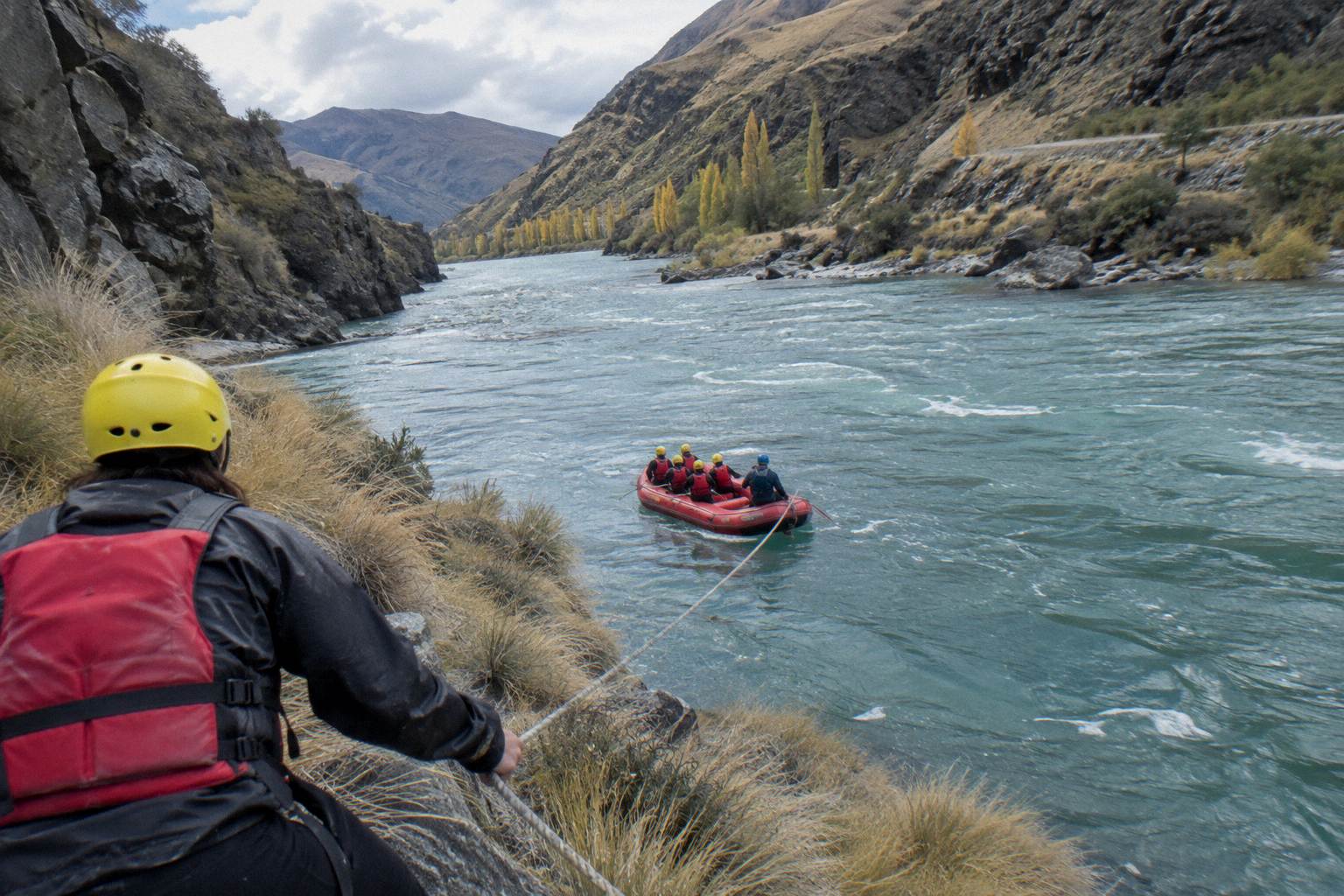
The briefing is not a formality. It covers how to sit, how to brace, how to grip the rope when the guide calls it, what to do when you hear a specific command, and the swimmer's position, feet up so they cannot catch on rocks, body back so the life jacket does the floating. Wetsuits add buoyancy and warmth. Helmets and booties handle the contact that does happen. A beginner who listens for thirty minutes arrives at the first rapid better prepared than most people ever are for their first bike commute.
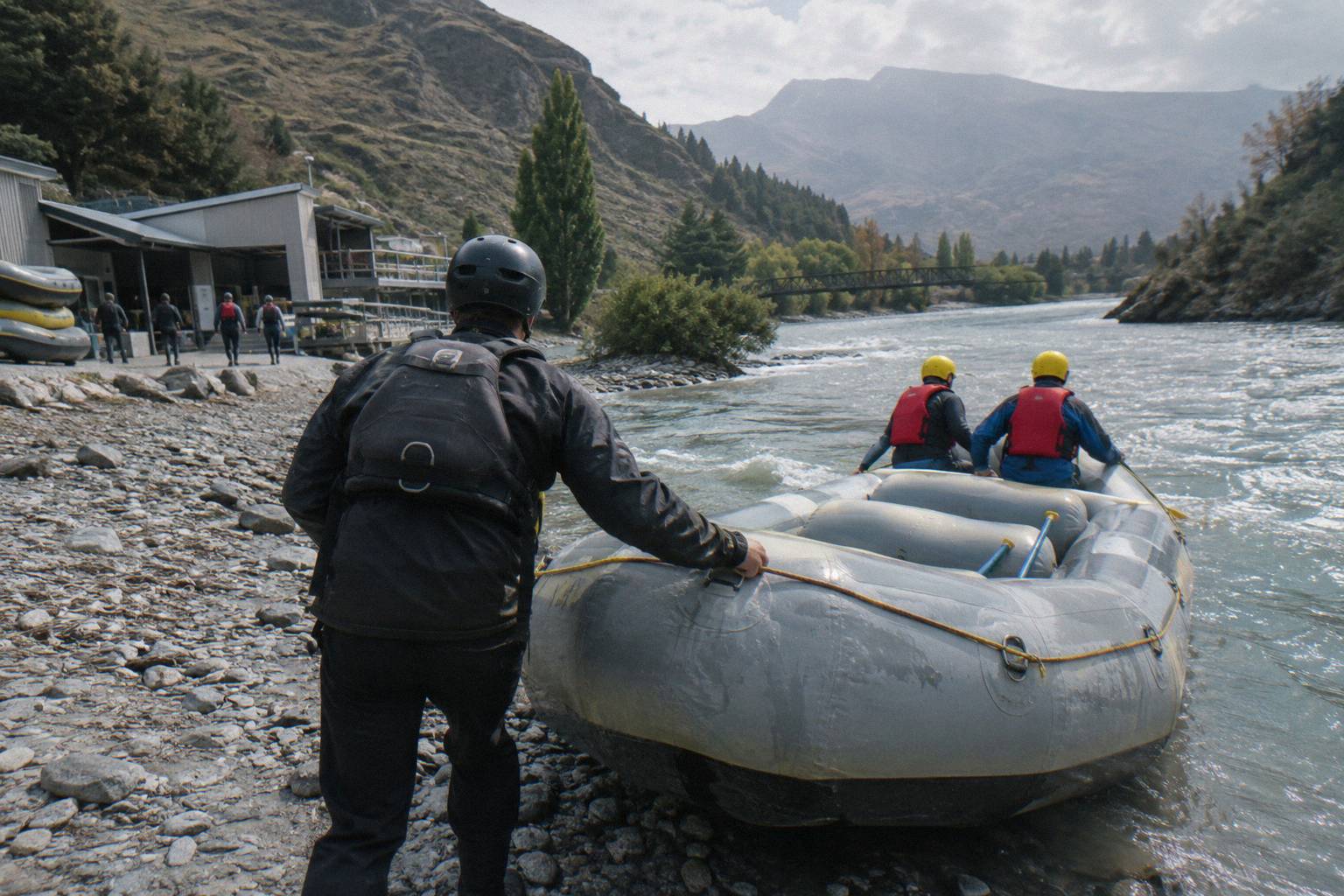
What the water itself does to help is often underestimated. The raft does not vanish when you leave it; it is a large, visible, soft platform that usually ends up closer than you expected. A swim through a class 4 rapid is typically measured in seconds, ending in a calmer pool where the kayaker shepherds you to the bank or the raft hauls you in. We go through the whole sequence, including the mental side, in what happens if you fall out of a raft and managing rafting fear and nerves.
What Should A Beginner Wear And Bring?
Wear swimwear only under the wetsuit, no cotton anywhere, and bring a towel plus dry clothes for the hot showers afterwards. Glasses need a sports strap or they stay behind, and nothing, no camera and no GoPro, can be taken on the raft on the Shotover trips. Every trip supplies the wetsuit, jacket, spray jacket, helmet, booties, life jacket and paddle, so your kit list is short by design.
Cotton is banned for a reason: it holds water against your skin and turns cold fast, while the synthetic layers the operators issue keep working when soaked. Show up already wearing your swimwear under your clothes and you shortcut the changing room queue. A sports strap for glasses is the one accessory worth buying, and a cheap one, because the alternative on the day is simply leaving them behind and trusting the guide's eyes for everything.
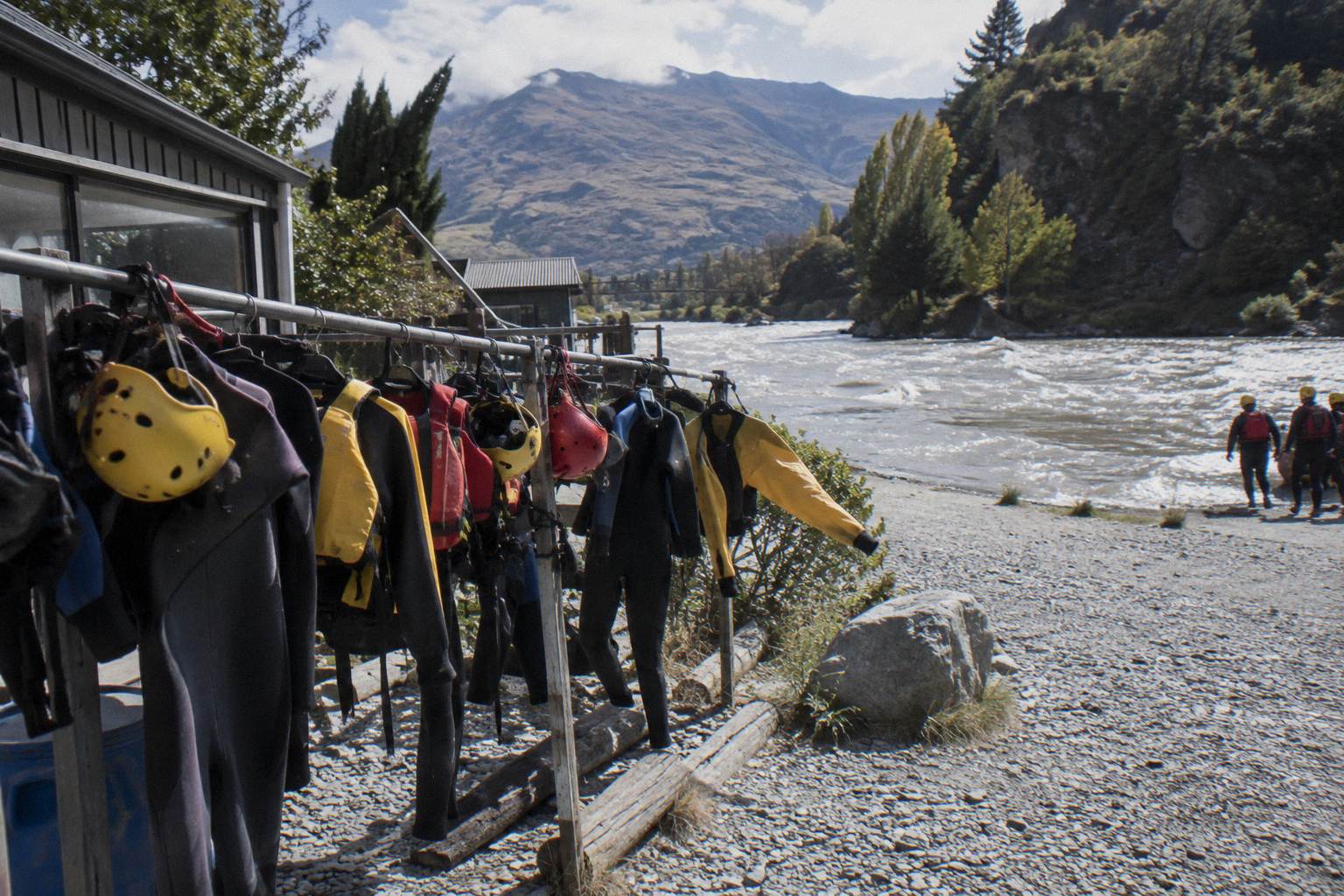
Valuables go in the locker at the raft base, which exists precisely because nothing can come on the water. Photos, where a trip includes them, come from the operator's own cameras, so you do not need to smuggle a phone. The full packing breakdown, including the shoe question, is in what to bring rafting and rafting shoes, and whether Crocs survive a trip, and the layering question is answered in detail in what to wear white water rafting.
Common Mistakes Beginners Make Before Their First Class 4 Trip
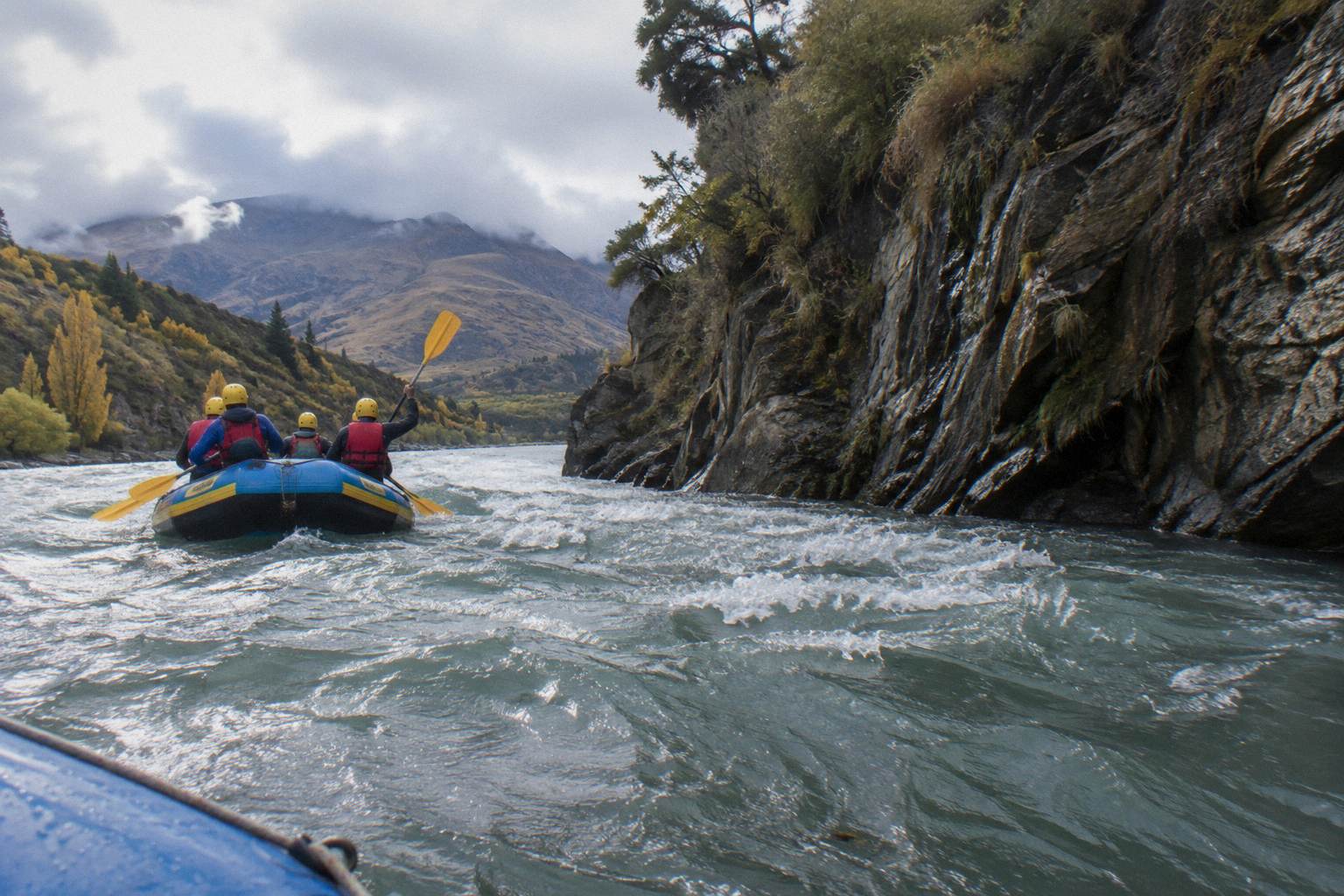
The five mistakes that sink beginner days happen before the water: booking the wrong river for your swimming ability, arriving dehydrated or hungover, wearing cotton under the wetsuit, skipping the briefing's commands, and gripping the paddle so tightly that arms are dead by the third rapid. Every one of them is avoidable with ten minutes of planning. None of them is about strength, because a class 4 trip rewards timing and listening far more than power.
| Mistake | Why it hurts | The fix |
|---|---|---|
| Booking the Shotover as a weak swimmer | The operator warns of a higher risk of falling out than the Kawarau | Choose the Kawarau's grade 2 to 3 water first |
| Cotton under the wetsuit | Holds water, loses warmth, saps energy | Swimwear only, no cotton |
| Ignoring the paddle commands | The guide steers with your strokes; hesitation is the risk | Treat the briefing as the trip's first rapid |
| White-knuckle grip | Forearms fail before the big rapids arrive | Loose hands, quick strokes |
| No towel or dry clothes | Hot showers wait at the base, but only for the prepared | Pack a towel and warm layer for after |
The deeper mistake is treating the day as a test of nerve. It is a test of preparation, and preparation is short: swim before you travel if you have not swum in years, sleep, eat, and read the weight and age limits before booking rather than at check-in where weight is verified. Trips also depend on weather, river level and water temperature, portages may be required, and minimum guest numbers apply, so a flexible attitude about the day's exact shape is part of the kit. Beginners who arrive humble and rested almost universally report the same thing: the guide made them far better than they expected to be.
The last word on the decision itself belongs to the water, not the marketing. If the phrase grade 2 to 3 with a possible grade 4 at higher water reads like a dare you are happy to accept, the Kawarau is your river. If it reads like the comfortable option and you want Aftershock and the tunnel, the Shotover trips are open to you at the same 13-year age floor and the same gear standard. Both answers are beginner answers. What Queenstown White Water Rafting exists to sort out is which one is yours.
Common Questions About Class 4 Rapids For Beginners
Can A Beginner Do Class 4 Rapids?
Yes, on a guided commercial trip with full gear, a professional guide and a safety kayaker. The operator requires swimmers able to cover 25 m unaided, moderate fitness, a minimum age of 13 and a weight between 40 kg and 120 kg. Nervous or non-swimming beginners should start on grade 2 to 3 water instead.
Do I Need To Be Able To Swim For Class 4 Rafting?
Yes. Water competence, described as the ability to swim 25 m unaided, is required on the Shotover trips, and non-swimmers are not suitable for them. The Kawarau trips suit less confident swimmers, though water confidence is still recommended, and the gentle grade 1 to 2 family trip needs no water confidence at all.
What Is The Hardest River A Beginner Can Raft In Queenstown?
The Shotover, graded 4 to 5 on its commercial trips, including six named grade 4 to 5 rapids, the 170 m Oxenbridge Tunnel and the drop into Cascade Rapid. Trips run it from NZ$299 per person. The operator notes a higher risk of falling out than on the Kawarau, so it is for confident swimmers only.
Will I Fall Out Of The Raft On Class 4 Water?
You might, and the trip is built around that possibility: a safety kayaker travels on every trip, everyone wears a life jacket and helmet, and the briefing teaches a feet-up swimmer's position before you launch. The Shotover carries a higher risk of falling out than the Kawarau, which is exactly why swimming ability is a booking condition.
Can Children Raft Class 4 Rapids?
From age 13, yes, provided they meet the 40 kg minimum weight and swim 25 m unaided, and they travel with a guardian if under 16 or 17 depending on the trip, with a waiver signed by a guardian for anyone under 18. Younger children from age 3 can join the gentle grade 1 to 2 Skippers Canyon trip, from NZ$329 per person.
Is Class 4 Harder Than Class 3?
Noticeably. Class 3 brings bigger waves and narrow passages; class 4 is powerful, continuous water requiring precise lines and full-crew paddling on command. On a commercial trip the guide absorbs most of that difference, which is why guided class 4 is beginner-friendly in a way that independent class 4 never would be.
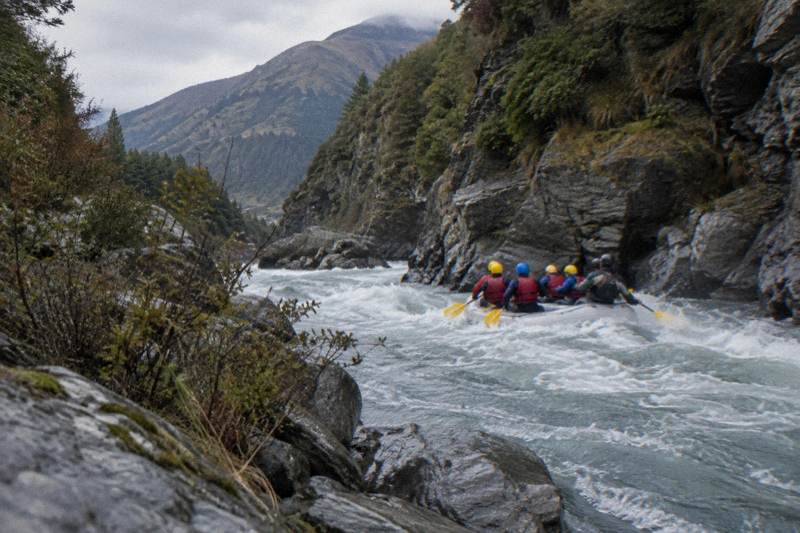
Before you go, the pick for this guide:
Shotover Rafting, Half Day
★ 4.8 · 346 reviews · From NZ$299
Check availability →