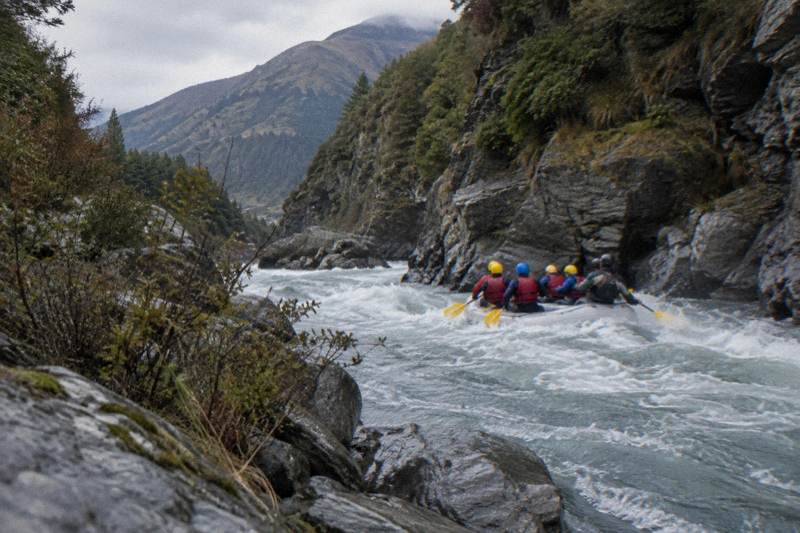
Wetsuits And Gear For Rafting: What Is Provided
Every commercial rafting trip in Queenstown hands you the technical kit you need, so the only things you genuinely bring are swimwear, a towel and the clothes you arrive in.
Short answer
All Queenstown rafting trips provide the full technical kit. The RealNZ trips hand out a wetsuit, wetsuit jacket, spray jacket, paddle, helmet, wetsuit booties and a life jacket; Challenge Rafting provides a full wetsuit, booties, life jacket and equipment; the Family Adventures trip provides all gear. From NZ$249 per person. Bring swimwear, no cotton, and a towel for the hot showers.
Rafting gear is the single biggest thing people overpack for. They arrive with borrowed wetsuits, neoprene gloves, river sandals, and then discover the crew at the base hands over everything that actually matters. Every commercial trip around Queenstown includes the technical equipment in the ticket price, from the full two-layer wetsuit setup on the Shotover River down to the booties that keep your feet off the gravel. For a wider view of the day itself, start with the complete Shotover River rafting guide, then come back here for the kit detail.
On the RealNZ trips the provided kit is a wetsuit, a wetsuit jacket, a spray jacket, a paddle, a helmet, wetsuit booties and a life jacket. Challenge Rafting includes a full wetsuit, booties, a life jacket and equipment. The Family Adventures Skippers Canyon trip provides all gear for its gentle grade 1 to 2 water. Nobody needs to buy, hire or borrow anything technical. The only personal items that matter are the swimwear you wear underneath, a towel, and whatever you plan to leave in the locker while you are on the water.
| Quick fact | Detail |
|---|---|
| RealNZ kit | Wetsuit, wetsuit jacket, spray jacket, paddle, helmet, wetsuit booties, life jacket |
| Challenge Rafting kit | Full wetsuit, booties, life jacket, equipment, safety briefing |
| Family Adventures kit | All gear provided, snacks included |
| Base facilities | Hot showers, valuables locker at the Shotover raft base, hot showers at Rafters Lodge |
| Sizing | Extra-large and child-size wetsuits available |
| On the raft | No cameras, no GoPros, nothing personal goes on the water |
What Gear Is Provided On A Queenstown Rafting Trip?
Every Queenstown rafting operator provides the full technical kit as part of the ticket, and nothing on the equipment list is rented or upsold on the day. The RealNZ Shotover and Kawarau trips issue a wetsuit, wetsuit jacket, spray jacket, paddle, helmet, wetsuit booties and life jacket. Challenge Rafting issues a full wetsuit, booties, a life jacket and equipment, with a safety briefing before anyone touches the water.
The reason the list is long is that alpine river water demands layers. A wetsuit alone is the base; the wetsuit jacket adds a second neoprene layer over your core, and the spray jacket is a waterproof shell that stops wind and splash from stripping heat off the surface. The booties are thick-soled, which matters on the gravel banks where rafts launch and land. Helmets and life jackets are fitted individually at the base, checked by the crew, and worn for the entire time on the water.
The paddle is also provided, and on a commercial trip you are expected to use it. Rafts on the RealNZ Shotover trip carry at most eight people including the guide, and a safety kayaker travels with each trip, so the gear extends beyond what you wear to the safety equipment shadowing the raft. If you are weighing which river suits you, the guide to white water rafting grades explained covers how the classes change what the day feels like rather than what you wear.
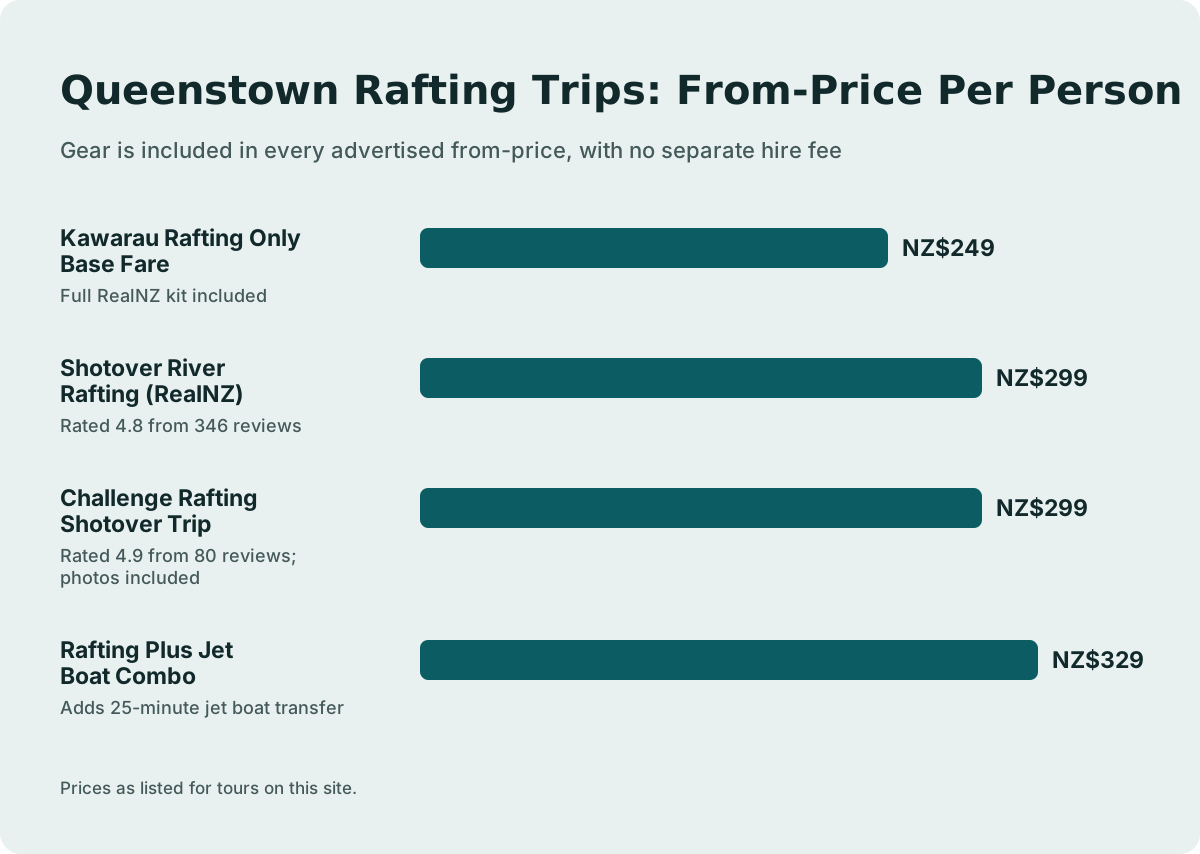
It is worth being clear about what "provided" means here. The kit is issued at the base, worn for the trip, and returned at the end; it is not yours to keep, and there is no hire fee hidden in the small print because it is already inside the advertised from-price. The prices around Queenstown run from NZ$249 per person for the Kawarau Rafting Only base fare up to NZ$329 for the combo trips, and every one of those five prices includes the full equipment list for that operator. If a budget line item called "wetsuit hire" appears in your planning spreadsheet, delete it.
Kit Lists By Trip: Exactly What Each Operator Hands Out
The RealNZ trips carry the longest kit list of any operator around Queenstown: wetsuit, wetsuit jacket, spray jacket, paddle, helmet, wetsuit booties and life jacket, with hot showers and a valuables locker at the base. Challenge Rafting provides a full wetsuit, booties, a life jacket and equipment plus hot showers at the Rafters Lodge. The Family Adventures trip provides all gear and includes snacks.
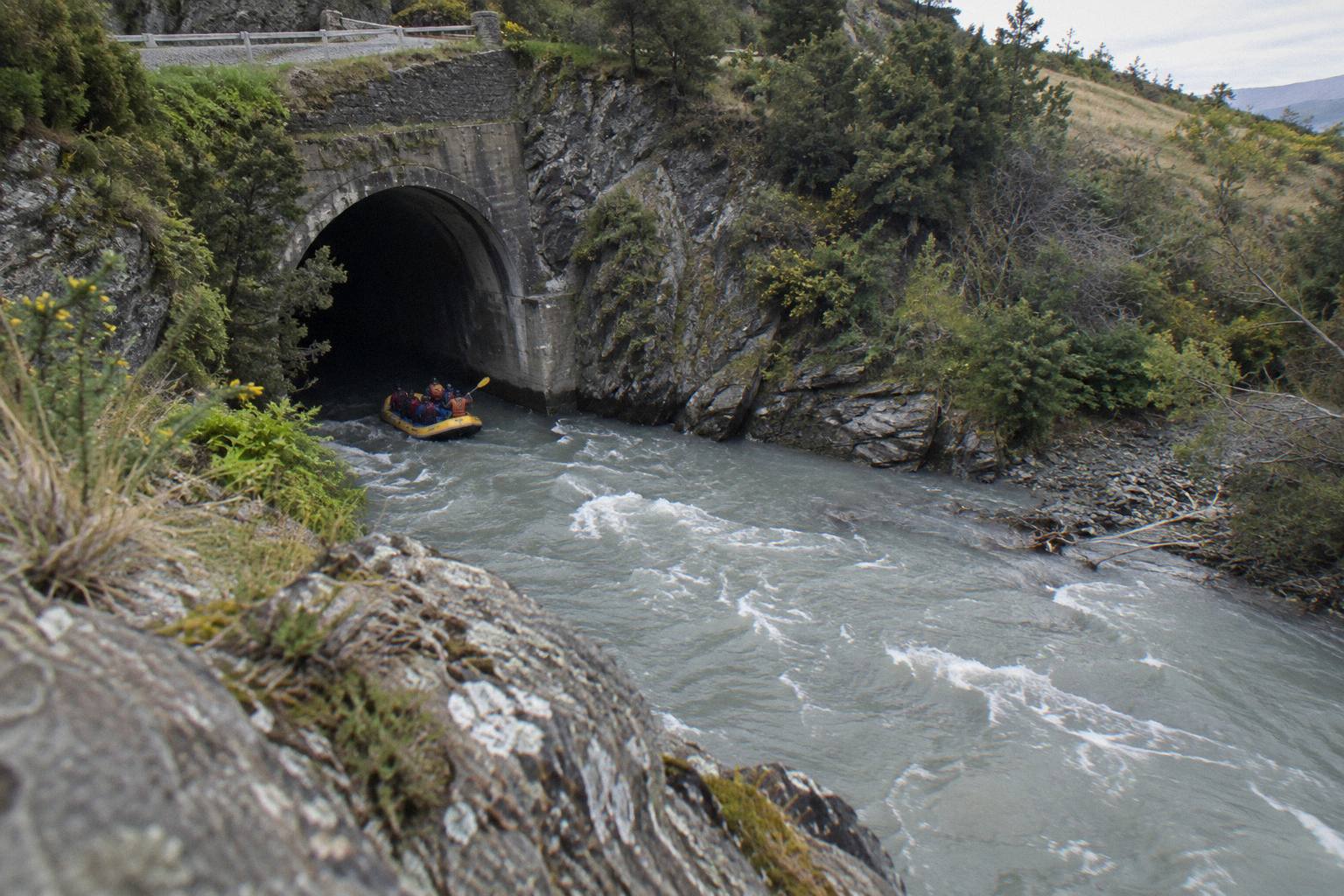
The differences between trips are smaller than people expect. What changes is the river, not the standard of equipment. The Queenstown: Shotover River Whitewater Rafting Adventure, from NZ$299 per person and rated 4.8 from 346 reviews, runs grade 3 to 5 water through the 170 m Oxenbridge Tunnel and issues the full RealNZ kit at the Arthurs Point base. The same operator's Kawarau trips use the identical equipment list on softer grade 2 to 3 water.
One distinction worth knowing: Challenge Rafting's own site says its Shotover trip is "operated by RealNZ", and both check in at 88 Beach Street, but they are separate products with separate booking pages. The Challenge trip, from NZ$299 per person and rated 4.9 from 80 reviews, names its rapids, Aftershock, Squeeze, Toilet and Pinball, runs November through April, and includes professional photos in the booking, which the gear list itself does not cover.
The jet boat combo changes the shape of the day rather than the kit. The Rafting Plus Jet Boat Combo, from NZ$329 per person and rated 4.8 from 151 reviews, adds a 25-minute jet boat transfer covering 22 km of the Kawarau at 95 km/h with 360-degree spins to the rafting station, then the same hour of rafting with the same equipment. Everything you wear is identical to the rafting-only Kawarau fare from NZ$249; what the extra NZ$80 buys is the jet leg and the free shuttle from town to the base first.
| Trip | Provided gear | Base facilities |
|---|---|---|
| Shotover Rafting, Half Day (RealNZ) | Wetsuit, wetsuit jacket, spray jacket, paddle, helmet, wetsuit booties, life jacket | Hot showers, valuables locker, toilets |
| Rafting Plus Jet Boat Combo (RealNZ) | Wetsuit, wetsuit jacket, spray jacket, paddle, helmet, wetsuit booties, life jacket | Hot showers |
| Kawarau Rafting Only, Base Fare (RealNZ) | Wetsuit, wetsuit jacket, spray jacket, paddle, helmet, wetsuit booties, life jacket | Hot showers |
| Challenge Rafting, 4 Hours | Full wetsuit, booties, life jacket, equipment, safety briefing | Hot showers at Rafters Lodge |
| Rafting And Skippers Canyon Combo | All gear provided, snacks included | Trip starts and ends at Camp Street |
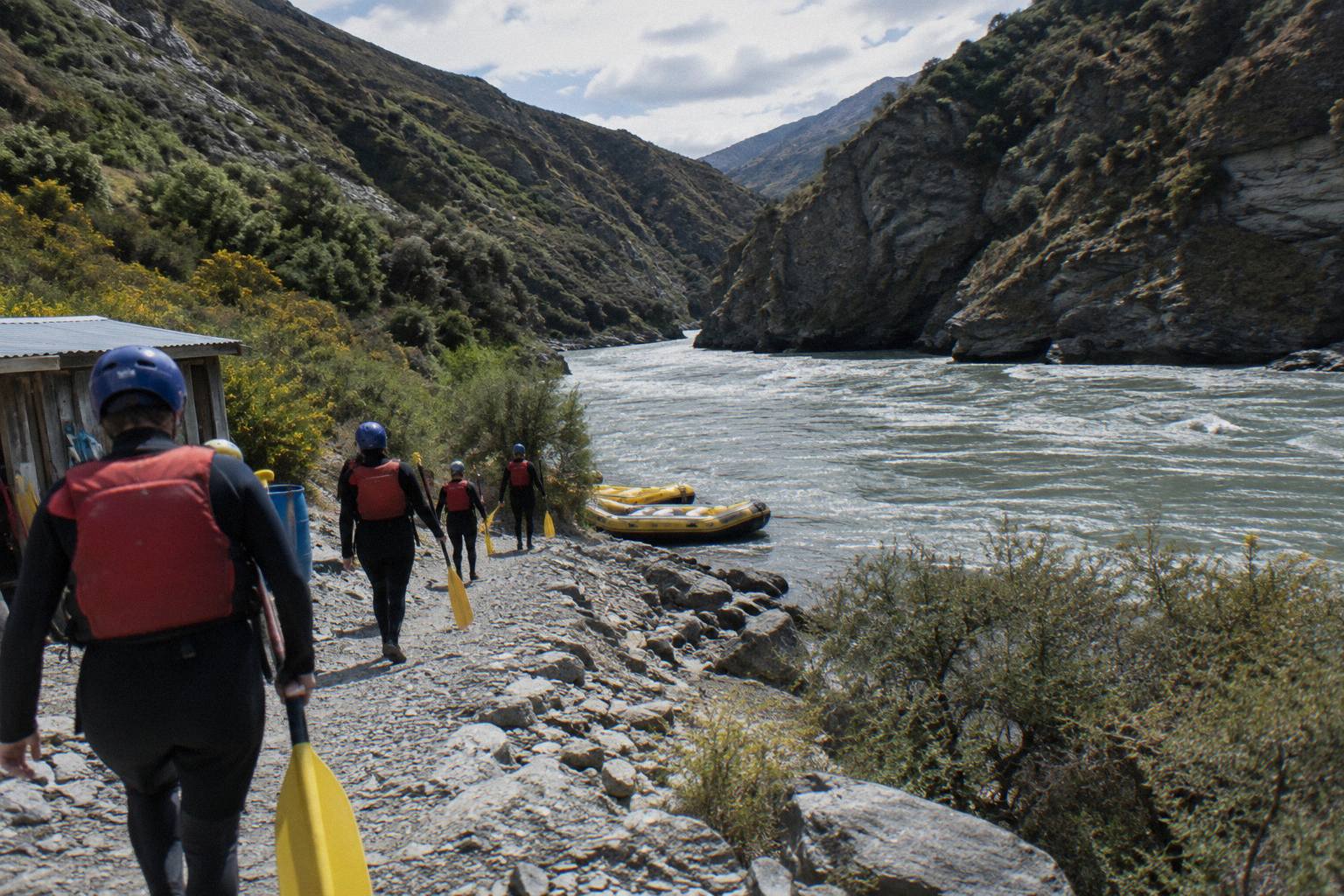
Wetsuit Fitting, Sizes And What To Wear Underneath
Wear swimwear only under the wetsuit, with no cotton anywhere in your layers, and let the crew fit the suit at the base rather than guessing a size in advance. Extra-large and child-size wetsuits are available, so the range covers most bodies, and weight limits are verified at check-in on the trips that publish them: minimum 40 kg, maximum 120 kg.
Cotton is the one hard rule. It holds water against your skin and stops the neoprene doing its job, which is why every operator repeats the instruction. Synthetic swimwear, a plain swimsuit or jammers, is all that belongs underneath. The Family Adventures booking text says simply to wear a swimsuit under your clothes for its gentle grade 1 to 2 float, suitable from three years upwards with no water confidence necessary, which tells you how much simpler the soft-water kit decision is.
Fitting happens at the base in both directions. The crew sizes you up, hands over the suit, and swaps it if the fit is wrong; wetsuits should feel tight dry and almost loose once wet. If you want the full clothing decision broken down, including footwear myths, read what to wear white water rafting and the closer look at rafting shoes and Crocs.
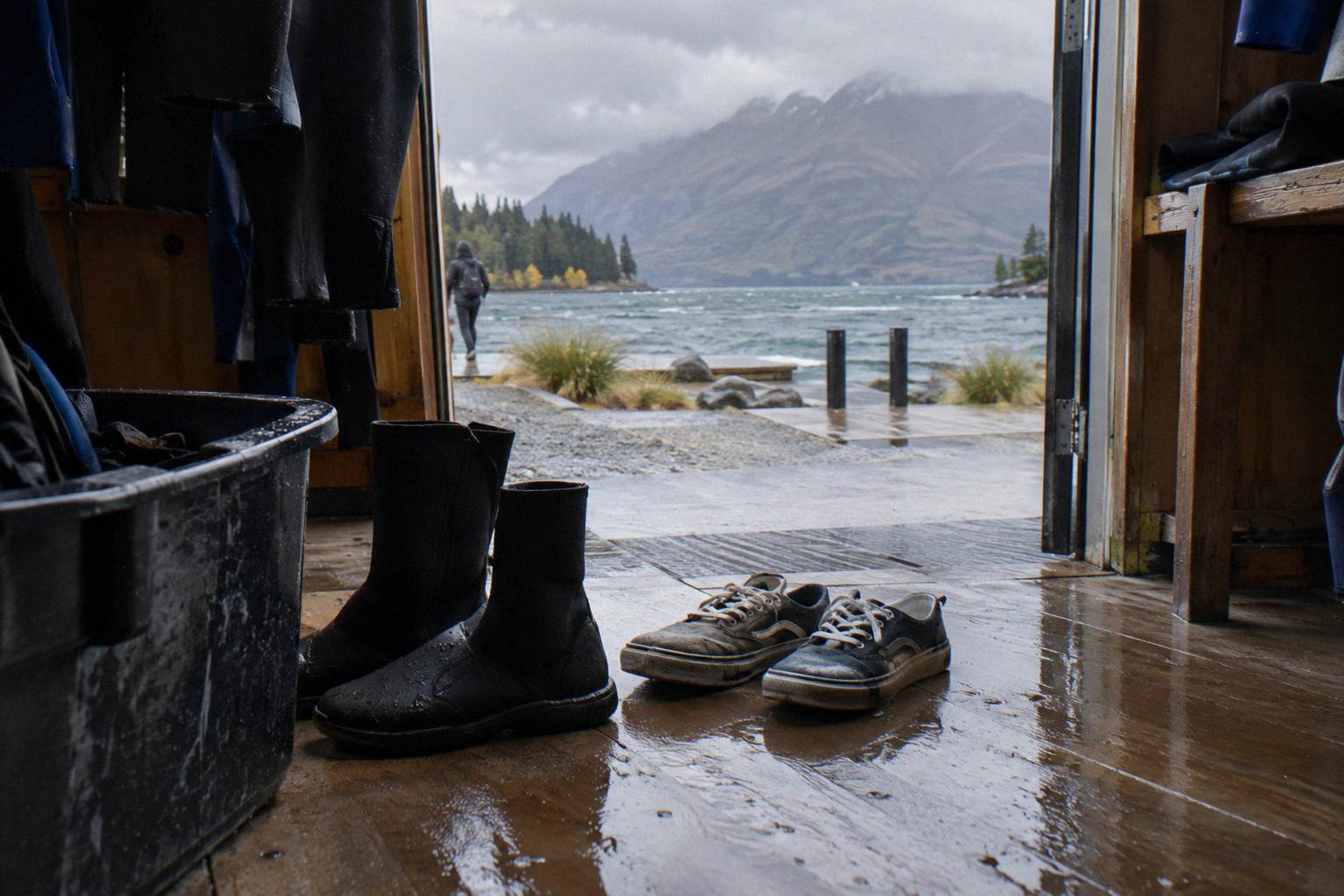
A tight wetsuit is doing its job, and this surprises first-timers more than anything else about the day. A suit that feels comfortable in the changing room is usually a size too big; a suit that feels like a firm handshake is the right one, and it loosens noticeably the moment it is wet. Expect the crew to err on the snug side rather than the loose side, expect the shoulder area to be the hardest part to get on, and expect the whole process, issue to fitted, to take a few minutes per person. Groups move through kitting up together, so nobody stands around in neoprene for long.
| Layer | What to bring or wear | Notes |
|---|---|---|
| Under the wetsuit | Swimwear only | No cotton, operator instruction on all trips |
| The wetsuit | Provided, fitted at base | Extra-large and child-size suits available |
| Feet | Wetsuit booties provided | Thick-soled for gravel banks |
| Head and buoyancy | Helmet and life jacket provided | Fitted individually, worn throughout |
| Glasses | Sports strap or leave behind | Operator guidance on all trips |
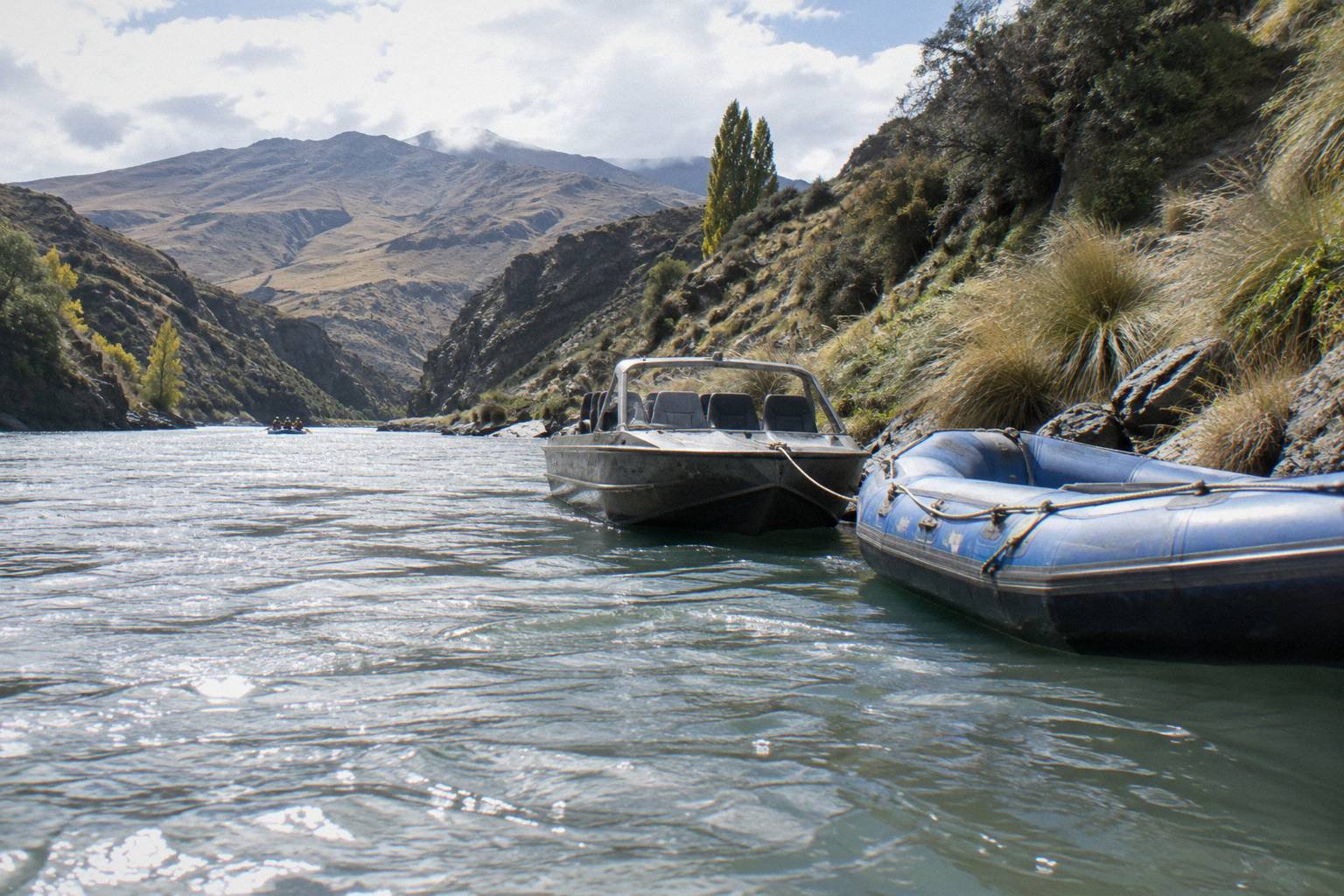
Showers, Lockers And Where Your Valuables Go
Hot showers wait at the end: the RealNZ Shotover raft base at Arthurs Point has hot showers and a valuables locker, Challenge Rafting guests use the hot showers at the Rafters Lodge, and the Kawarau trips list hot showers in their equipment. Nothing personal goes on the raft, so the locker or the bus is where wallets, phones and keys stay.
The rule on the RealNZ Shotover trip is blunt: nothing, camera or GoPro included, can be taken on the raft. That is not a photography policy dressed up as a rule; it is about loose items in moving water. The practical consequence is that your day bag stays behind at the base, and the facilities exist around that fact. Toilets are available at the raft base and at Deep Creek, the put-in reached by about 40 minutes' drive along Skippers Canyon Road.
Bring a towel and a dry change of clothes for after the shower. That is the whole personal kit for the end of the day, and it is the item people forget most often. On the Kawarau Rafting Only itinerary the structure of the day, a 30-minute break midway through the bus legs, gives you a natural point to warm up and change if you want to.
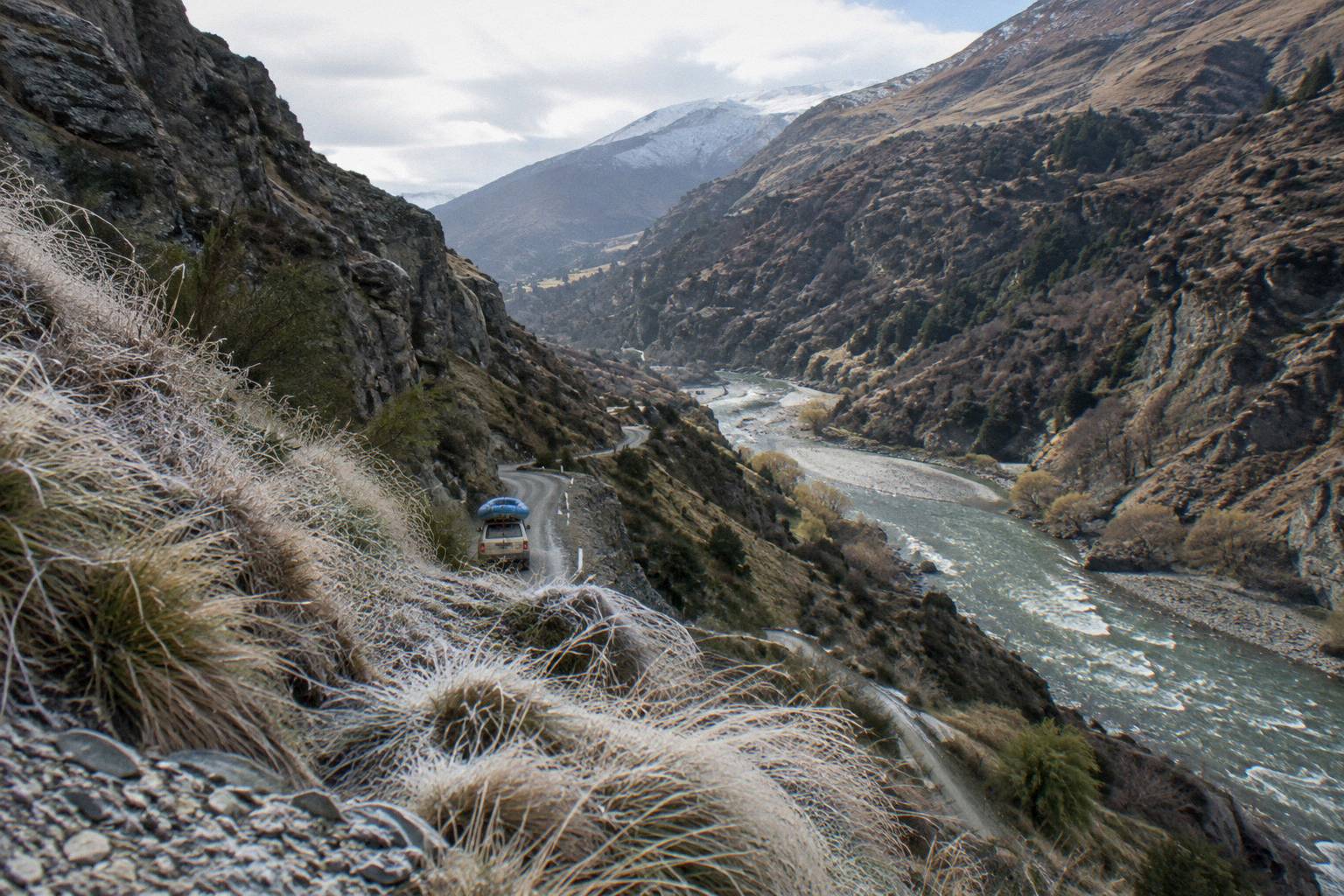
The Dog Leg on the Kawarau, 400 m long and described by the operator as the longest commercially rafted rapid in New Zealand at grade 3/4, is exactly the kind of water where you are glad the only thing you could lose is the paddle they gave you. Around it sit the gentler stretches of an 8 km run that ends in the Gibbston Valley, with an optional cliff-jumping section when weather and water level allow, plus the chance to swim a rapid. None of that changes the kit list; it just changes how wet you get inside the same wetsuit.
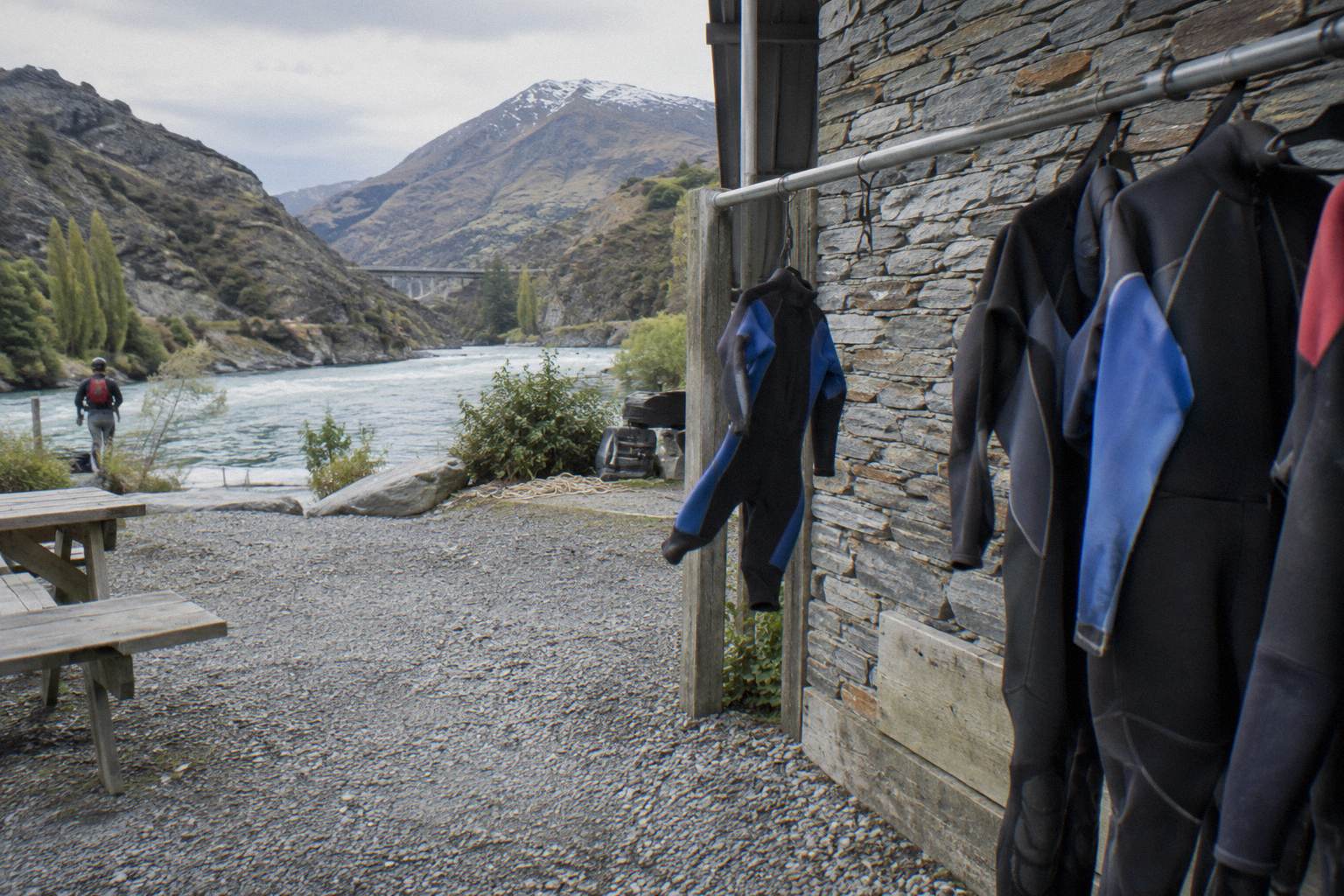
Photos, Cameras And Why Nothing Goes On The Raft
On the RealNZ Shotover trip nothing can be taken on the raft, cameras and GoPros included, and the alternative is built into the day: Challenge Rafting includes professional photos in its booking, and spectators can watch from near the last rapid where rafts exit the Oxenbridge Tunnel, though timing varies.
There are no spectators on the river itself on the RealNZ trips, which is another way of saying the water is committed grade 3 to 5 territory with rafts carrying at most eight people including the guide. Viewers stand near the final rapid, below the tunnel, and catch the rafts as they come out. Everyone else in your group who is not rafting is better off walking the short Oxenbridge Tunnel Track, a 20-minute easy walk from just before the Edith Cavell Bridge at Arthurs Point to a viewpoint over the tunnel diversion and an old steam engine, as the Department of Conservation track page describes.
The tunnel itself has a story worth knowing while you are being kitted up a few hundred metres from its mouth. It was started in 1906 by the Oxenbridge Brothers to divert the Shotover away from the Jeweller's Shop rapids, fabled for gold after the 1862 rush that saw the river dubbed "the richest river in the world", and the company behind it was liquidated by 1912 with no evidence of mining use after that, per Heritage New Zealand's list entry 5607. Today it carries the river and, primarily, rafts.
For the softer-water alternative, the Family Adventures Skippers Canyon trip takes a different approach entirely: a 45-minute drive into the canyon, 1.5 hours of rafting past gold mining relics and the Ford of Bruinen filming location, all gear provided, suitable from three years upwards. The canyon road itself is part of the experience; Skippers Road is unsealed, narrow and winding, 13 km from Skippers Saddle to Skippers Bridge, and the Department of Conservation advises that only experienced drivers should attempt it, so letting the operator drive is the standard choice. Everything else covered here is indexed on Queenstown White Water Rafting.
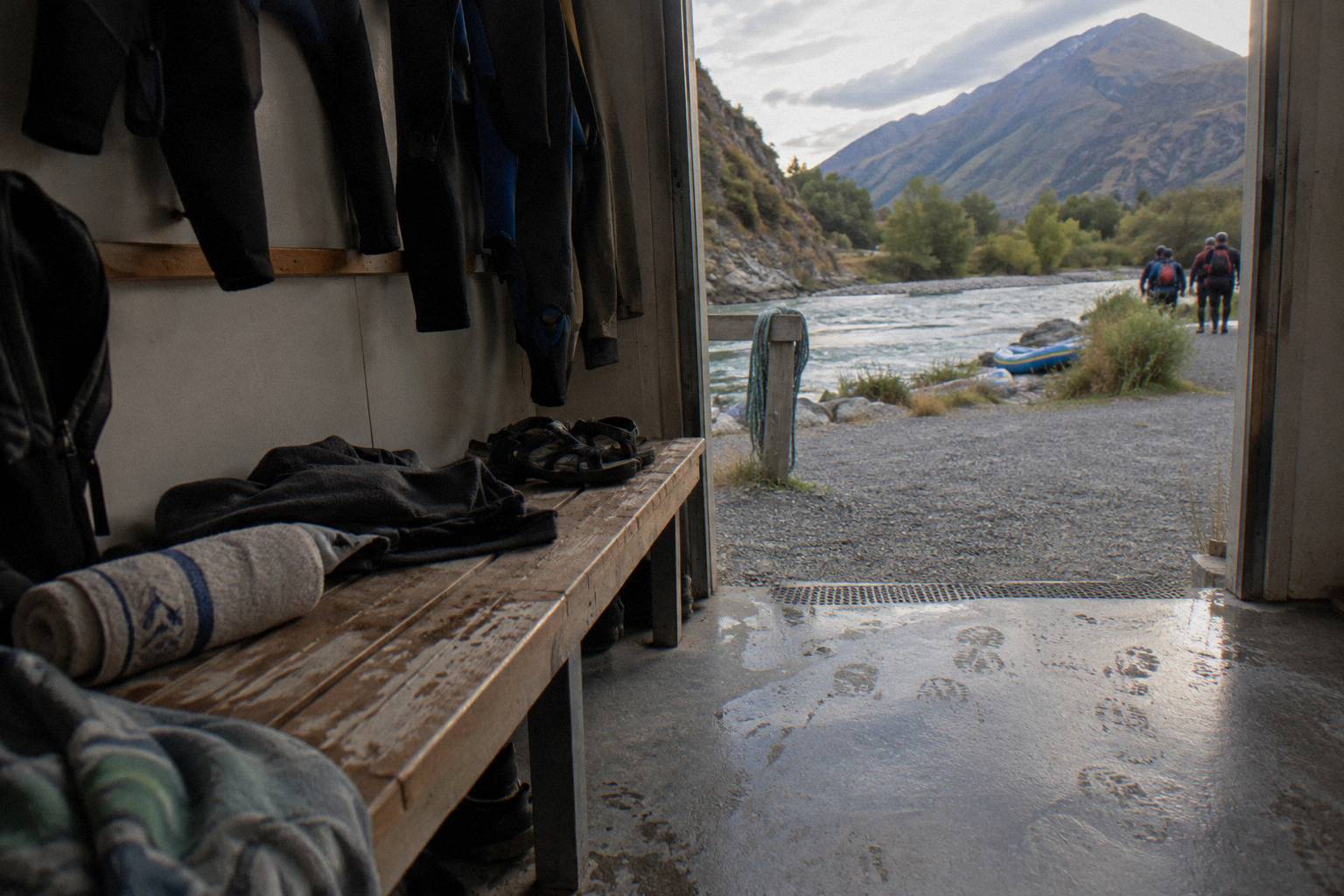
Does The Provided Gear Make Rafting Safe?
Provided gear is one layer of a regulated system, not the whole of it. Adventure activity operators in New Zealand must be registered with WorkSafe and have passed a safety audit before they may legally run trips, and on the water the RealNZ setup pairs a maximum of eight people per raft including the guide with a safety kayaker on every trip.
The register is public and searchable by name, activity and location, and WorkSafe describes its entries as operators who have passed a safety audit and are authorised to provide adventure activities; it is an offence to provide an adventure activity unless the operator is registered, excluded or exempted, per the WorkSafe adventure activities register. You can look up any operator yourself before booking.
The gear still has limits, and the operators say so plainly. Trips run depending on weather, river level and water temperature, portages may be required, and minimum guest numbers apply. Guests on the Shotover must be water-competent, able to swim 25 m unaided, with moderate fitness, and RealNZ says the Shotover carries a higher risk of falling out than the Kawarau. Medical exclusions are real: any heart condition except blood pressure managed with medication excludes, pregnant guests are excluded, and safety briefings must be understood in English. The fuller picture is in is white water rafting safe, and the nerves question is handled in rafting fear and nerves.
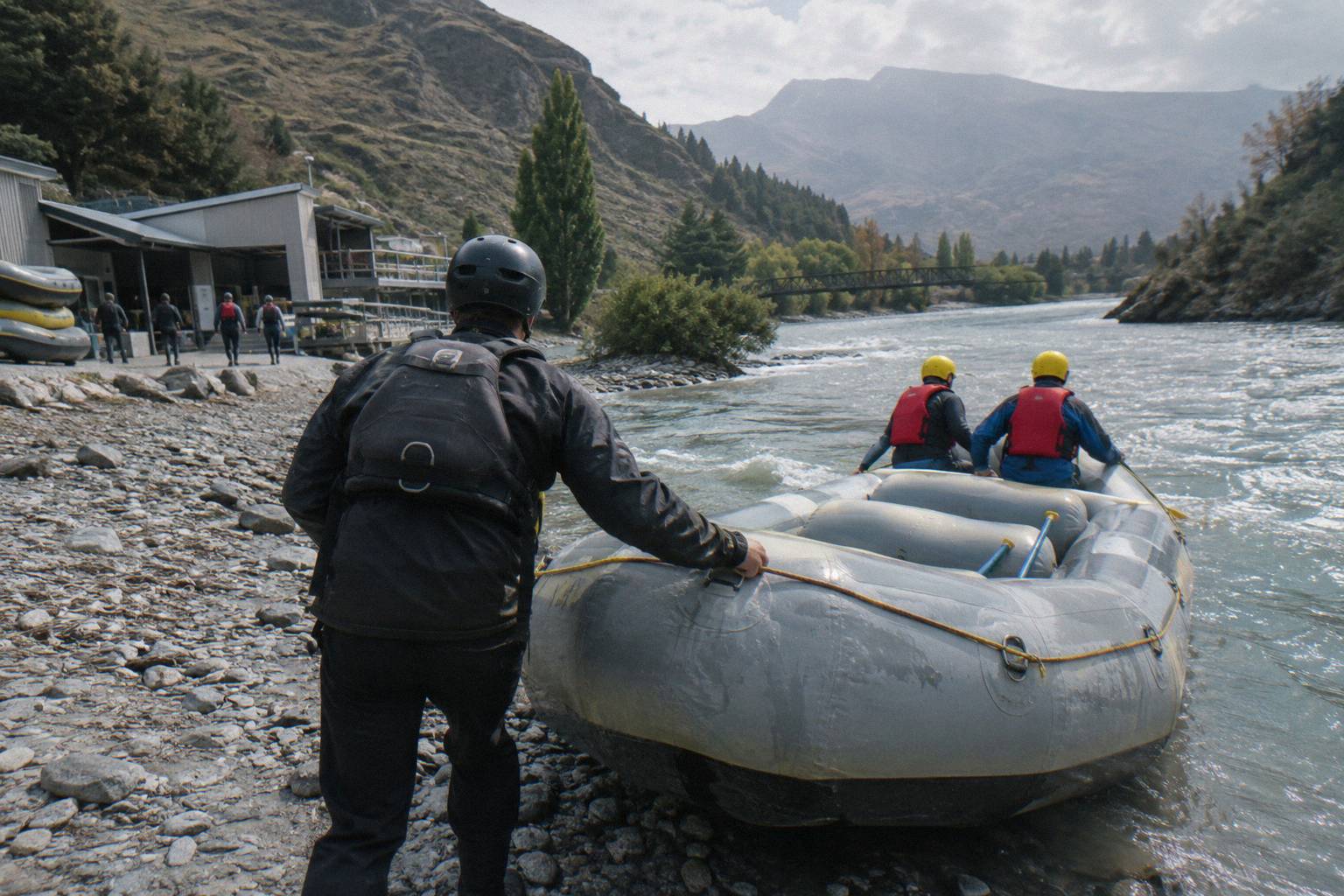
Put the layers together and the gear starts to make sense as a system rather than a costume. The helmet and life jacket are the safety layer, fitted and checked by crew whose job includes rejecting a bad fit. The wetsuit, jacket and spray jacket are the thermal layer, sized to your body because insulation depends on fit. The paddle is the participation layer, and the safety kayaker plus the guide-to-guest ratio of eight per raft is the supervision layer that no amount of personal equipment can replace. Understanding it that way also explains why operators are fussy about what you add yourself: anything unregulated you bring into the system, cotton, loose sunglasses, a GoPro mount, is the one variable they did not choose.
Common Mistakes People Make With Rafting Gear
The gear mistakes are consistent: wearing cotton under the wetsuit, bringing a camera they then cannot take on the raft, forgetting a towel for the hot showers, arriving in sandals instead of just letting the booties do the job, and guessing at eligibility limits that are actually checked, with weight verified at check-in against the 40 kg minimum and 120 kg maximum.
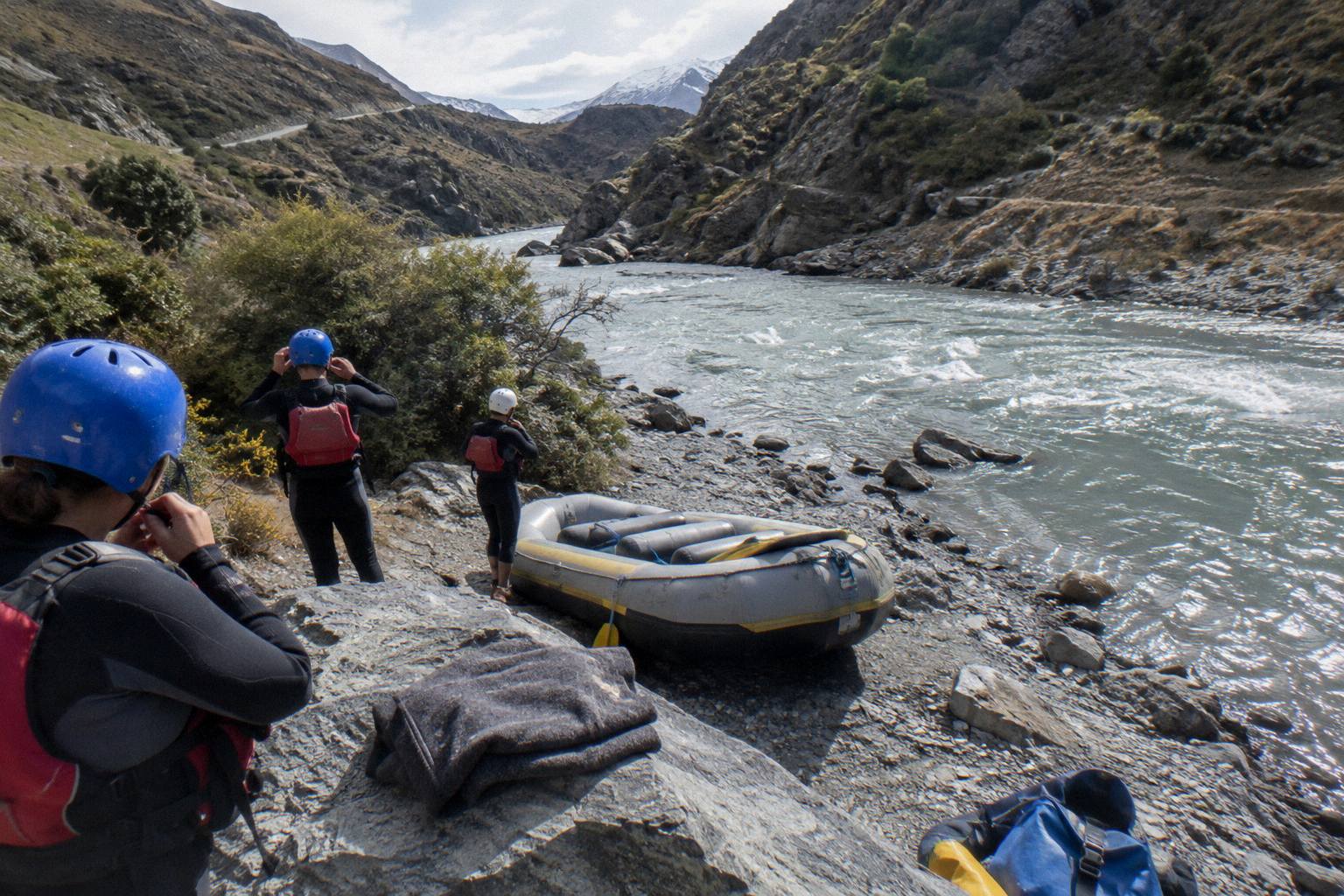
Cotton under a wetsuit is the most common and the most consequential. It defeats the insulation the suit provides, and every operator bans it for that reason. The camera mistake is more of a logistics annoyance than a safety one: you carry it to the base, then it goes in the locker with everything else. On trips where photos are not included in the booking, ask the operator what photography options exist before you go.
The sandals mistake deserves its own line. People arrive in bulky river sandals assuming they need their own footwear, then wear the provided booties anyway and carry the sandals all day. Leave them. If you wear glasses, bring a sports strap or leave them behind, the choice is that simple. And if your question is what else belongs in the bag, what to bring rafting is the packing companion, while glasses, cameras and valuables rafting covers the delicate items in detail.
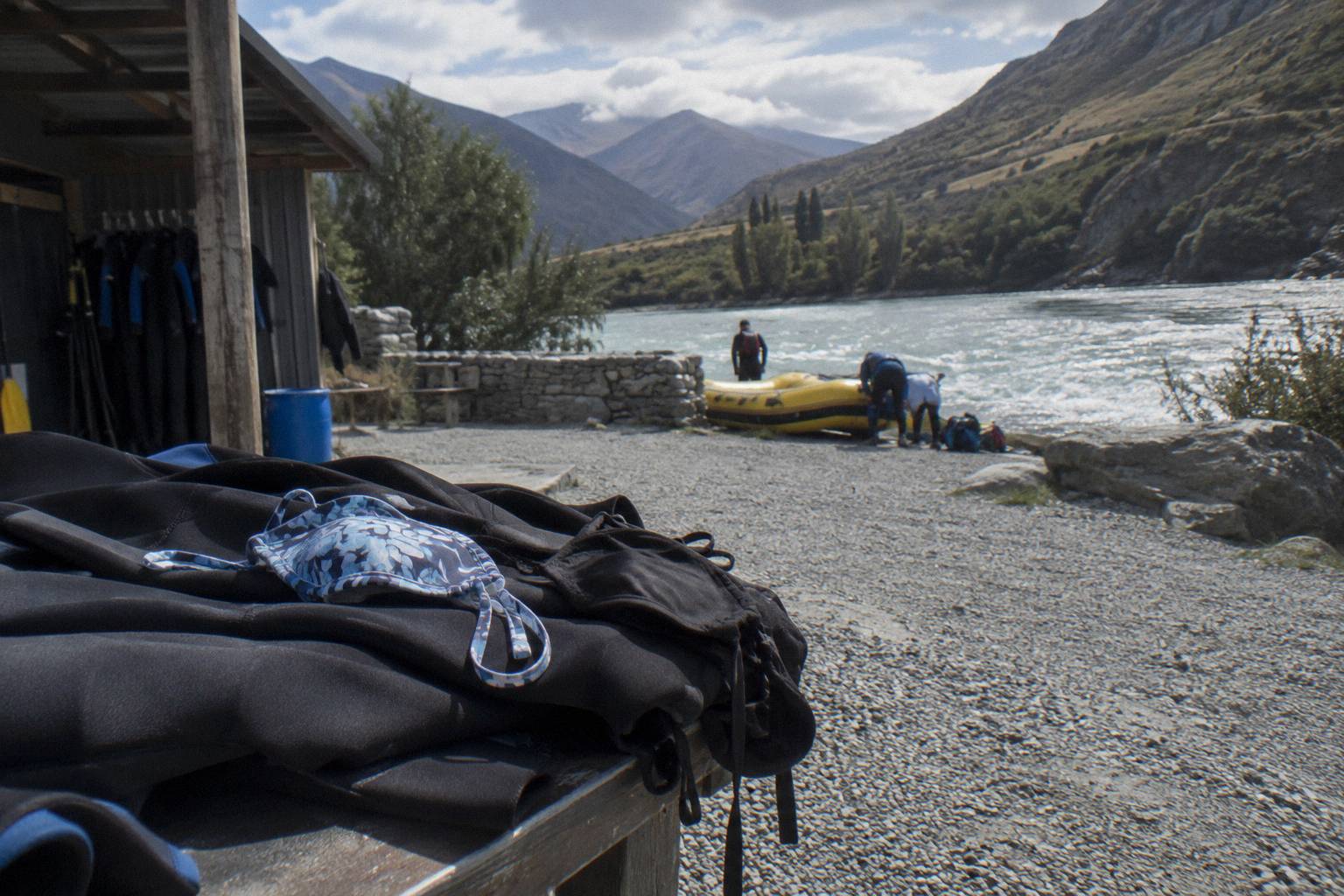
A quieter mistake is timing the booking around the wrong season. Challenge Rafting runs its Shotover trip November through April and states plainly that it does not operate rafting in the winter season, May to early September. Show up in June expecting that trip and the gear question becomes irrelevant. No operating months are published for the RealNZ trips, so if you are travelling in the shoulder season, confirm dates on the booking calendar before building the rest of your day around a rafting slot.
| Mistake | Consequence | Fix |
|---|---|---|
| Cotton under the wetsuit | Loses the insulation the suit provides | Swimwear only, no cotton |
| Bringing a camera or GoPro | It stays in the locker; nothing goes on the raft | Rely on trip photos or watch from the last rapid |
| No towel or dry clothes | Cold drive home after the hot showers | Pack both, every trip |
| Own river sandals | Dead weight; booties are provided | Leave them at your accommodation |
| Guessing at weight limits | Limits are verified at check-in | Check 40 kg to 120 kg against your own before booking |
| Ignoring the season | Challenge Rafting runs November to April only | Confirm dates on the booking calendar |
For the harder-water option, the Challenge Rafting Shotover trip includes professional photos in the booking, which quietly solves the camera problem: the kit you are given includes the images you would otherwise have risked a GoPro for. It runs November through April with the same age and weight limits, and its check-in is at 88 Beach Street or self-drive to the base at 1 Arthurs Point Road.
Questions People Ask Before They Are Kitted Up
Almost every booking question about gear collapses into three answers: everything technical is provided, swimwear is the only thing you wear underneath, and the base handles showers, lockers and sizing on the day. The remaining decisions are personal ones, what to do with glasses, whether your group has non-rafters, and which river matches your confidence, and those are answered by the trip you choose rather than the kit you pack.
Choosing between the rivers is really choosing between gear experiences. The Shotover grade 3 to 5 water means you will be glad of every layer the RealNZ crew hands you, wetsuit, jacket and spray jacket stacked, as the raft drops through rapids named Aftershock and Pinball on the Challenge version of the run. The Kawarau at grade 2 to 3 is the trip where first-timers and less confident swimmers feel the same equipment working as comfort rather than armour, and the operator says it can reach grade 4 at higher water levels. The comparison is laid out in full in Shotover versus Kawarau rafting, and the beginner angle is covered in white water rafting for beginners.
Common Questions About Rafting Gear
Do I Need To Bring My Own Wetsuit?
No. Every Queenstown rafting trip provides the wetsuit as part of the ticket, along with the rest of the technical kit. Extra-large and child-size wetsuits are available, so the range covers most bodies.
What Do I Wear Under The Provided Wetsuit?
Swimwear only, and no cotton anywhere in your layers. Cotton holds water against your skin and stops the neoprene working. The Family Adventures trip asks simply for a swimsuit under your clothes.
Are Shoes Provided, Or Should I Bring Sandals?
Wetsuit booties are provided on every trip and are thick-soled for the gravel banks. Bring your own footwear only for before and after; leave river sandals behind entirely.
Can I Take A Camera Or GoPro On The Raft?
On the RealNZ Shotover trip, nothing, camera or GoPro included, can be taken on the raft. Challenge Rafting includes professional photos in its booking, and spectators can watch near the last rapid where rafts exit the Oxenbridge Tunnel.
Is There Anywhere To Shower And Store Valuables?
Yes. The RealNZ Shotover raft base at Arthurs Point has hot showers, a valuables locker and toilets, and Challenge Rafting guests have hot showers at the Rafters Lodge. Bring a towel and dry clothes.
What If The Wetsuit Does Not Fit Me?
The crew fits suits at the base and swaps sizes on the spot, with extra-large and child-size wetsuits available. Fitting is part of check-in, so arrive ready to be sized rather than with a pre-booked size.