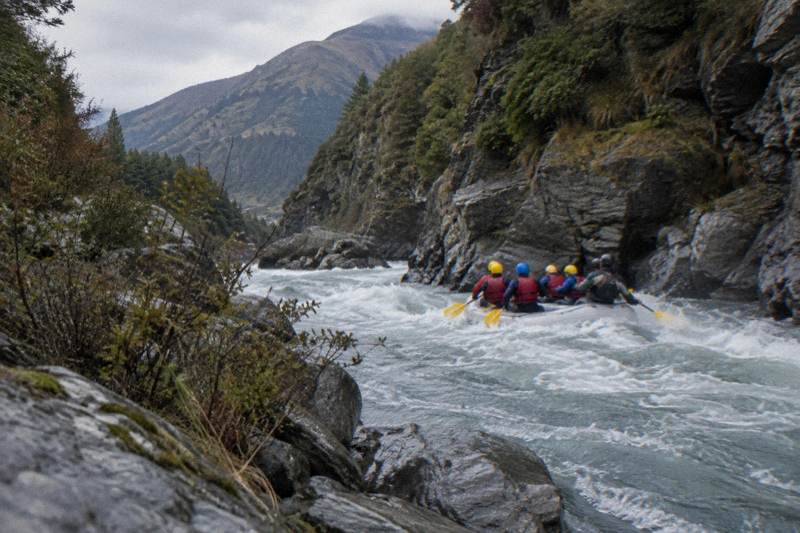
What To Do If Your Raft Flips On A Queenstown River?
A plain-language answer to what happens if a Queenstown raft flips: the protections in place on the Shotover and Kawarau rivers, what the safety briefing covers, and which trips suit nervous paddlers.
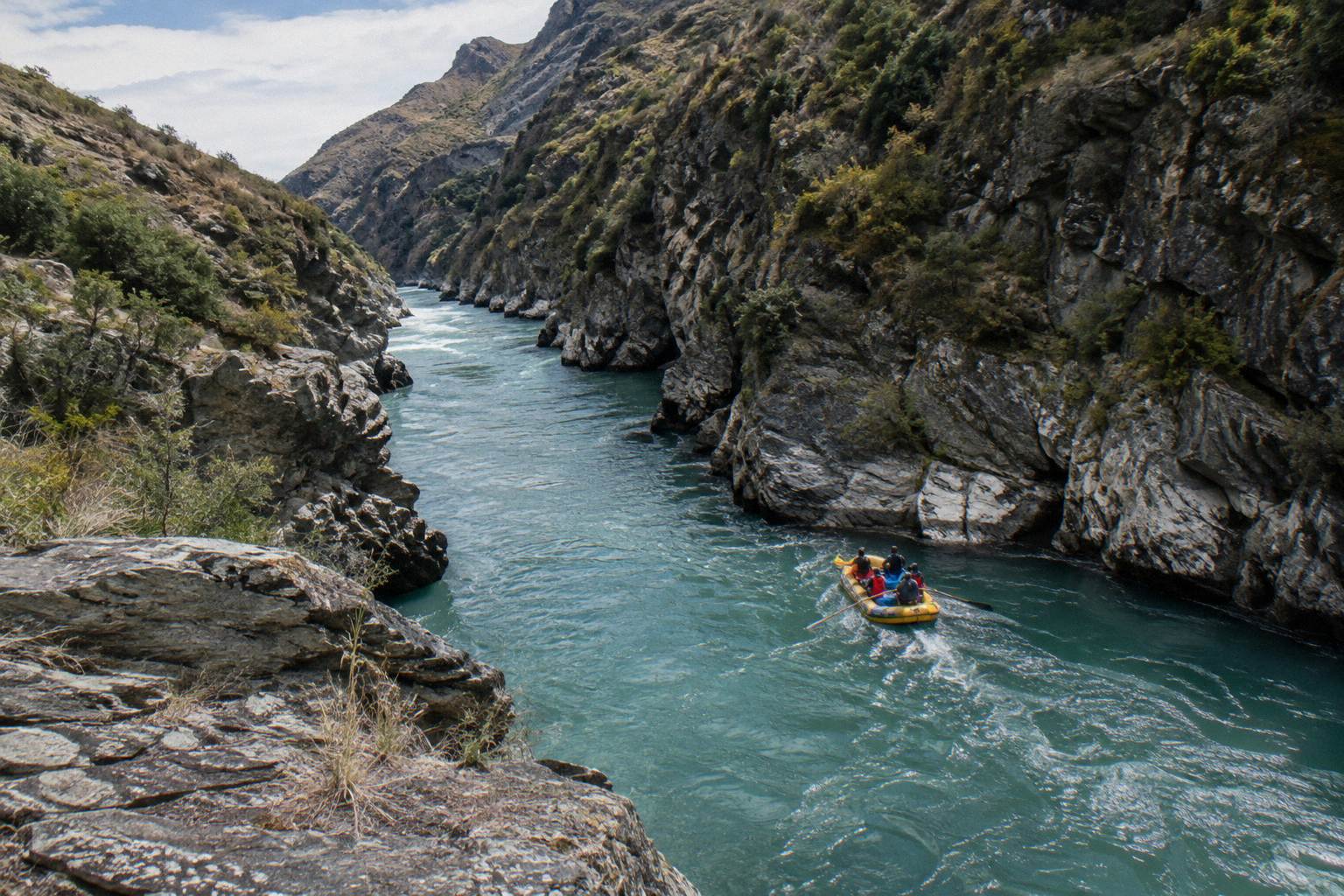
The honest answer to the flip question is that you will not be working it out on your own. Queenstown rafting is built around the assumption that people end up in the water sometimes, and every layer of the trip, from the briefing to the gear to the staff on the river, exists because of that assumption. What follows is a look at those layers on the two rivers commercially rafted here, the Shotover and the Kawarau, drawn from what the operators themselves publish.
What To Do If Your Raft Flips?
If a raft flips on a Queenstown river, the response you follow is the one taught at the safety briefing before you ever reach the water, delivered by the guide who runs your raft, and backed by equipment that keeps you afloat while help reaches you. Every guest wears a life jacket and helmet, the guide is trained for exactly situations of people ending up in the water, and on the RealNZ Shotover trip a safety kayaker travels with each raft to assist. There is no substitute for listening hard at that briefing. It is the single most useful thing you can do.
Why not publish a step-by-step procedure here? Because the operators do not publish one, and improvising rescue instructions without knowing the river would be worse than useless. What the operators do publish is the structure of protection around each trip, and that structure is worth understanding before you book. On the RealNZ Shotover trip, rafts carry a maximum of eight people including the guide, and a safety kayaker travels on each trip, paddling alongside the raft through the rapids. That second craft is there for moments when a raft empties its passengers into the river.
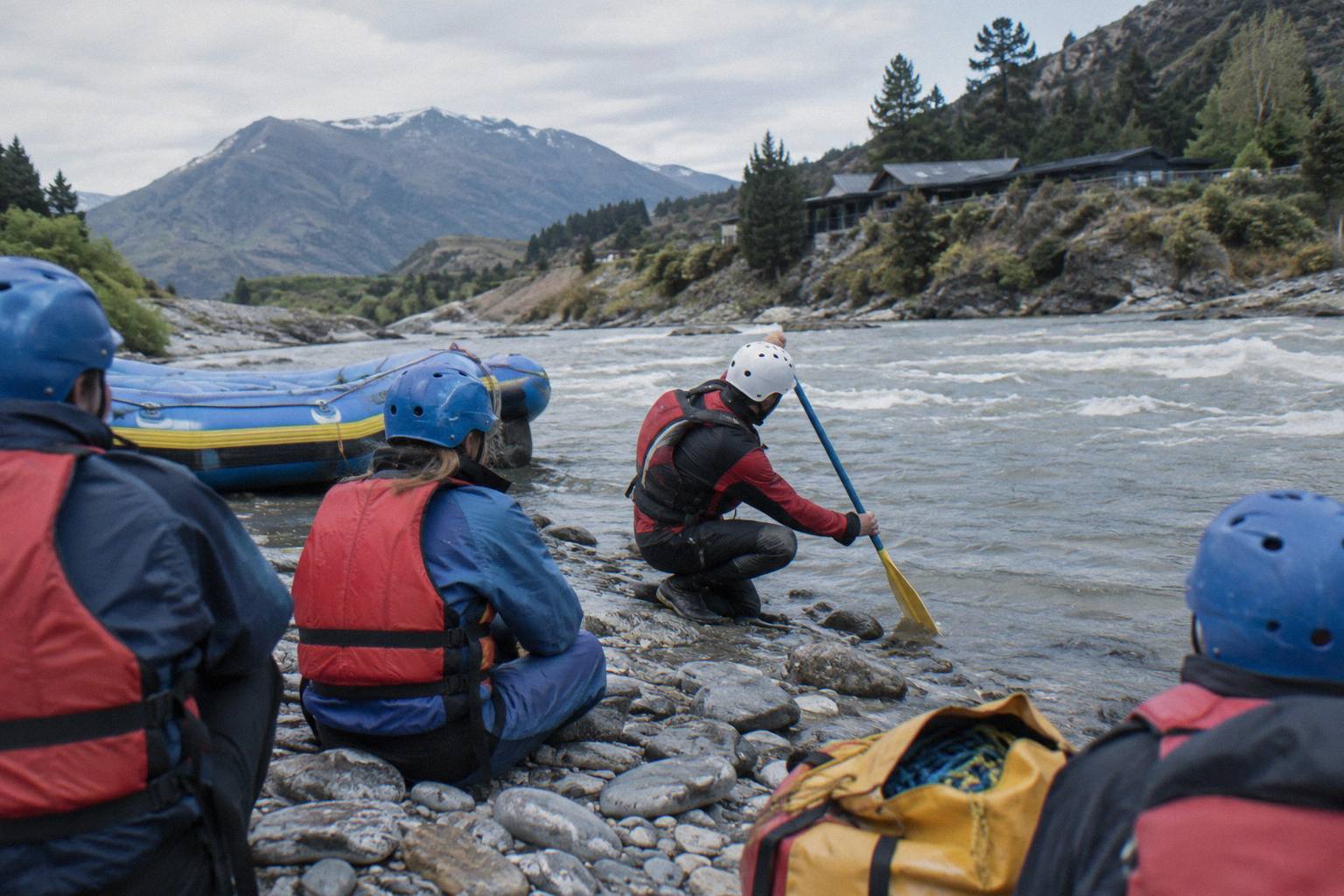
The briefing itself is a fixed part of the day. On the Kawarau Rafting Only itinerary, the schedule includes a 30 minute safety briefing at the base between the drive out and the put-in, a substantial block of time devoted to paddling commands, positioning in the raft, and what the crew does if someone ends up in the water. The Shotover trips follow the same pattern. Guests must be able to understand the briefing in English, which tells you how much weight the operators place on it: it is treated as a requirement, not a formality.
The gear does quiet work too. Wetsuits, wetsuit jackets, spray jackets, helmets, booties and life jackets are provided on both rivers, and the life jacket is the piece that matters most in a swim. Combined with a guide whose job includes recovering people from the water, and on the Shotover a dedicated safety kayaker, the system is layered so that no single thing has to work perfectly. If you want a fuller walk-through of the moment itself, read what actually happens if you fall out of a raft, which covers the same protections in more detail.
Who Is On The Water To Help You?
On the RealNZ Shotover River trip, your raft carries a guide and at most seven guests, and a safety kayaker paddles the river alongside every trip, which means two trained people are on the water with your group at all times. On the Kawarau trips the guide leads from the raft, with the same briefing, gear and rescue role. The guide is not a driver, they are the trip's safety officer, swim coach and captain rolled into one person whose entire job is the water in front of them.
The kayaker detail deserves more attention than it usually gets. A safety kayaker is a paddler in a small, highly maneuverable boat whose only role is to be where the rafts are, positioned to reach anyone in the water quickly. RealNZ states plainly that this person travels on each Shotover trip, through six grade 3 to 5 rapids and the 170 m Oxenbridge Tunnel. It is a second rescue asset dedicated to your raft, and it reflects the character of that river: grade 3 to 5 water, where the operator notes guests face a higher risk of falling out than on the Kawarau.
The industry context matters here too. Adventure activity operators in New Zealand must be registered with WorkSafe and have passed a safety audit, and WorkSafe's public register lets anyone search registered operators by name, activity and location. It is an offence to run an adventure activity without that registration. That regime exists precisely because activities like rafting carry real risk, and it is the floor beneath everything else described here. If you have broader worries, the guide to whether white water rafting is safe works through the whole framework.
None of the trip pages promise that nobody falls in. What they promise is equipment, training and staffing built around the fact that people sometimes do. Reading them that way, as a system rather than a slogan, is the most useful frame for deciding whether a trip is right for you.
Do Rafts Flip More On The Shotover Or The Kawarau?
The Shotover is the more demanding river: RealNZ grades its trip grade 3 to 5 and states that the Shotover carries a higher risk of falling out than the Kawarau, which is graded 2 to 3 and pitched at first-timers and less confident swimmers. The same operator runs both rivers, which makes the comparison unusually clean. When the company that sells you both trips tells you one is gentler, that is decision-grade information, not marketing hedging.
The character of the two rivers explains the difference. The Shotover run covers 14 km of water through Skippers Canyon country, including six grade 3 to 5 rapids and the pitch-black 170 m Oxenbridge Tunnel, finishing at the Arthurs Point rafting base. The Kawarau run is 8 km, ending in the Gibbston Valley, usually graded 2 to 3 though the operator notes it can reach grade 4 at higher water levels. Its headline feature, the Dog Leg, is 400 m long and described by the operator as the longest commercially rafted rapid in New Zealand. Long, but at grade 3 to 4, forgiving by Shotover standards.
| River trip | Grade | Water covered | Duration | From (per person) | Rating |
|---|---|---|---|---|---|
| Shotover Rafting, Half Day | 3 to 5 | 14 km, six grade 3-5 rapids, 170 m tunnel | 4.5 hours | NZ$299 | 4.8 from 346 reviews |
| Challenge Rafting, 4 Hours | 4 to 5 | Six grade 4-5 rapids, tunnel, Cascade Rapid | 4 hours | NZ$299 | 4.9 from 80 reviews |
| Kawarau Rafting Only | 2 to 3 | 8 km, the Dog Leg, Gibbston finish | 4 hours | NZ$249 | 4.7 from 48 reviews |
Note the second row. Challenge Rafting sells a separate Shotover trip graded 4 to 5, running the Mother rapids, a series of six grade 4 to 5 stretches with names like Aftershock, Squeeze, Toilet and Pinball, then the tunnel and the drop into Cascade Rapid. Its own site states the trip is operated by RealNZ, though the two products are listed separately. If your flip worry is strong, that row is the one to think hardest about: it is the most committed white water on this roster, from NZ$299 per person, rated 4.9 from 80 reviews.
What The Briefing Actually Covers
The safety briefing is where the operator teaches you, on dry land, everything you need to do on the water, including how to sit, how to hold the paddle, how to respond to the guide's commands, and what the crew does when someone ends up in the river. It is delivered before you launch, repeated in plain language, and treated as mandatory. RealNZ requires that guests understand it in English, and Challenge Rafting includes the briefing in what it lists as part of every trip alongside the full wetsuit, booties, life jacket and equipment.
The scale of the briefing is visible in the Kawarau itinerary. Of a roughly four hour day, a full 30 minutes is set aside for safety at the base before anyone gets near the river. That is not a two-minute chat on the bank. It is a structured session, and it happens after the bus ride out and before the second bus hop to the put-in, so it lands when you are suited up, helmeted and ready to see the water. The Shotover trips follow the same shape, with the briefing built into the shuttle sequence out through Skippers Canyon Road to the Deep Creek put-in, about 40 minutes' drive from town.
What you will not find on any of these pages is a written flip procedure to memorise in advance, and there is a reason for that. Rescue actions depend on where you are, what the raft is doing and what the guide calls, which is exactly why they are taught in person rather than printed. The right preparation is showing up fit to listen. Guests on all these trips are asked for moderate fitness and water competence, on the RealNZ trips the ability to swim 25 m unaided, and the guide on managing rafting fear and nerves covers the mental side of the same preparation.
The Gear That Keeps You Safe In The Water
Every commercial rafting trip in Queenstown issues you a full kit before you touch the river, and on the RealNZ and Challenge trips that means wetsuit, wetsuit jacket, spray jacket, helmet, wetsuit booties, life jacket and paddle, all included in the fare. The life jacket is the piece that does the work if you end up in the water. The helmet does the work if the water moves you somewhere you did not choose. Everything else exists to keep you functional and warm through a day built around getting splashed.
| Item | On RealNZ Shotover | On RealNZ Kawarau | On Challenge Rafting Shotover |
|---|---|---|---|
| Wetsuit | Included | Included | Full wetsuit included |
| Wetsuit jacket and spray jacket | Included | Included | Equipment included |
| Helmet | Included | Included | Included |
| Life jacket | Included | Included | Included |
| Booties | Included | Included | Included |
| Hot showers after | At the raft base | Included | At the Rafters Lodge |
Two small facts about the kit are easy to miss and worth knowing. First, nothing can be taken on the raft on the RealNZ Shotover trip, no camera and no GoPro, which removes the temptation to hold onto equipment instead of following the guide. There is a valuables locker at the raft base. Second, what you wear under the wetsuit matters: swimwear only, no cotton, and glasses need a sports strap or stay behind. The full rundown is in the guide to what to wear white water rafting.
The weight limits connect to the same system. Minimum 40 kg and maximum 120 kg, verified at check-in, exist because the kit and the raft's balance are built around that range, and extra-large and child-size wetsuits are available so the suit actually fits the person inside it. None of this prevents a flip, and it is not meant to. It is meant to make a swim survivable and short.
Which Trip Should A Nervous Paddler Choose?
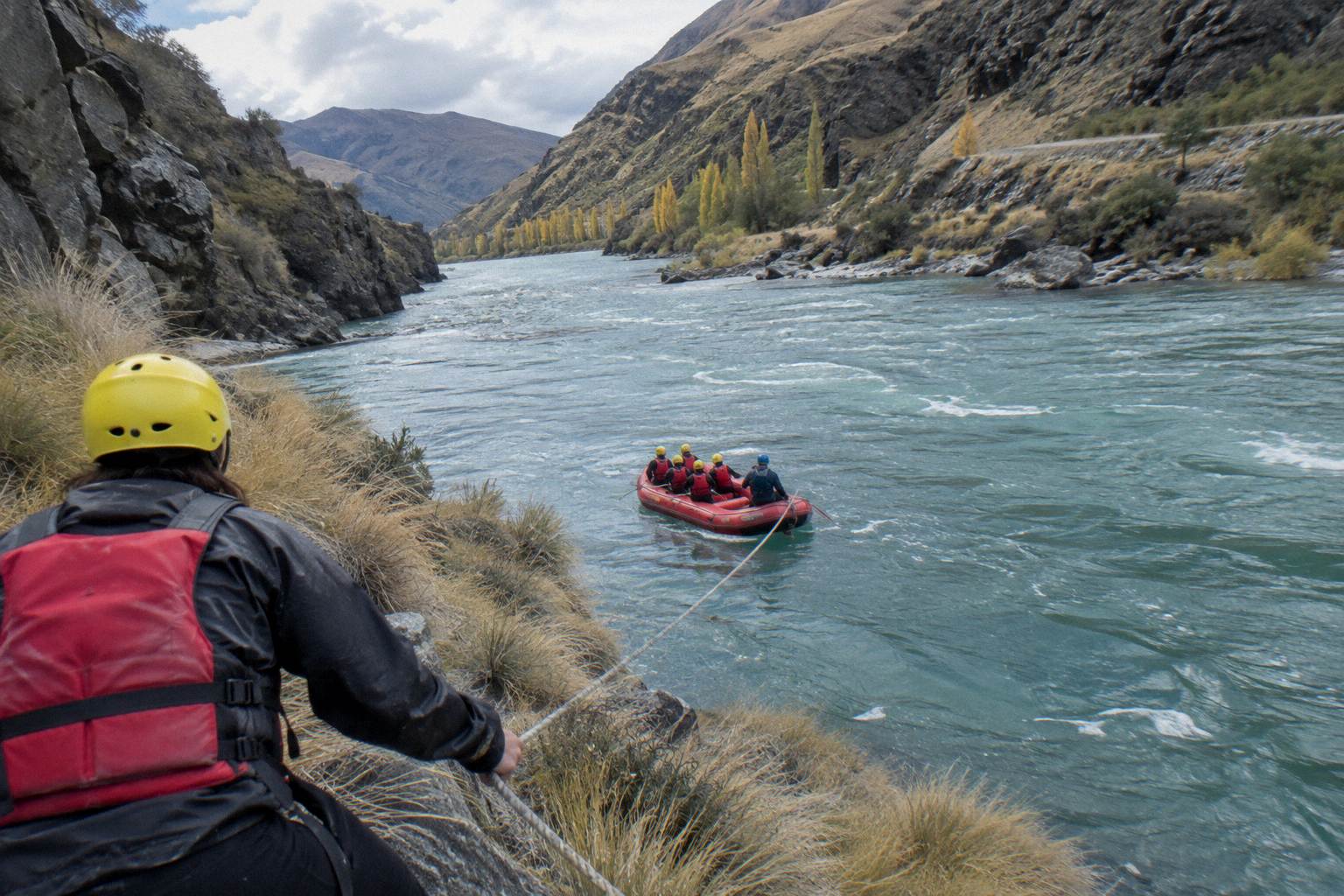
A nervous paddler should start on the Kawarau, graded 2 to 3 and described by its own operator as suited to first-timers and less confident swimmers, or on the gentle grade 1 to 2 Family Adventures trip where water confidence is not necessary at all. The Kawarau Rafting Only trip is the base fare at NZ$249 per person, four hours, rated 4.7 from 48 reviews. It is the least expensive full rafting day on the roster and the least technically demanding.
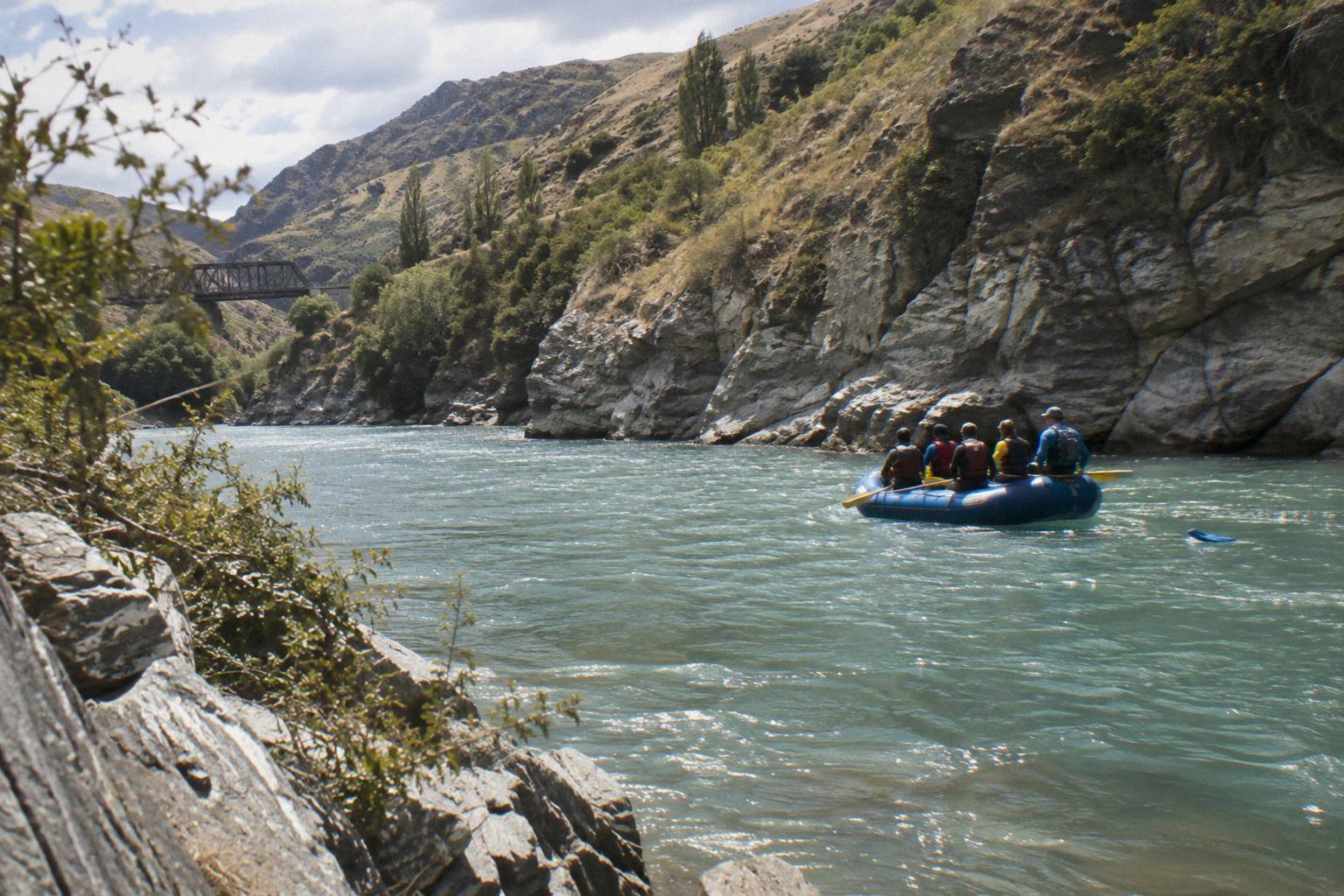
The Kawarau day has a rhythm that suits first-timers. After meeting at 88 Beach Street, it is a 20 minute bus ride to the base, the 30 minute briefing, another 20 minutes to the river, an hour of rafting, then the return legs with a 30 minute break in the middle. One hour of actual river time inside a well-paced day is a gentle introduction, and the operator even makes the swim voluntary in a sense: there is an optional rapid-swimming section and optional cliff jumping, both depending on weather and water level. Nobody is pushed past their line.
Below the Kawarau again sits the Family Adventures trip, the Rafting And Skippers Canyon Combo. It is suitable for everyone from 3 years upwards, water confidence is not necessary, and the rapids are grade 1 and 2. The day runs 5 hours from Camp Street, from NZ$329 per person, rated 5.0 from 7 reviews, a small review pool so far. It drives 45 minutes into Skippers Canyon, past gold mining relics, rafts 1.5 hours of flat-ish water including the Lord of the Rings Ford of Bruinen location, and includes snacks. If the flip question is the thing keeping you or your family off the water entirely, this is the trip that answers it.
A River With A Reminder Of Why The Rules Exist
The Shotover's most famous rafting feature, the Oxenbridge Tunnel, is a 170 m hole blasted for gold mining that failed commercially by 1912, and its modern life as a rafting channel carries a recorded history that shaped how operators treat safety on this river. The tunnel was begun in 1906 by the Oxenbridge Brothers, Bert and Edmund, to divert the Shotover away from the Jeweller's Shop rapids above Arthurs Point, rapids fabled for the gold they were thought to hold. The Arthurs Point Gold Mining Company, incorporated in October 1909, was liquidated by August 1912 with no evidence of mining use after that year, according to Heritage New Zealand's list entry 5607.
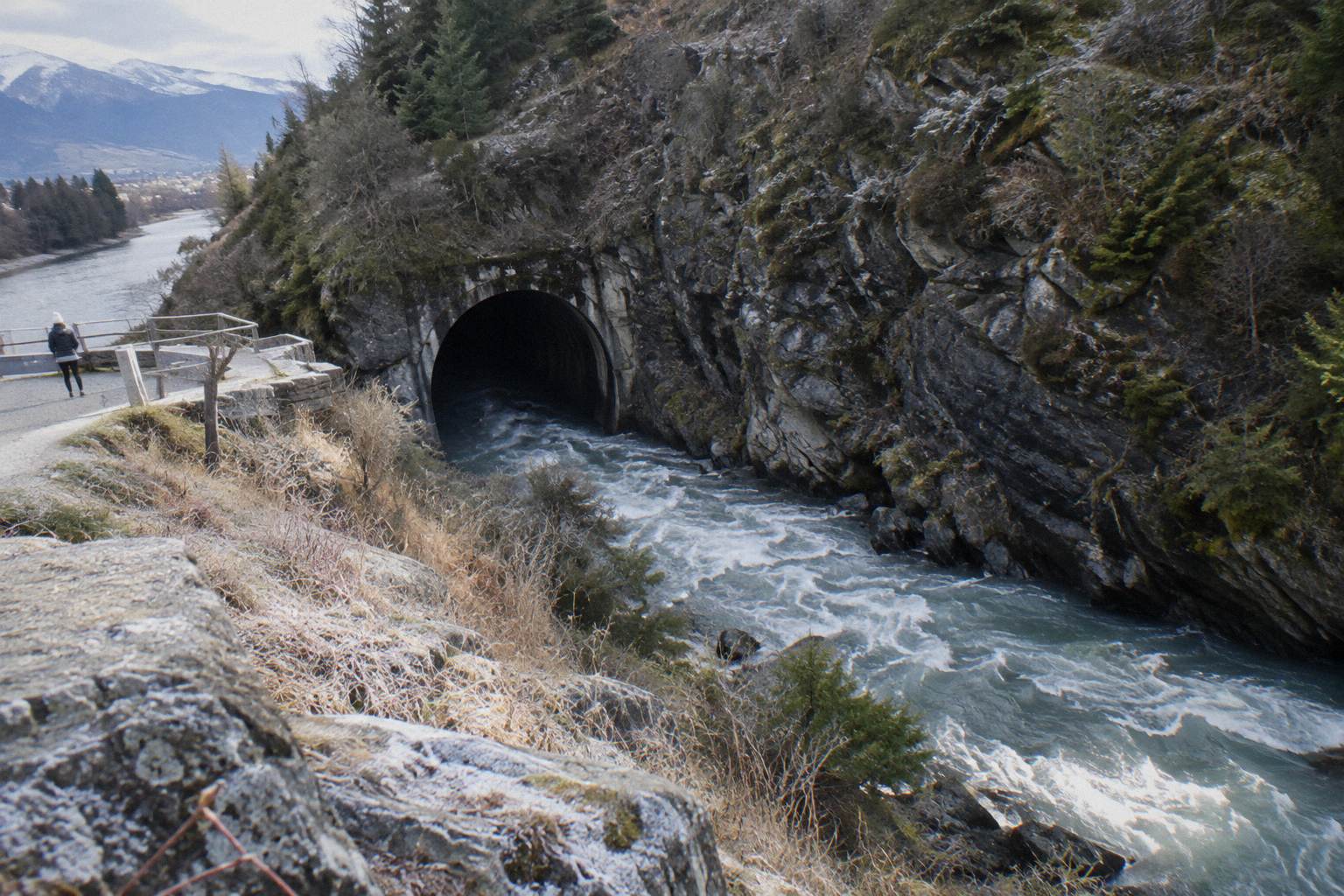
The same entry records that a 1995 tourist death led to the filling in of the Toaster, the farthest north of the tunnel's two original outlet channels, and that the tunnel now carries the Shotover's flow and is used primarily by rafting companies. This site will not turn that history into a risk statistic, because none is published. What it does show is that the river's infrastructure has been reshaped more than once in response to how people actually use the water, which is the same instinct behind today's briefings, safety kayakers and gear checks.
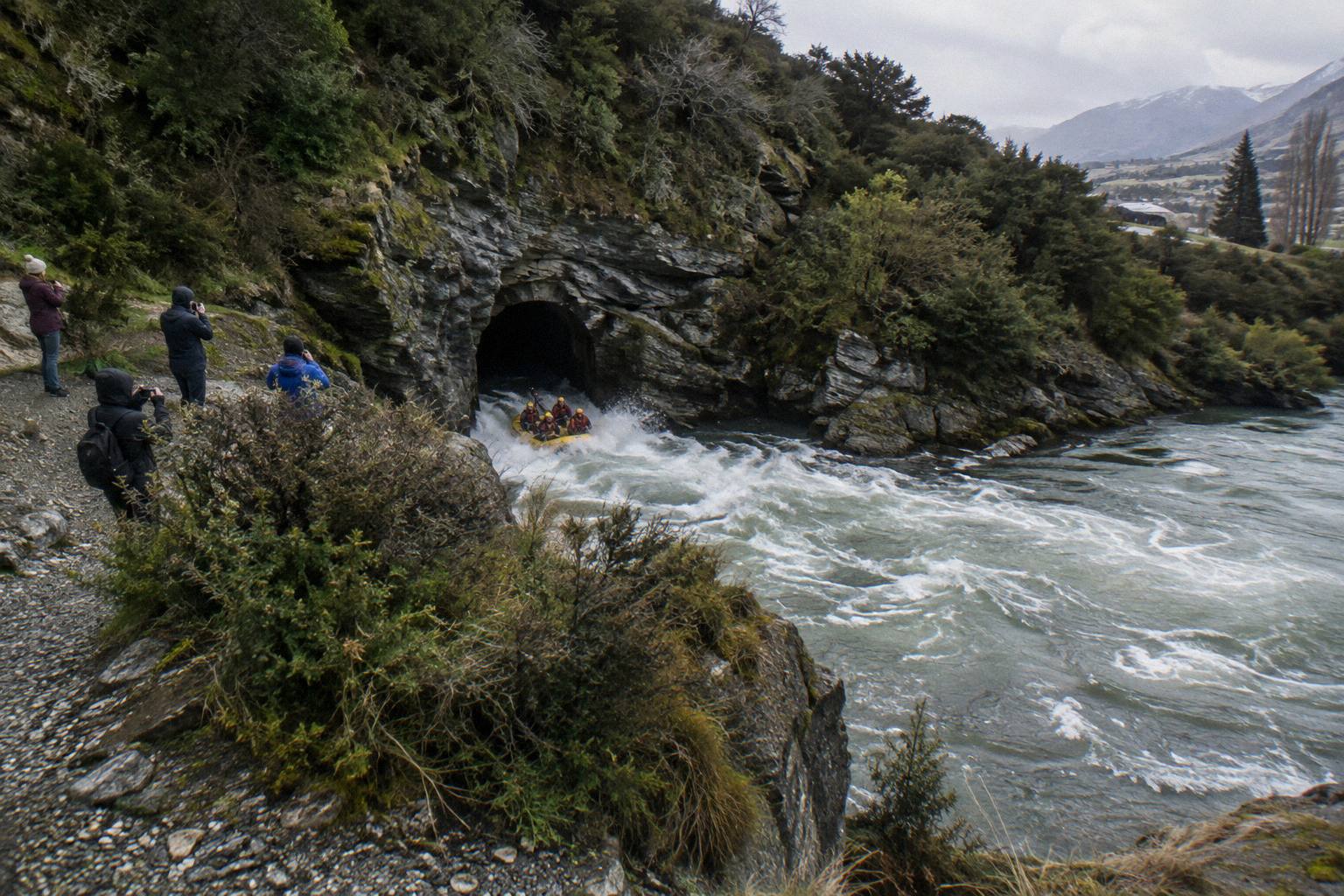
You do not have to raft to see it, either. The Department of Conservation's Oxenbridge Tunnel Track is a short, easy 20 minute walk from just before the Edith Cavell Bridge at Arthurs Point to a viewpoint over the tunnel diversion and an old steam engine. Spectators cannot follow the rafts down the river, but viewers can stand near the final rapid as rafts exit the tunnel, with timing varying by trip.
How Fitness And Eligibility Feed Into Flip Risk
Every operator page links your personal readiness to the river's demands: RealNZ requires moderate fitness, water competence meaning the ability to swim 25 m unaided, and an understanding of the safety briefing in English, because a guest who cannot act on the guide's words is harder to protect in moving water. These are not box-ticking rules. They are the operator's way of making sure that if the worst moment comes, you are a participant in your own rescue rather than an object in the current.
| Requirement | RealNZ trips | Challenge Rafting Shotover | Family Adventures |
|---|---|---|---|
| Minimum age | 13 | 13 | 3 |
| Weight range | 40 to 120 kg | 40 to 120 kg | No limit published |
| Swimming | Water-competent, 25 m unaided | Water competence required | Not necessary |
| Fitness | Moderate, good level asked | Moderate | Gentle trip |
| Exclusions | Heart conditions, pregnancy | Heart conditions or medication, pregnancy, non-swimmers | None published |
The age rules have their own ladder. On RealNZ trips, under 16s (under 17s on the Challenge Rafting trip) must travel with a guardian, under 18s need an accompanying adult or guardian consent plus a guardian-signed waiver, and everyone signs a waiver. Challenge Rafting's text says under 17 accompanied by a guardian and under 18 with a guardian-signed waiver. There is no maximum age, disabilities are assessed case by case, and a heart condition, except blood pressure managed with medication, excludes from the big-water trips. The fuller picture is in the guide to rafting weight and fitness limits, and the family angle is covered in rafting with kids in Queenstown.
Worth saying plainly: these filters are the flip answer in disguise. A raft of water-competent, briefed, correctly weighted guests in fitted gear, led by a guide and shadowed by a safety kayaker, is a raft that handles a capsize as a controlled event. The same river with none of that would be a different story, which is why the operators enforce the checks at all, including weighing guests at check-in.
When Trips Do Not Run At All
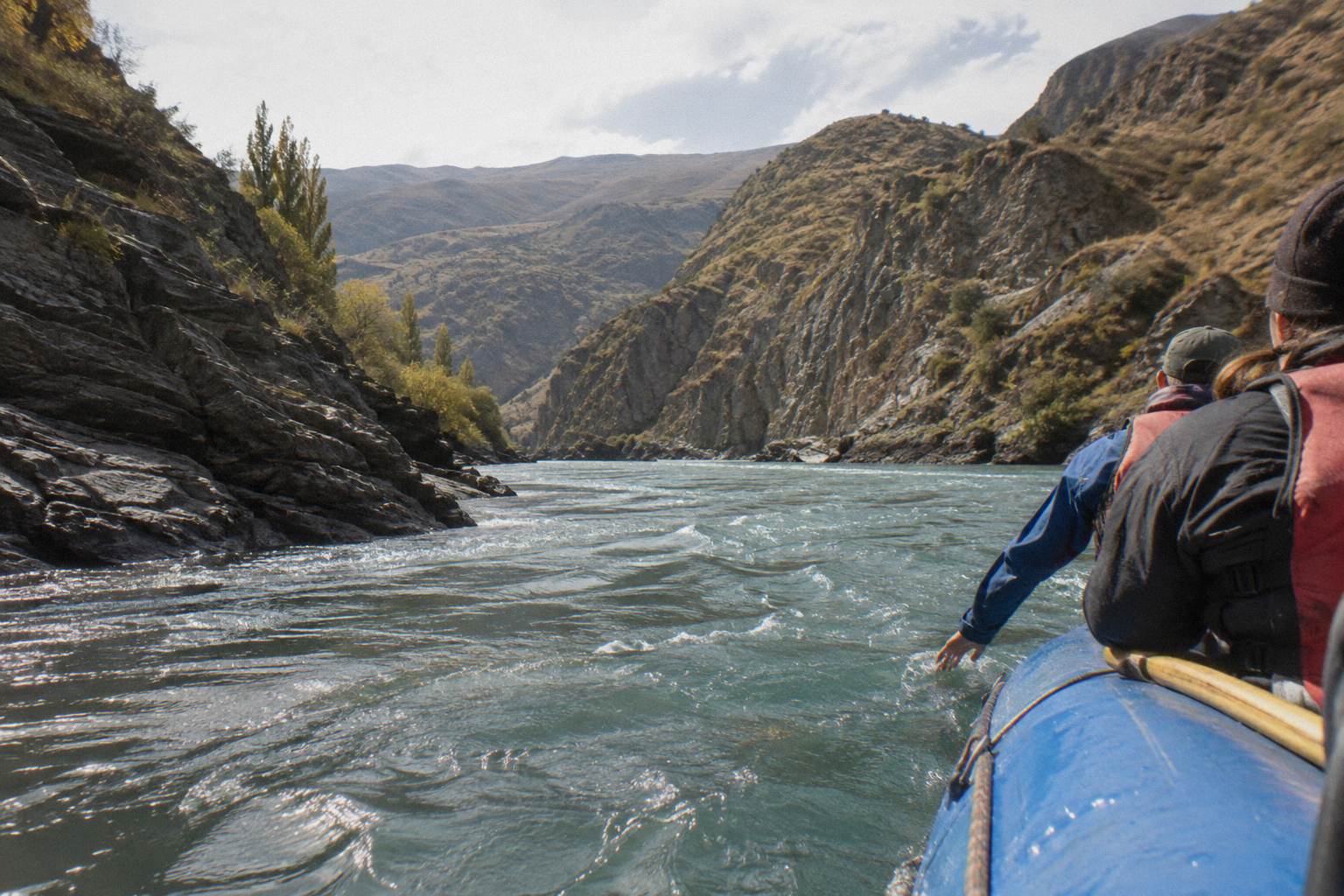
Operators cancel or adjust trips when conditions are wrong: RealNZ states its trips depend on weather, river level and water temperature, that portages may be required, and that minimum guest numbers apply, so the river you get is one the operator has judged safe that day. A portage means carrying or walking the raft around a stretch of water rather than running it. That is not a concession to nerves, it is a decision made by people who read the river professionally.
Challenge Rafting is more explicit about its calendar: it runs November through April and does not operate rafting during winter, May to early September. No operating months are published for the RealNZ trips, so do not assume the same gap applies to them. What you can take from both is that the season and the day's conditions are inputs to a go or no-go decision that belongs to the operator, not to you. The guide to the best time for rafting in Queenstown covers the seasonal picture in more depth.
For anyone weighing the whole question of whether this activity is for them, Queenstown White Water Rafting exists to answer exactly that with sourced operator detail rather than bravado. The flip question is a good question. It deserves a better answer than reassurance, and the better answer is the system itself: the briefing, the gear, the guide, the kayaker, the eligibility filters and the operator's willingness to not run the river when the river is wrong.
Common Questions About A Flipped Raft
What To Do If Your Raft Flips?
Follow the procedure taught at the safety briefing before you launch: that is what it is for. Your life jacket keeps you afloat, your helmet protects your head, the guide's instructions direct the response, and on the RealNZ Shotover trip a safety kayaker travels with each raft to assist. Listen closely at the briefing and ask questions there.
Do Rafts Flip On The Shotover River?
The Shotover is graded 3 to 5 and its operator states there is a higher risk of falling out than on the Kawarau, so ending up in the water is a real possibility that the trip is staffed and equipped for. No flip frequency figure is published, and none should be invented.
Which Queenstown Rafting Trip Is Gentlest?
The Family Adventures Skippers Canyon trip, grade 1 to 2, suitable from age 3 with no water confidence necessary. The Kawarau trips, grade 2 to 3, are the next step up and are described by the operator as suited to first-timers.
Do I Need To Be Able To Swim To Go Rafting?
On the RealNZ and Challenge Rafting trips, yes: guests must be water-competent, on RealNZ trips able to swim 25 m unaided. On the Family Adventures grade 1 to 2 trip, water confidence is not necessary.
Is There A Safety Kayaker On The Trip?
On the RealNZ Shotover River trip, yes, a safety kayaker travels on each trip alongside rafts carrying at most eight people including the guide.
Can Trips Be Cancelled For River Conditions?
Yes. RealNZ states trips depend on weather, river level and water temperature, portages may be required, and minimum guest numbers apply. Challenge Rafting does not run its Shotover trips in winter, May to early September.