Is There White Water Rafting In Queenstown?
Yes: Queenstown runs commercial white water rafting on the Shotover and Kawarau rivers, from NZ$249 per person. Which river suits you, prices, durations and how to book.
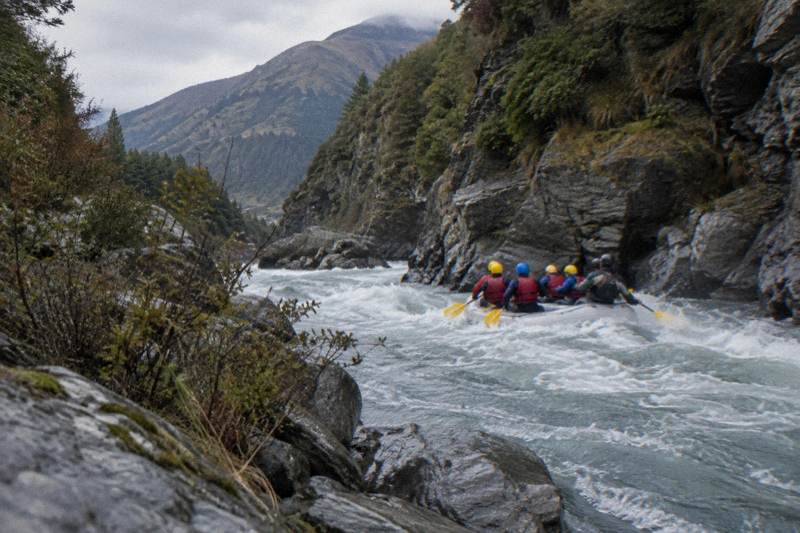
Yes. Queenstown has commercial white water rafting on two rivers: the Shotover and the Kawarau, with five trips from NZ$249 per person. The Shotover runs grade 3 to 5 whitewater through a 170 m tunnel; the Kawarau runs gentler grade 2 to 3 water built for first-timers. Every trip meets in central Queenstown and runs four to five hours in total.
The town sits on Lake Wakatipu, and the Kawarau is the lake's only outlet, flowing east from Queenstown towards the Gibbston Valley. The Shotover, meanwhile, carves its way through Skippers Canyon behind Coronet Peak before reaching Arthurs Point, about a 10 minute drive from the town centre. Between them, the two rivers cover nearly the full width of the international grade scale: from grade 1 and 2 water gentle enough for three year olds, up to grade 5, which one operator describes as the highest grade commercially rafted in the world.
Rafting here is not a marginal activity tucked behind the mainstream attractions. It is one of the town's signature experiences, with a rafting base on the Shotover bank at Arthurs Point, shuttles running from a visitor centre at 88 Beach Street, and a seasonal rhythm that follows the snowmelt. The gold miners who rushed the Shotover in 1862, when it was dubbed the richest river in the world, would recognise the canyon; the rafts now drifting through the Oxenbridge Tunnel are the newest chapter in a working river town. If you want a deeper comparison of the two runs, our Shotover versus Kawarau rafting comparison breaks down every difference.
Which River Should You Raft: Shotover Or Kawarau?
Pick the Shotover if you want the biggest whitewater Queenstown offers, and the Kawarau if you want to get wet without the intensity. The Shotover runs grade 3 to 5, six named rapids and a tunnel, and asks that you can swim 25 m unaided. The Kawarau runs grade 2 to 3, suits first-timers and less confident swimmers, and finishes 8 km downstream in the Gibbston Valley wine country.
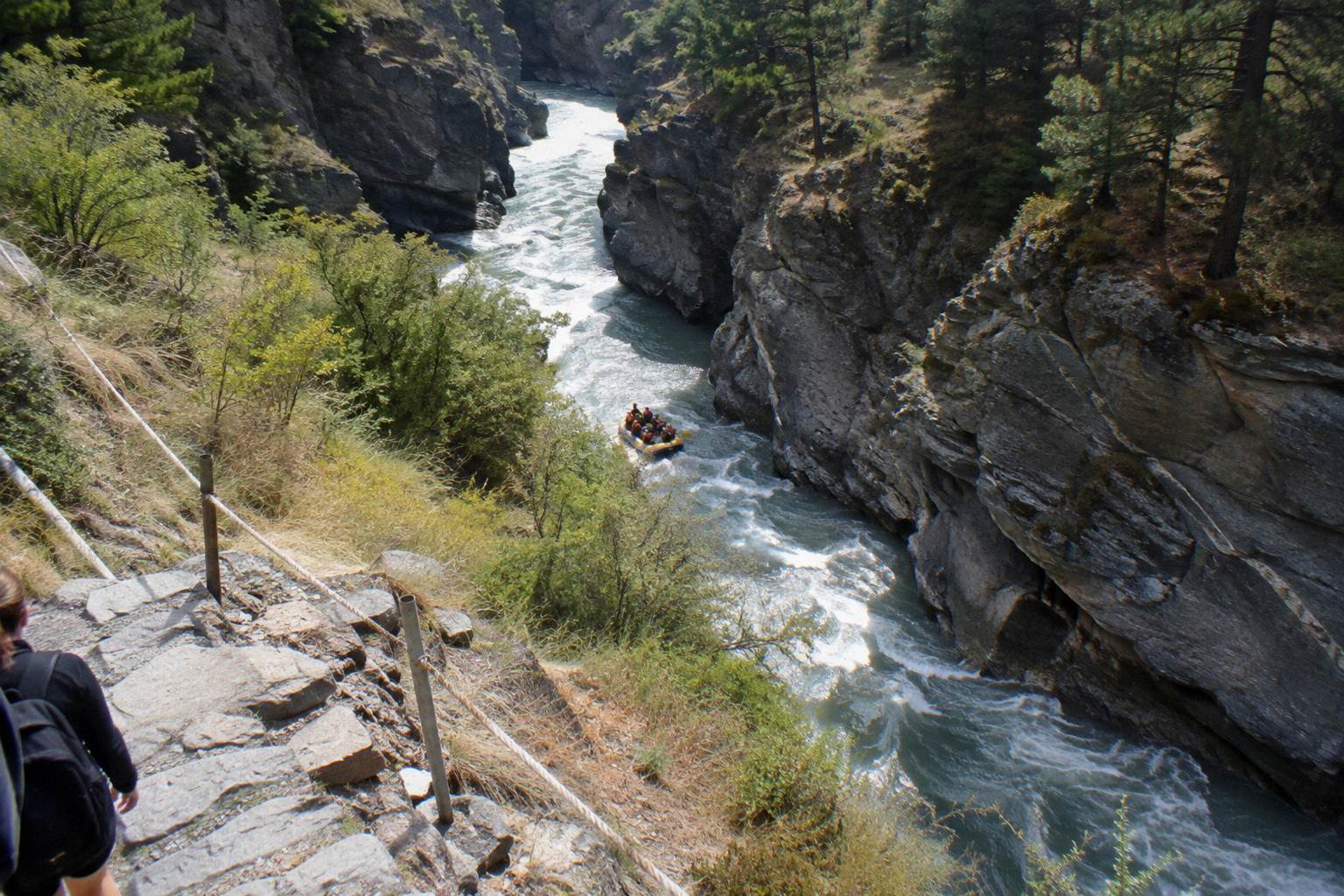
The two rivers sit about half an hour apart by road and could hardly feel more different. The Shotover trip begins with a shuttle along Skippers Canyon Road to the put-in at Deep Creek, a drive of about 40 minutes on a narrow dirt road the operator says hugs the canyon's sheer cliffs. From there, 14 km of river carry the raft through six grade 3 to 5 rapids and the 170 m Oxenbridge Tunnel, ending at the raft base at Arthurs Point. Rafts hold a maximum of eight people including the guide, and a safety kayaker travels on every trip.
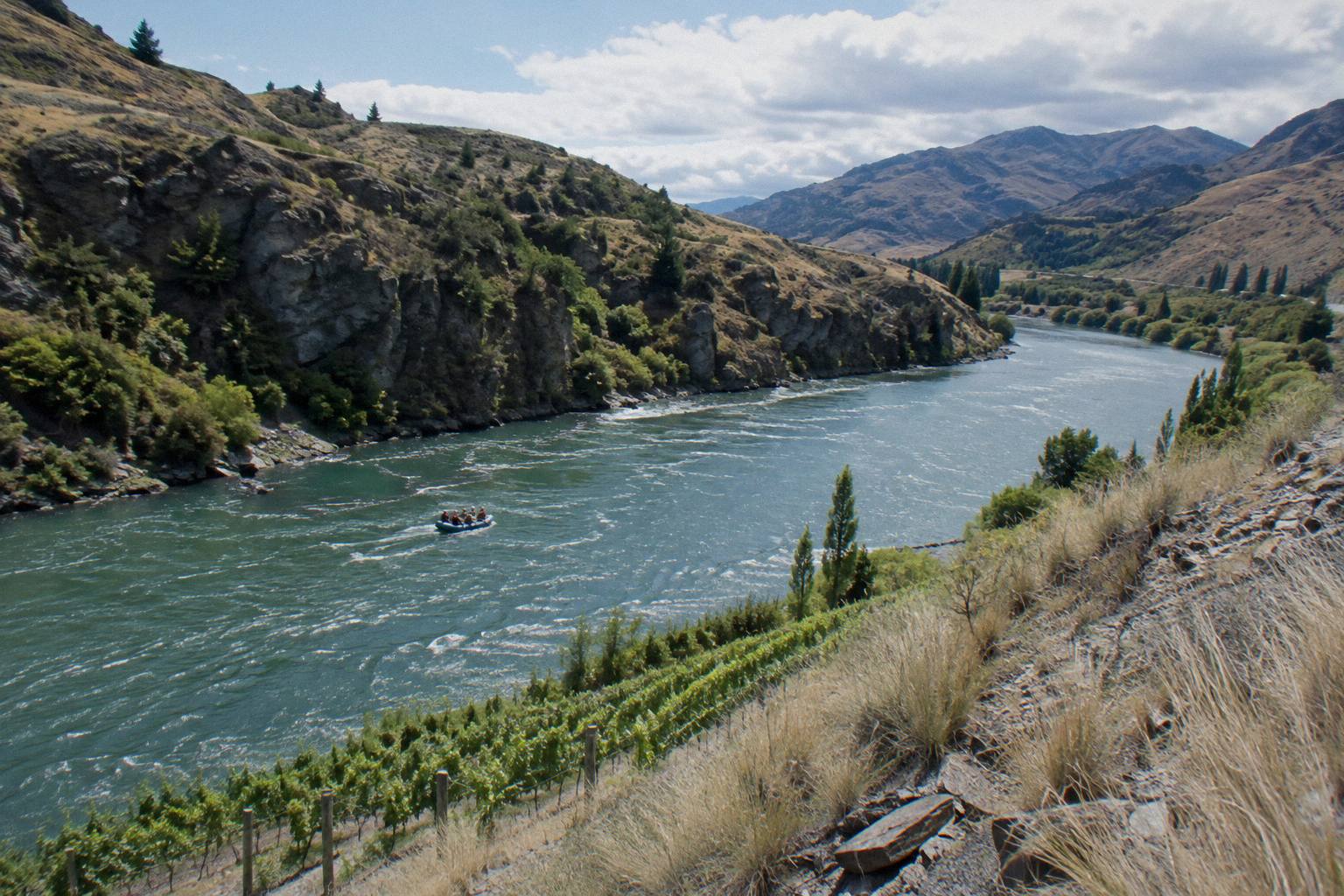
The Kawarau is a wider, more open river. The base itinerary runs from 88 Beach Street by bus to the rafting station, then a 30 minute safety briefing, then 1 hour on the water, with breaks and transfers around it for a four hour total. Its centrepiece is the Dog Leg, a 400 m rapid the operator calls the longest commercially rafted rapid in New Zealand. There is an optional cliff-jumping section when weather and water level allow, plus the chance to swim a rapid. Film fans get a bonus: the river appeared as the River Anduin in Lord of the Rings.
| River | Grade | Distance rafted | Character | Best for |
|---|---|---|---|---|
| Shotover | 3 to 5 | 14 km | Steep canyon, six rapids, 170 m tunnel, higher risk of falling out | Confident swimmers chasing the biggest water |
| Kawarau | 2 to 3, up to 4 at higher levels | 8 km | Open river, 400 m Dog Leg rapid, optional cliff jumping | First-timers and less confident swimmers |
One operator notes that the Shotover carries a higher risk of falling out than the Kawarau, which is the single most useful sentence in the decision. Neither river is a theme park ride: both require moderate fitness, a signed waiver, and the ability to understand the safety briefing in English. But the Kawarau is designed so that a nervous swimmer can complete it, while the Shotover asks for genuine water competence. If you are still unsure where you fall, our beginner's white water rafting primer walks through the full decision.
If the top-end Shotover trip is the one calling you, the Queenstown White Water Rafting team's pick is the original: Queenstown: Shotover River Whitewater Rafting Adventure, rated 4.8 from 346 reviews, from NZ$299 per person, Check availability.
What Makes The Shotover Trip So Well Known?
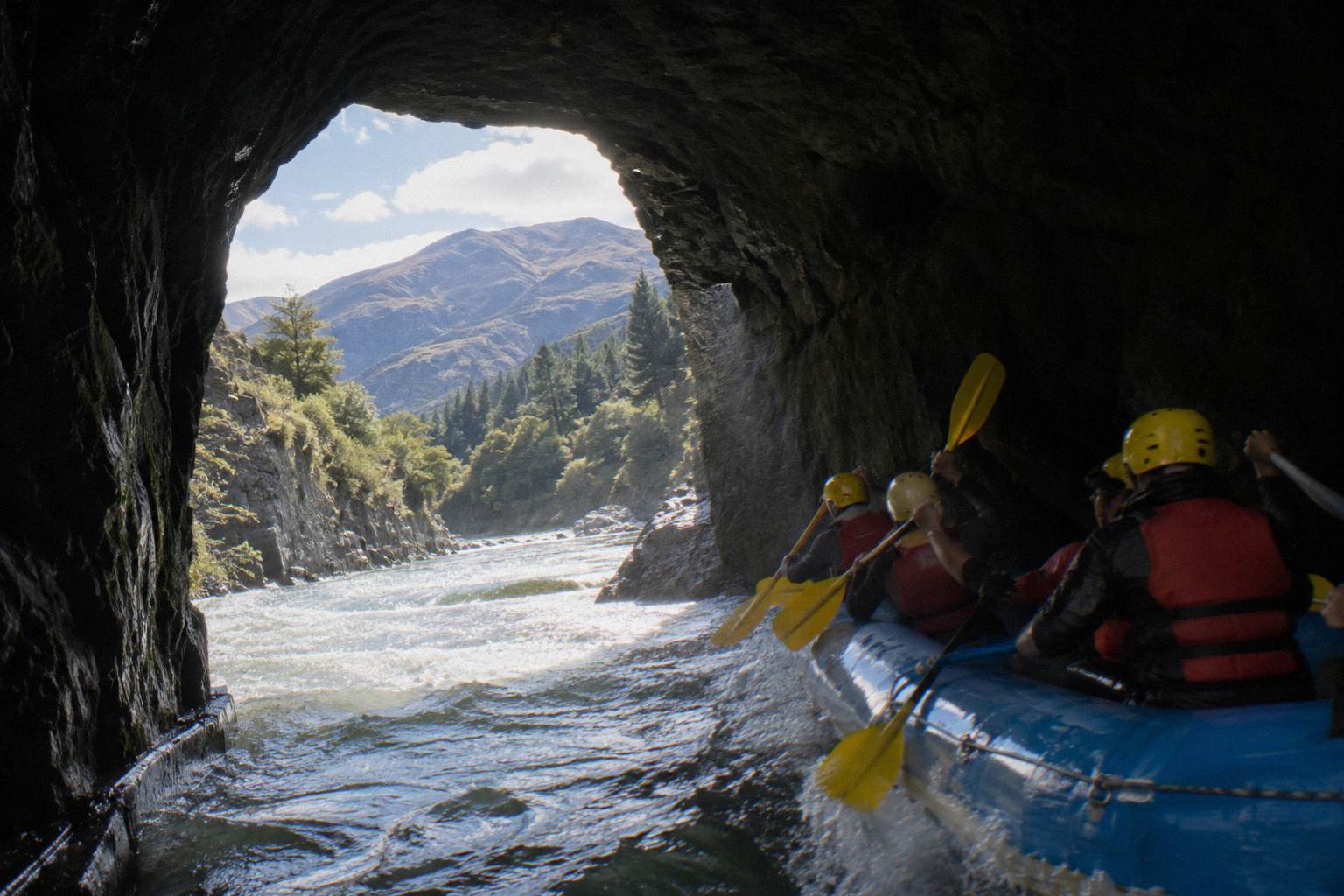
The tunnel. The raft paddles into the 170 m Oxenbridge Tunnel, a gold-mining relic blasted from 1906, then drops into the rapids beyond it before finishing at Arthurs Point. Built by the Oxenbridge brothers to divert the Shotover away from gold-bearing rapids, the tunnel failed as a mine and now carries rafts instead, which is why every Shotover trip runs through it.
The tunnel's story is worth knowing because it explains the trip's shape. Bert and Edmund Oxenbridge began driving the tunnel in 1906 to divert a large part of the river away from the Jeweller's Shop rapids above Arthurs Point, rapids fabled for the gold trapped in their bed. The Arthurs Point Gold Mining Company, incorporated in 1909, won its first return in 1911, was liquidated in August 1912, and there is no evidence of mining use after that. The Heritage New Zealand list entry for the tunnel records the whole arc, and notes the tunnel still carries the Shotover flow today, used primarily by rafting companies.
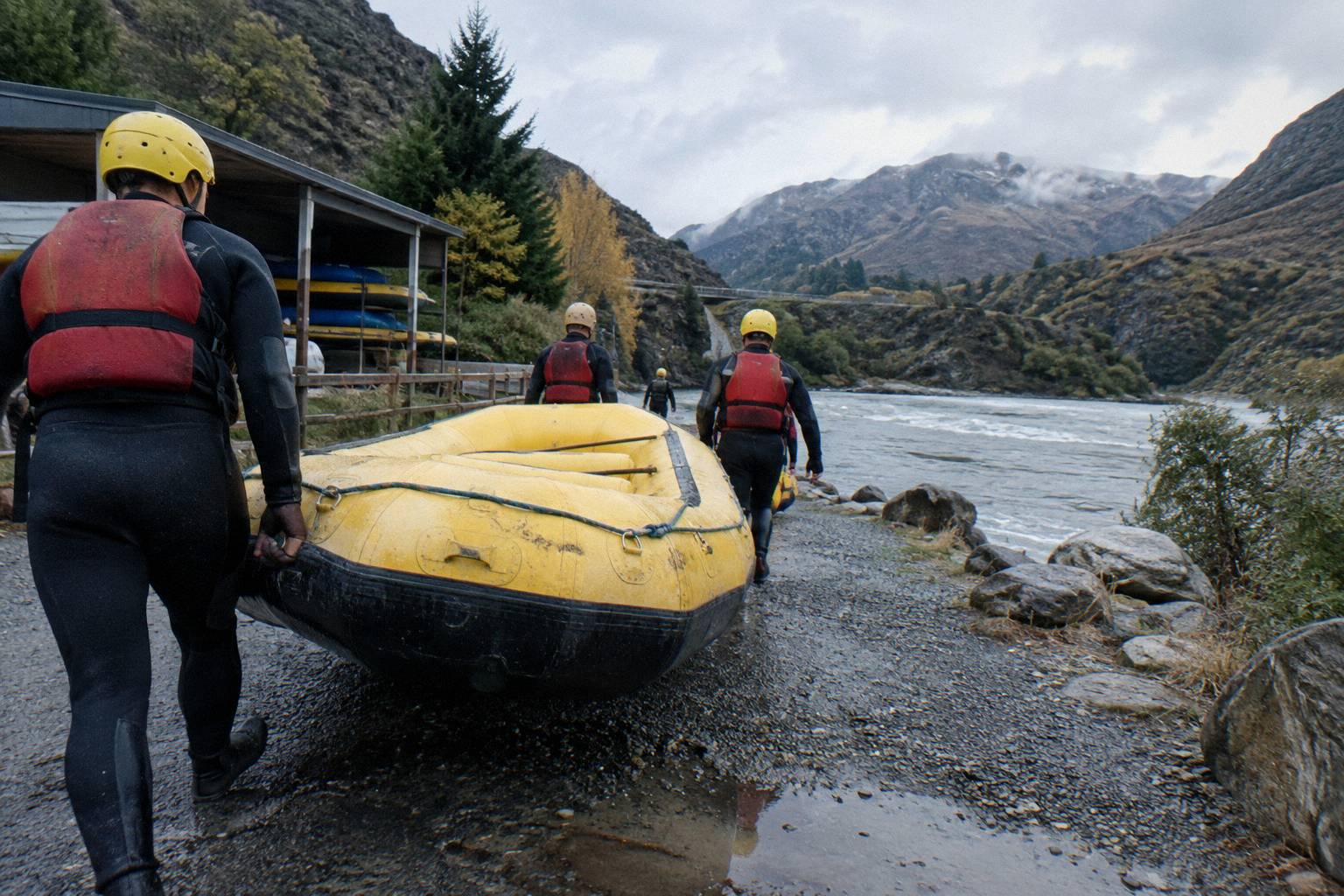
Beyond the tunnel, the RealNZ Shotover trip covers six grade 3 to 5 rapids over 14 km in a 4.5 hour total experience. Everything technical is provided: wetsuit, wetsuit jacket, spray jacket, paddle, helmet, booties and life jacket, with hot showers and a valuables locker at the base. Nothing can be taken on the raft, cameras and GoPros included, so leave them secured. Spectators cannot join on the river, though viewers can stand near the last rapid where rafts exit the tunnel, with timing varying by trip. If the grade numbers are new to you, our white water rafting grades explained guide decodes each class.
Is There A Harder Shotover Option?
There is. Challenge Rafting runs a separate four hour Shotover trip built around the Mother rapids, a series of six grade 4 to 5 drops with names like Aftershock, Squeeze, Toilet and Pinball, then the tunnel, then the drop into Cascade Rapid. It runs November through April only, and professional photos are included in the booking.
Challenge Rafting's own site says its Shotover trip is operated by RealNZ, though the two products are not the same: the Challenge trip is structured around the hardest rapids on the river, and its base fare is from NZ$299 per person over four hours. Check-in is at 88 Beach Street, Queenstown, with no pickup from accommodation, though guests may self-drive to the raft base at 1 Arthurs Point Road, Arthurs Point, which shares a street address with the Morning Star Reserve meeting point. The operator does not run rafting in winter, treating May to early September as the off-season.
The eligibility rules match the main Shotover trip: minimum age 13, minimum weight 40 kg, maximum 120 kg, no heart conditions or heart medication, no pregnancy on grade 3 or above water, under 17s accompanied by a guardian and under 18s needing a guardian-signed waiver. It is rated 4.9 from 80 reviews. For anyone weighing whether the jump from grade 3 to grade 5 water is sensible, our piece on whether a beginner can run class 4 rapids is the honest reckoning, minus the word honest: it is a direct one.
Is The Kawarau Trip Good For First-Timers?
It is built for them. The Kawarau runs grade 2 to 3 water, the operator says it suits first-timers and less confident swimmers, and the trip includes an optional cliff jump and a chance to swim a rapid so you can push yourself by choice. The full loop from 88 Beach Street back to 88 Beach Street takes four hours, with one hour of it on the water.
The base fare is from NZ$249 per person, the lowest entry point in town, and the itinerary is generous with breathing room: a 20 minute bus to the base, a 30 minute safety briefing, another 20 minute bus to the river, the hour of rafting, a 30 minute break, and the run back to town. The drive out passes through Arrowtown in about 25 minutes, and the return threads through the Gibbston Valley wineries in about 30 minutes, which makes the afternoon an accidental wine-region tour. Kawarau Bridge, where New Zealand's first commercial bungy jumping site operates, sits on the same river at Gibbston.
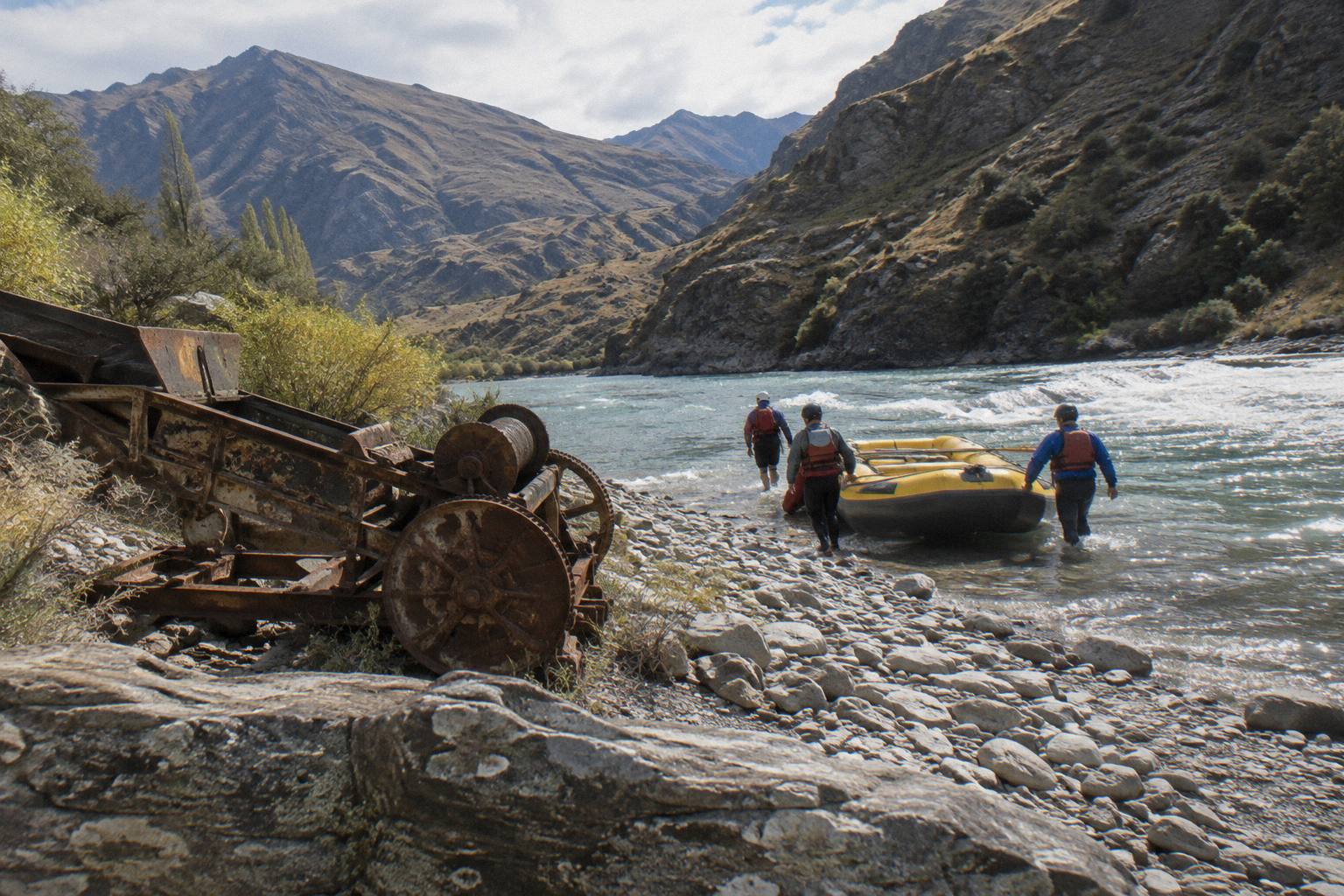
The Dog Leg is the headline rapid: 400 m long, called grade 3/4 by the operator and described as the longest commercially rafted rapid in New Zealand. At higher water levels the whole river can push toward grade 4, so conditions vary. Equipment matches the Shotover standard, wetsuit, jackets, helmet, booties, life jacket, and hot showers wait at the end. The trip is rated 4.7 from 48 reviews. If your main worry is the water itself rather than the rapids, read what happens if you fall out of a raft before you decide.
Can Young Children Or Nervous Families Raft?
Yes, on one trip. A gentler Shotover outing from Family Adventures takes children from three years upwards on grade 1 and 2 water, with water confidence described as unnecessary. It runs five hours from Camp Street in central Queenstown, drives 45 minutes into Skippers Canyon, rafts for 1.5 hours past gold mining relics, and includes snacks, all from NZ$329 per person.
This is the trip that reframes what rafting in Queenstown means. Instead of the grade 5 canyon, it floats the upper Shotover through Skippers Canyon, part of the 9,100 hectare Mount Aurum Recreation Reserve, an area the Department of Conservation describes as the heart of Wakatipu's 1860s gold fever. Guests raft past gold mining relics and the Ford of Bruinen from Lord of the Rings. It is rated 5.0, though from just 7 reviews, so treat that number lightly.
The canyon itself deserves respect even from non-rafters: Skippers Road is unsealed, narrow and winding for 13 km from Skippers Saddle to Skippers Bridge, and only experienced drivers should attempt it, which is a good argument for taking the operator's vehicle rather than your own hire car. For the standard trips, the family question has a harder edge: minimum age 13 everywhere else, minimum weight 40 kg and maximum 120 kg verified at check-in, and no pregnancy on grade 3 or above. Our rafting with kids in Queenstown guide maps every age to a trip.
How Much Does Rafting In Queenstown Cost?
Entry is from NZ$249 per person on the Kawarau, the two flagship Shotover trips both start from NZ$299, and the two combo and family trips start from NZ$329. All amounts are New Zealand dollars and change by date and group; the booking page shows the price for your date. Durations run from four to five hours including transfers, briefing and shower time.
That per-person figure covers the guided rafting, all the thermal and safety equipment, and the round-trip bus from the central meeting point on every trip. It does not cover hotel pickup, which is excluded on four of the five, or photos, which are included only on the Challenge Rafting trip. What looks like a one hour float is really a half day commitment, and pricing reflects the whole loop, not just the water time.
| Trip | River | Grade | Duration | From (per person) |
|---|---|---|---|---|
| Kawarau Rafting Only | Kawarau | 2 to 3 | 4 hours | NZ$249 |
| Shotover Rafting, Half Day | Shotover | 3 to 5 | 4.5 hours | NZ$299 |
| Challenge Rafting | Shotover | 4 to 5 | 4 hours | NZ$299 |
| Rafting Plus Jet Boat Combo | Kawarau | 2 to 3 | 4.5 hours | NZ$329 |
| Rafting And Skippers Canyon Combo | Shotover | 1 to 2 | 5 hours | NZ$329 |
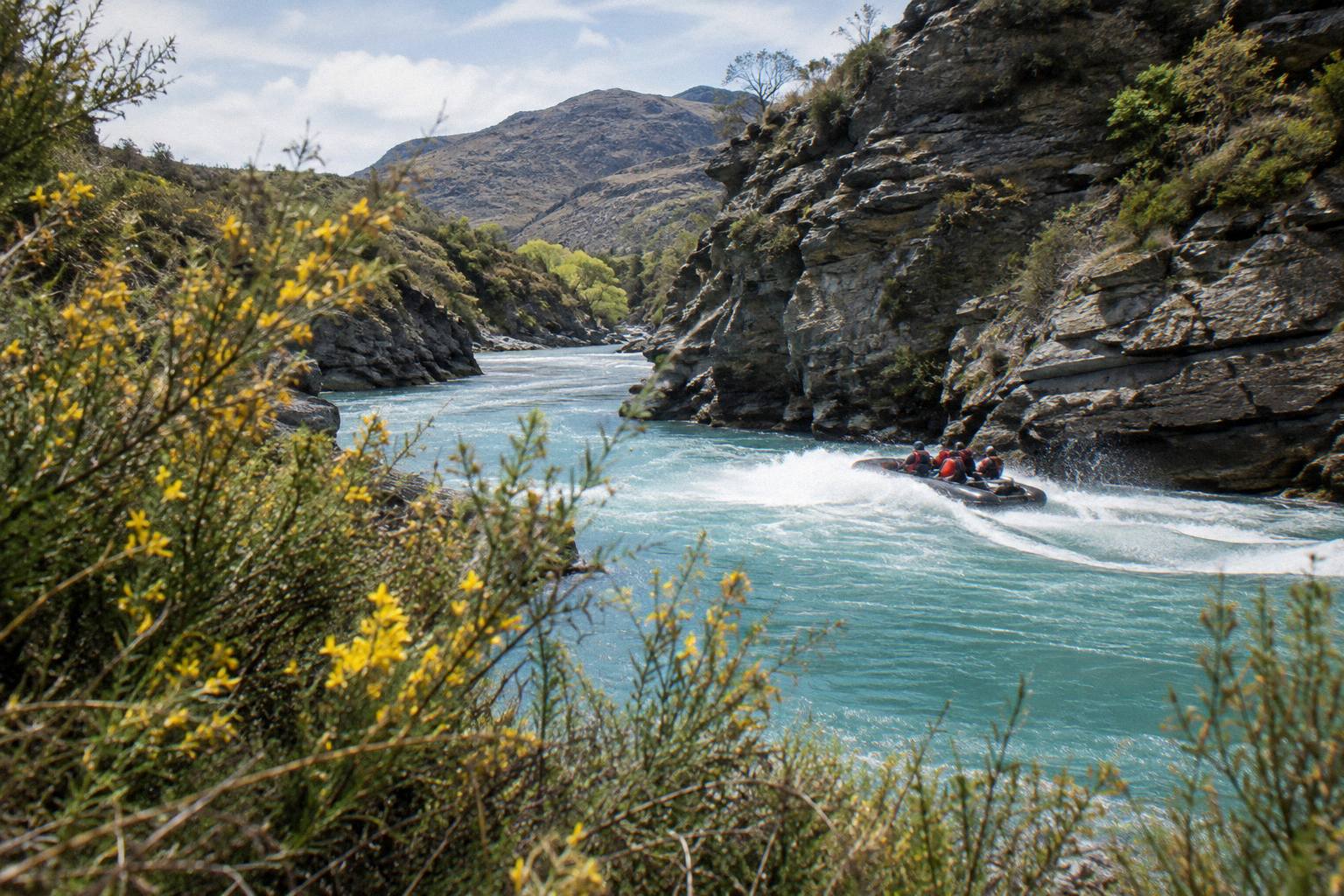
The jet boat combo deserves a line of explanation, because its price hides the most varied half day on the roster-free list: a free shuttle from town to the base, then a 25 minute jet boat transfer covering 22 km of the Kawarau at 95 km/h with 360-degree spins to the rafting station, then the hour of rafting. It is rated 4.8 from 151 reviews. For the full budget picture, including what you might spend around the trip itself, our Queenstown rafting trip cost breakdown runs the numbers.
What Should You Check Before Booking?
Three things: eligibility, season and weather. Every grade 3 plus trip requires age 13 or over, weight between 40 kg and 120 kg, water competence and moderate fitness, and trips run dependent on weather, river level and water temperature, with portages sometimes required and minimum guest numbers applying. Challenge Rafting runs November through April only, and free cancellation up to 24 hours before start applies to every trip.
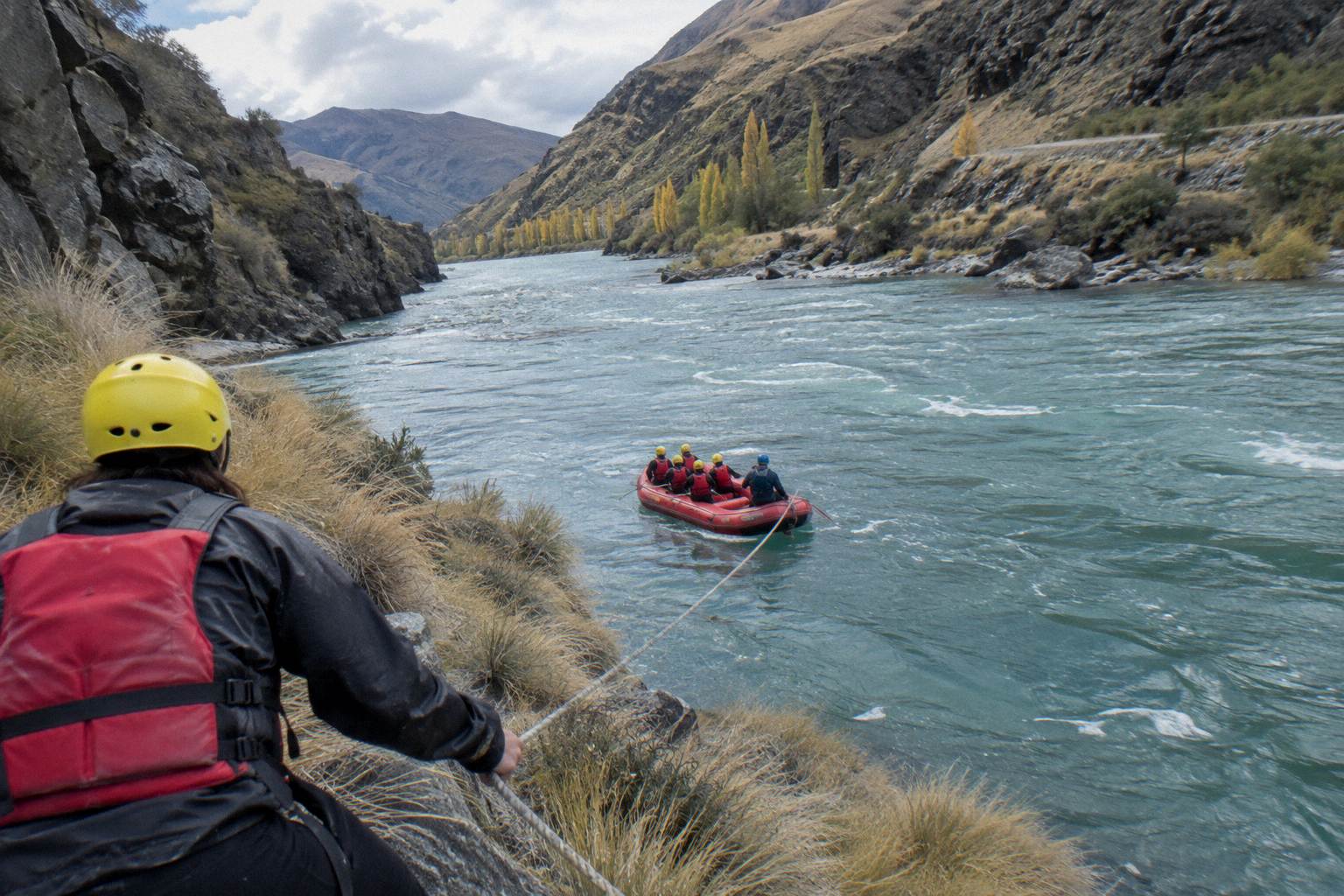
The eligibility list is firm. A heart condition or heart medication excludes, managed blood pressure excepted on the RealNZ trips; pregnancy excludes on grade 3 or above water; guests must understand safety briefings in English; and everyone signs a waiver, with under 18s needing a guardian's signature and under 16s travelling with a guardian on the RealNZ trips. There is no maximum age, disabilities are assessed case by case, and extra-large and child-size wetsuits exist, so ask when booking if sizing is a worry. Weight is verified at check-in, so measure honestly before you go, and wear swimwear only under the wetsuit, no cotton, with glasses either on a sports strap or left behind.
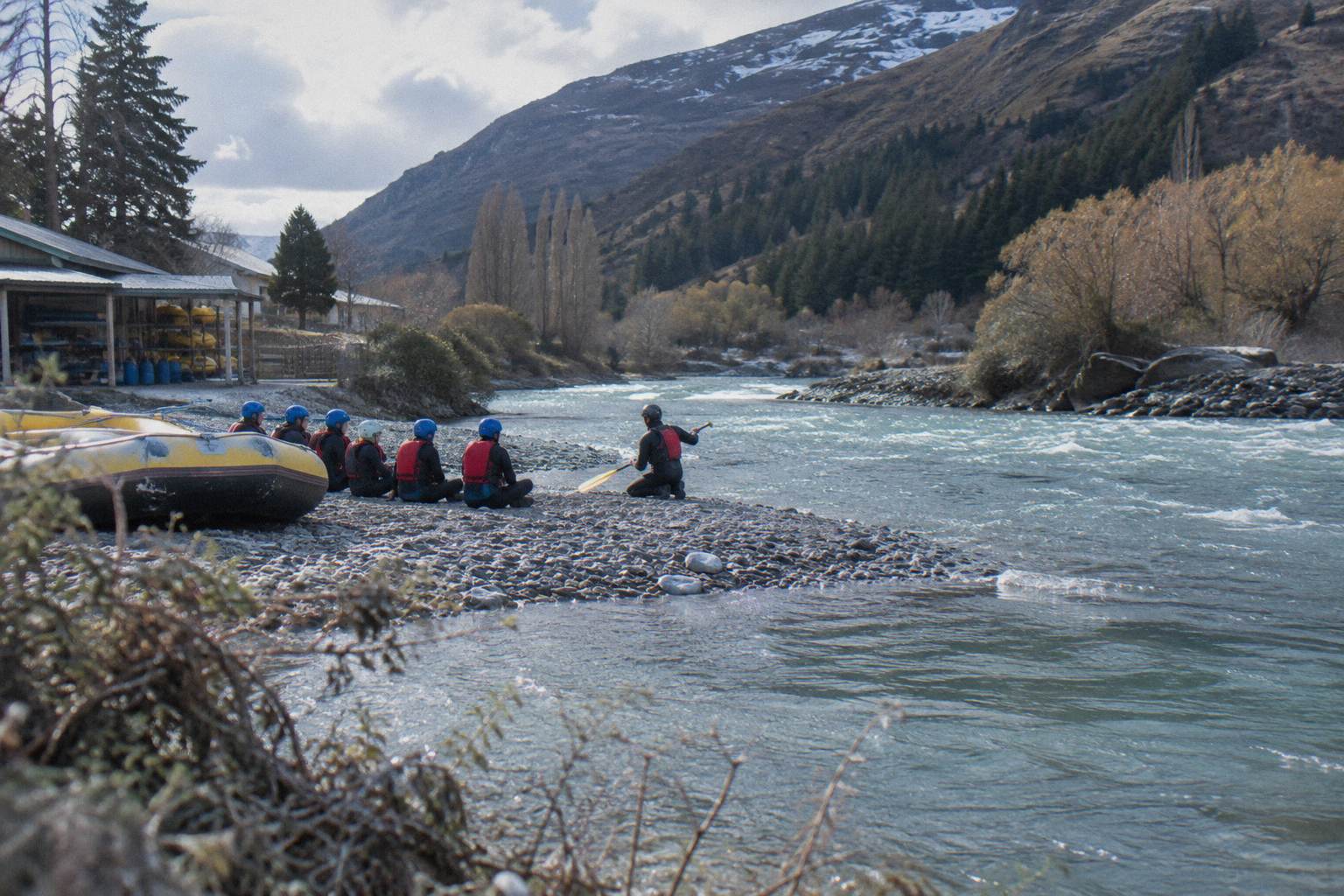
| Trip | Minimum age | Weight range | Cancellation |
|---|---|---|---|
| Shotover Rafting, Half Day | 13 | 40-120 kg | Check when booking |
| Rafting Plus Jet Boat Combo | 13 | Up to 120 kg | Check when booking |
| Challenge Rafting | 13 | 40-120 kg | Check when booking |
| Kawarau Rafting Only | 13 | Up to 120 kg | Check when booking |
| Rafting And Skippers Canyon Combo | 3 | No limit published | Free cancellation up to 24 hours before start |
Regulation is worth a sentence too, because it is one travellers rarely think to ask about. WorkSafe New Zealand maintains a public register of adventure activity operators who have passed a safety audit and are authorised to provide adventure activities, and it is an offence to operate without registration. You can search it by name, activity and location if you want to see a operator's status for yourself. For a fuller walk through the safety picture, our is white water rafting safe guide covers the systems behind the briefings.
| Season factor | What it means for your trip |
|---|---|
| Challenge Rafting season | November through April; no winter rafting |
| RealNZ seasons | No operating months published; check the calendar when booking |
| Weather dependence | Trips depend on weather, river level and water temperature; portages may be required |
| Minimum numbers | Minimum guest numbers apply; a quiet weekday can matter |
| Spectators | None on the river; viewing near the last rapid where rafts exit the tunnel |
Common Questions About Rafting In Queenstown
Is There White Water Rafting In Queenstown?
Yes. Queenstown has commercial white water rafting on two rivers, the Shotover and the Kawarau, with five trips from NZ$249 per person. The Shotover runs grade 3 to 5 through the Oxenbridge Tunnel; the Kawarau runs grade 2 to 3 suited to first-timers.
Which River Is Better For Beginners?
The Kawarau. It is graded 2 to 3, the operator says it suits first-timers and less confident swimmers, and it includes an optional cliff jump so you choose your own level of challenge. The Shotover trips require you to swim 25 m unaided and carry a higher risk of falling out.
How Much Does A Rafting Trip Cost?
From NZ$249 per person on the Kawarau, NZ$299 on the two flagship Shotover trips, and NZ$329 on the jet boat combo and the Skippers Canyon family trip. All amounts are New Zealand dollars and change by date and group.
Can Children Go Rafting In Queenstown?
On most trips the minimum age is 13, with a 40 kg minimum weight. One gentler trip takes children from three years upwards on grade 1 and 2 water through Skippers Canyon, with water confidence described as unnecessary.
Do You Need To Be Able To Swim?
For the grade 3 to 5 Shotover trips, yes: guests must be water-competent and able to swim 25 m unaided. The Kawarau suits less confident swimmers, though water confidence is still recommended, and the Skippers Canyon family trip needs none.
When Is Rafting Season In Queenstown?
Challenge Rafting runs November through April and does not operate in winter, May to early September. The other trips publish no operating months, so check the booking calendar for your dates, and note all trips depend on weather, river level and water temperature.