White Water Rafting For Beginners: First Trip Guide
Most people who book a Queenstown rafting trip have never held a paddle before, and the operators design their trips around that fact. Here is how a first trip works, which river suits a nervous beginner, and what the eligibility rules really say.
Short answer
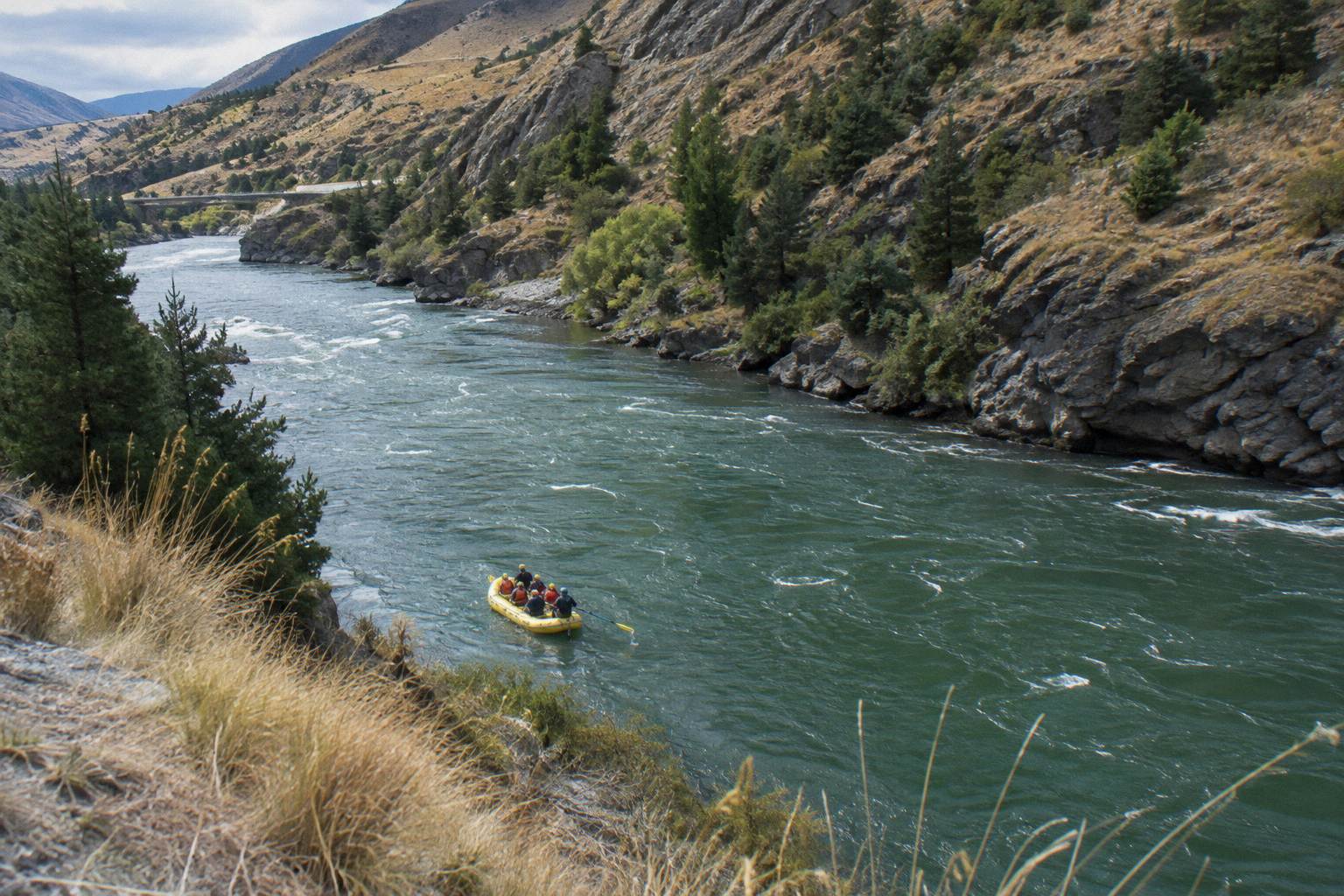
Beginners are the main market for Queenstown rafting. The Kawarau River runs grade 2 to 3 and is suited to first-timers from NZ$249 per person. The Shotover runs grade 3 to 5 and asks for water confidence. A family trip on grade 1 to 2 water takes children from 3 years.
Is White Water Rafting Good For Beginners?
Yes, and in Queenstown beginners are the core of the business. The Kawarau River is graded 2 to 3, the operator describes it as suited to first-timers and less confident swimmers, and the whole day is built around people who have never rafted before. The harder Shotover water, grade 3 to 5, is still within reach for a fit beginner who can swim, but the gentler river is where most first trips start.
That distinction matters more than any equipment choice. The international river difficulty scale runs from class 1, easy, to class 6, extreme, and class 6 is not commercially rafted anywhere. Queenstown's operators use their own grade statements for every trip, and the spread across the region is unusually wide: grade 1 and 2 water on the family trip, grade 2 to 3 on the Kawarau, grade 3 to 5 on the Shotover. A beginner can therefore choose a difficulty rather than accept one, which is exactly what a first trip should feel like. If the grading language is new to you, the plain-English breakdown in white water rafting grades explained is the place to start.
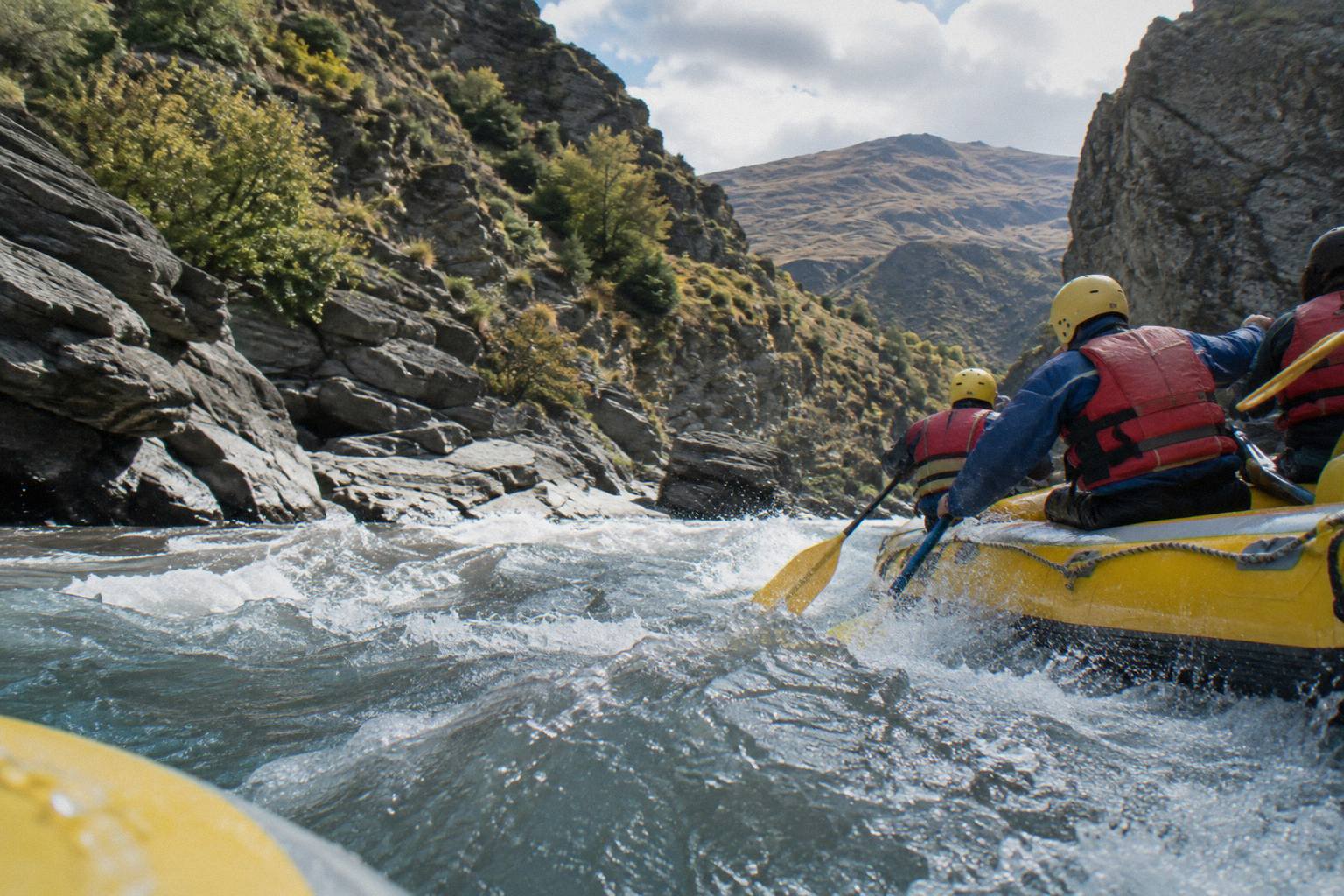
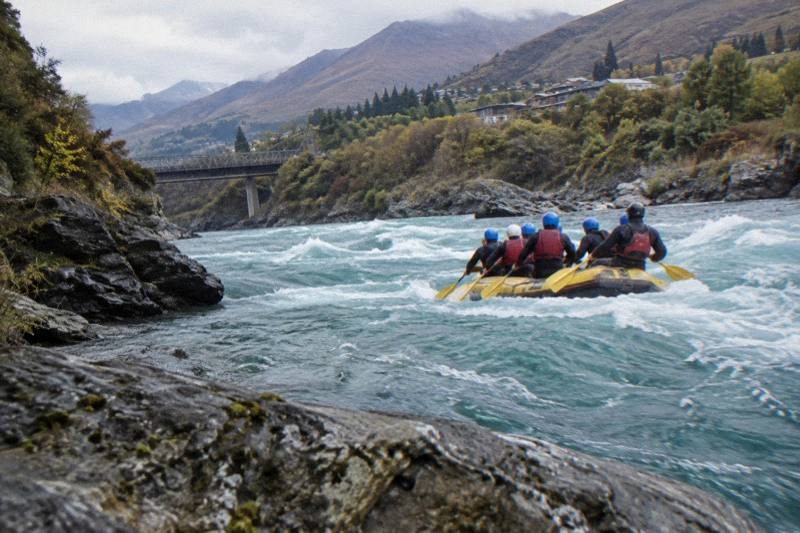
None of the trips expect experience. Every operator supplies the wetsuit, booties, helmet and life jacket, runs a safety briefing before anyone touches the river, and staffs the raft with a guide who does the steering and the shouting. The RealNZ Shotover rafts carry at most eight people including the guide, and a safety kayaker travels on each trip. Your job as a first-timer is to paddle when told, hold on when told, and enjoy the canyon. Nobody is asked to read water, pick a line, or make a safety call, because those decisions all sit with the guide.
The boats themselves are stable, self-bailing craft designed for commercial passengers rather than athletes. A raft full of nervous novices is the normal load-out on the Kawarau in high summer, and the guides brief accordingly, repeating commands until everyone in the boat can respond together. Synchronised paddling matters more than strength: eight people stroking at half power together move the raft better than three strong strokes and five hesitant ones. That is why the briefing spends real time on the call-and-response before anyone launches.
| Quick fact | What a beginner gets |
|---|---|
| Gentlest trip | Rafting And Skippers Canyon Combo, grade 1 to 2, ages 3 and up |
| Standard first trip | Kawarau Rafting Only, grade 2 to 3, from NZ$249 per person |
| Biggest water | Shotover trips, grade 3 to 5, minimum age 13 |
| Gear included | Wetsuit, jacket, helmet, booties, life jacket, paddle |
| Time on the water | About 1 hour of rafting on the Kawarau itinerary |
One reassurance worth stating plainly: adventure activity operators in New Zealand must be registered with WorkSafe and must have passed a safety audit before they may lawfully run commercial trips. It is an offence to provide an adventure activity unless the operator is registered or holds an exemption, and register entries carry statuses of Current, Cancelled or Suspended. The WorkSafe public register is searchable by name, activity and location, so you can look any operator up yourself before booking.
Which Queenstown River Should A Beginner Raft?
Start on the Kawarau unless you are confident in moving water. It is graded 2 to 3, the operator says it is suited to first-timers and less confident swimmers, and 8 km of river ends in the Gibbston Valley, with about an hour of actual paddling. The Shotover, at grade 3 to 5, is the step up. The family Skippers Canyon trip, grade 1 to 2, is the gentle option and takes children from 3 years.
The three-way choice is the single biggest decision a beginner makes, so it deserves a careful look. The RealNZ Kawarau page grades the river 2 to 3 but notes it can reach grade 4 at higher water levels, and it flags one rapid by name: the Dog Leg, 400 m long, which the operator calls the longest commercially rafted rapid in New Zealand. There is an optional cliff-jumping section depending on weather and water level, plus the chance to swim a rapid, both of which you can skip. The river has screen fame too: it appeared as the River Anduin in Lord of the Rings, and it is the only outlet of Lake Wakatipu, flowing east from Queenstown.
The Shotover is a different proposition. Grade 3 to 5, six rapids, a run through the 170 m Oxenbridge Tunnel, and the operator's own words that the Shotover carries a higher risk of falling out than the Kawarau. Guests must be water-competent, meaning able to swim 25 m unaided, with moderate fitness. Plenty of first-timers do it, but it belongs at the confident end of the beginner range, and the comparison in Shotover versus Kawarau rafting works through the trade-offs in detail. The grade 5 label deserves context, too: as the operator puts it, grade 5 is the highest grade commercially rafted in the world, so this is as hard as the sport legally gets on a guided trip.
Between those two sits the family option, a 5-hour trip from Camp Street that drives 45 minutes into Skippers Canyon, rafts 1.5 hours on grade 1 and 2 water past gold mining relics, and includes snacks. The booking text calls it suitable for everyone from 3 years upwards and says water confidence is not necessary. If your party spans generations or includes nervous young children, that is the trip that removes the difficulty question entirely. It even passes the Ford of Bruinen from Lord of the Rings, which gives the drive a storyline for the back seat.
| Trip | Grade | Beginner fit | From price | Rating |
|---|---|---|---|---|
| Kawarau Rafting Only | 2 to 3 | The standard first trip; operator says suited to first-timers | NZ$249 per person | 4.7 from 48 reviews |
| Rafting Plus Jet Boat Combo | 2 to 3, with a 25-minute jet boat transfer | First trip plus a thrill ride to the rafting station | NZ$329 per person | 4.8 from 151 reviews |
| Rafting And Skippers Canyon Combo | 1 to 2 | Gentle family water, ages 3 and up, no water confidence needed | NZ$329 per person | 5.0 from 7 reviews, a very small count so far |
| Shotover Rafting, Half Day | 3 to 5 | Confident beginners who can swim 25 m unaided | NZ$299 per person | 4.8 from 346 reviews |
| Challenge Rafting, 4 Hours | 3 to 5 | Same river, similar limits, photos included | NZ$299 per person | 4.9 from 80 reviews |
All amounts are New Zealand dollars and change by date and group; the booking page shows the price for the date you choose. Ratings, where printed, belong to their own trips and are never a ranking: a 5.0 from 7 reviews reflects seven people, not a verdict.
What Happens On A First Trip, Step By Step?
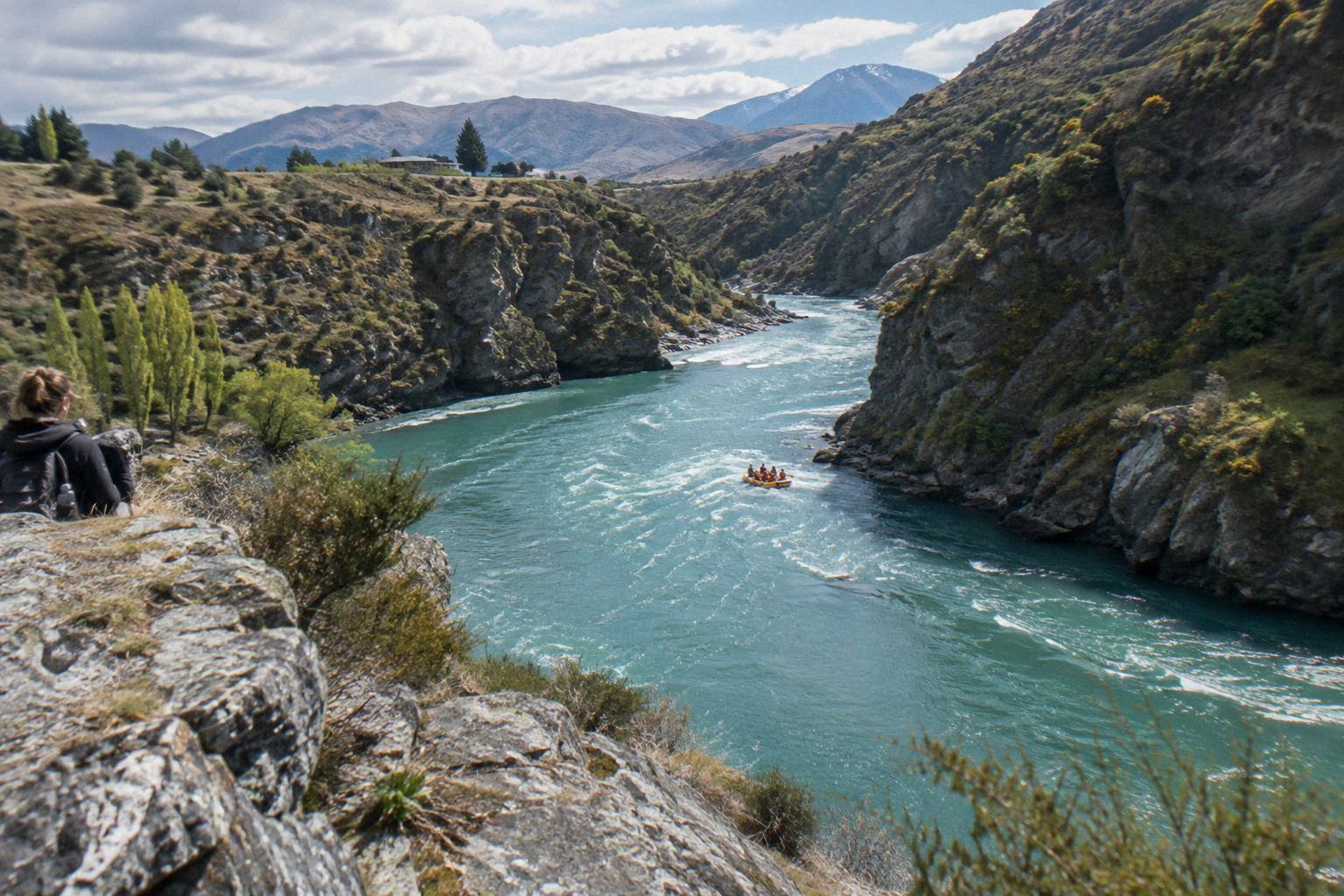
A first Kawarau trip runs to a fixed rhythm: check in at 88 Beach Street, a 20-minute bus to the raft base, a 30-minute safety briefing and gearing up, another 20-minute bus to the river, about 1 hour of rafting, then showers and the ride back. The whole experience lasts around 4 hours from check-in to return. Nothing in the sequence requires prior knowledge.
The published itinerary for Kawarau Rafting Only spells it out: meet at the RealNZ Queenstown Visitor Centre at 88 Beach Street at least 20 minutes before departure, bus 20 minutes to the base, briefing for 30 minutes, bus 20 minutes to the river, 1 hour of rafting, a 20-minute bus ride, a 30-minute break, and a final 20-minute bus back to 88 Beach Street. Hotel pickup is excluded, so you make your own way to the check-in point. The briefing covers paddling commands and what to do in the water, and it is delivered in English, which guests must be able to understand. If English is a struggle for anyone in your group, raise it before booking rather than at the riverbank.
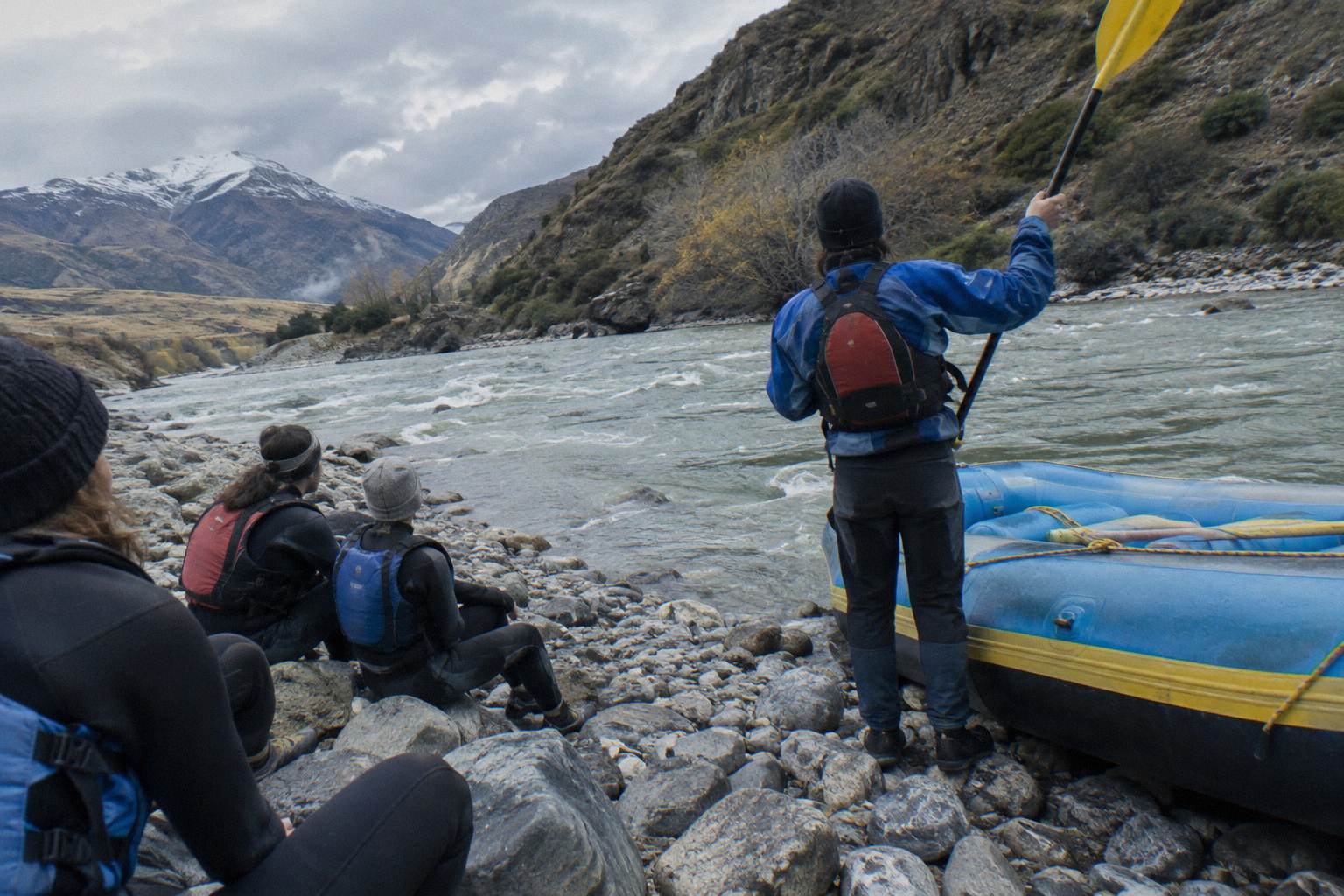
Gear is handed out at the base: wetsuit, wetsuit jacket, spray jacket, helmet, booties, life jacket and paddle. Extra-large and child-size wetsuits are available, so sizing is not a reason to worry in advance. Hot showers wait at the end, and on the RealNZ Shotover trip there is a valuables locker at the base. One rule catches almost every beginner out: nothing, camera or GoPro included, can be taken on the raft. Photos on the Challenge Rafting Shotover trip are included in the booking; for other trips, ask the operator how photos work when booking. The fuller version of this timeline, including self-drive options, is in the rafting trip timeline and pickup guide.
The Shotover day follows a similar shape with a grander commute: the shuttle bus climbs Skippers Canyon Road to the put-in at Deep Creek, about a 40-minute drive to the start, the rafts cover 14 km of river through the tunnel, and the trip finishes at the Arthurs Point rafting base, about a 10-minute drive from Queenstown. Toilets are available at the base and at Deep Creek, a detail that matters more than beginners expect once wetsuits are involved. Challenge Rafting guests can check in at 88 Beach Street or self-drive to the raft base at 1 Arthurs Point Road, Arthurs Point.
| Step | What happens | Beginner notes |
|---|---|---|
| Check-in | Meet at 88 Beach Street at least 20 minutes before departure | Weight may be verified; under-18s need a guardian-signed waiver |
| Bus to base | About 20 minutes on the Kawarau itinerary | Toilets at the base |
| Briefing and gear | 30 minutes; full wetsuit kit issued | Swimwear only under the wetsuit, no cotton |
| To the river | Another 20-minute bus ride | Glasses need a sports strap or stay behind |
| Rafting | About 1 hour on the Kawarau, 14 km on the Shotover | Paddle on command; guide does the steering |
| After | Hot showers, break, bus back | Photos and cameras stay off the raft |
Departure times are chosen on the booking calendar rather than printed on a fixed schedule, so pick the slot that suits your day when you book. There is no spectators' access on the river itself; on the Shotover, viewers can stand near the last rapid as rafts exit the tunnel, though timing varies with the day's schedule.
Do You Need To Swim Or Be Fit To Raft?
For the Kawarau trips, water confidence is recommended but strong swimming is not required, and the operator explicitly welcomes less confident swimmers. For the Shotover, you must be able to swim 25 m unaided and have moderate fitness. Minimum age is 13 on the graded trips, weight must fall between 40 kg and 120 kg, and pregnancy or a heart condition excludes you from the harder water.
These rules are operator-stated and checked at the door, so read them before you book rather than after. Weight is verified at check-in. Any heart condition, except blood pressure managed with medication, excludes, and pregnant guests are excluded from grade 3 water and above. There is no maximum age, a good level of physical fitness is asked for, and disabilities are assessed case by case. Under 16s must travel with a guardian on the RealNZ trips, under 17s on the Challenge Rafting trip, and every guest signs a waiver. The detail sits in rafting weight and fitness limits. Proof of age may be required for teenagers, so carry identification for any 13-year-old whose birthday is close to the line.
The swimming question deserves a direct answer, because it stops more beginners than anything else. On the Kawarau you wear a life jacket the whole time, the operator's wording suits the trip to first-timers and less confident swimmers, and the optional cliff jump and rapid swim are exactly that, optional. If even that feels like a step, the grade 1 to 2 family trip asks for no water confidence at all, from age 3 upwards. The honest framing of the whole question, including what water competence means in practice, is covered in rafting if you cannot swim.
Fitness works the same way. You do not need a training plan, but you do need honest self-assessment: paddling for an hour at altitude in a wetsuit is real exercise, and getting in and out of a raft at the riverbank involves climbing and balance. Guests with mobility impairments or who use wheelchairs are named as not suitable on the Challenge Rafting Shotover trip, while the RealNZ trips assess disabilities case by case, so the right move for anyone unsure is a direct question to the operator before paying. Other pages covering the same trip are gathered on Queenstown White Water Rafting.
| Requirement | Kawarau trips | Shotover trips | Family trip |
|---|---|---|---|
| Minimum age | 13 | 13 | 3 |
| Swimming | Water confidence recommended | Must swim 25 m unaided | Not necessary |
| Fitness | Good level asked | Moderate fitness, water-competent | Gentle trip |
| Weight | 40 to 120 kg, verified at check-in | 40 to 120 kg, verified at check-in | No limit published |
| Exclusions | Heart condition, pregnancy | Heart condition or heart medication, pregnancy, non-swimmers | None published |
One Shotover-specific note: Challenge Rafting runs November through April and does not operate in the winter season, which it defines as May to early September, so a beginner targeting that trip should plan the warmer months. When in doubt about a medical question, ask the operator directly before booking.
What Should You Wear And Bring On Your First Trip?
Wear swimwear only under the wetsuit, never cotton, and bring a towel and dry clothes for after the showers. Glasses need a sports strap or should stay behind, and nothing can be taken on the raft, so leave cameras, GoPros and valuables at your accommodation or in the base locker where one is provided. Everything else, wetsuit to booties, is supplied.
The clothing rules are stricter than most beginners expect, and they exist for a reason: cotton under a wetsuit loses its insulating value when wet, while swimwear or synthetic layers work with the suit rather than against it. The family trip's simpler instruction is to wear a swimsuit under your clothes. Footwear is solved for you, since wetsuit booties are part of the kit on every trip, so the ongoing Crocs debate is settled in rafting shoes and Crocs. For the full packing list, glasses included, see what to bring rafting. What goes under the neoprene, and why, gets its own treatment in what to wear white water rafting.
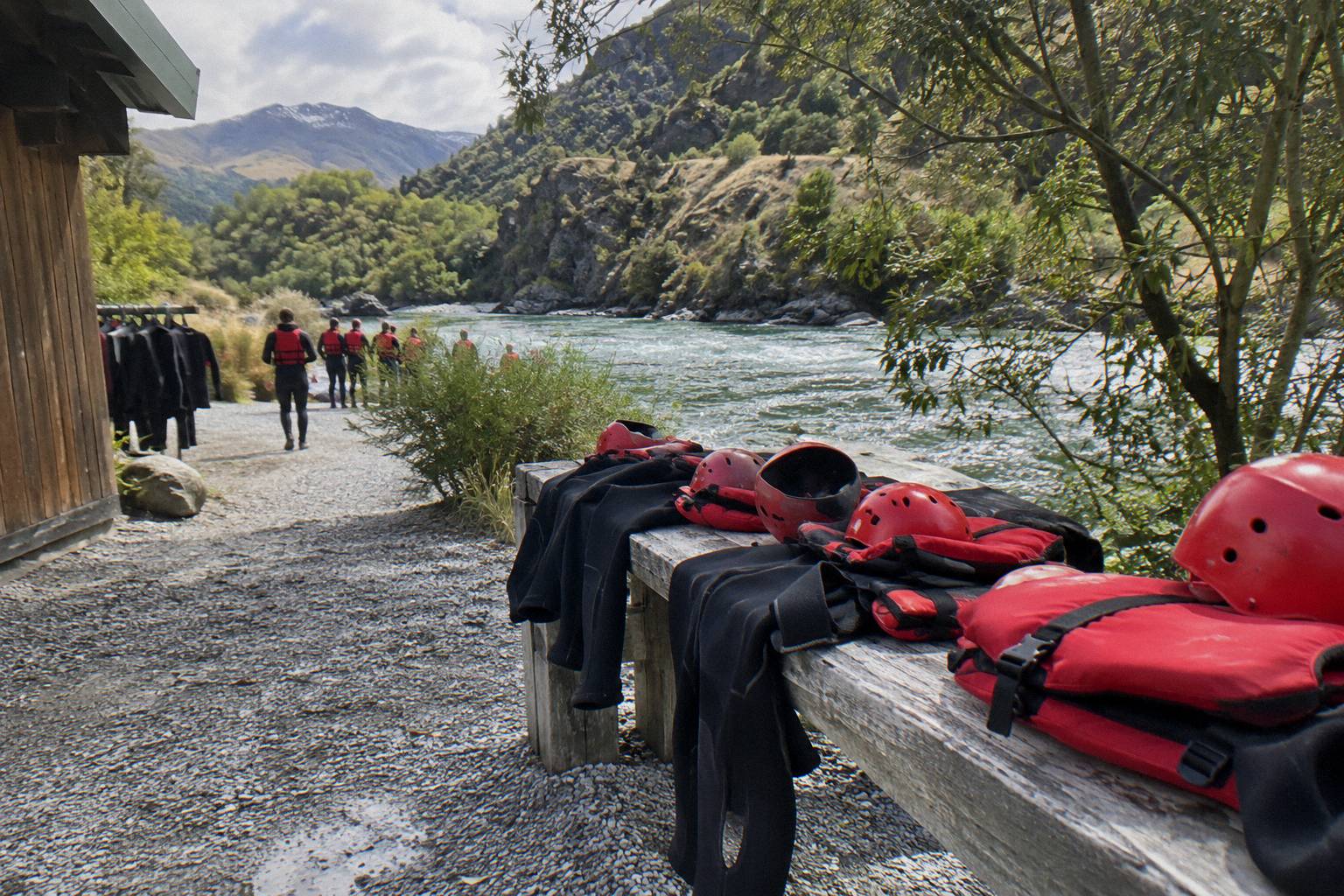
Think in two bags: a dry bag mentality for the day itself, which in practice means almost nothing in your pockets, and a leave-behind pile at your accommodation for everything electronic. The towels and dry clothes ride on the bus rather than the raft, and you collect them at the base when the showers open. Changing rooms and hot showers are a standard part of every itinerary, so plan something for the evening after rather than racing back to town damp.
| Item | Bring or leave | Why |
|---|---|---|
| Swimwear | Bring and wear under the wetsuit | No cotton under neoprene |
| Towel and dry clothes | Bring | Hot showers at the base after the trip |
| Glasses | Sports strap or leave behind | Operator rule on every graded trip |
| Camera or GoPro | Leave behind | Nothing can be taken on the raft |
| Valuables | Leave behind or use the base locker | Lockers provided at the Shotover base |
| Sunscreen | Bring | Glare off the water on the drive and at the put-in |
How Much Does A First Rafting Trip Cost?
The entry point is the Kawarau Rafting Only trip at from NZ$249 per person, which is the standard beginner fare and covers all gear and transfers from the check-in point. The two Shotover trips sit at from NZ$299 per person, and the jet boat combo and the Skippers Canyon family trip both start at NZ$329 per person. All prices are per person, in New Zealand dollars, and vary by date.
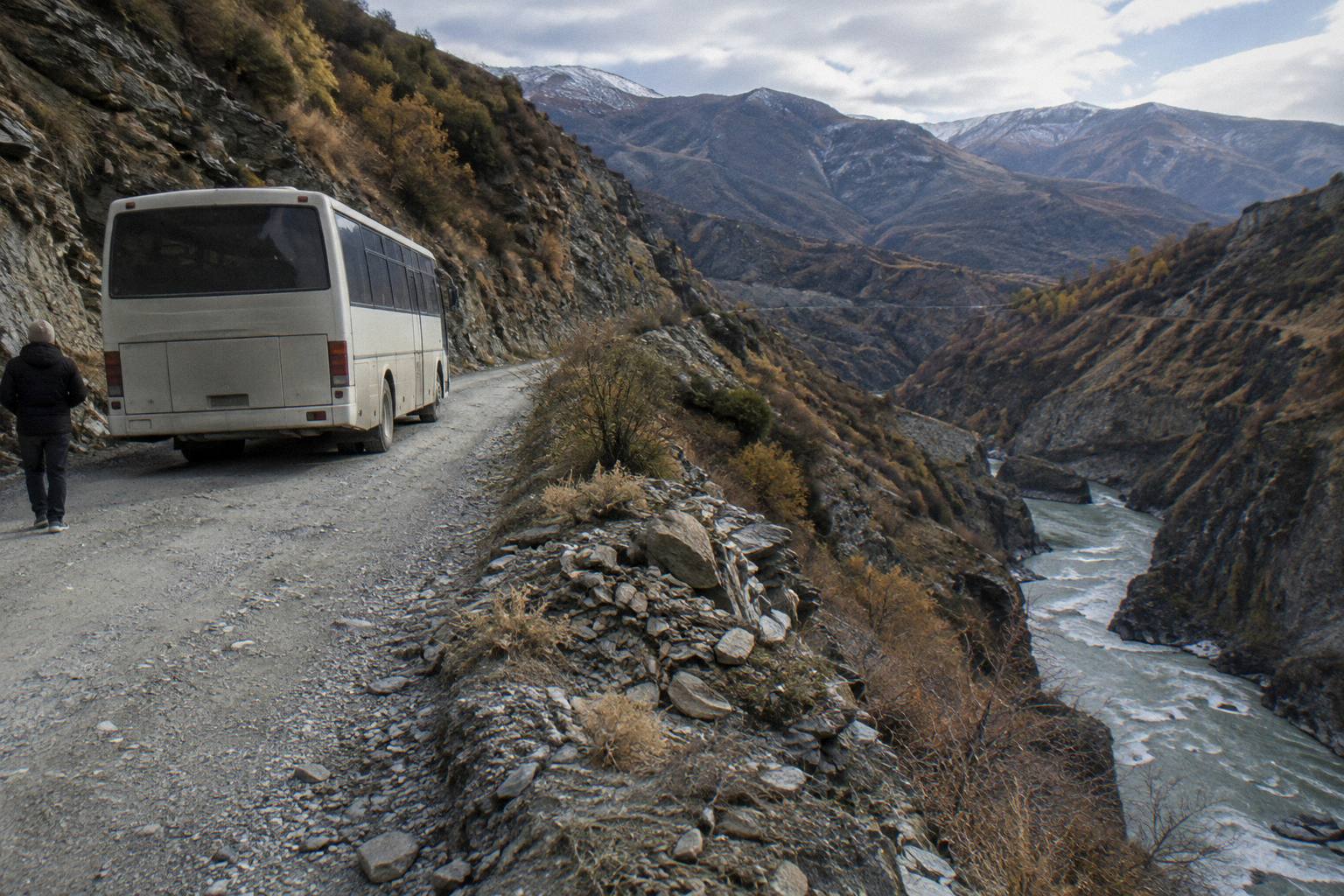
Price differences map onto the experience rather than onto quality. The NZ$329 jet boat combo wraps a 25-minute jet boat transfer, 22 km of the Kawarau at 95 km/h with 360-degree spins, around the same grade 2 to 3 rafting, which suits a beginner who wants two thrills in one 4.5-hour outing. The NZ$299 Shotover trips buy harder water, the tunnel and the canyon scenery of Skippers Road, whose narrow dirt track hugs sheer cliffs behind Coronet Peak; the Department of Conservation describes the road as narrow and winding and says only experienced drivers should attempt it, which is a good argument for taking the operator's bus. How the full cost of a Queenstown rafting day adds up, transport included, is broken down in the rafting trip cost guide.
Duration is part of the value picture too. The Kawarau Rafting Only trip runs 4 hours total, both Shotover trips run 4 or 4.5 hours, and the family canyon trip is the longest at 5 hours, though only a portion of any of these is on the water: about an hour of paddling on the Kawarau, 1.5 hours on the family trip, and 14 km of river on the Shotover. The rest is buses, briefings, gear and showers, which is exactly why first-timers should not judge a trip by its headline hours.
A first-timer nervous about the water itself can read the safety picture, briefing to safety kayaker, in is white water rafting safe. The DOC Skippers area page also covers the canyon's gold-rush history, part of Mount Aurum Recreation Reserve, if the 45-minute drive in is part of the appeal. Nerves before a first trip are normal and manageable, and the practical strategies are laid out in rafting fear and nerves.
Beginner Mistakes To Avoid On Trip One
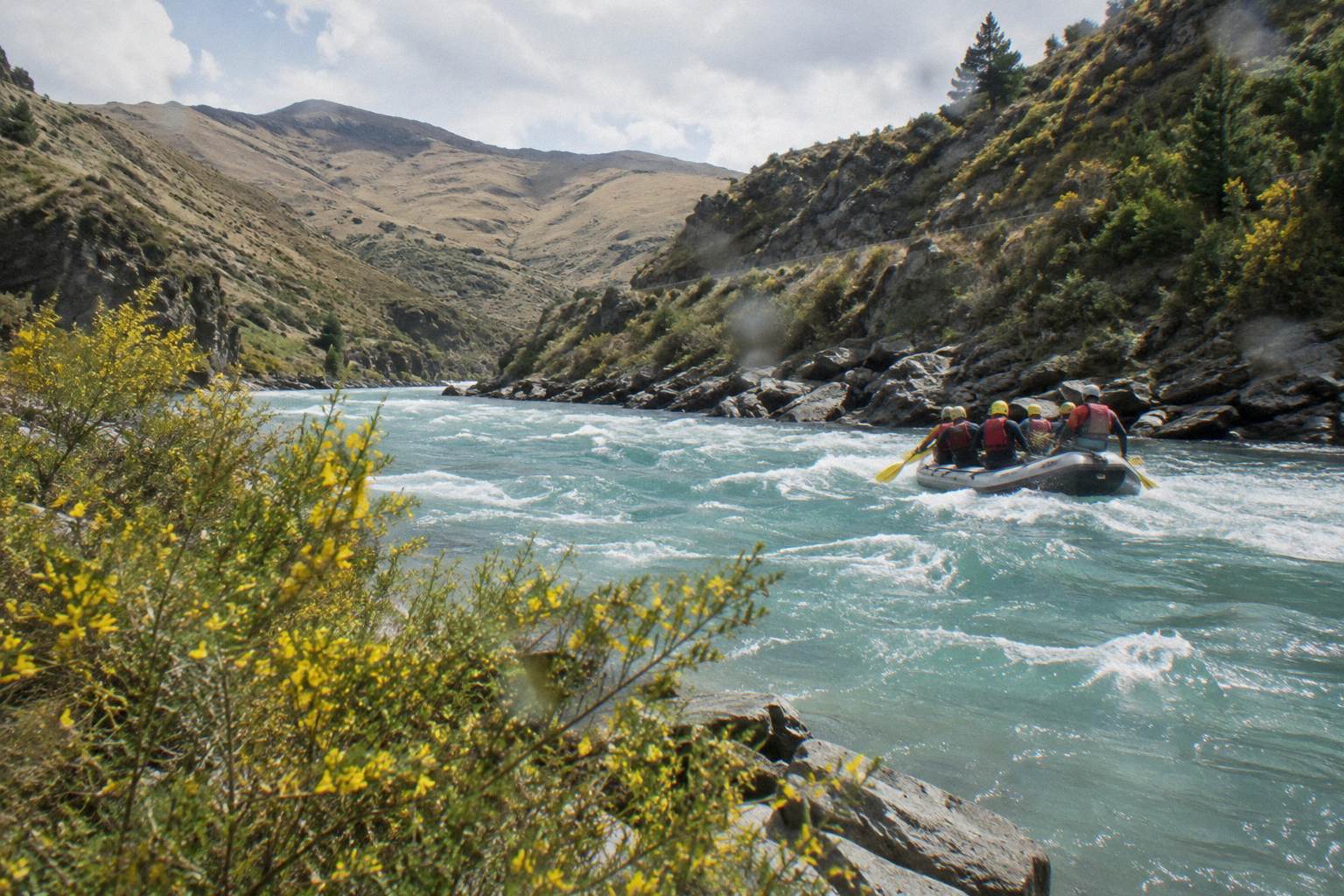
The four that recur are booking the Shotover before testing the Kawarau, wearing cotton under the wetsuit, arriving without a plan for glasses and valuables, and misreading the meeting time, since check-in closes 20 minutes before departure and hotel pickup is excluded on the graded trips. Each is avoidable with ten minutes of planning, and none of them costs money to fix, only attention.
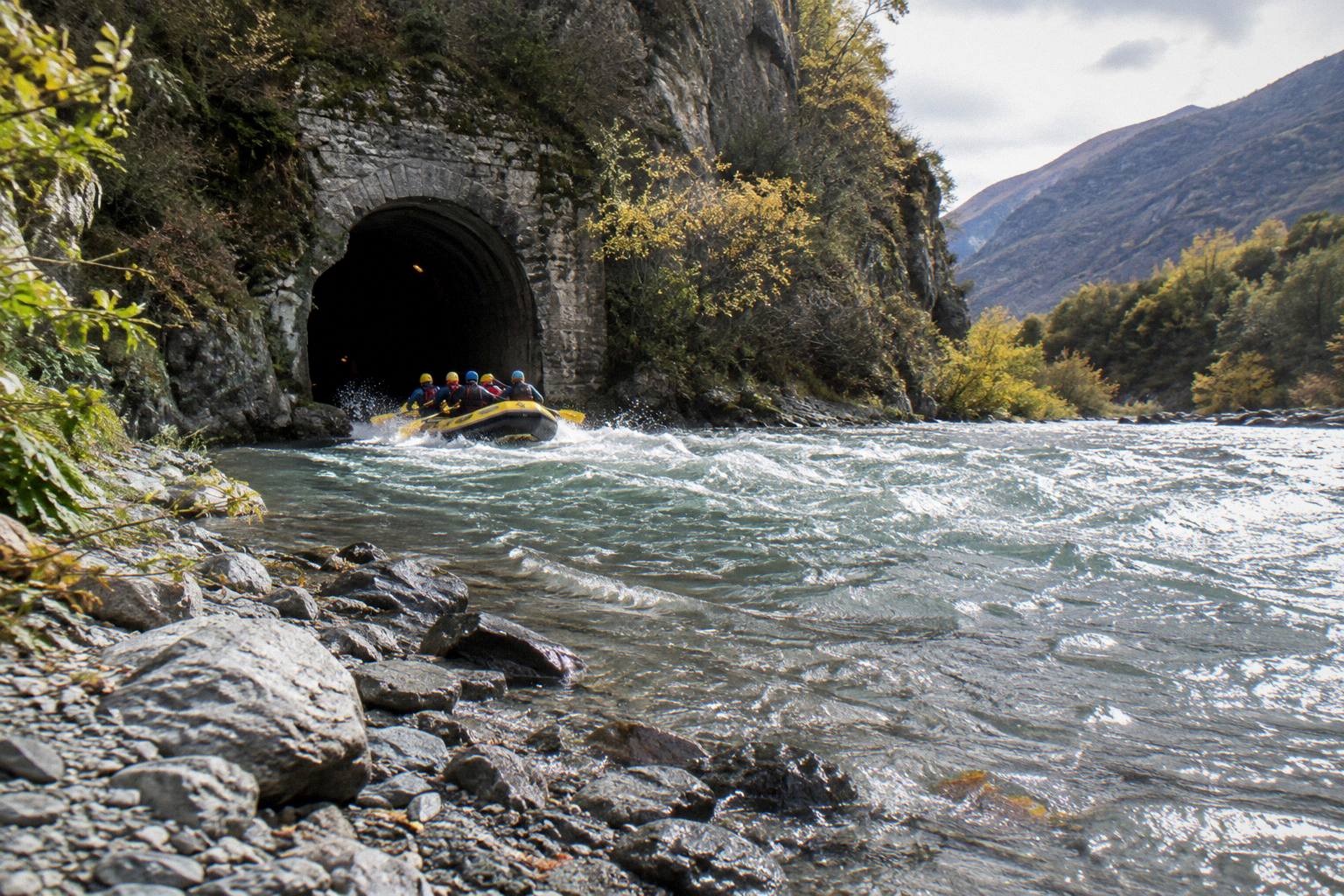
The grade mistake is the most consequential. A beginner who can swim but has never read moving water sometimes books grade 4 to 5 water on price or photos alone, then spends the briefing anxious. The smarter ladder is obvious in hindsight: grade 1 to 2 with the family trip if nerves are high, grade 2 to 3 on the Kawarau as the standard first run, and the Shotover as trip two once you know how a raft feels in a wave train. The middle rung even offers the jet boat combo, which lets you see 22 km of the river at speed before you paddle it. If you already have your heart set on the big water, read whether a beginner can do class 4 rapids before committing.
The logistics mistakes are smaller but irritating. Arriving at 88 Beach Street at the departure minute rather than 20 minutes early risks missing the bus. Assuming a hotel pickup will materialise is another, since pickup is excluded on every graded trip in the region. And booking a morning slot after a late night in Queenstown is a self-inflicted wound; the choice between slots gets a proper treatment in morning or afternoon rafting, and the seasonal angle, including which months the Challenge Rafting trip actually runs, is in the best time for rafting.
Trips also run subject to weather, river level and water temperature, portages may occasionally be required, and minimum guest numbers apply, so a first trip carries a small chance of adjustment. That is normal river operations rather than a red flag, and the free-cancellation terms on the family trip, up to 24 hours before start, show how flexible the gentler end of the market can be. Booking well ahead of a peak-season visit, covered in how to book rafting, keeps your options open on dates and departure slots.
Common Questions About A First Rafting Trip
Is White Water Rafting Good For Beginners?
Yes. Queenstown's operators build their trips around first-timers, and the Kawarau River, grade 2 to 3, is described by its operator as suited to beginners and less confident swimmers. A gentler grade 1 to 2 family trip takes children from 3 years.
Can You Go White Water Rafting If You Can't Swim?
On the Kawarau trips, water confidence is recommended rather than full swimming ability, and the family trip asks for no water confidence at all. The Shotover trips require you to swim 25 m unaided, so non-swimmers are excluded there.
What Should A Beginner Wear White Water Rafting?
Swimwear only under the wetsuit, never cotton, with the wetsuit, jacket, helmet, booties and life jacket all provided. Bring a towel and dry clothes for the hot showers afterwards, and give glasses a sports strap or leave them behind.
Which Is The Easiest Rafting Trip In Queenstown?
The Rafting And Skippers Canyon Combo, grade 1 to 2, suitable from 3 years upwards with no water confidence necessary. The Kawarau Rafting Only trip, grade 2 to 3 and from NZ$249 per person, is the standard adult beginner choice.
Do You Get Weighed Before White Water Rafting?
Weight is verified at check-in on the graded trips, and the limits are a minimum of 40 kg and a maximum of 120 kg. The family trip publishes no weight limit.
Can You Bring A Camera On The Raft?
No. Nothing, camera or GoPro included, can be taken on the raft on the graded trips. Photos are included in the booking on the Challenge Rafting Shotover trip; for the others, ask the operator how photos are handled when booking.