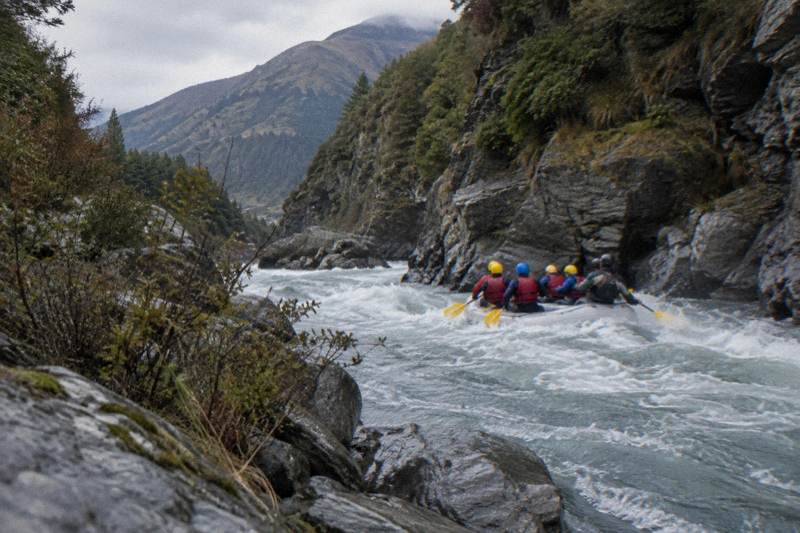
What Happens If You Fall Out Of The Raft?
The Shotover carries a higher risk of falling out than the Kawarau, every guest wears a life jacket and helmet, and the guide's briefing covers what to do if it happens. That is the whole answer in three clauses, and everything below unpacks it.
Short answer
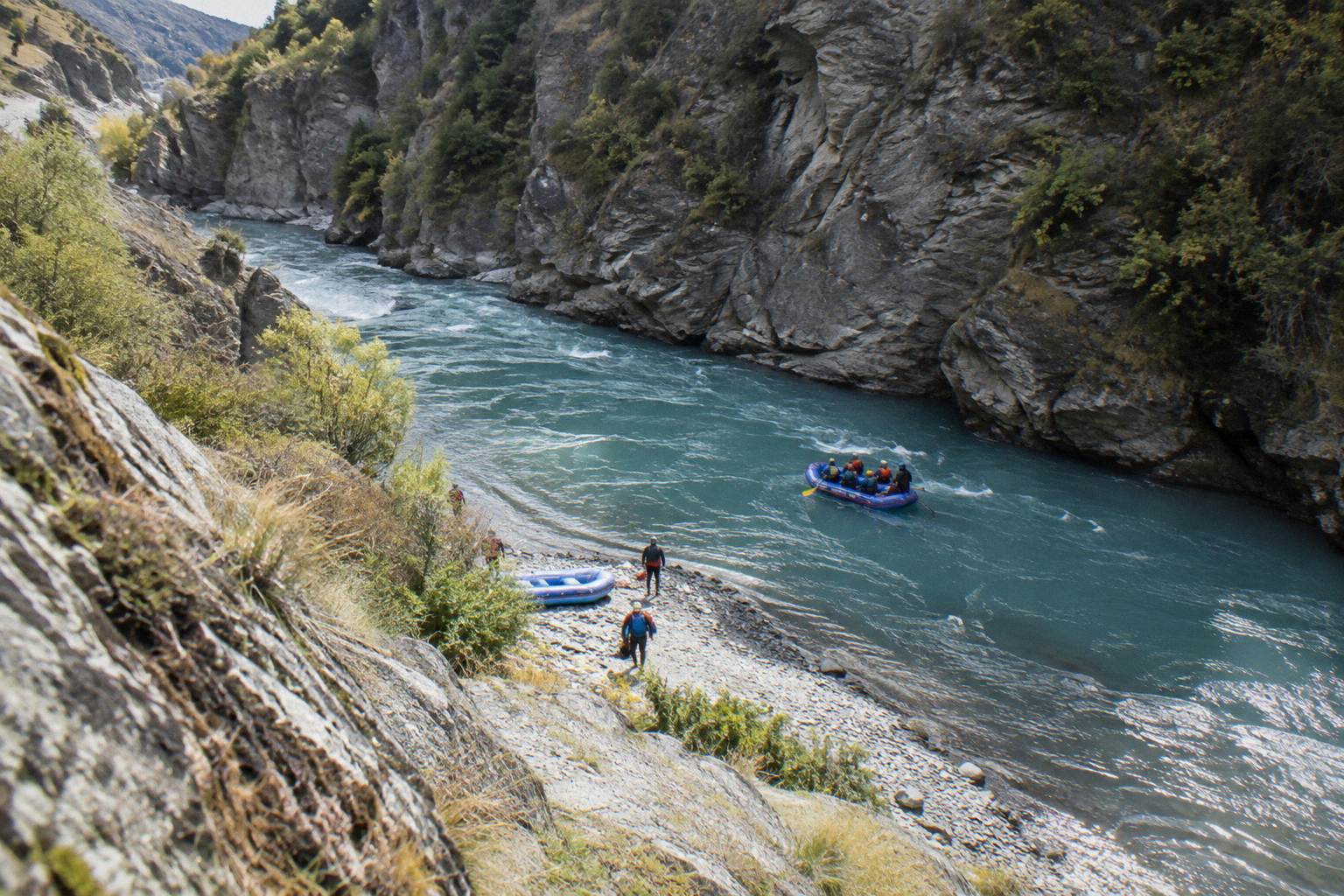
On the Shotover, grade 3 to 5 rapids mean a higher risk of falling out than on the Kawarau, which runs grade 2 to 3. Every guest wears a life jacket and helmet, a guide rides in the raft, and a safety kayaker travels on the RealNZ Shotover trip. The guide's briefing covers what to do, so no technique needs to be learnt in advance.
Falling out of a raft is the thought that stops most people booking, and the operators themselves are blunt about it: RealNZ says its Shotover trip carries a higher risk of falling out than its Kawarau trips. That single sentence is the most useful piece of planning information on the subject, because it tells you the risk is real, uneven, and something you can choose around. The rest of the picture is equipment and people. A life jacket and helmet go on every guest, a guide rides in every raft, and on the RealNZ Shotover trip a safety kayaker paddles along too.
None of that requires you to learn a recovery technique before you travel. The guide's briefing covers what to do, delivered on dry land before the river, and that briefing is a fixed part of the day rather than an optional extra. If you want a wider look at how rafting days are structured, the Queenstown White Water Rafting home page lays out the trips side by side.
What Actually Happens If You Fall Out Of The Raft?
If you fall out, you end up in moving water wearing a life jacket and helmet, with a trained guide in the raft and, on the RealNZ Shotover trip, a safety kayaker on the water whose job includes helping people back to safety. What you should do with your body and paddle is taught in the guide's in-person briefing before the trip, not read in advance, and no operators publish written recovery instructions.
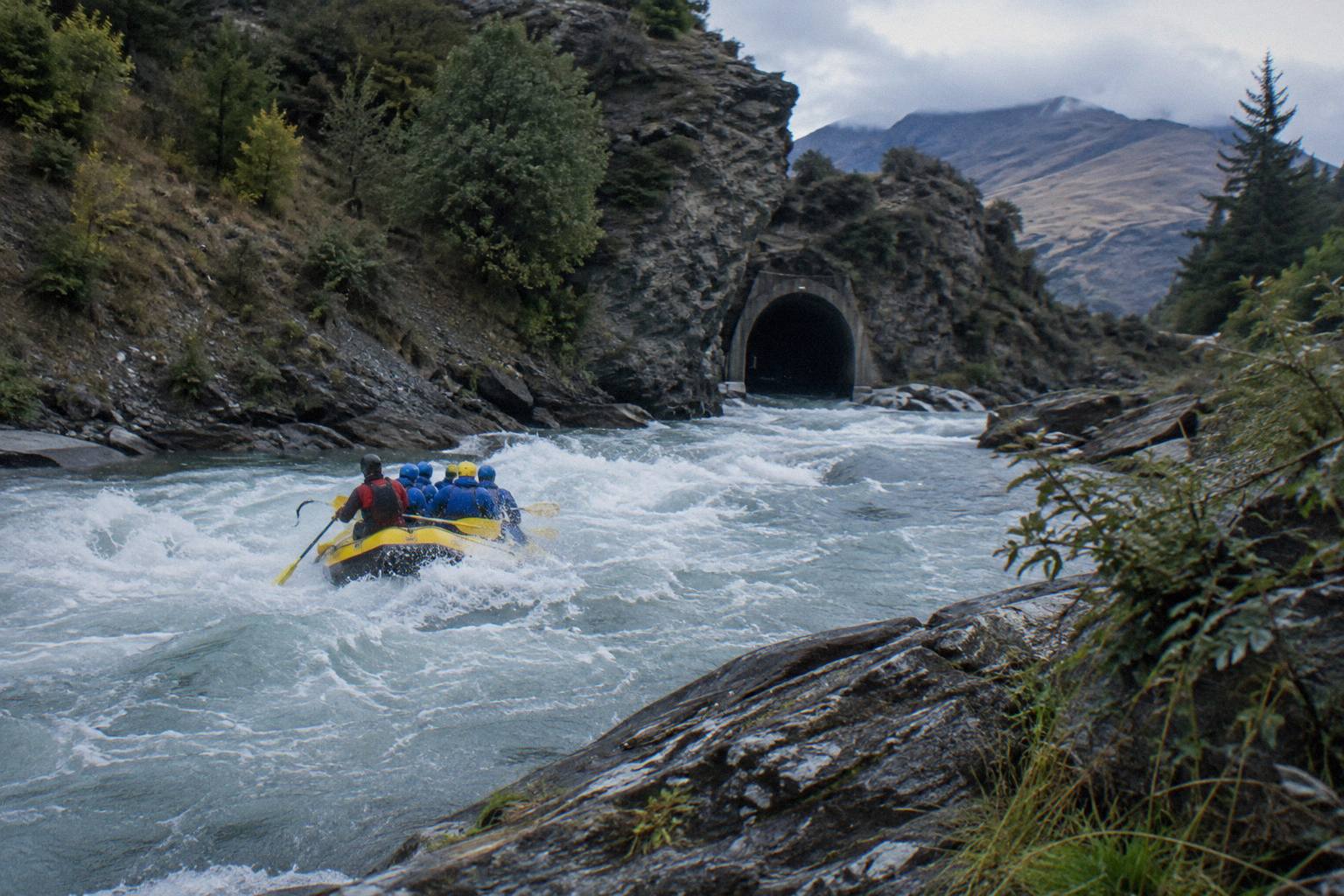
The operators treat a fall-out as a normal event on a whitewater river, not a catastrophe. RealNZ publishes that the Shotover has a higher risk of falling out than the Kawarau, in the same breath as it describes the grade 3 to 5 rapids that cause it. Challenge Rafting names the rapid sequence on its Shotover trip, six grade 4 to 5 rapids it calls the Mother rapids, including Aftershock, Squeeze, Toilet and Pinball, then the 170 m Oxenbridge Tunnel and the drop into Cascade Rapid. Rivers like that ask questions of your grip, and sometimes the answer is no.
What happens next is not left to improvisation. The raft carries at most eight people including the guide, so the person in charge of the recovery is close enough to touch you. Equipment is not optional: wetsuit, wetsuit jacket, spray jacket, paddle, helmet, wetsuit booties and life jacket are all provided and all worn. The briefing before the river is where the guide explains the sequence of a swim and the signals used on the water, and guests must understand it in English, which tells you how much weight the operators put on it.
If the fear itself is the blocker rather than the mechanics, it helps to see how the two rivers differ in difficulty, because that is the lever you control. The white water rafting grades explained guide breaks down what grade 2 to 3 water looks like against grade 4 to 5, in the operators' own words.
Which Trip Makes Falling Out More Likely?
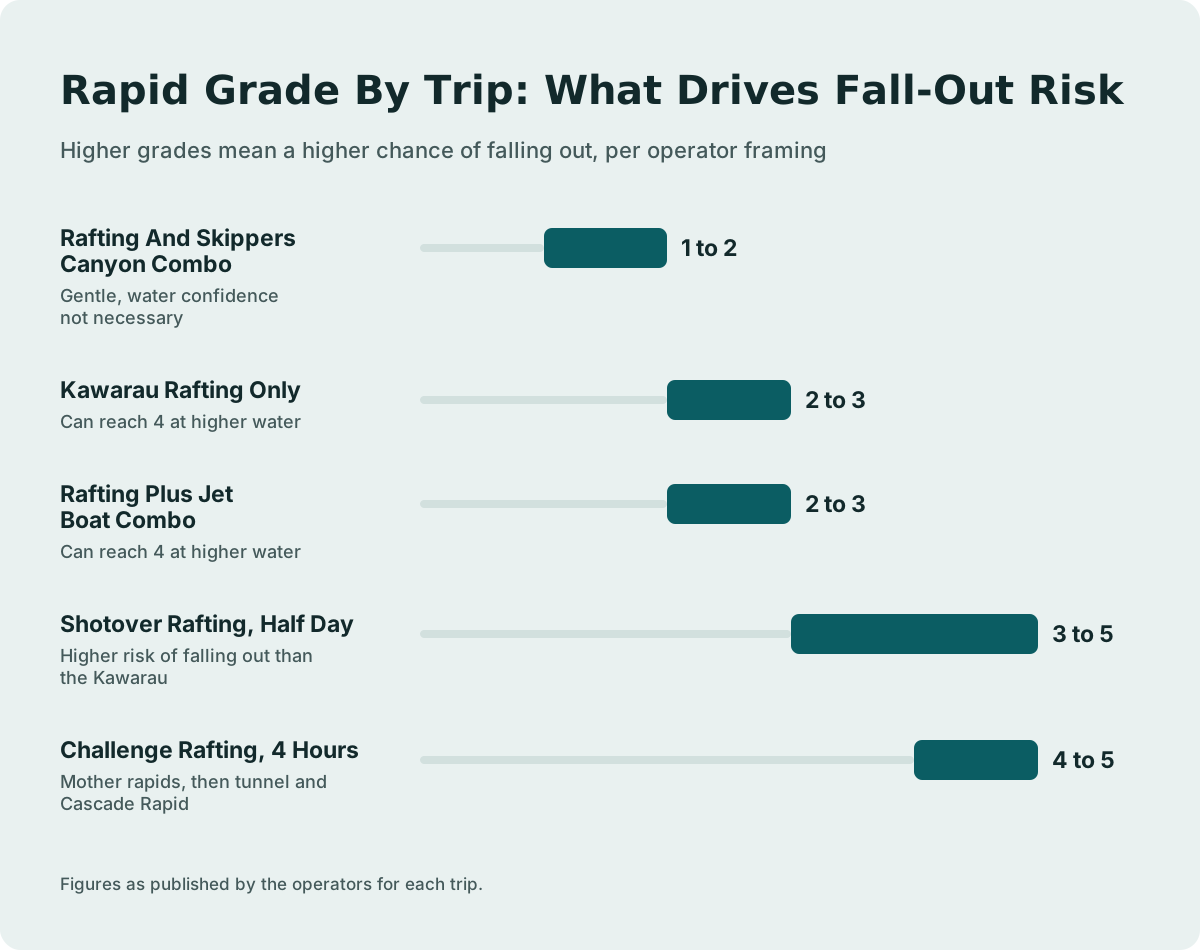
The Shotover River trip carries the higher risk of falling out, while the Kawarau trip carries the lower risk, because the two rivers run different grades. The Shotover is the more intense run, whereas the Kawarau usually sits at grade 2 to 3, though it can reach grade 4 at higher water levels. For the gentlest option, the Family Adventures Skippers Canyon trip runs grade 1 to 2.
River choice is therefore the single biggest decision you make about swim risk. On the Shotover with RealNZ you get six grade 3 to 5 rapids, the Oxenbridge Tunnel, and 14 km of river, with the operator noting that grade 5 is the highest grade commercially rafted in the world. Challenge Rafting's Shotover trip runs grade 4 to 5 through the Mother rapids. Neither is a float trip; both ask for moderate fitness and water competence, and RealNZ excludes pregnant guests from this level of water.
The Kawarau is the operator's own recommendation for first-timers and less confident swimmers, with water confidence still recommended. Its 8 km ends in the Gibbston Valley, and its headline rapid, the Dog Leg, is 400 m long and called the longest commercially rafted rapid in New Zealand. There is even an optional cliff-jumping section and the option to swim a rapid deliberately, which reframes the water as a place you choose to be rather than one you fear.
The Family Adventures Skippers Canyon trip takes the spectrum to its gentle end: grade 1 to 2 rapids, suitable from 3 years upwards, water confidence not necessary. It is a different kind of day, 5 hours including a 45-minute drive into the canyon, gold mining relics and a Lord of the Rings filming location, but for a nervous swimmer or a family with small children it removes most of the question.
A like-for-like comparison of the rivers helps here, because grades are the honest proxy for swim risk that the operators themselves use.
| Trip | River | Grade | Operator's swim-risk framing |
|---|---|---|---|
| Shotover Rafting, Half Day | Shotover | 3 to 5 | Higher risk of falling out than the Kawarau |
| Challenge Rafting, 4 Hours | Shotover | 4 to 5 | Mother rapids, then tunnel and Cascade Rapid |
| Kawarau Rafting Only | Kawarau | 2 to 3, can reach 4 at higher water | Suited to first-timers and less confident swimmers |
| Rafting Plus Jet Boat Combo | Kawarau | 2 to 3, can reach 4 at higher water | Suited to first-timers and less confident swimmers |
| Rafting And Skippers Canyon Combo | Shotover, Skippers Canyon | 1 to 2 | Gentle, water confidence not necessary |
What Protects You On The Water?
Three layers, in order: equipment, people and regulation. Every guest wears a life jacket and helmet, provided with the wetsuit and booties. A trained guide rides in every raft, at most eight people including the guide, and a safety kayaker travels on every RealNZ Shotover trip. Behind all of it, New Zealand law requires adventure activity operators to be registered with WorkSafe, having passed a safety audit, before they may legally run commercial trips.
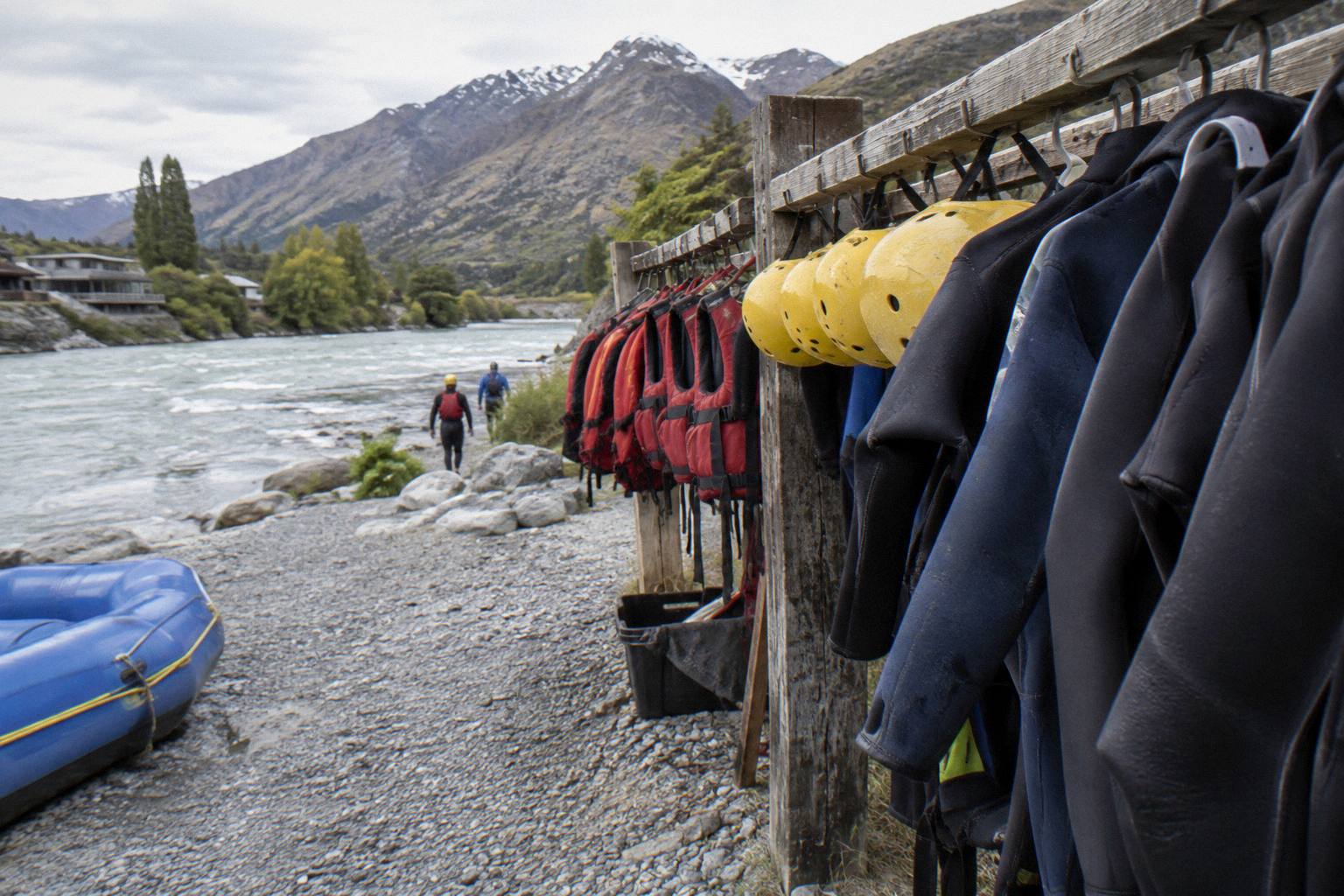
Start with the gear, because it is uniform across the trips. The RealNZ equipment list is wetsuit, wetsuit jacket, spray jacket, paddle, helmet, wetsuit booties and life jacket, and the Challenge Rafting trip lists the same set: safety briefing, full wetsuit, booties, life jacket and equipment. The life jacket is the piece that matters most in a swim, and the helmet is what stands between your head and rock. Both are provided, both are worn, and neither is negotiable.
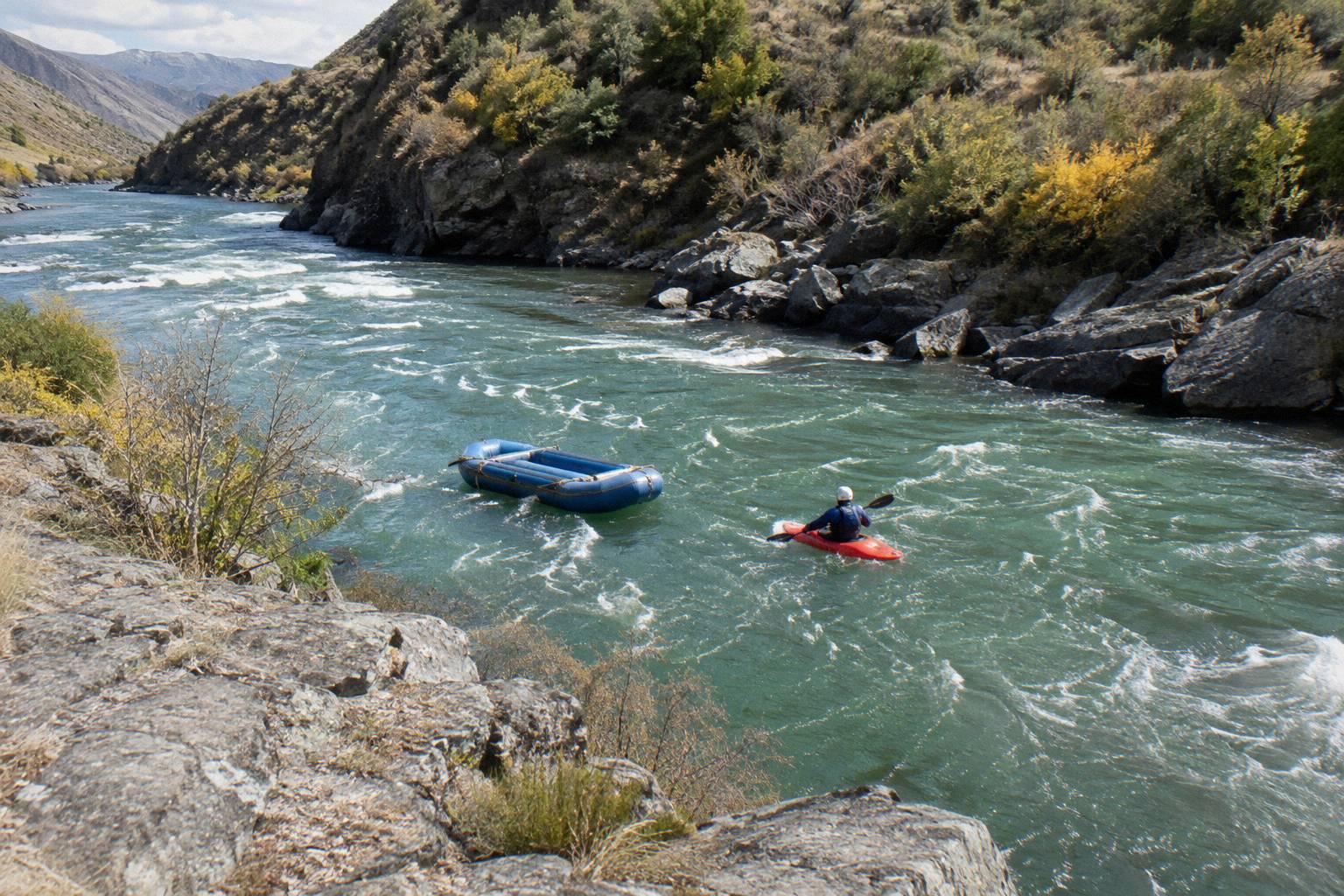
The people layer is thicker than most guests expect. Eight is the raft maximum including the guide on the RealNZ Shotover trip, so ratios are small. The safety kayaker on that trip is a second trained operator on the water whose job exists precisely for moments when someone is in the river rather than on it. On the Challenge Rafting Shotover trip, professional photos are included in the booking, which is a small detail that tells you someone else is watching the water closely enough to photograph it.
The regulatory layer is the one almost nobody reads about and everybody benefits from. WorkSafe New Zealand's public register lists adventure activity operators that have passed a safety audit and are authorised to provide adventure activities, and it is an offence to run an adventure activity without being registered or exempted. The register is searchable by name, activity and location, so a reader can look up any New Zealand operator in seconds. That is the background against which the gear and the guide exist.
The most complete single summary of these protections sits on RealNZ's own Shotover rafting page, which sets out the grade statement, the equipment list and the swim-risk comparison in the operator's own words.
The same protections, trip by trip, in one table:
| Trip | Guide in the raft | Safety kayaker | Life jacket and helmet | Raft size |
|---|---|---|---|---|
| Shotover Rafting, Half Day | Yes | Yes, on each trip | Provided and worn | Max 8 including guide |
| Challenge Rafting, 4 Hours | Yes | - | Provided and worn | - |
| Kawarau Rafting Only | Yes | - | Provided and worn | - |
| Rafting Plus Jet Boat Combo | Yes | - | Provided and worn | - |
| Rafting And Skippers Canyon Combo | Yes | - | Provided and worn | - |
The Safety Briefing: Where The Real Answer Lives
Yes, the specific swimmer actions, paddle holds, and re-entry techniques are all taught in the guide's on-land briefing before the river, with no published written version. On the Kawarau Rafting Only itinerary this is a scheduled 30-minute block between the bus ride to the base and the bus to the river, and RealNZ requires guests to understand the briefing in English and sign a waiver.
That 30-minute block deserves respect, because it is the only place the recovery technique is taught, and the operators deliberately put it there. A briefing delivered beside the raft, with the actual equipment on your actual body, beats any paragraph read at home. The guide demonstrates, guests repeat, and the signals used on the water are agreed while everyone is dry and calm.
The waiver is part of the same system rather than a piece of scary paperwork. All guests sign one, under 18s need a guardian-signed version, and the act of signing follows the briefing, which is to say it follows the moment you were told what the risks are and what to do about them. It is the operators' way of confirming the briefing landed.
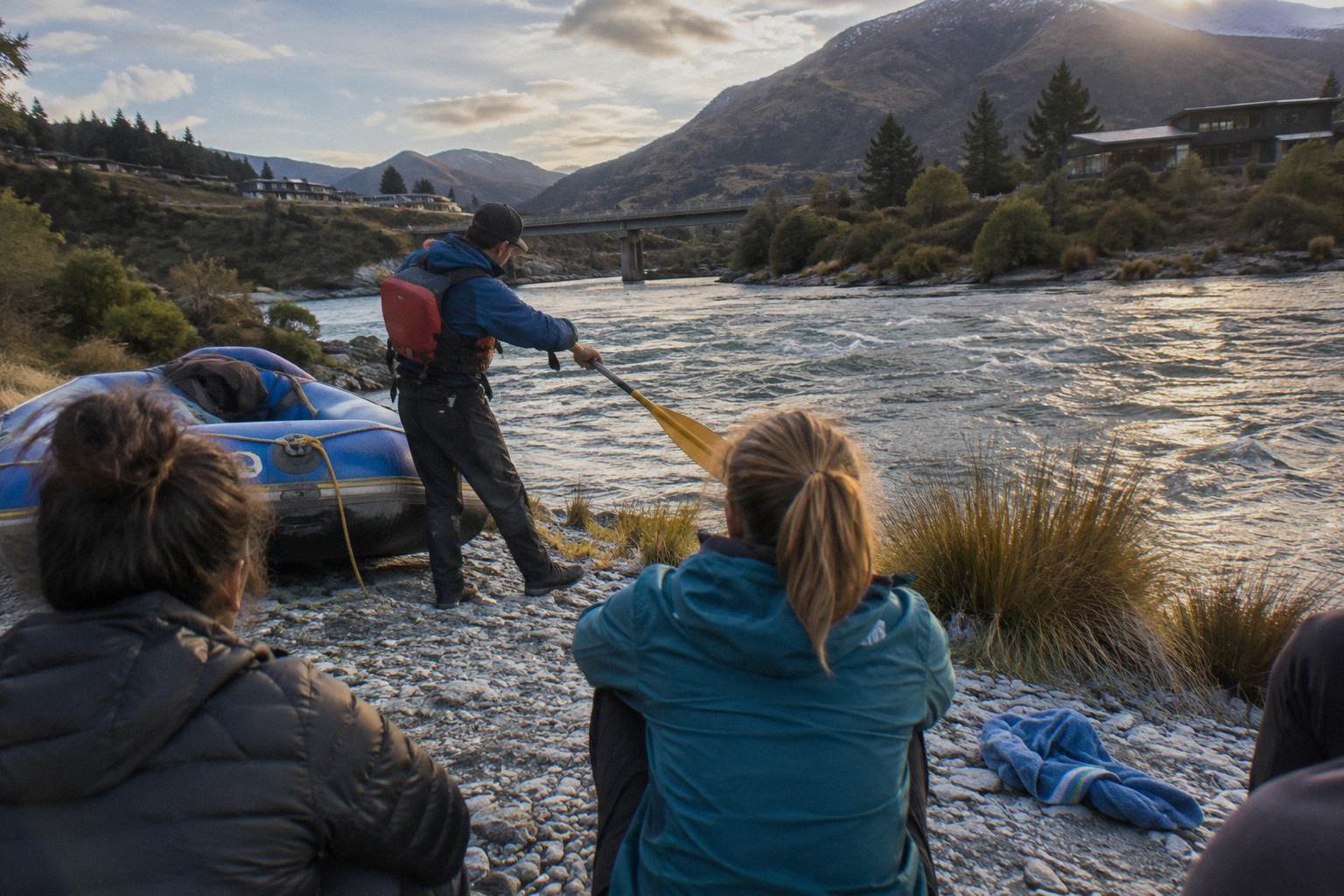
For the wider shape of the day, from check-in to hot showers, the rafting trip timeline and pickup guide walks through the RealNZ itinerary block by block. The short version: meet at 88 Beach Street at least 20 minutes before departure, bus to the base, brief, bus to the river, one hour of rafting, then the road home.
Who Is Allowed On The Water At All?
Yes, but only if you meet RealNZ's strict eligibility rules: guests must be water-competent, able to swim 25 m unaided, at least 13 years old, and between 40 kg and 120 kg, verified at check-in. Heart conditions exclude you unless it is blood pressure managed with medication, and pregnancy excludes you entirely. The Challenge Rafting Shotover trip also bars non-swimmers, though the Family Adventures trip welcomes children from age 3 with no water confidence required.
Those limits are not admin trivia; they are the first layer of protection, applied before anyone gets near a rapid. Weight is checked at check-in because the life jacket and the raft both depend on it. Age comes with its own scaffolding: under 16 must travel with a guardian on RealNZ trips, under 17 accompanied by a guardian on the Challenge Rafting trip, and under 18 needs a guardian-signed waiver either way.
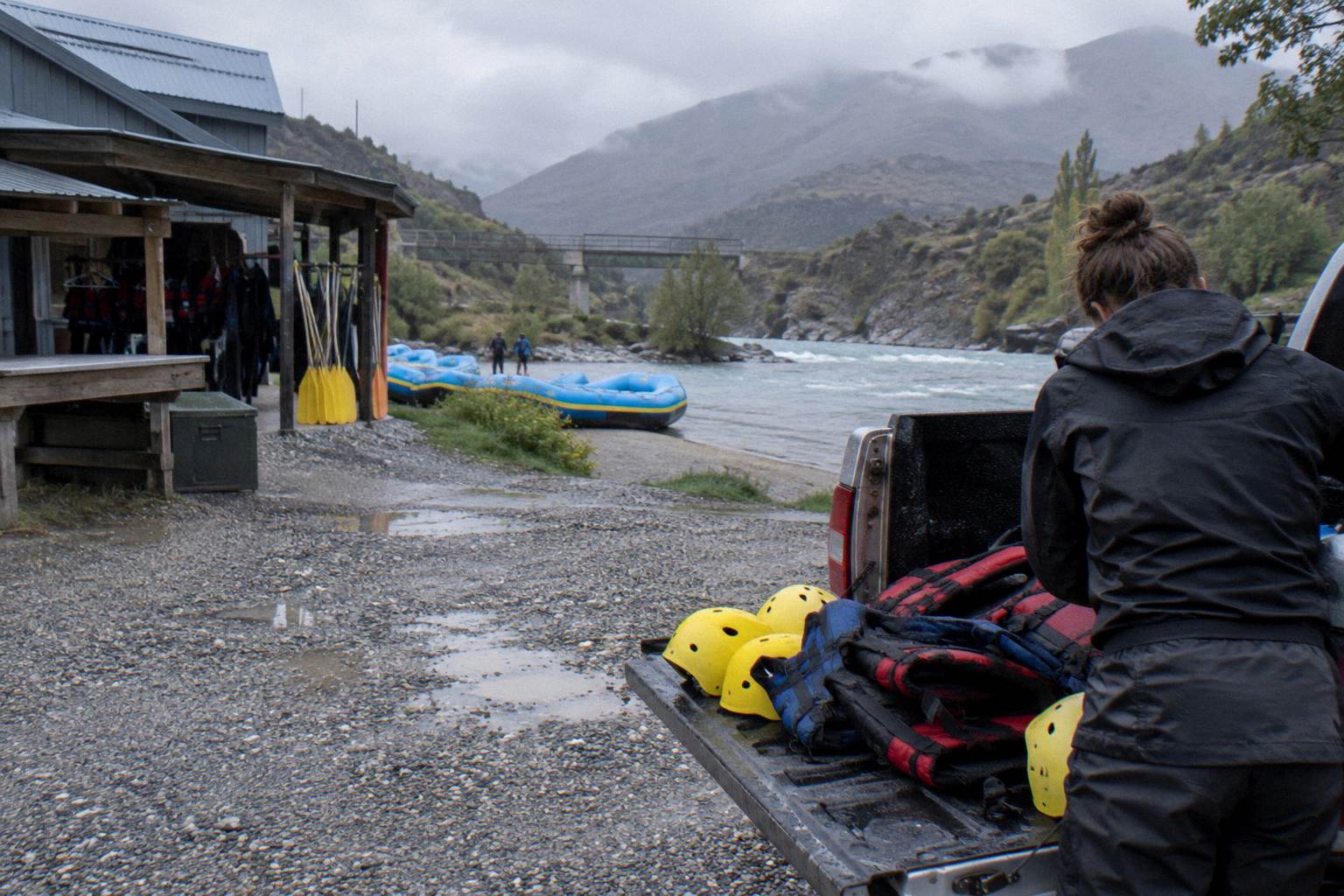
The swimmer question is the one worth lingering on. If swimming 25 m unaided is beyond you, the grade 3 to 5 rivers are closed by rule rather than by courage, and the operators say so plainly. The Family Adventures Skippers Canyon trip exists precisely for that gap, gentle grade 1 to 2 water where water confidence is not necessary. There is more on who fits where in the rafting if you can't swim guide.
| Requirement | Shotover Rafting, Half Day | Kawarau Rafting Only | Rafting And Skippers Canyon Combo |
|---|---|---|---|
| Minimum age | 13 | 13 | 3 |
| Weight range | 40 to 120 kg | Up to 120 kg | No limit published |
| Water competence | Swim 25 m unaided | Recommended, first-timers suited | Not necessary |
| Fitness | Moderate | - | - |
| Excluded | Heart conditions, pregnancy | Heart conditions, pregnancy | - |
Falling In On Purpose: The Kawarau's Optional Swim
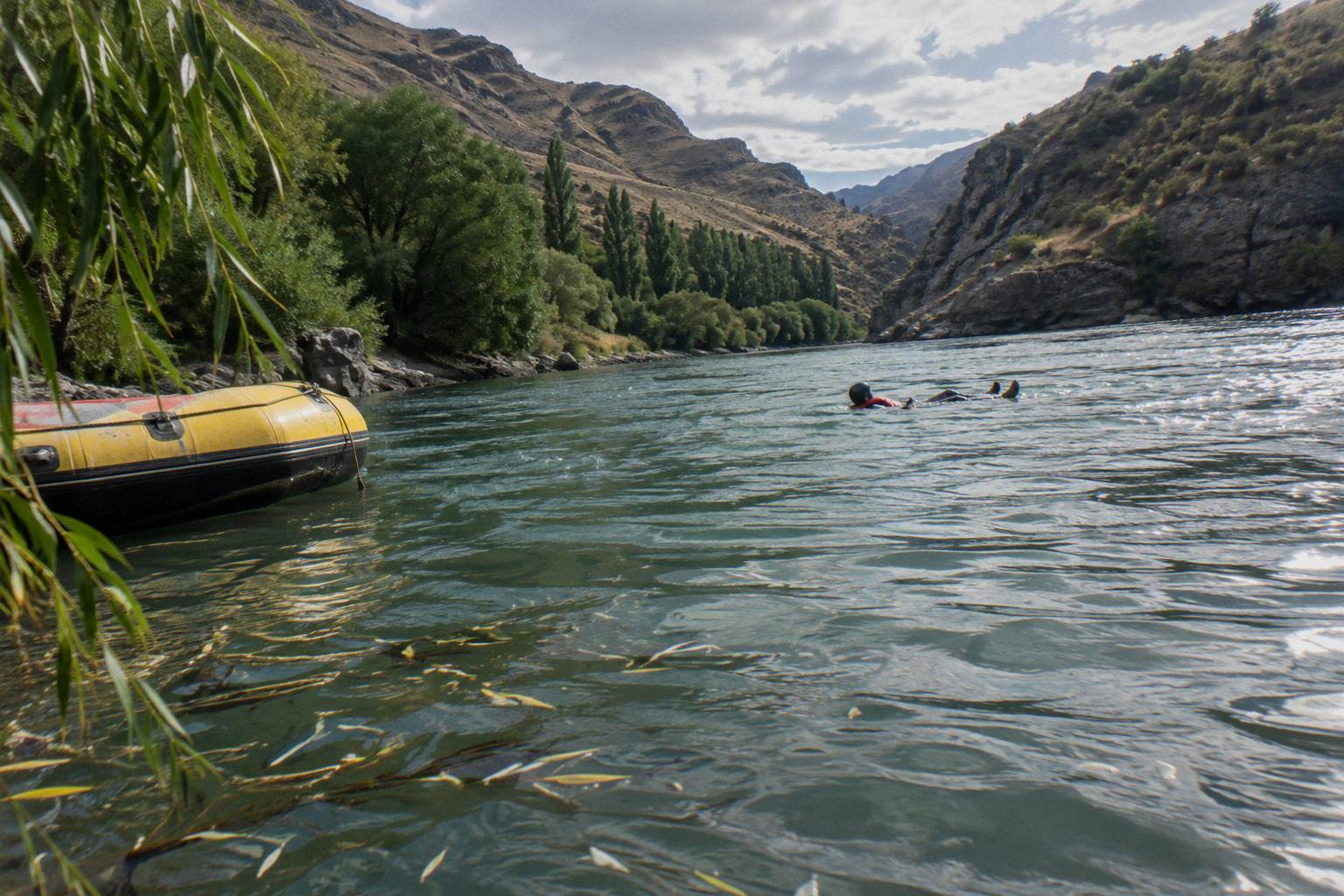
The Kawarau trips include swimming a rapid as an optional activity, and there is an optional cliff-jumping section depending on weather and water level, which inverts the whole fear. On the river graded 2 to 3, the operator invites guests into the water deliberately, with the raft and guide positioned for it. Nobody has to take the option, and its existence says something about how the operator views that water with its own staff standing by.
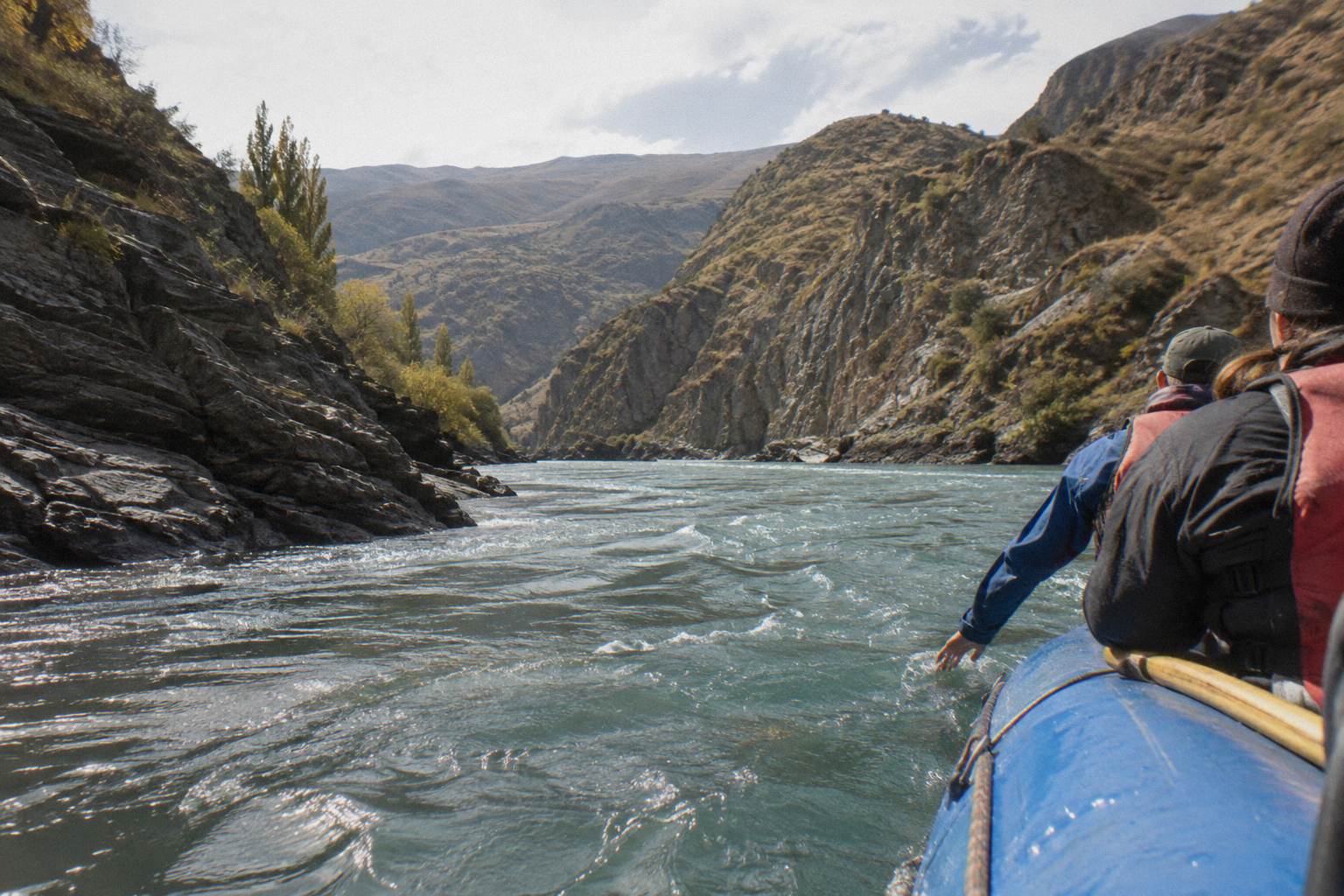
It is a strange and useful reframe. The same river that a nervous first-timer fears is the river where guests are invited to let go of the raft and swim a rapid for fun, in a life jacket, with a guide managing the situation. The Dog Leg, 400 m long and the longest commercially rafted rapid in New Zealand, is the centrepiece, and the trip ends 8 km downstream in the Gibbston Valley, the wine country the return drive passes through.
The rafting plus jet boat version of the day adds a different kind of water thrill entirely: a 25-minute jet boat transfer covering 22 km of the Kawarau at 95 km/h with 360-degree spins, before the rafting station and an hour on the river. For someone building confidence, the combo orders the day so the wildest part happens with a driver at the wheel rather than a paddle in your hand.
RealNZ also notes that its jet boat and rafting trips never share a stretch of river except a 500 m stretch after the Oxenbridge Tunnel on the Shotover, which is the kind of operational detail that only an operator managing risk closely would bother to state.
Common Mistakes That Make A Swim More Likely
The avoidable errors are all made before the raft touches water: ignoring the briefing because it seemed like formality, wearing cotton under the wetsuit instead of swimwear, taking glasses on the river without a sports strap, and choosing a grade 3 to 5 river when the eligibility rules and your own swimming say otherwise. The operators publish guidance against each of these, and none of them is a rapid-reading problem, they are preparation problems.
The briefing mistake is the biggest. Everything that happens in a swim is choreographed in those 30 minutes on the Kawarau itinerary, and guests who chat through it arrive at the first rapid without the signals. The clothing mistake is quieter but real: swimwear only under the wetsuit, no cotton, because the wetsuit works by trapping water against skin and cotton defeats that. Glasses need a sports strap or stay behind, and nothing at all, camera or GoPro, can be taken on the raft on the RealNZ Shotover trip, with a valuables locker at the base.
| Mistake | Why it matters | The operator's rule |
|---|---|---|
| Skipping the briefing | The recovery actions are taught only there | Briefings must be understood in English |
| Cotton under the wetsuit | Undermines how the wetsuit works | Swimwear only, no cotton |
| Loose glasses | A swim takes them | Sports strap or leave behind |
| Camera on the raft | Cannot be taken on the water | Valuables locker at the base |
| Overreaching on river choice | Grade 3 to 5 asks for water competence | Swim 25 m unaided, moderate fitness |
The clothing question has its own deep dive in what to wear white water rafting, and the Fear side of the equation, the nights-before variety rather than the on-the-river kind, is covered in rafting fear and nerves.
A River With History Of Exactly This Question
Yes, the Shotover River really did have a tunnel dug into it: in 1906 the Oxenbridge brothers bored a 170 m channel to divert water away from gold-bearing rapids, and today rafters float through that same tunnel as the trip's signature moment. Heritage New Zealand notes the tunnel still carries river flow and serves mainly rafting companies, while the Department of Conservation maintains a 20-minute track to a viewpoint above it.
That history is worth ten seconds of thought before booking, because it reframes the canyon. The 1862 gold rush dubbed the Shotover the richest river in the world and brought thousands of prospectors, per Heritage New Zealand's list entry for the tunnel. The Oxenbridge Tunnel, expected at 550 ft, was cut from 1906, and the company behind it was liquidated by 1912 with no evidence of mining use after. The gold scheme failed; the rafting industry inherited the hole.
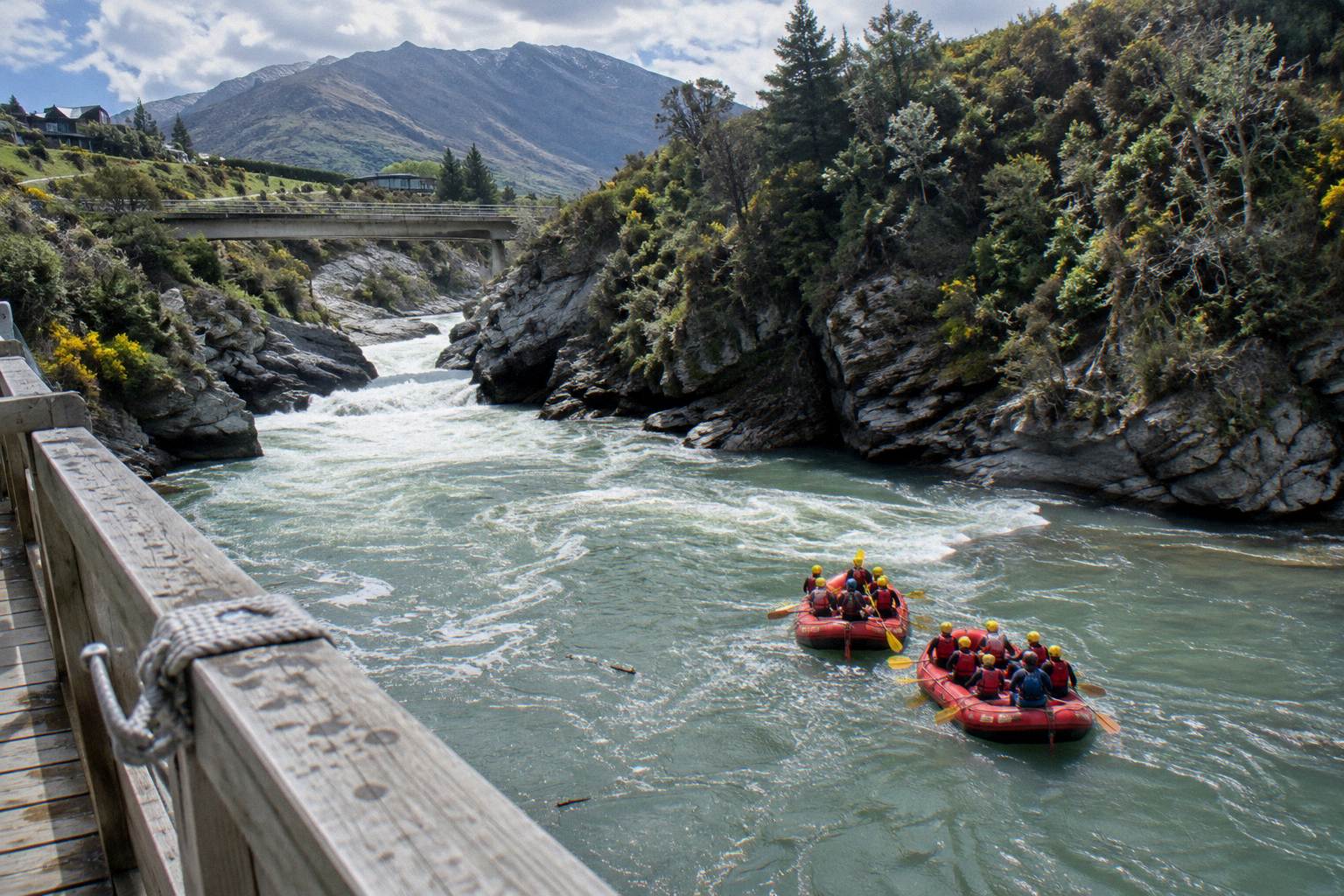
For non-rafters, the Department of Conservation's Skippers area page describes the Oxenbridge Tunnel Track, an easy 20-minute walk from just before the Edith Cavell Bridge at Arthurs Point to a viewpoint over the diversion and an old steam engine. RealNZ notes there are no spectators on the river itself, but viewers can stand near the last rapid as rafts exit the tunnel, though timing varies.
Choosing With The Fear In The Equation
Match the river to your swimming ability and nerve by relying on operators' own descriptions rather than your imagination. Choose grade 1 to 2 on the Family Adventures trip with no water confidence needed, grade 2 to 3 on the Kawarau for first-timers and less confident swimmers, or grade 3 to 5 on the Shotover if you can swim 25 m unaided and accept the stated higher risk of falling out.
The Shotover River Whitewater Rafting Adventure from NZ$299 per person, 4.5 hours, rated 4.8 from 346 reviews, is the trip most people picture when they picture Queenstown rafting, and it is also the trip where the swim-risk sentence applies. The Kawarau Rafting Only base fare from NZ$249 per person, 4.7 from 48 reviews, covers the same mechanics at gentler grades. The Rafting And Skippers Canyon Combo from NZ$329, 5.0 from 7 reviews, from age 3 with no water confidence necessary, removes the question almost entirely.
Whichever end of that spectrum you choose, the things that actually determine a good outcome are already arranged: the gear is provided and fitted, the briefing is scheduled, the guide is in the raft, and on the Shotover a kayaker is on the water. Your only real jobs are to pick the right river, listen for 30 minutes, and wear what you are given.
Common Questions About Falling Out Of A Raft
What Happens If You Fall Out While White Water Rafting?
You end up in moving water wearing a life jacket and helmet, with a trained guide in the raft and, on the RealNZ Shotover trip, a safety kayaker on the water. The specific actions to take are covered in the guide's briefing before the river, which is why understanding the briefing in English is a requirement.
Which Queenstown River Has The Higher Risk Of Falling Out?
The Shotover. RealNZ states that its Shotover trip, graded 3 to 5, carries a higher risk of falling out than its Kawarau trips, which are graded 2 to 3 and suited to first-timers and less confident swimmers.
Do You Need To Be Able To Swim To Go Rafting In Queenstown?
On the Shotover and Kawarau trips with RealNZ, yes: guests must be water-competent, able to swim 25 m unaided, with moderate fitness. The Family Adventures Skippers Canyon trip is the exception, suitable from 3 years upwards with water confidence not necessary.
Is There A Safety Kayaker On The Rafting Trips?
Yes on the RealNZ Shotover trip: a safety kayaker travels on each trip. Every trip has a trained guide in the raft, and rafts on the RealNZ Shotover trip carry a maximum of eight people including the guide.
Can You Fall Out On The Grade 1 To 2 Family Trip?
The Family Adventures Skippers Canyon trip runs grade 1 and 2 rapids and is described by the operator as a gentle trip with water confidence not necessary, suitable from 3 years upwards. It is the lowest-difficulty rafting option around Queenstown.
Where Do You Learn What To Do If You Fall In?
In the safety briefing before the river. On the Kawarau Rafting Only itinerary the briefing is a 30-minute scheduled block, and every guest signs a waiver after it. No written recovery instructions are published, and none are needed before the day.