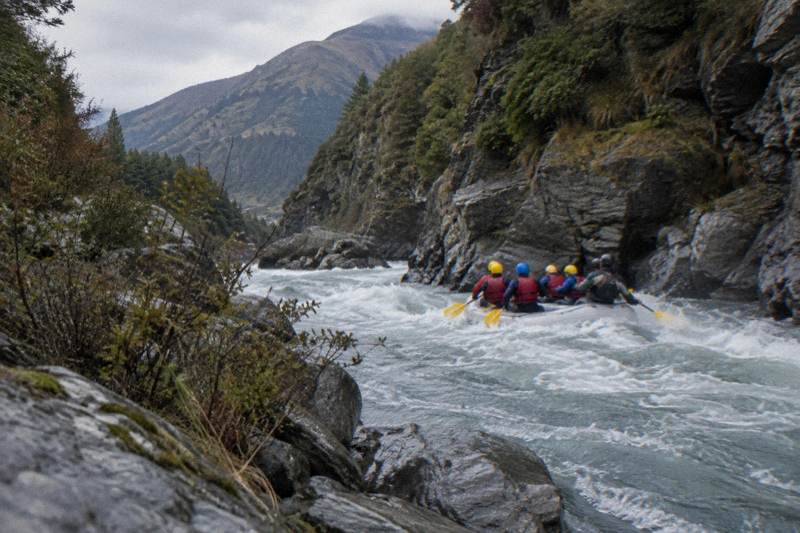
What Not To Wear When White Water Rafting?
The clothing mistakes that can end a Queenstown rafting trip before it starts: cotton, loose valuables, wrong footwear, and what belongs in the locker instead of on the raft.
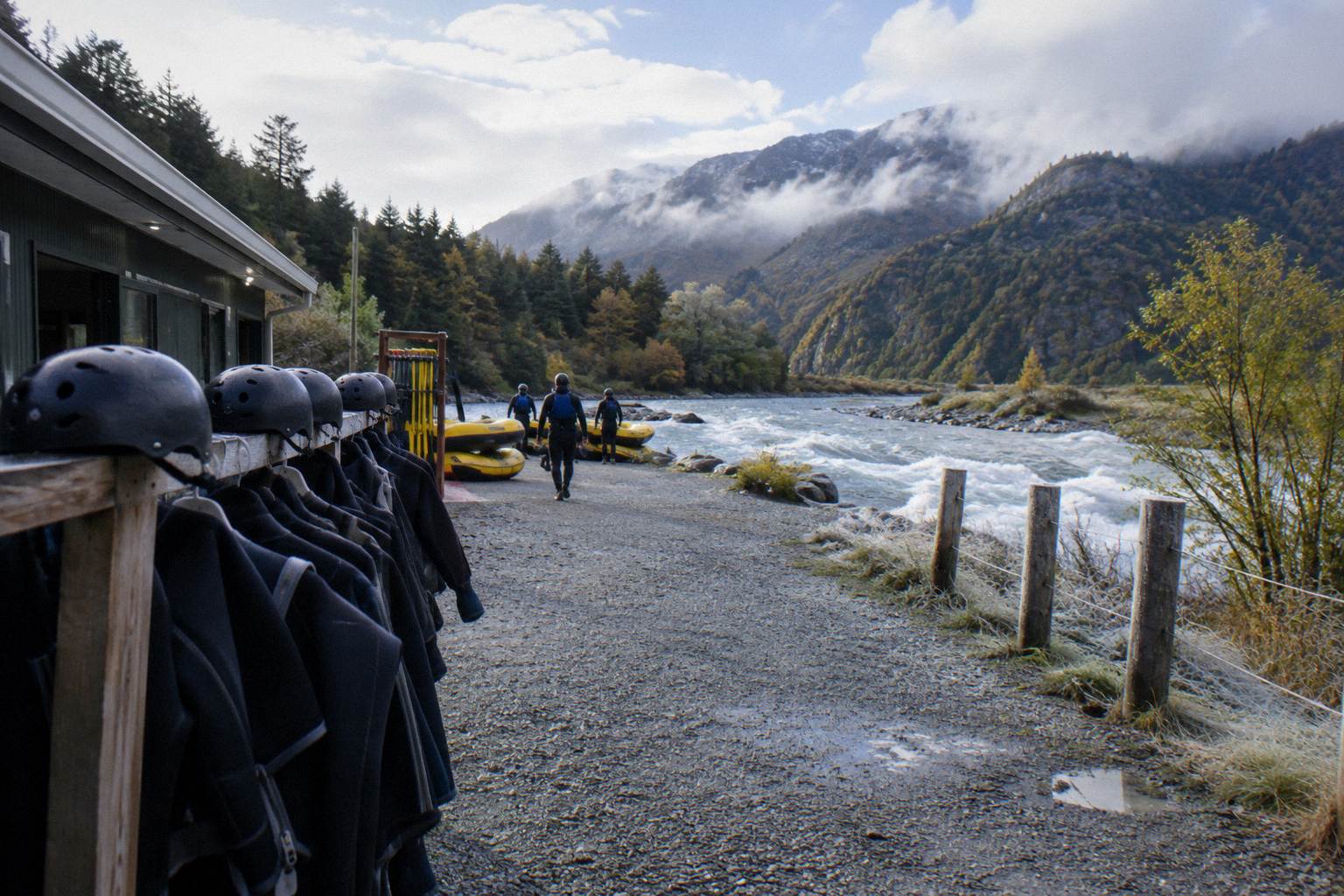
Skip cotton entirely, wear swimwear as your only base layer under the wetsuit, secure glasses with a sports strap or leave them behind, and keep pockets empty, since cameras and GoPros are never taken on the raft. Operators in Queenstown supply the same core kit, so your clothing choices mainly determine how comfortable the next four hours feel.
The single biggest mistake is also the most common one. Cotton, whether a t-shirt, hoodie or jeans, holds water against the skin and stops insulating the moment it gets wet. Under a wetsuit that trapped water sits there for the whole trip. Operators in Queenstown are blunt about it: swimwear only under the wetsuit, and no cotton. That instruction appears in the pre-trip information for both the RealNZ Shotover rafting page and Challenge Rafting's own FAQ, which is about as close to a universal rule as rafting gets.
The second mistake is bringing things. Rings that slip off cold fingers, phones, keys, wallets, and above all cameras. On the Shotover trip nothing can be taken on the raft, no camera and no GoPro, full stop. There is a valuables locker at the raft base for exactly the things you should not be wearing. The instinct to document the run is understandable, but professional photos are part of some bookings, Challenge Rafting includes them in its Shotover trip, so the phone can stay dry.
The third mistake is subtler: dressing for the town, not the river. A warm jacket for the bus is fine, a cotton jumper worn into the raft is not. A swimsuit under your clothes is the standard advice on the gentler Skippers Canyon family trip, and it works everywhere: arrive dressed to change quickly, because the wetsuit goes over swimwear and nothing else.
There is a fourth category that catches experienced travellers more than first-timers, and that is over-preparation. People arrive with specialist gear they bought for the trip: their own neoprene, water shoes, waterproof pouches, dry bags. Almost none of it is needed. The base issues every technical item, the booties fit better than anything bought online, and a dry bag strapped to your waist is exactly the kind of loose object the safety briefing tells you to leave ashore. The packing problem here is subtractive, not additive.
If you are still choosing between rivers, the three trips below cover the range most visitors want.
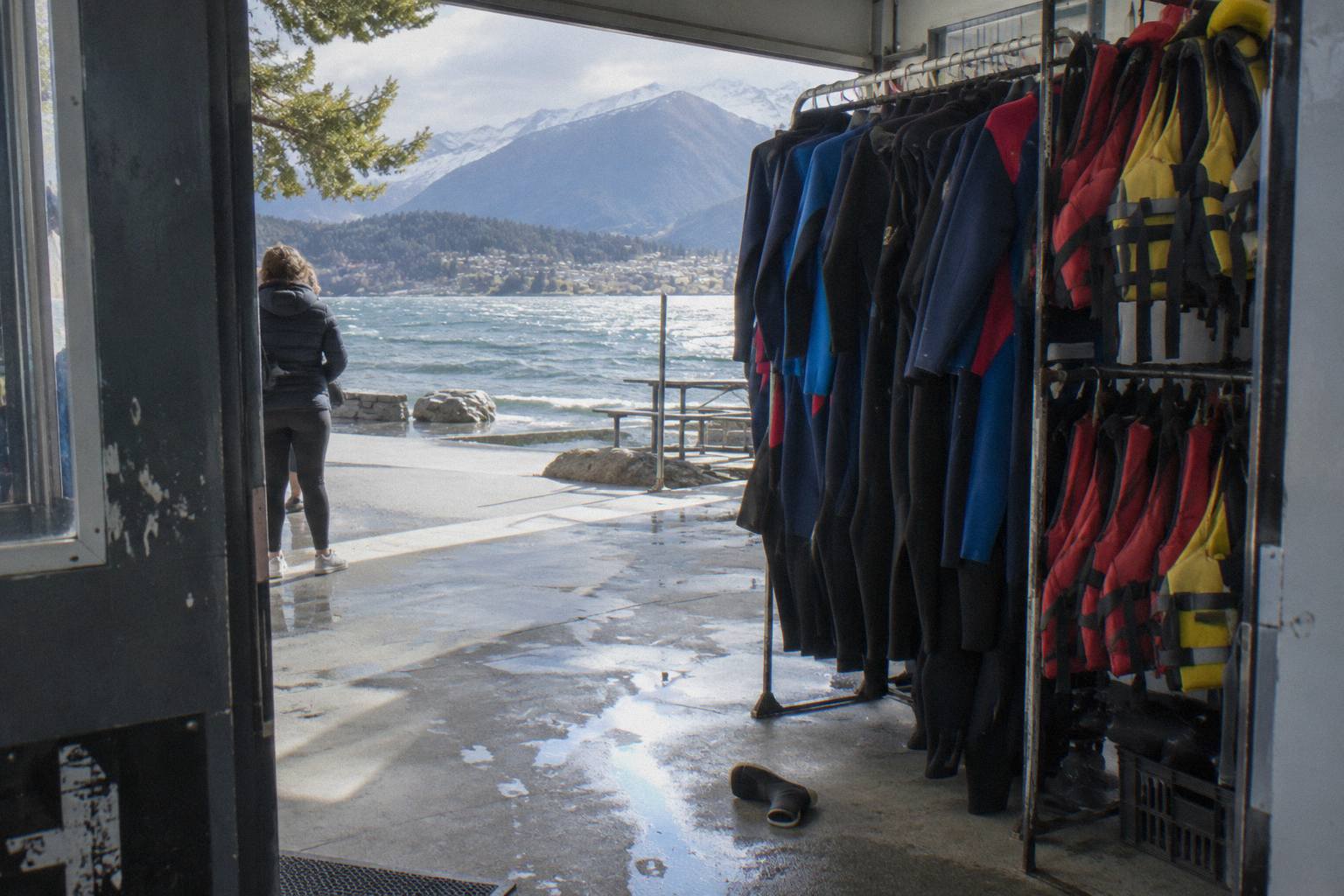
For a fuller rundown of the full kit, the what to wear rafting guide covers the positive side of the list, layer by layer, while the breakdown below sticks to the wardrobe failures.
Swimwear Only Under The Wetsuit, And Why Cotton Fails
Swimwear is the only base layer that belongs under a Queenstown wetsuit, and cotton is the one fabric every operator rules out by name. A wetsuit keeps you warm by holding a thin layer of water against your skin that your body heats; cotton holds vastly more, stays sodden, and dumps warm water out with every wave. Ignore it and you get four hours of shivering on a river that was supposed to be fun.
The physics is simple enough to be worth understanding, because it explains every other clothing rule too. Neoprene traps a thin film of water between the suit and your skin. Your body warms that film within minutes and the suit holds it there, which is why a wetsuit works even though you are soaked the entire time. Cotton defeats the mechanism. It absorbs water, weighs a wet t-shirt's worth of extra weight against your chest, and every rapid pushes a fresh pulse of cold water through the fabric. You never get ahead of it.
That leaves a fairly narrow wardrobe for the base layer. A plain swimsuit, board shorts or a rash top all work. Sports synthetics designed for swimming work. What does not work: cotton t-shirts, singlets, underwear with cotton content, jeans, and fleecy leisurewear, which behaves like cotton once wet. The Family Adventures Skippers Canyon trip puts it in the friendliest terms: wear a swimsuit under your clothes. Same rule, softer delivery, because grade 1 and 2 water forgives more than grade 5 does.
| Item | Under the wetsuit? | Why |
|---|---|---|
| Swimsuit or board shorts | Yes | Dries fast, traps no water, designed to sit under neoprene |
| Rash top | Yes | Synthetic, thin, adds warmth without bulk |
| Cotton t-shirt | No | Soaks through, stays heavy, flushes cold water every rapid |
| Jeans or cotton trousers | No | Sodden, stiff, and impossible to move in |
| Regular underwear | No | Cotton content soaks; swimwear replaces it |
| Fleece hoodie | No | Holds water like cotton and adds bulk under neoprene |
Everything else on the technical side is provided. Both RealNZ and Challenge Rafting hand out a full wetsuit, wetsuit jacket, spray jacket, helmet, wetsuit booties, life jacket and paddle as part of the trip, with hot showers at the base afterwards. Extra-large and child-size wetsuits exist, so an unusual size is a solved problem rather than a reason to wear your own layers instead. The gear you bring is limited to the base layer and a towel for after.
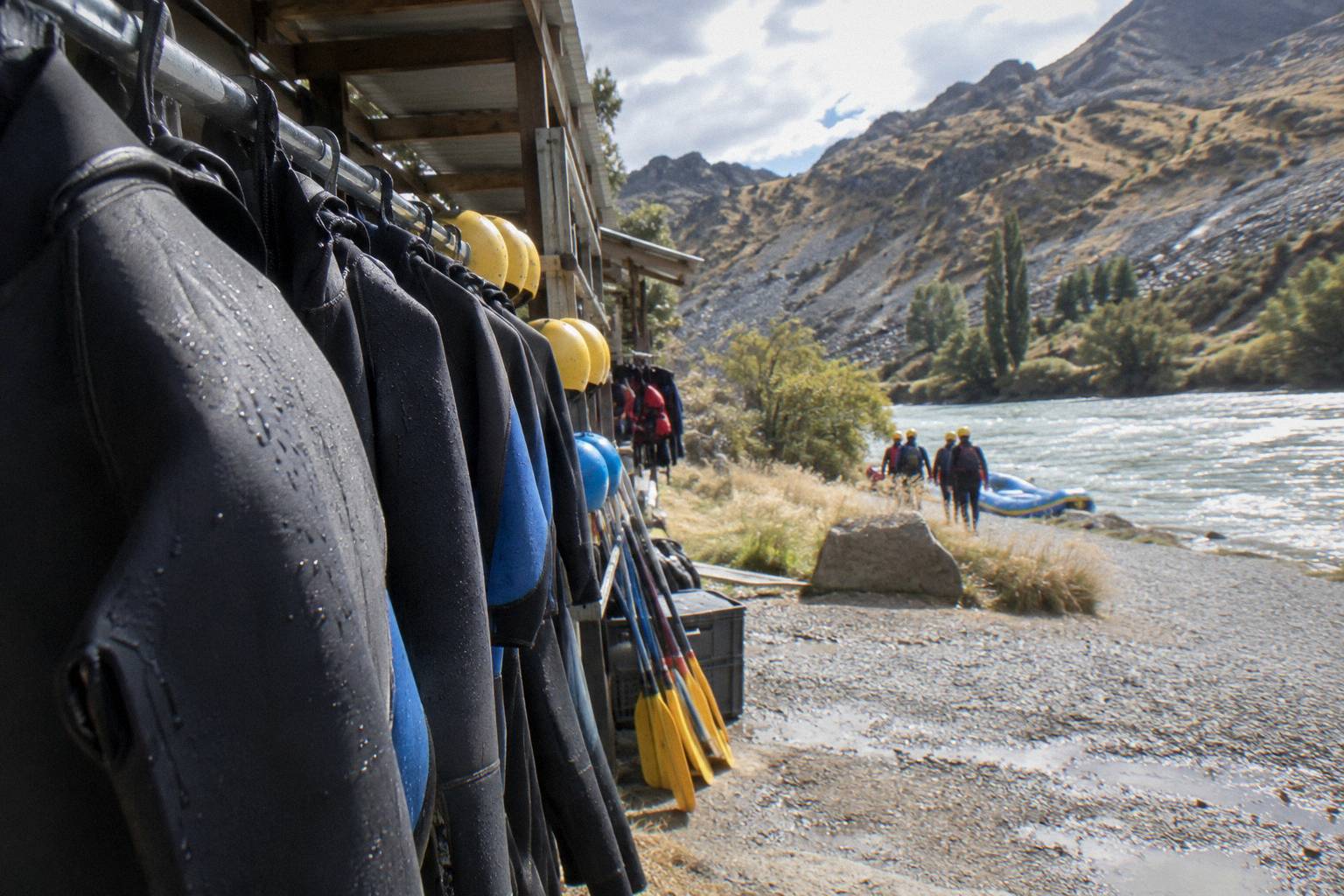
The timing of the day matters too. The Kawarau itinerary runs meet, bus, briefing, bus, an hour of rafting, a break and another bus, and the Shotover day is similar with its drive out through Skippers Canyon Road to the Deep Creek put-in. Once you are suited, you stay suited, sometimes for hours, including on shuttle buses where a soaked cotton layer goes from uncomfortable to unpleasant. Dressing correctly at the start is the difference between a day you talk about and a day you endure.
Wondering whether the trip itself is worth the wardrobe discipline?
The providers' stance is consistent across rivers. The grade 3 to 5 Shotover trips demand the strictest version of the rule, since you will spend more time in the water and less time simply drifting. The grade 2 to 3 Kawarau is more forgiving, but the kit and the cotton ban are identical, so there is no river in town where a cotton layer is a good idea. Even the optional extras on the Kawarau, the cliff jumping and rapid swimming, argue for the same base layer, because both put you properly in the river rather than just above it.
Glasses, Cameras, Jewellery And Everything In Your Pockets
Glasses need a sports strap or they stay behind, nothing loose belongs on your body, and on the Shotover trips no camera or GoPro can be taken on the raft at all. Cold hands and big water take jewellery, hats fly off, and a phone in a wetsuit is a phone in a river. There is a valuables locker at the Shotover raft base, which tells you how the operators expect the day to go.
Prescription glasses are the classic case. You need them to see the guide's signals, but a wave takes an unstrapped pair in seconds, and replacing spectacles mid-holiday is nobody's idea of fun. The operator guidance is a sports strap or leave them behind. Contact lenses are the usual workaround and generally the better one on white water, though that is personal preference rather than operator policy. Sunglasses follow the same rule as glasses: strap or nothing.
Then there is everything else. Rings are worth leaving at the hotel, cold water shrinks fingers and swollen knuckles from paddling do the rest. Necklaces, earrings and watches have no place under a wetsuit, the neoprene presses them into your skin and the river takes whatever works loose. Hats fly off on the first rapid. And pockets, which swimwear rarely has anyway, should be empty: no phone, no room key, no cash. The base has a locker.
The camera question has a hard answer on the Shotover. Nothing can be taken on the raft, no camera, no GoPro, and the rule is absolute rather than advisory. The raft runs grade 3 to 5 water through the 170 m Oxenbridge Tunnel, and anything not strapped to the boat is going swimming without you. Photos of the trip exist anyway: Challenge Rafting includes professional photos in its booking, and the roster of what to do with glasses and valuables goes deeper on each item.
| Item | On the raft? | What to do with it |
|---|---|---|
| Prescription glasses | Only with a strap | Sports strap, or leave with the operator and wear contacts |
| Sunglasses | Only with a strap | Same as glasses |
| Phone | No | Valuables locker at the base |
| Camera or GoPro | No on the Shotover | Locker; professional photos are included on some trips |
| Jewellery and watch | No | Leave at accommodation |
| Hat | No | It will not survive the first rapid |
| Towel and change of clothes | No, but bring them | For the hot showers at the base afterwards |
The Kawarau trips take a similar line on personal items even though the water is gentler, and the same locker logic applies. If you want a gentler river while keeping all your fingers and your glasses, Check availability on the Kawarau trip alongside the calmer-run details.
One more thing worth knowing: the bus rides are part of the day, so a warm layer for before and after is genuinely useful. It rides in the bus or the locker, not on the raft. Wear it to check-in, hand it over when you suit up, and put it back on for the showers. Spectators get a version of the same advice. No one rides along on the river itself, but viewers can stand near the last rapid as rafts come out of the tunnel, so family members waiting at Arthurs Point should dress for standing around outdoors, not for boating.
Footwear, Fitness And Who The Clothing Rules Apply To
Wetsuit booties are provided on every Queenstown rafting trip, so your own shoes, sandals and Crocs belong in the category of things not to wear: they come off, they fill with water, and they do not grip wet rock. The rules apply to everyone from age 13 and 40 kg up to 120 kg, with weight verified at check-in. What you wear matters less than whether you are allowed on the water at all.
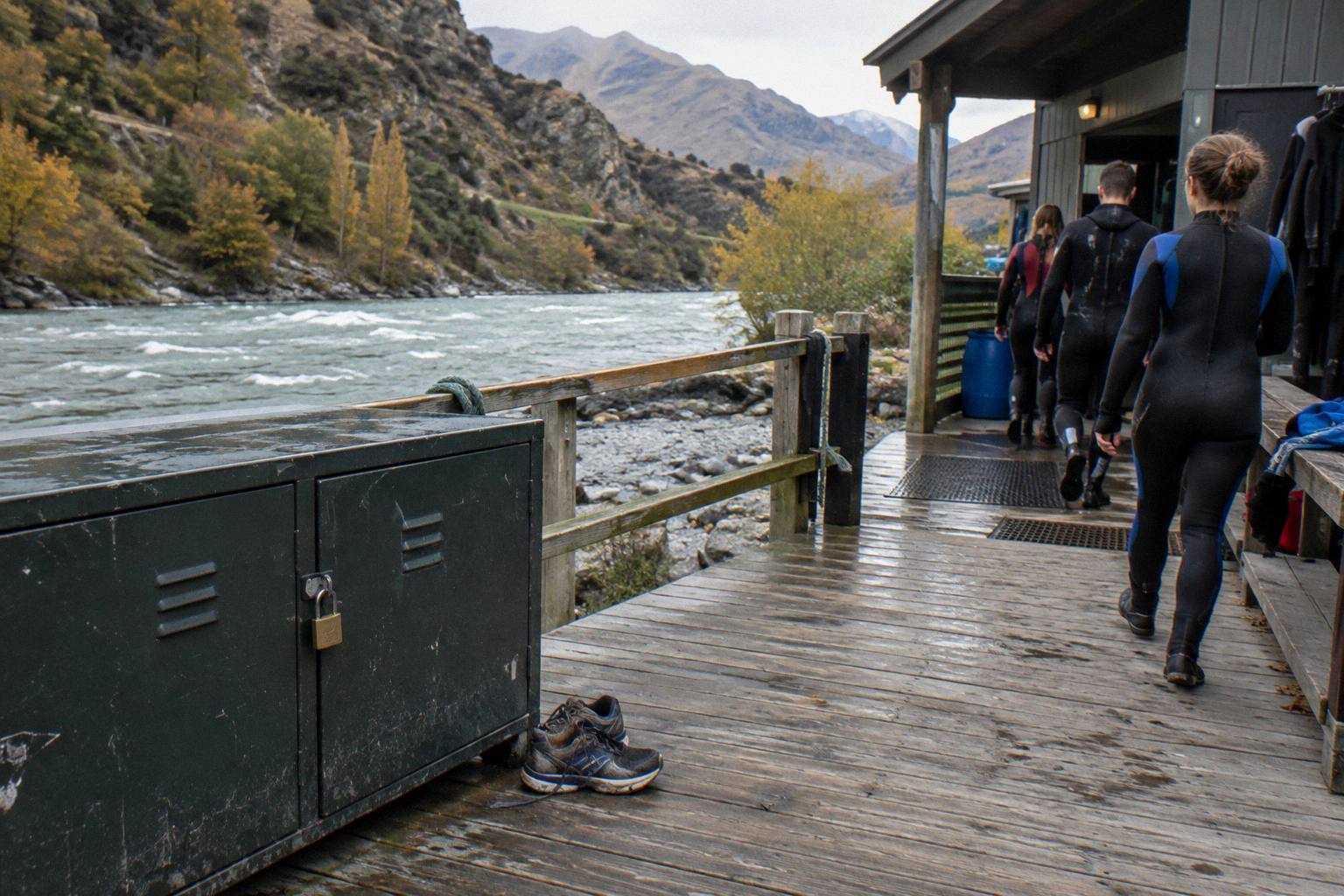
Footwear is where people overthink. The booties handed out with the wetsuit are designed for exactly two jobs: gripping the wet raft floor and walking on the river bank at the put-in and take-out. Trainers soak through and stay heavy, sandals strap badly and pull off in current, and Crocs, which come up constantly, are effectively floats with a strap. The full rule set lives in the rafting shoes and Crocs breakdown, but the short version is that you bring socks or nothing, and the operator provides the rest.
Eligibility frames the clothing question. The grade 3 to 5 trips require swimmers, able to manage 25 m unaided, with moderate fitness, because the operator is direct that the Shotover carries a higher risk of falling out than the Kawarau. Minimum age is 13 with proof possibly checked, under 18s need an accompanying adult or guardian-signed consent, weight sits between 40 and 120 kg and is verified at check-in. Heart conditions exclude, pregnancy excludes on grade 3 water and above, and safety briefings are delivered in English, which you need to understand. None of that changes your outfit, but it changes who is wearing it.
| Who is on the water | Trip that fits | Clothing rule that matters most |
|---|---|---|
| First-timers, less confident swimmers | Kawarau, grade 2 to 3 | Swimwear under wetsuit, nothing loose |
| Confident swimmers, 13 and over | Shotover grade 3 to 5 | Strict no-cotton, no camera at all |
| Families with young children | Skippers Canyon trip from age 3 | Swimsuit under clothes, water confidence optional |
At the gentle end, the Skippers Canyon family trip takes everyone from 3 years upwards on grade 1 and 2 water, water confidence not necessary, in a raft that is less about surviving rapids than floating past gold mining relics and a Lord of the Rings filming location. A swimsuit under clothes is the whole requirement there. There is no published weight limit on that trip, and the five-hour day includes snacks, which is worth knowing when small children are involved.
The Shotover half day, meanwhile, is the trip where every rule earns its keep. Six grade 3 to 5 rapids, the tunnel, rafts of at most eight including the guide, and a safety kayaker along for every run. Details and dates are on the Shotover rafting adventure page.
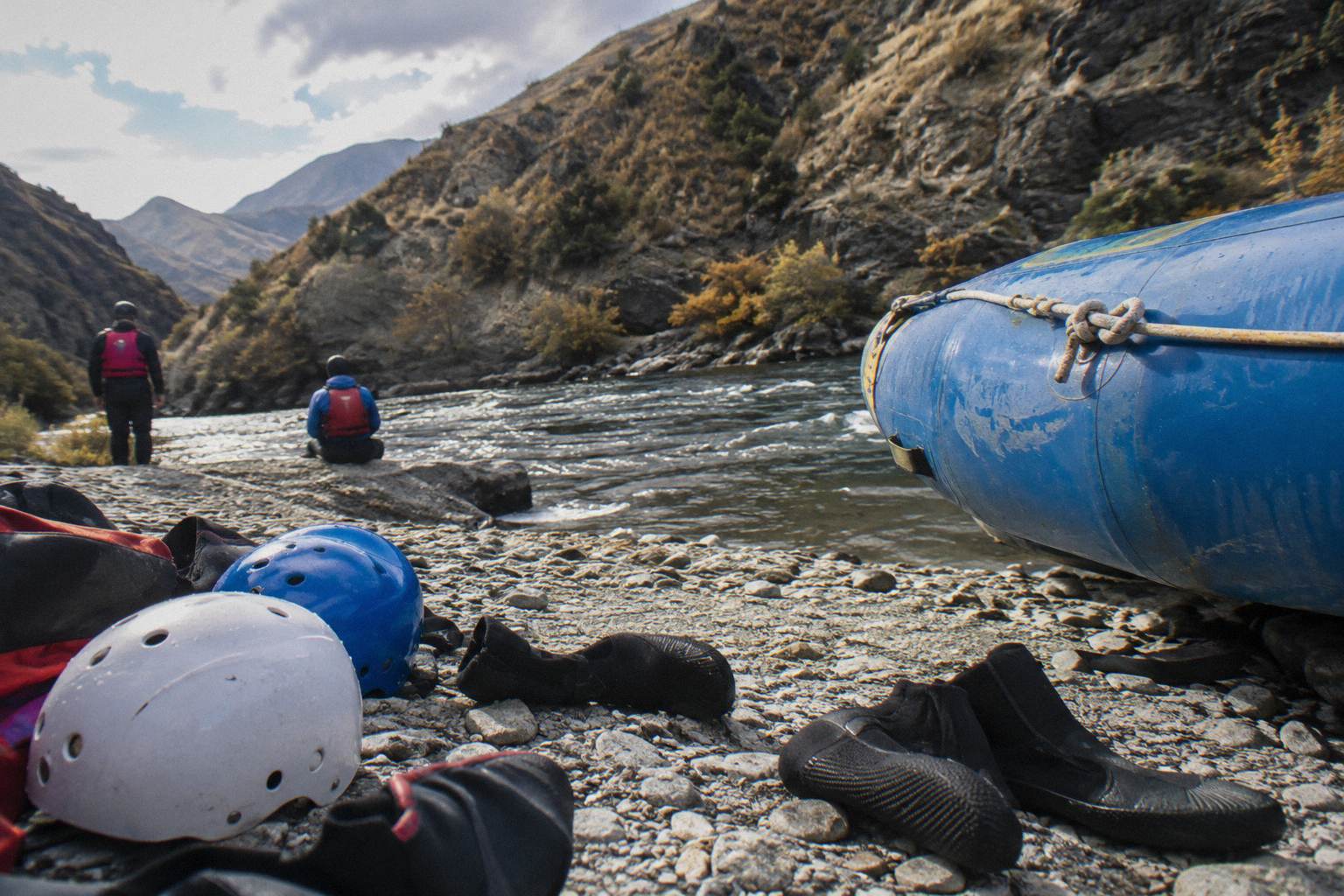
One historical footnote puts the whole kit in perspective. The wetsuit, the helmet and the booties are modern answers to a very old stretch of water: gold miners in 1862 dubbed the Shotover the richest river in the world, and the Oxenbridge Brothers drove their tunnel from 1906 to divert it. They worked it in wool. Wool, for the record, behaves better than cotton when soaked, but you are still better off with the neoprene. The Heritage New Zealand entry on the tunnel tells the rest of that story.
The Morning-Of Checklist, And The Mistakes That Remain
By departure morning the plan is simple: swimwear on under your clothes, a warm layer and towel in a bag for after, glasses on a strap or left behind, pockets empty, jewellery in the hotel safe, and boots, wetsuit, jacket, helmet and life jacket all waiting at the base. The mistakes that remain are procedural: arriving late, wearing cotton by accident under a swimsuit wrap, and planning to photograph a trip where photography is banned.
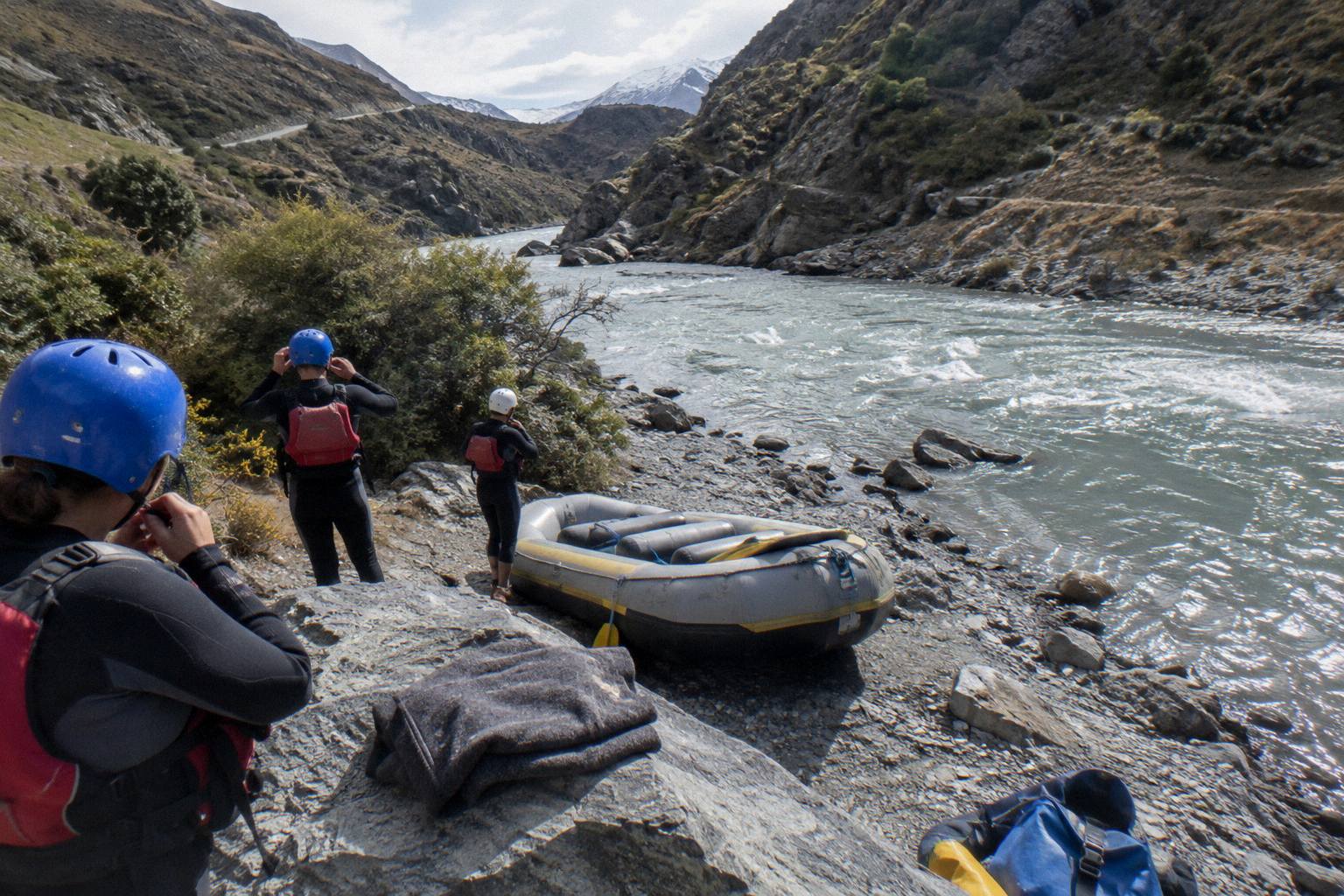
Check-in has its own rhythm. The RealNZ trips meet at the Queenstown Visitor Centre on Beach Street at least 20 minutes before departure, and Challenge Rafting checks in at the same street address or at the raft base in Arthurs Point, about a 10 minute drive from town. Hotel pickup is excluded on all of those, so you walk or drive yourself, which means the bag you bring is the bag you carry. Small is better. Towel, dry clothes, wallet for afterwards, and nothing that has to survive the river.
The accidental-cotton problem is real and worth a final check in the mirror. The sports bra with cotton lining, the boxers under the board shorts, the cotton socks someone told you to bring for the booties: all of them undo the base layer. A quick audit before you leave accommodation saves a cold two hours. Under 18s should bring a guardian or a signed waiver, and anyone near the weight boundaries should expect the check-in scales, because weight is verified on the spot.
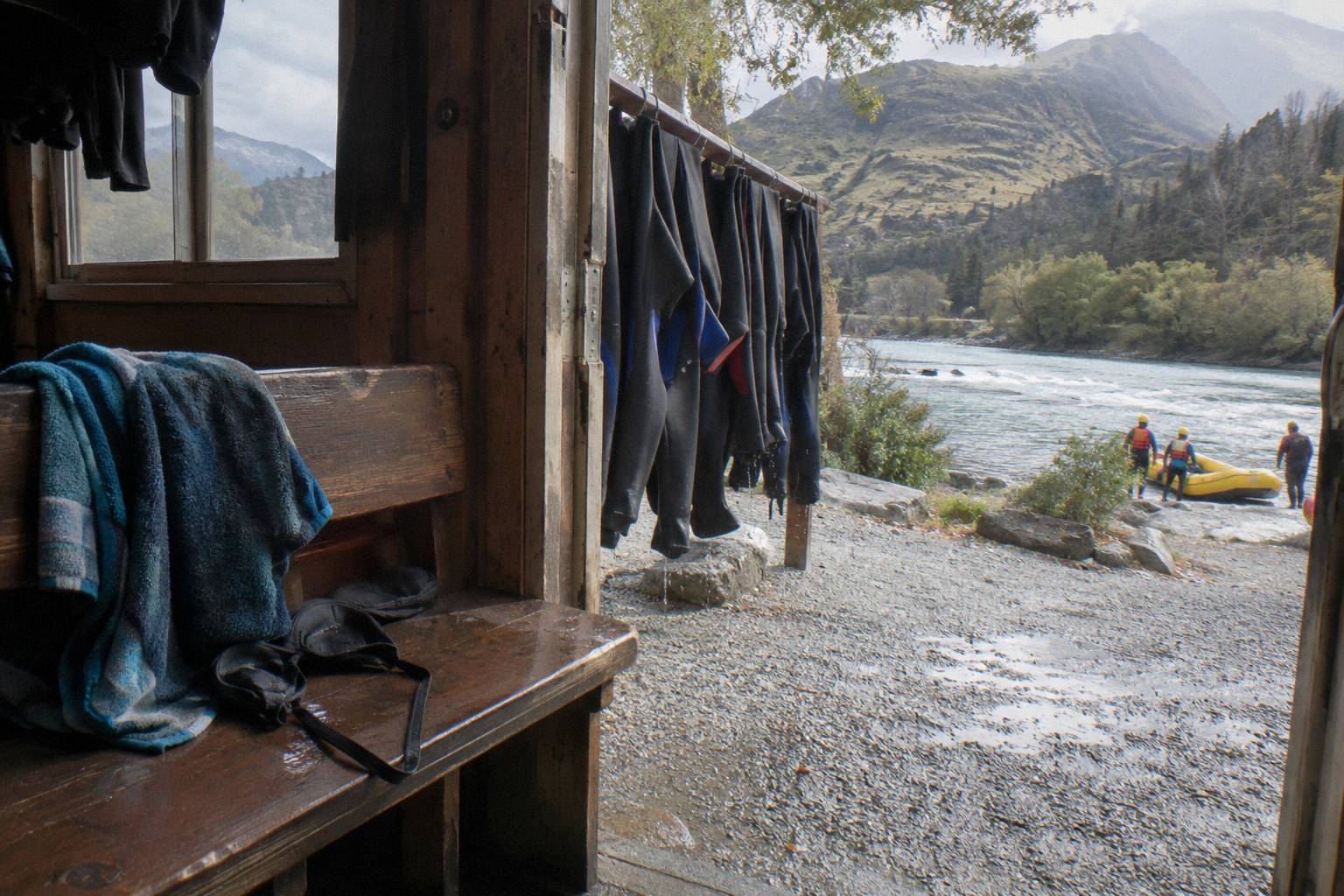
Weather belongs in the same mental bucket as clothing. Trips run depending on conditions, river level and water temperature, and portages are sometimes required, so a day that starts warm can end with a bus ride home in the rain. The dry clothes you packed are not optional extras; they are the difference between a cheerful debrief at the base and a damp shuffle back to town. Toilets are available at the base and at the Deep Creek put-in on the Shotover, so there is a last comfortable moment before the wetsuit goes on.
Finally, trust the provided kit rather than supplementing it. Everything technical is issued at the base, from the wetsuit to the paddle, and the operators' own pages, like the Challenge Rafting FAQ, answer the wardrobe questions the same way every time. Your job is the base layer and the locker. Theirs is everything else.
If the river choice is still open, the same three trips cover the spread, from full-grade Shotover water to the friendlier Kawarau run.
However you dress the part, Queenstown White Water Rafting covers the rivers, the grades and the booking details for every trip in town.
Common Questions About Rafting Clothing
What Not To Wear When White Water Rafting?
No cotton in any form, no regular underwear, no jeans, no jewellery, no watch, no unstrapped glasses, no phone, no camera on the Shotover, and no footwear of your own, since wetsuit booties are provided. Swimwear is the only base layer that belongs under the wetsuit.
Can I Wear My Own Shoes On The Raft?
No. Wetsuit booties are provided on every Queenstown trip, and they do the two jobs your shoes cannot: gripping the wet raft floor and walking on the rocky river bank. Trainers soak and weigh you down, sandals pull off, and Crocs simply float away.
Can I Bring A GoPro On The Raft?
Not on the Shotover trips, where nothing, camera or GoPro, can be taken on the raft. Professional photos are included in the Challenge Rafting booking, so there are images of the run without any gear on your body. Lockers at the base hold everything else.
What Do I Wear Under The Wetsuit?
Swimwear only. A swimsuit, board shorts or a rash top all work. Anything with cotton content, including everyday underwear, soaks up water, stays heavy and flushes cold water through the suit on every rapid.
Can I Wear Glasses While Rafting?
Only with a sports strap, otherwise leave them behind at check-in. The strap rule applies to prescription glasses and sunglasses alike. Contact lenses are the common workaround on white water.
Do I Need To Bring A Wetsuit?
No. Every operator provides the full technical kit: wetsuit, wetsuit jacket, spray jacket, helmet, booties, life jacket and paddle. Extra-large and child-size wetsuits are available, so sizing is handled at the base. Bring a towel and dry clothes for the hot showers afterwards.