Do You Need To Be Fit For White Water Rafting?
Fitness requirements for Queenstown rafting: what operators ask for, the 25 m swim on the Shotover, weight and health limits, and gentler options for lower fitness.
You do not need to be an athlete to go white water rafting. Most people of average health and reasonable fitness can enjoy it, especially on gentler Grade 2 or 3 runs, though harder rivers demand stronger swimming ability, stamina, and comfort in moving water. Your guide will match you to a suitable trip, so check the grade and requirements before booking. Operators here ask for a good level of physical fitness rather than racing form, and the harder the water, the firmer the wording becomes. The Shotover trips require you to be water-competent, meaning you can swim 25 metres unaided, plus moderate fitness, because the operator describes a higher risk of falling out than on the Kawarau. The Kawarau trips suit first-timers and less confident swimmers, and one gentle canyon option takes children from three years up with no water confidence needed at all.
Fitness, in rafting terms, mostly means three things: can you paddle hard for a sustained stretch, can you hold your position in the raft when the water gets bumpy, and could you keep your head and swim to the raft or the bank if you ended up in the river. None of that calls for gym work. It does call for a body that copes with cold water, bursts of effort and some scrambling on wet rocks at the put-in and take-out.
The distinction that matters most when choosing is the river grade. The international river difficulty scale runs from class 1, easy, to class 6, extreme, which is not commercially rafted. Higher grades bring bigger consequences for anyone who falls out, which is exactly why the fitness and swimming requirements tighten. Our guide to how the white water grades work breaks the scale down rapid by rapid if you want the full picture.
What Fitness Do Queenstown Operators Actually Ask For?
Queenstown rafting operators typically ask for a good level of physical fitness, and some specify moderate fitness for harder rivers such as the Landsborough. No prior rafting experience is required on any trip, so beginners can join most runs. If you can swim and manage a full day of outdoor activity, you should meet the requirements for the majority of Queenstown's rafting options. There is no fitness test at check-in, no treadmill and no timed swim. What there is instead is a set of conditions you must self-assess against before you board the bus, and a waiver every guest signs. The demands fall on your shoulders, core and lungs: paddling in short hard bursts, bracing against waves, and hauling yourself back over a raft tube if you go in.
On the Shotover River trips the standard is explicit. RealNZ describes its guests as needing to be water-competent, able to swim 25 metres unaided, with moderate fitness, and notes the Shotover carries a higher risk of falling out than the Kawarau. Challenge Rafting uses the same moderate fitness and water competence wording for its grade 3 to 5 run. You can read the full requirements on the operator's own Shotover page.
The Kawarau River lowers the bar deliberately. RealNZ calls its grade 2 to 3 run suited to first-timers and less confident swimmers, with water confidence still recommended. That single sentence is the clearest signal in Queenstown rafting: if you can float, follow instructions and are willing to get wet, the Kawarau is built for you.
| Requirement | Shotover trips | Kawarau trips | Gentle canyon trip |
|---|---|---|---|
| Fitness wording | moderate fitness, water-competent | first-timers and less confident swimmers welcome, water confidence recommended | no water confidence necessary |
| Swimming standard | able to swim 25 m unaided | water confidence recommended | none required |
| River grade | 3 to 5 | 2 to 3, reaching 4 at higher water levels | 1 to 2 |
| Prior experience | not required | not required | not required |
| Minimum age | 13 | 13 | 3 |
A practical way to judge yourself: could you swim a length of a standard pool without stopping, and could you do twenty minutes of intermittent physical work in a swimming costume? If both answers are yes, every adult-grade trip in Queenstown is within range. If either is no, the Kawarau or the family canyon float is the better fit, and both are genuinely good days out rather than consolation prizes.
Can You Raft If You Cannot Swim Well?
On the Shotover River, no, you cannot raft if you cannot swim well: operators require all participants to swim 25 metres unaided before being allowed on the water. This is a firm safety requirement, so if you cannot meet that swimming standard, you will need to consider a different rafting option. On the Kawarau, weaker swimmers are explicitly welcome, with water confidence recommended rather than a distance test. And on the gentle Skippers Canyon trip, water confidence is described as unnecessary, with the operator calling it suitable for everyone from three years upwards. So the honest answer is that poor swimming rules out the hardest river but nothing else.
The 25 metre figure deserves attention because it is specific. Twenty-five metres is one length of a standard pool, swum without touching the sides or the bottom, unaided. It exists because the Shotover is grade 3 to 5 water, the operator describes a higher likelihood of ending up in the river than on the Kawarau, and a safety kayaker rather than a pool wall is your nearest support. If you can swim but the distance makes you pause, build up to it before your trip or choose the Kawarau, where RealNZ explicitly names less confident swimmers among the guests the river suits.
Non-swimmers are not left out entirely, but the options narrow sharply. Challenge Rafting lists its Shotover trip as unsuitable for non-swimmers. The Family Adventures canyon trip is the exception, a grade 1 to 2 float where the operator says water confidence is not necessary and children from three years old take part. Our longer piece on rafting when you cannot swim works through the same question for nervous swimmers across every Queenstown river.
Panic, not arm strength, is the real risk factor operators screen for. A swimmer who keeps calm, floats on their back with feet up and points their toes downstream until picked up is safer than a strong swimmer who fights the current. Listen for the whistle signals and the paddle instructions at the briefing, because everything the guide tells you before the rapid is what your body needs to remember during it. If your heart is set on the Shotover, the half-day trip is the one to price first: Check availability.
Which Health Conditions Exclude You From Rafting?
You cannot raft if you have any heart condition, with one exception: high blood pressure that is managed with medication does not exclude you. Pregnancy is also a limiting factor, as expectant mothers are excluded from rafting on grade 3 water and anything above it, though calmer stretches may remain an option. Those are firm operator rules, not suggestions, and they sit alongside a weight window of 40 kg to 120 kg that is verified at check-in. Beyond those lines, disabilities are assessed case by case, there is no maximum age, and guests must be able to understand the safety briefing in English, because instructions on the water are verbal and immediate.
The heart rule is the one to read carefully. It is not a general invitation to self-diagnose, and it is wider than many people assume: the operator wording covers any heart condition, with the single carve-out for blood pressure that is managed with medication. If you take heart medication of any other kind, the trip is off the table for the Shotover and Kawarau runs. When in doubt, ask the operator before booking rather than at check-in. The rest of the planning pages sit on Queenstown White Water Rafting.
Weight matters for reasons that are easy to picture. Wetsuits and life jackets are sized, extra-large and child-size suits are available, and a raft with a maximum of eight people including the guide needs balanced load. Weights are checked at check-in, so the numbers are enforced rather than advisory. Our guide to weight and fitness limits on Queenstown rivers covers the same ground for anyone close to either boundary.
| Condition or limit | Rule | Applies to |
|---|---|---|
| Heart condition | excludes, except blood pressure managed with medication | all adult-grade trips |
| Pregnancy | excluded on grade 3 and above | Shotover and Kawarau grade runs |
| Weight | minimum 40 kg, maximum 120 kg, verified at check-in | adult-grade trips |
| Minimum age | 13 years, proof of age may be required | Shotover and Kawarau trips |
| Under 16 | must travel with a guardian, under 18 needs a guardian-signed waiver | RealNZ trips |
| Under 17 | accompanied by a guardian | Challenge Rafting trip |
| Maximum age | none published | all trips |
Age, at the upper end, is treated very differently from age at the lower end. There is no maximum age on record for any Queenstown rafting trip, and the operator wording asks for a good level of physical fitness rather than a birth date. Plenty of travellers in their seventies raft the Kawarau every summer; the deciding factors are conditioning, mobility on wet surfaces and honest self-assessment, all covered in our piece on rafting minimum ages in Queenstown.
How Hard Is The Paddling On A Real Trip?
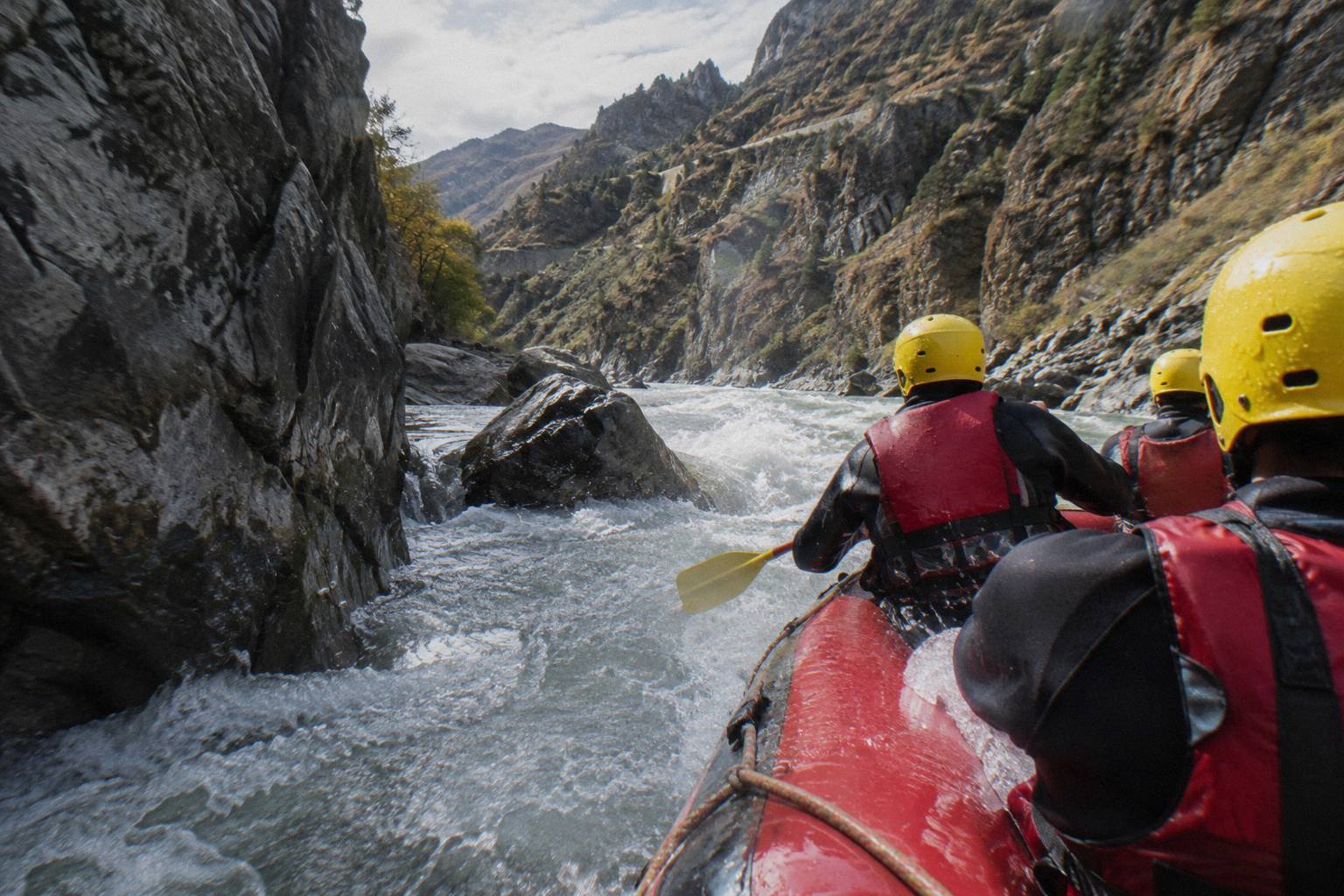
On a typical trip, the paddling comes in short, repeated bursts of hard effort rather than a long sustained grind, and those bursts are broken up by calm stretches where you barely move the paddle at all, so the challenge is more about timing and quick bursts of power than endurance over long distances. A guide calls the strokes, the crew responds together, and the rhythm is closer to interval training than distance work. On the Shotover, six grade 3 to 5 rapids punctuate 14 km of river; on the Kawarau, 8 km contains long float sections between the named whitewater, including the 400 m Dog Leg, which the operator calls the longest commercially rafted rapid in New Zealand.
Your upper body does the visible work, but your core and legs do the quiet work. You wedge your feet forward under the tube in front, and that brace is what keeps you in the raft when waves hit from the side. Passengers who feel unstable usually are not weak, they are sitting passively; the brace and the paddle together are what make you part of the raft's structure. The briefing covers this before the first rapid.
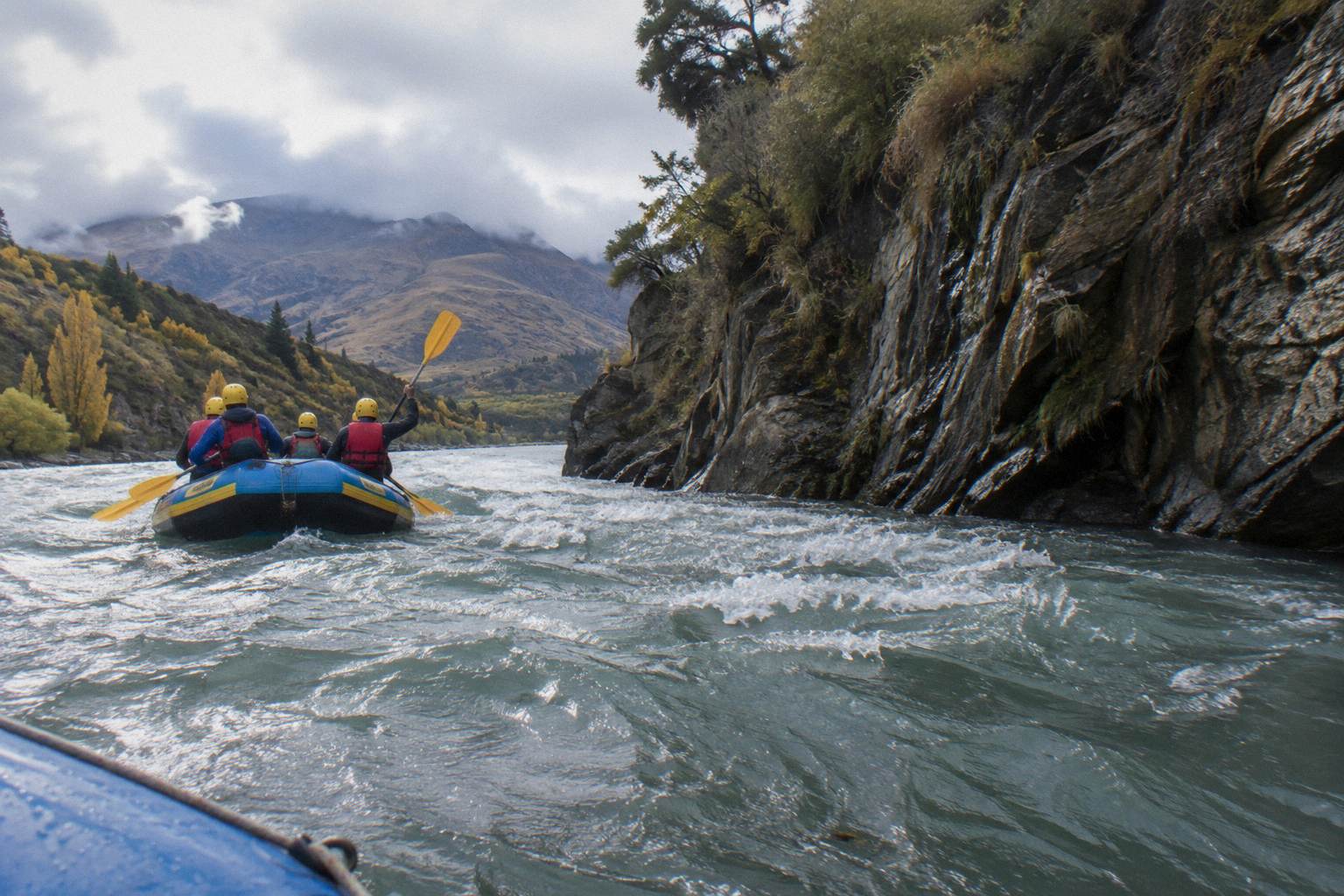
Time on the water is shorter than the trip length suggests. The Kawarau itinerary allots about one hour of actual rafting inside a four hour trip, with bus transfers, a 30 minute safety briefing and a break accounting for the rest. The Shotover half day runs 4.5 hours in total, including a roughly 40 minute shuttle drive to the put-in at Deep Creek. So the conditioning question is really whether you can work hard, in cold water, for bursts within an hour, not whether you can sustain output for four hours straight.
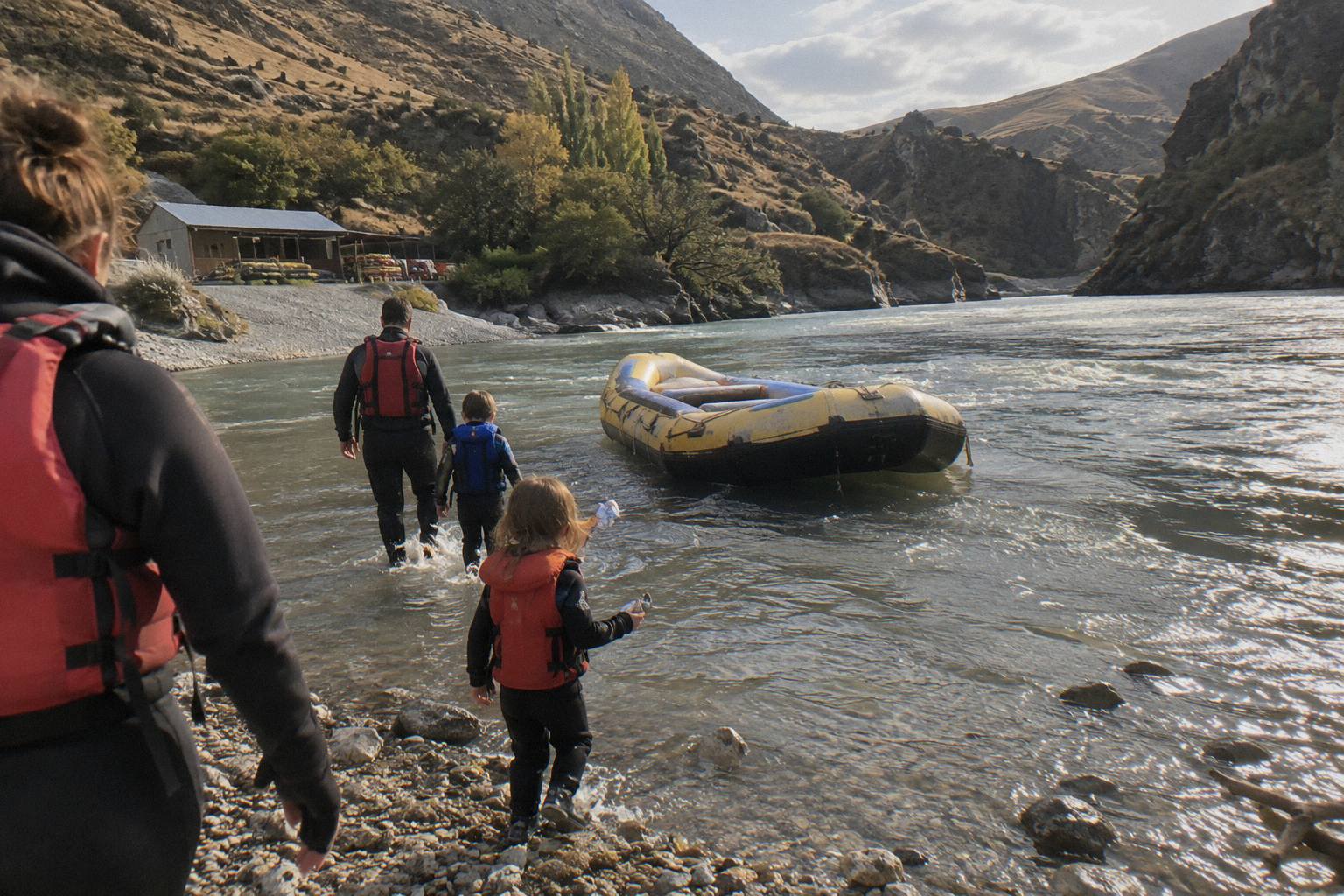
Portaging is the hidden fitness demand few first-timers expect. When conditions require it, the crew carries or walks the raft around a section, over uneven ground, in a wetsuit and booties. It is rare, but it is the moment a trip stops being purely seated. Anyone comfortable walking twenty minutes on a rough trail has nothing to worry about. More on the day's shape is in our rafting trip timeline and pickup guide.
Which Trip Should You Pick For Your Fitness Level?
Pick your trip based on swim confidence first and stamina second: strong, confident swimmers in solid shape can handle the more demanding route, while casual swimmers or anyone building endurance should choose the gentler option. Match the river to your fitness level honestly, and the right choice almost makes itself. Strong swimmers who want the biggest ride take a Shotover trip at grade 3 to 5. Average swimmers and first-timers take the Kawarau at grade 2 to 3. Families with small children, nervous swimmers and anyone recovering fitness take the gentle grade 1 to 2 Skippers Canyon float, which welcomes guests from three years upwards. Fitness worries should push you down one level of river, never off the water entirely.
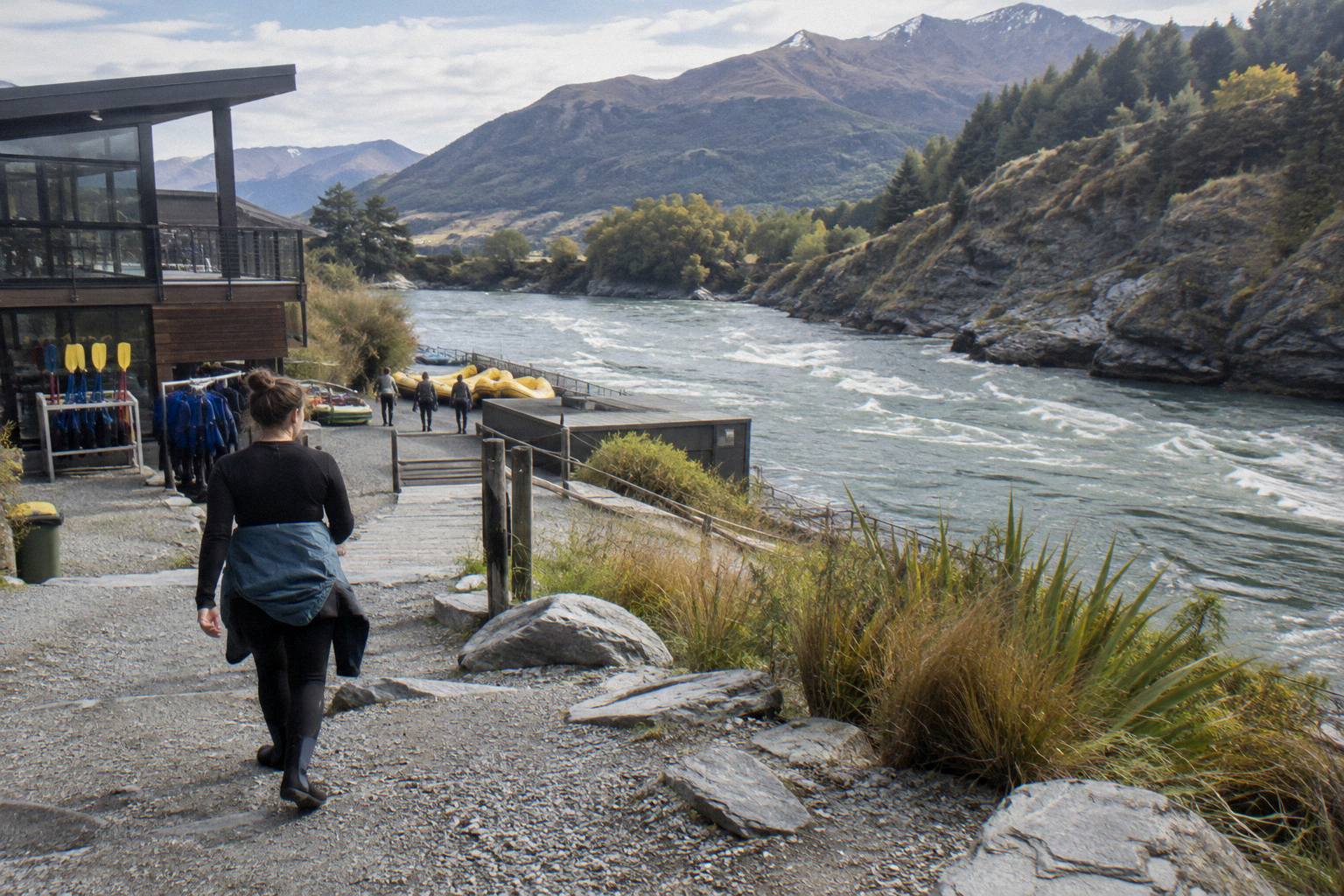
The two Shotover options differ mainly in flavour. The RealNZ half day covers 14 km over 4.5 hours, from NZ$299 per person, and rates 4.8 from 346 reviews. The Challenge Rafting trip runs 4 hours, also from NZ$299, rates 4.9 from 80 reviews, and names its big water: the Mother rapids, a series of six grade 4 to 5 drops including Aftershock, Squeeze, Toilet and Pinball, then the 170 m Oxenbridge Tunnel and the drop into Cascade Rapid. Both demand the same swimming and fitness standard; Challenge Rafting's run simply spends more of its time in the hardest water. Requirements are on the Challenge Rafting FAQ page.
The Kawarau is the confidence builder, and the pricing rewards it. The base rafting fare is NZ$249 per person, rating 4.7 from 48 reviews, with 8 km of river finishing in the Gibbston Valley. For NZ$329 you can combine rafting with a 25 minute jet boat transfer covering 22 km of the Kawarau at 95 km/h with 360 degree spins, a combo that rates 4.8 from 151 reviews and swaps part of the shuttle for adrenaline. Both suit first-timers, and both end with hot showers.
| Trip | Grade | Duration | From price | Rating |
|---|---|---|---|---|
| Shotover Rafting, Half Day | 3 to 5 | 4.5 hours | NZ$299 per person | 4.8 from 346 reviews |
| Challenge Rafting, Shotover | 4 to 5 | 4 hours | NZ$299 per person | 4.9 from 80 reviews |
| Kawarau Rafting Only | 2 to 3 | 4 hours | NZ$249 per person | 4.7 from 48 reviews |
| Rafting Plus Jet Boat Combo | 2 to 3 plus jet boat | 4.5 hours | NZ$329 per person | 4.8 from 151 reviews |
| Rafting And Skippers Canyon | 1 to 2 | 5 hours | NZ$329 per person | 5.0 from 7 reviews |
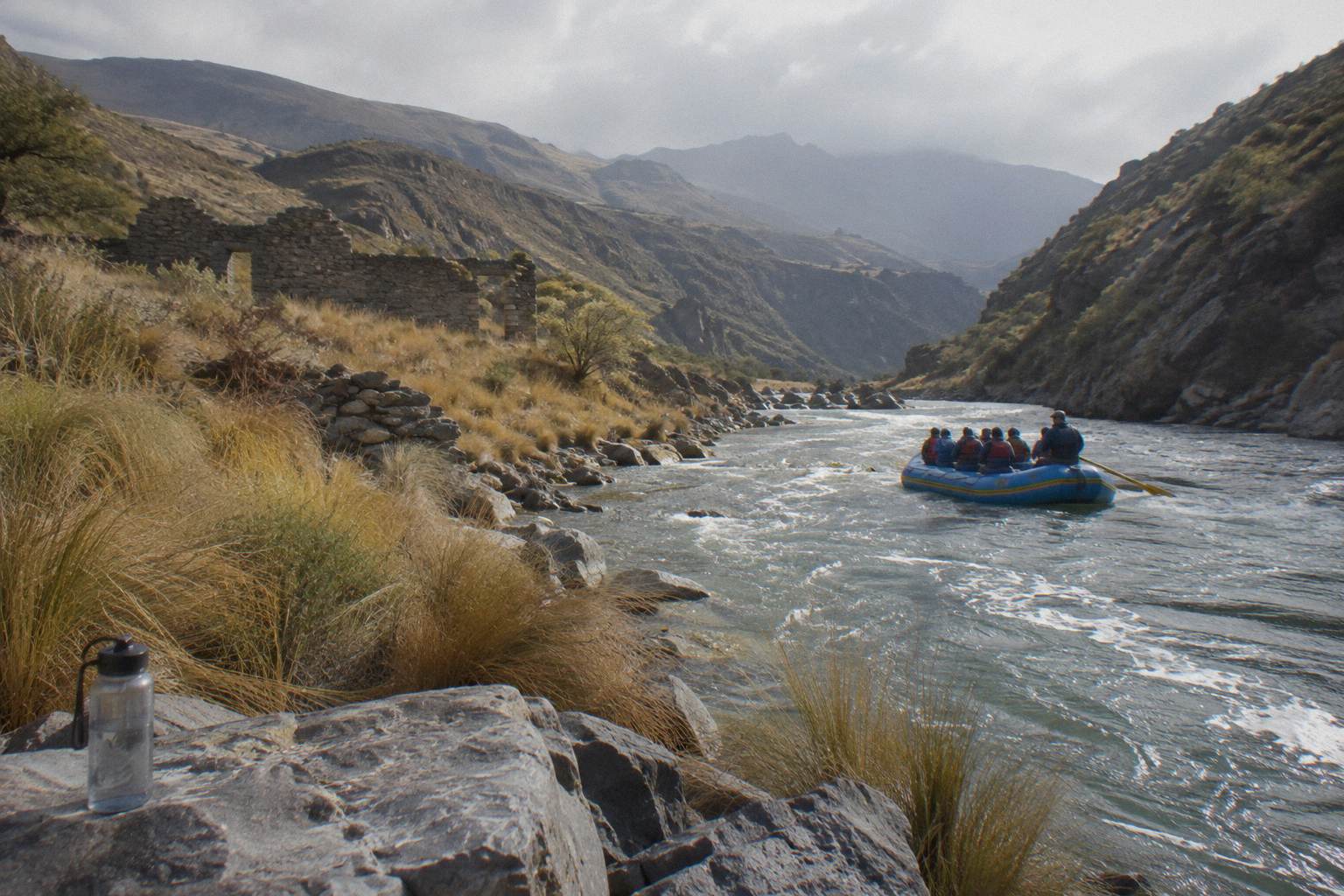
A note on the gentle option: the Rafting And Skippers Canyon trip, run by Family Adventures, is a five hour journey into the canyon behind Coronet Peak, with a 45 minute drive in, 1.5 hours of rafting on grade 1 and 2 water, gold mining relics along the banks and a stop at the Ford of Bruinen from Lord of the Rings. Its 5.0 rating comes from 7 reviews, a small pool so far, but the operator's suitability claim, everyone from three years upwards with no water confidence needed, is the widest welcome in the region.
How Should You Prepare Before Your Trip?
You do not need any formal training, since nothing in the operator requirements asks for it, but two or three weeks of easy preparation before departure will make a grade 3 to 5 trip far more enjoyable. Simple buildup over that window is enough, so build it into your plans rather than leaving fitness to the last minute. Swim a pool length without stopping to confirm the 25 m standard comfortably rather than barely. Do some paddling-style work, bands, light weights or even swimming front crawl, to condition the shoulders. And walk uneven ground in the weeks before, because put-ins, take-outs and possible portages are on rocks and gravel, not pavements.
Skip the pre-trip heroics. A hard gym session the day before leaves you sore on the water, and sore shoulders paddle worse. Sleep, eat normally, go easy on alcohol the night before, and bring swimwear to wear under the wetsuit, with no cotton anywhere, as the operator FAQ directs. Glasses need a sports strap or should stay behind; our what to wear rafting guide has the full clothing list.
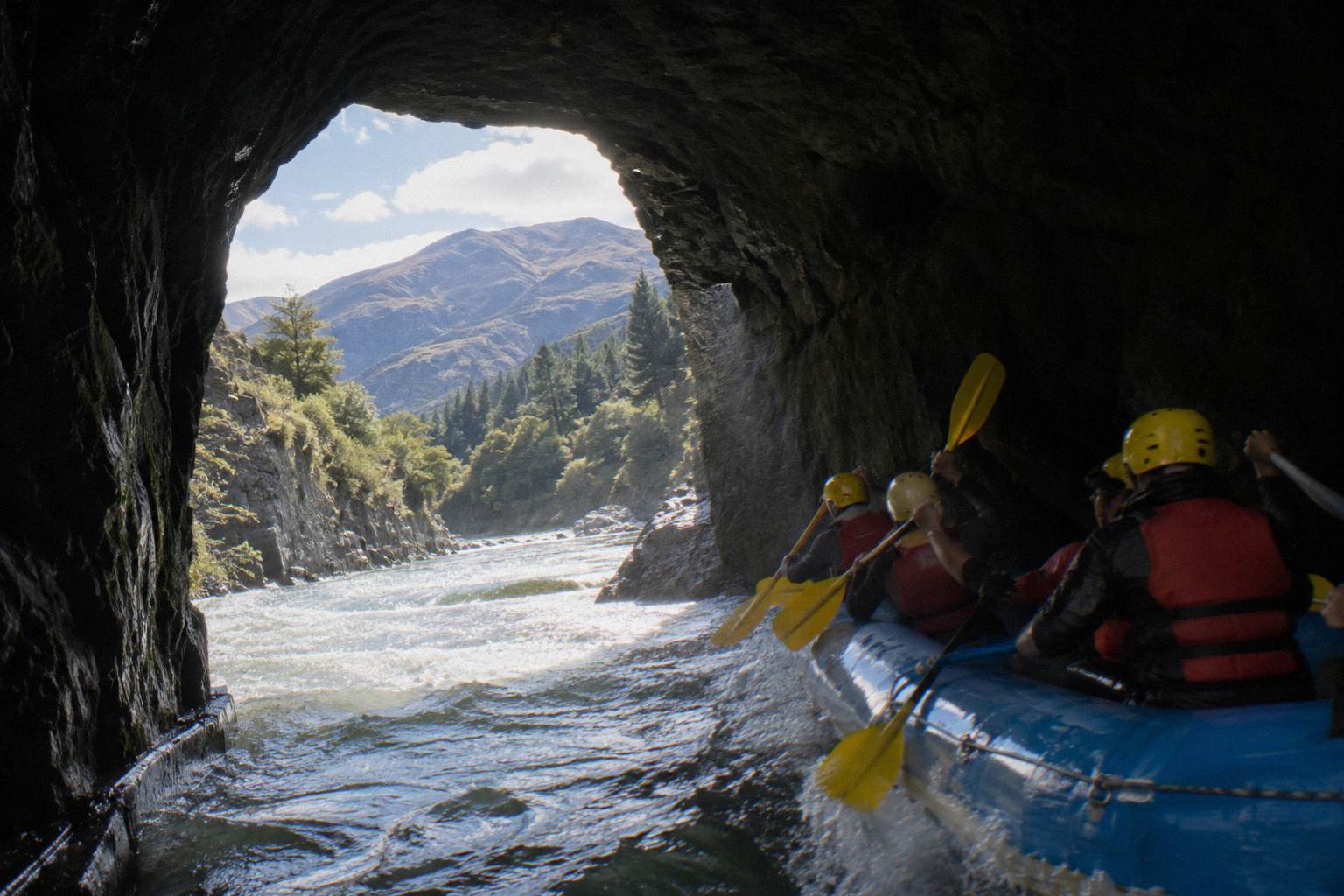
On the day itself, the honest self-assessment matters more than any preparation. Tell the guide at the briefing if you are a weak swimmer, carrying an old shoulder injury or genuinely frightened, because guides adjust seating and coaching accordingly. The Department of Conservation's Skippers area page is also worth a read if your trip enters the canyon, for context on the road and the reserve you travel through. Queenstown White Water Rafting exists to match you to water that fits, and every operator here would rather coach a nervous, honest guest than carry a quiet one who overreached.
If the fitness question is settled and the only remaining choice is which river, these are the three most-booked ways to find out how fit you really are:
Common Questions About Rafting Fitness
Do You Need To Be Fit For White Water Rafting?
You need a good level of physical fitness on every Queenstown trip, moderate fitness with the ability to swim 25 m unaided on the Shotover, and less on the Kawarau, which welcomes first-timers and less confident swimmers. No trip asks for prior rafting experience or athletic training, just honest swimming ability and the conditioning to paddle in bursts.
Do They Weigh You Before White Water Rafting?
Yes on the adult-grade trips. The weight window is 40 kg to 120 kg and the operator confirms weights at check-in, since wetsuits and life jackets are sized and rafts carry a maximum of eight people including the guide.
Can You Raft If You Cannot Swim?
Not on the Shotover or the Kawarau grade 2 to 3 runs, where water competence is required or strongly recommended. The gentle Skippers Canyon trip is the exception, described by its operator as suitable for everyone from three years upwards with no water confidence necessary.
Is There An Age Limit For Rafting?
The minimum age is 13 on the Shotover and Kawarau trips, with proof of age possibly required. Under 16 must travel with a guardian and under 18 needs a guardian-signed waiver. There is no published maximum age on any trip.
How Long Do You Actually Paddle On A Trip?
Around one hour of rafting sits inside each four or five hour trip, with the rest taken up by bus transfers, the 30 minute safety briefing and breaks. The paddling itself is short bursts through rapids separated by calm float stretches.
Does Rafting Get You Fit, Or Do You Need To Be Fit First?
You need a base level first: swim confidence, moderate fitness and steady footing on wet rock. The trips themselves are too short to train you, but two or three weeks of swimming and light shoulder work before a grade 3 to 5 trip makes the day noticeably better.