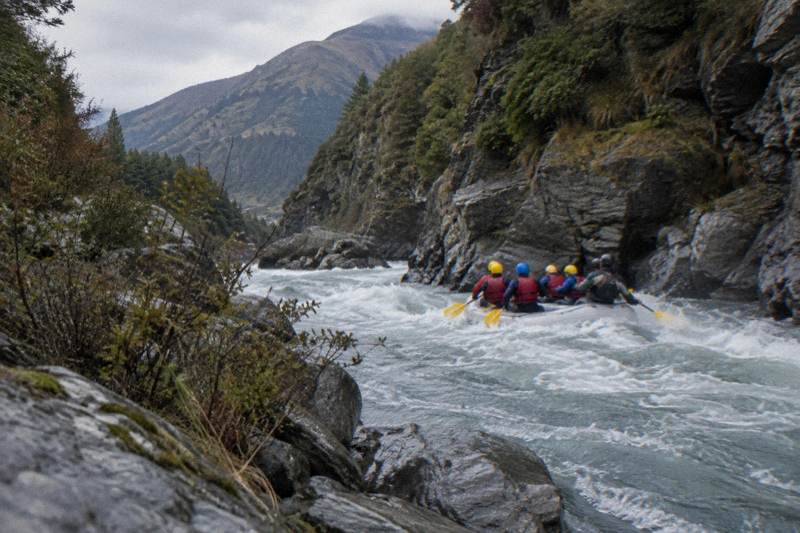
What Is The Hardest River To Whitewater Raft?
The hardest commercially rafted water sits at grade 5. Within Queenstown, the Shotover River carries that top grade while the Kawarau stays gentler. Here is how difficulty is measured and where each local run sits.
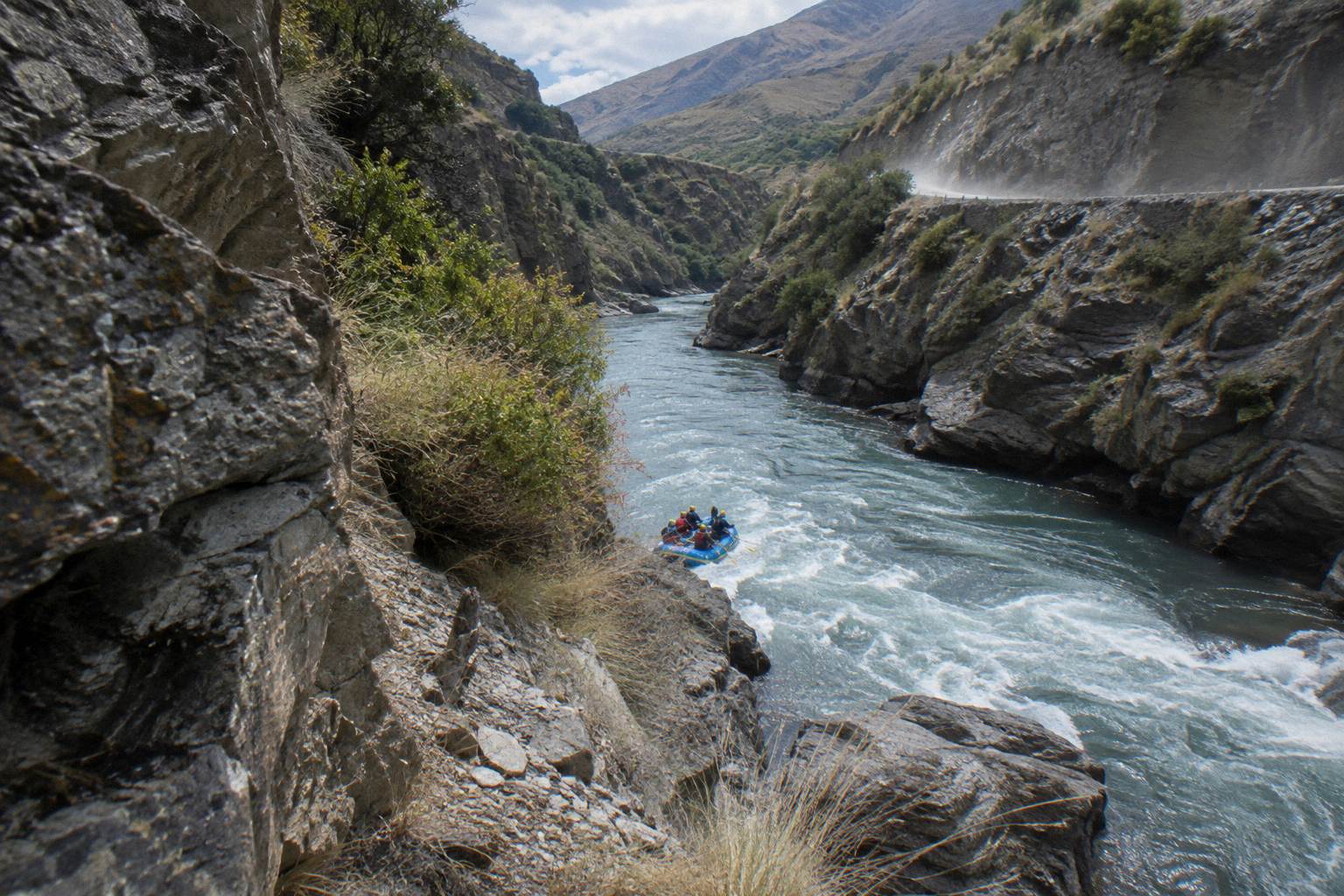
On the international river difficulty scale, grade 5 is the highest water commercially rafted anywhere, and grade 6 is never run commercially at all. In Queenstown terms, the Shotover River is the hardest local run: its operators describe it as grade 3 to 5, including a tunnel passage and named grade 4 and 5 rapids. The Kawarau River usually sits at grade 2 to 3, making it the gentler of the two rivers that frame the town.
That single comparison answers most of the question for anyone planning a Queenstown trip. The scope here is the Queenstown rivers only: no other river in the world is being ranked, because difficulty on remote grade 5 creeks in other countries depends on flow, access and local judgment that no booking page can settle. What can be settled, precisely, is what the grades mean, what the operators themselves say about the water they run, and which local trip matches which appetite for punishment.
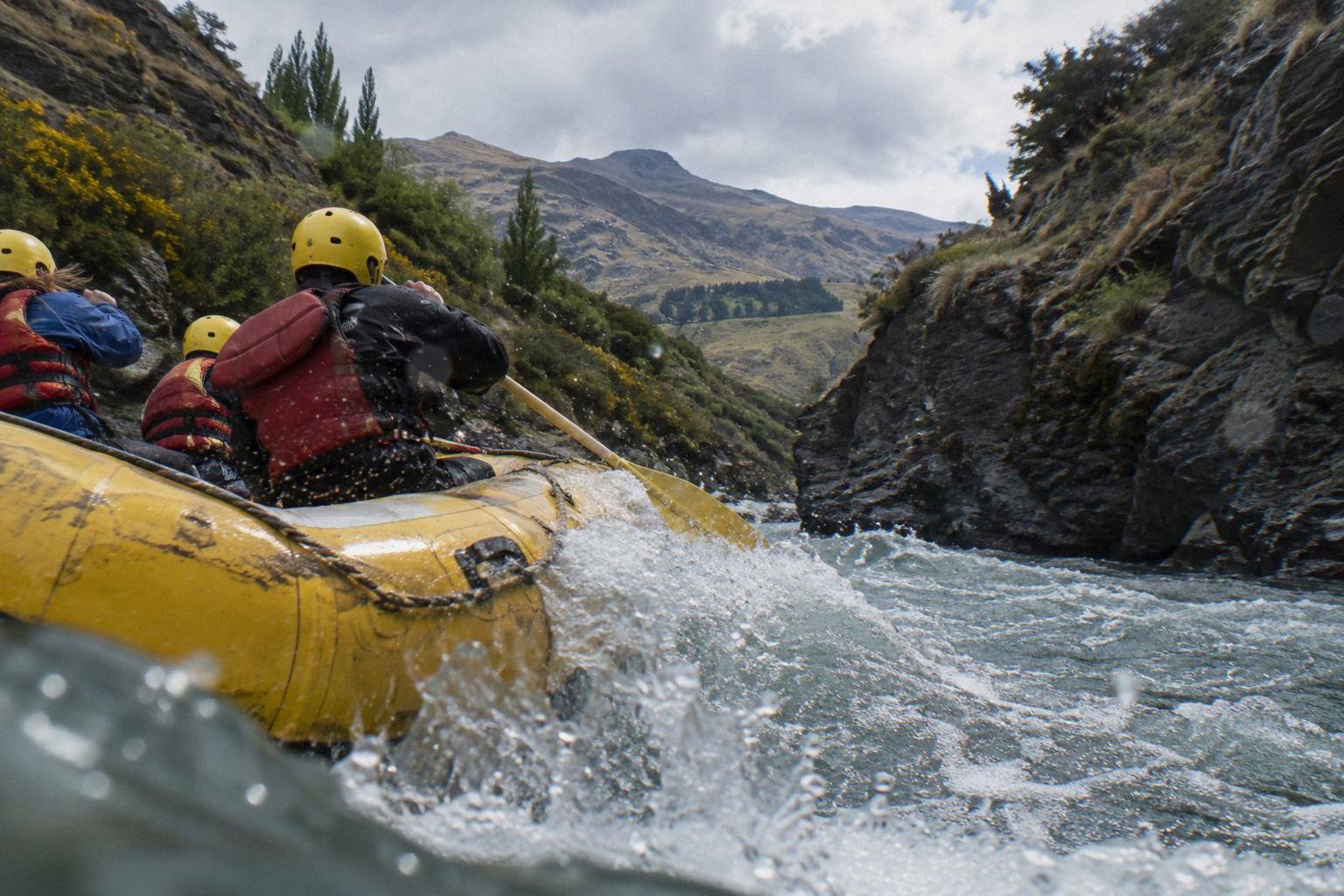
The two rivers could hardly sit closer together and differ more. The Shotover drops through a narrow gorge behind Coronet Peak, reached by a road that hugs sheer canyon cliffs, and its commercial trips punch through rapids with names like Aftershock, Squeeze, Toilet and Pinball before floating into a 170 m mining tunnel. The Kawarau, the only outlet of Lake Wakatipu, runs wider and more forgiving water east through the Gibbston Valley, ending among wineries. One river asks for water competence and nerve, the other actively courts first-timers and less confident swimmers.
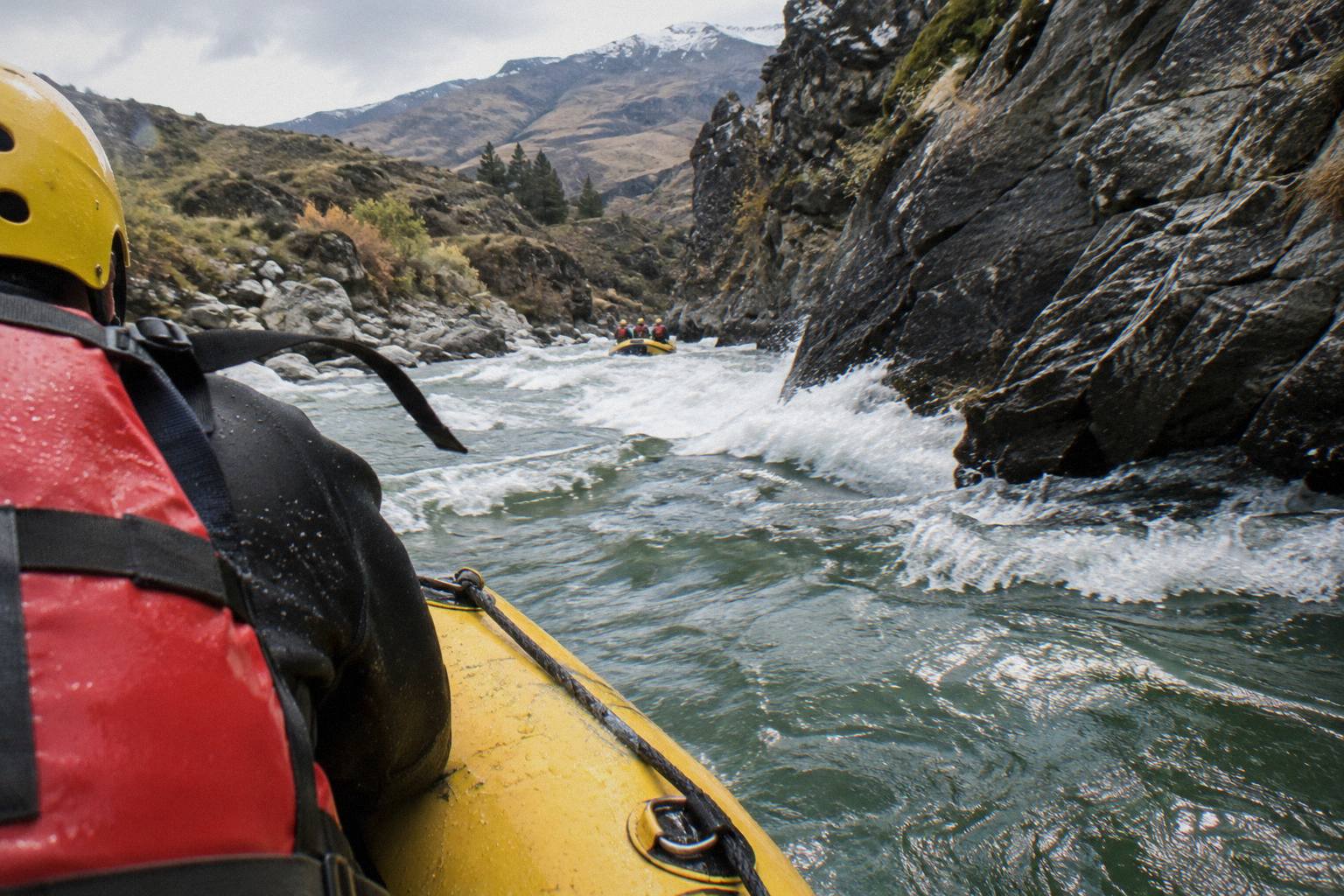
Difficulty is not just a number, though the number matters. The operator of the Shotover trips states plainly that grade 5 is the highest grade commercially rafted in the world, and the same operator says the Shotover carries a higher risk of falling out than the Kawarau. That admission is worth more than any marketing superlative: when the company running both rivers tells you one is harder than the other, you can plan around it.
For anyone weighing the options side by side, these are the three runs that bracket the difficulty range, from the full grade 3 to 5 Shotover experience to the gentlest Kawarau fare:
- Shotover Rafting, Half Day
- Rafting Plus Jet Boat Combo
- Challenge Rafting, 4 Hours
- Kawarau Rafting Only, Base Fare
- Rafting And Skippers Canyon Combo
How The Grade Scale Measures Difficulty
Rivers are graded on an international scale running from class 1, easy moving water, up to class 6, extreme and never commercially rafted. Class 3 is moderate, with waves and drops that require a guide who reads the line. Class 4 is difficult, with powerful, constricted rapids demanding precise manoeuvring. Class 5 is the ceiling of commercial rafting: violent, complex water where everything depends on the crew and the guide.
The scale is deliberately qualitative rather than numeric. No flow volume, drop height or speed figure defines a class, because a rapid's grade shifts with water level, and the same stretch can be a different beast in April than it was in November. That is why the descriptions stay in plain words, easy through to extreme, and why operators publish a grade range rather than a single number for a whole river.
Queenstown's operators use exactly that range language. The Shotover trips are described as grade 3 to 5 overall, with the hardest concentration in the Mother rapids, a series of six grade 4 and 5 rapids run back to back. The Kawarau is usually graded 2 to 3, though the operator notes it can reach grade 4 at higher water levels. The Dog Leg, the longest commercially rafted rapid in New Zealand at 400 m, sits on the Kawarau and is described as grade 3/4 on the operator's own page.
| Grade | Plain-English description | Queenstown example |
|---|---|---|
| Class 1 | Easy, calm moving water, minimal manoeuvring | The flat stretches of the Family Adventures canyon trip |
| Class 2 | Straightforward rapids, small waves, clear channels | Kawarau's gentler sections |
| Class 3 | Moderate rapids, larger waves, a guide who steers a line | Kawarau's usual grade, The Dog Leg |
| Class 4 | Difficult, powerful rapids needing precise handling | The Mother rapids series on the Shotover |
| Class 5 | The highest grade commercially rafted in the world | The hardest Shotover sections |
| Class 6 | Extreme, not commercially rafted | None run commercially |
If the numbers make the decision feel abstract, one practical rule brings it down to earth: the higher the grade, the more the trip asks of you before you even get on the water. Grade 2 to 3 water welcomes people who have never held a paddle. Grade 4 and 5 water asks for water competence, the ability to swim 25 m unaided, moderate fitness, and a willingness to follow instructions in English at speed. The grade is a promise about the river, and it is also a checklist for the guest.
Why The Shotover River Is Queenstown's Hardest Run
The Shotover earns its place on three counts: its grade range reaches 5, the very top of what is commercially rafted anywhere; its rapids are stacked in a tight, steep gorge with a tunnel at the bottom; and its own operator says the risk of falling out is higher here than on the Kawarau. Six grade 3 to 5 rapids, the 170 m Oxenbridge Tunnel, and the drop into Cascade Rapid make up the climax of the run.
The RealNZ trip, the Shotover River Whitewater Rafting Adventure, rafts 14 km of the river, rated 4.8 from 346 reviews, from NZ$299 per person over 4.5 hours. The shuttle reaches the put-in at Deep Creek via Skippers Canyon Road, about 40 minutes' drive to the start, on a narrow dirt road that hugs the canyon's sheer cliffs. Rafts carry at most eight people including the guide, and a safety kayaker travels on every trip, which tells you something about how the operator treats the water: even with a veteran guide on the tiller, a second rescuer paddles along.
The risks are managed, not hidden. Trips run depending on weather, river level and water temperature, portages may be required, and minimum guest numbers apply, so the hardest stretches can be walked around when conditions ask for it. Guests must be water-competent, able to swim 25 m unaided, with moderate fitness. Nothing, camera or GoPro, can be taken on the raft, which is standard on serious white water: hands belong on the paddle, not on a phone.
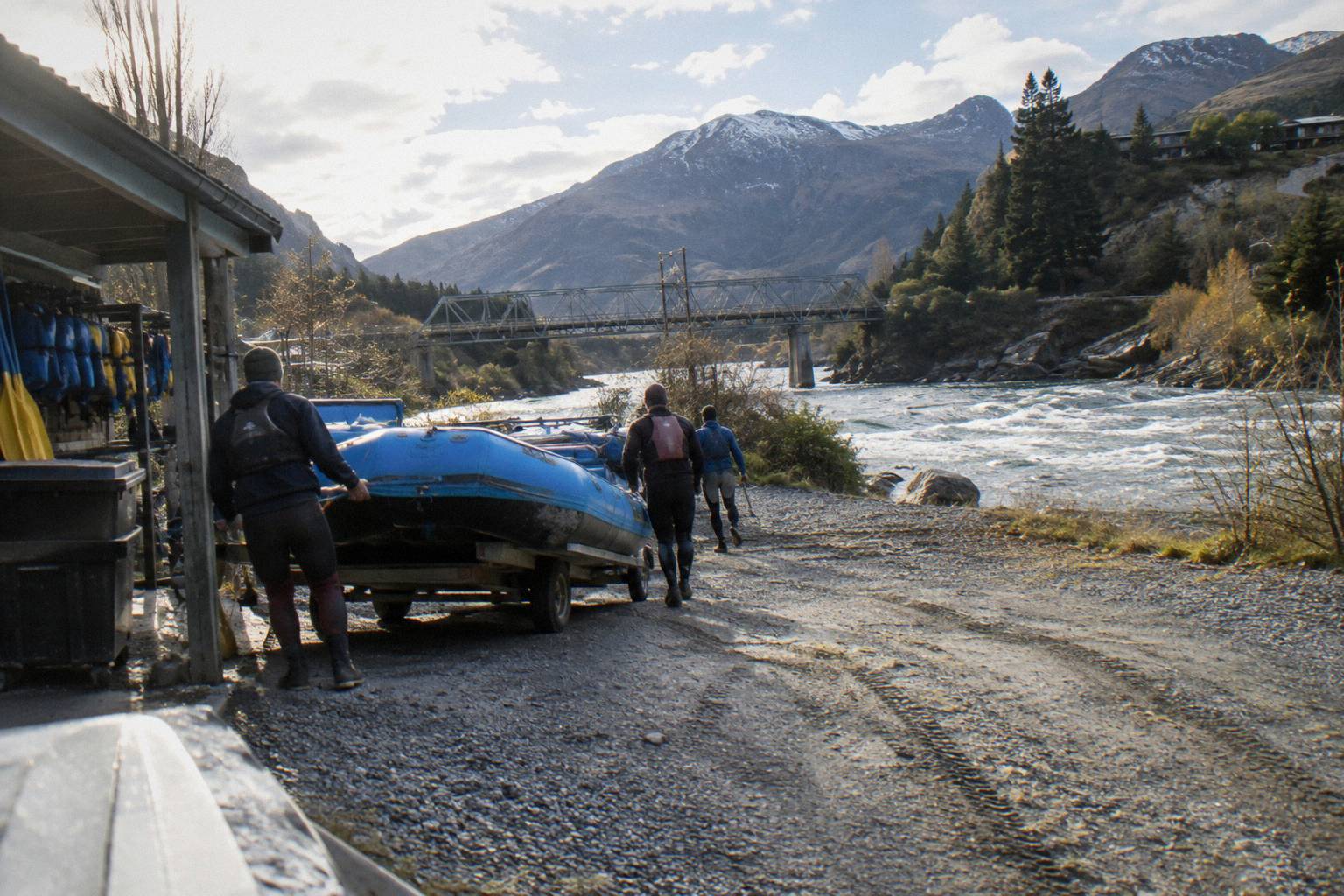
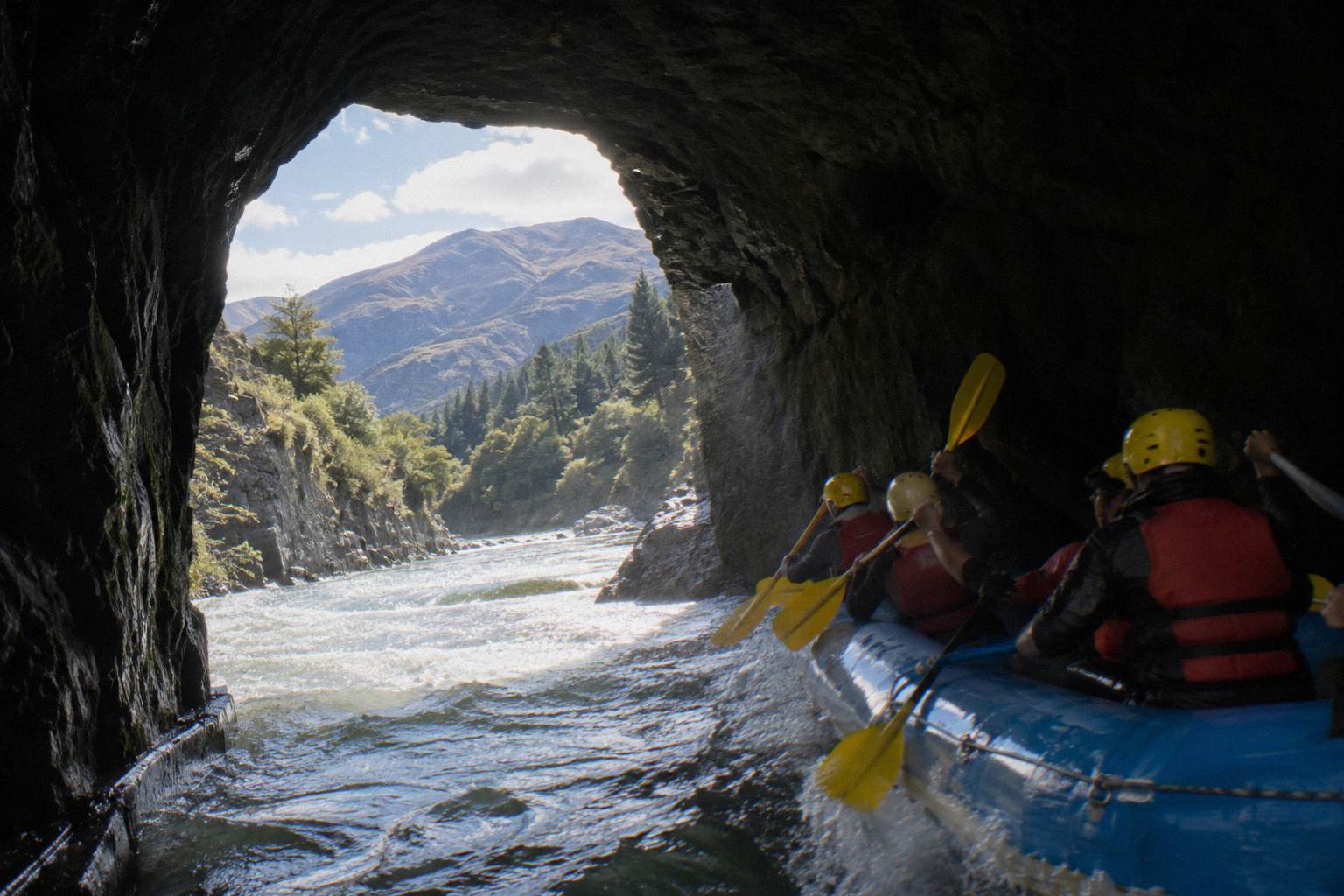
One detail almost nobody expects: the tunnel. Rafts float through the Oxenbridge Tunnel in the dark, and the trip ends after the rapids beyond it, finishing at the Arthurs Point rafting base about a 10 minute drive from Queenstown. Spectators cannot access the river, but viewers can stand near the last rapid as rafts exit the tunnel, timing varies. It is a strange, memorable piece of engineering to meet at the bottom of a grade 5 run, and its story, told below, is pure gold-rush ambition.
Inside The Mother Rapids And The Oxenbridge Tunnel
The hardest single stretch of the Shotover is the Mother rapids, a consecutive series of six grade 4 and 5 rapids with names that tell the story: Aftershock, Squeeze, Toilet and Pinball among them. Immediately after comes the 170 m Oxenbridge Tunnel, then the drop into Cascade Rapid. The Challenge Rafting trip runs this exact sequence, grade 3 to 5 overall, over 4 hours from NZ$299 per person, rated 4.9 from 80 reviews.
The Challenge Rafting version, the Shotover River Whitewater Rafting Trip, is the tighter, more concentrated take on the same hard water: 4 hours rather than 4.5, check-in at 88 Beach Street in Queenstown or a self-drive to the raft base at 1 Arthurs Point Road, Arthurs Point, with the meeting point at Morning Star Reserve on the same street. It runs November through April only, and the operator says it does not run rafting in winter at all, winter being May to early September. Professional photos are included in the booking, a real advantage when cameras are banned on the raft itself. Challenge Rafting's own site says its Shotover trip is operated by RealNZ, though the two are sold as separate products with separate schedules and inclusions.
After the Mother rapids comes the tunnel, and the tunnel deserves its own paragraph because it is a working piece of old mining engineering. It was built from 1906 by the Oxenbridge Brothers, Bert and Edmund, to divert a large part of the Shotover away from the Jeweller's Shop rapids above Arthurs Point, a stretch fabled for gold. The Arthurs Point Gold Mining Company was incorporated in October 1909, returned its first gold in 1911, was liquidated in August 1912, and there is no evidence of mining use after 1912. The gold scheme failed; the tunnel survived, and as of 2023 it still carries the Shotover flow, used primarily by rafting companies. Heritage New Zealand records the history in its list entry for the tunnel, including the 1995 events that led to the filling in of the Toaster, the farthest north of the two original outlet channels.
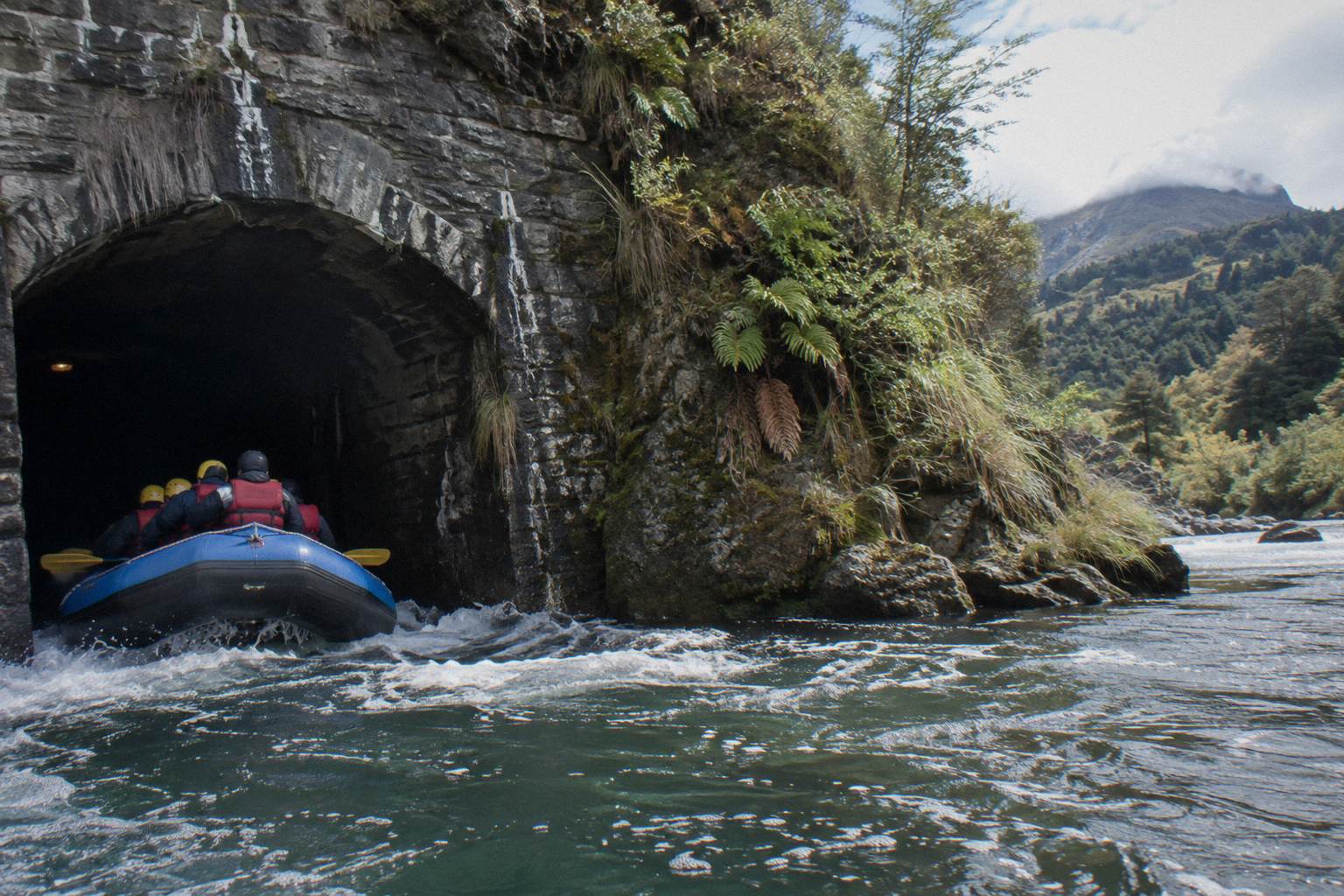
You do not have to raft to see it. The Department of Conservation's Oxenbridge Tunnel Track is a short, easy 20-minute walk to a viewpoint over the tunnel diversion and an old steam engine, starting by turning left just before the Edith Cavell Bridge at Arthurs Point, as described on the DOC track page. For a fuller grounding in the river's grades, the companion piece on what grade Shotover River rafting actually is breaks the scale down further.
How The Kawarau River Compares
The Kawarau is the approachable sibling: usually grade 2 to 3, suited to first-timers and less confident swimmers, though it can reach grade 4 at higher water levels. Its 8 km of rafted river ends in the Gibbston Valley, and its headline feature, The Dog Leg, is 400 m long and is called the longest commercially rafted rapid in New Zealand. Length, not violence, is the Kawarau's claim to fame.
The base trip, Kawarau River Whitewater Rafting, runs 4 hours from NZ$249 per person, rated 4.7 from 48 reviews. The itinerary is a model of unhurried logistics: meet at 88 Beach Street, a 20 minute bus to the base, a 30 minute safety briefing, another 20 minute bus to the river, a full hour of rafting, then buses and a 30 minute break before the run back to town. The gentle pacing suits the river's character, and the extras are optional rather than obligatory: a cliff-jumping section depending on weather and water level, plus the chance to swim a rapid.
| Kawarau Rafting Only stage | Time on the itinerary |
|---|---|
| Meet at 88 Beach Street | Start of the day |
| Bus to the base | 20 minutes |
| Safety briefing | 30 minutes |
| Bus to the river | 20 minutes |
| Rafting on the Kawarau | 1 hour |
| Bus transfer and mid-trip break | 20 minutes plus a 30 minute break |
| Bus back to 88 Beach Street | 20 minutes |
There is a fun layer of film trivia under the surface. The Kawarau appeared as the River Anduin in Lord of the Rings, and the Family Adventures canyon trip on the upper Shotover passes the Ford of Bruinen from the same films. The Kawarau is also the only outlet of Lake Wakatipu, flowing east from Queenstown, and the Kawarau Bridge Bungy, New Zealand's first iconic bungy site, hangs over it at Gibbston, so a nerve-testing morning can be combined with a rafting afternoon.
For guests who want a taste of speed with their paddle, the Kawarau River Rafting and Jet Boat Ride, rated 4.8 from 151 reviews from NZ$329 per person over 4.5 hours, adds a 25-minute jet boat transfer covering 22 km of the Kawarau at 95 km/h with 360-degree spins on the way to the rafting station. RealNZ says its jet boat and rafting trips never share a stretch of river except a 500 m stretch after the Oxenbridge Tunnel on the Shotover, so the two experiences stay cleanly separate. If you are weighing duration against difficulty, the guide to how long a Shotover rafting trip takes sets out the timelines side by side.
Who Can Actually Raft The Hard Water
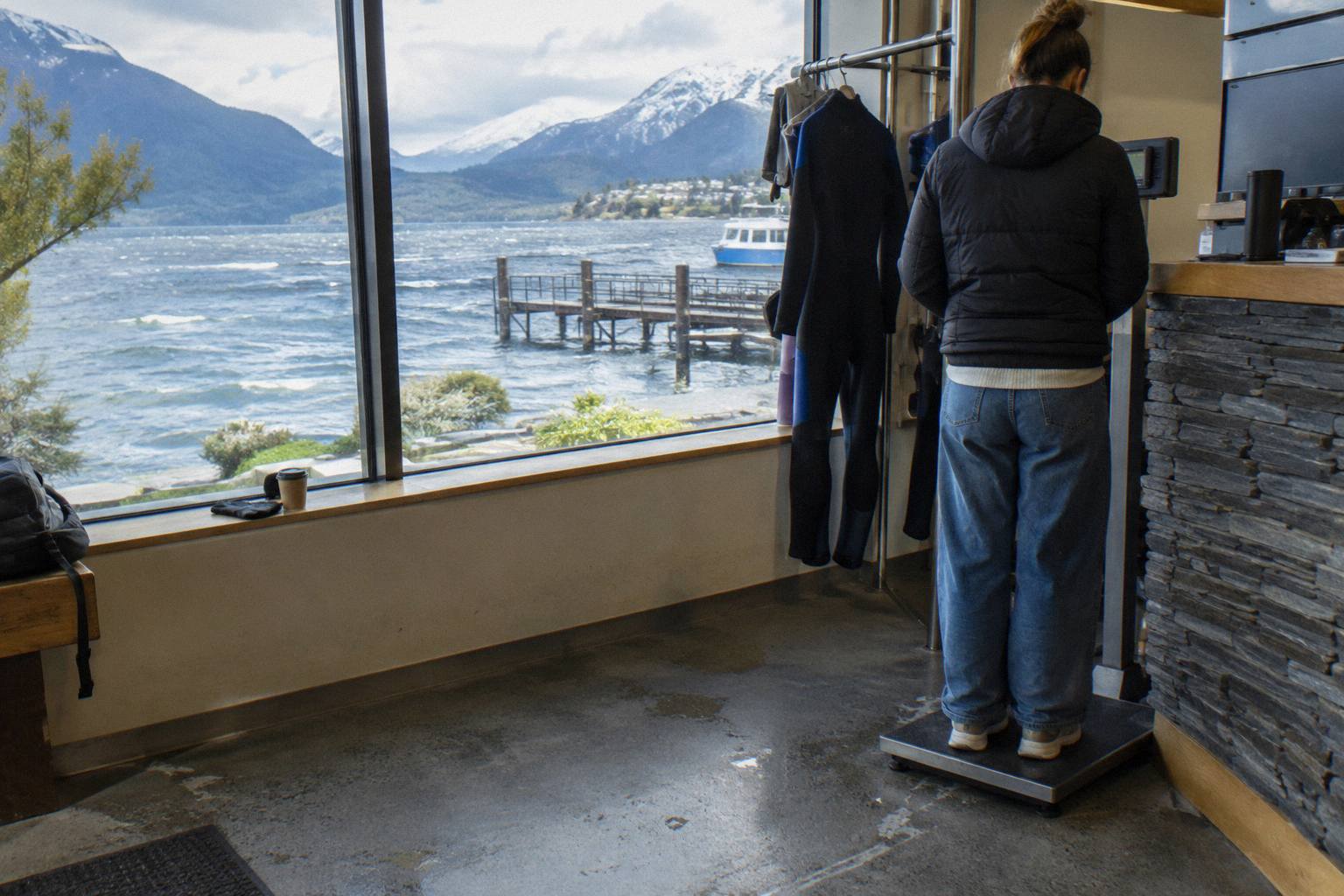
Grade 4 and 5 water comes with firm gates. Minimum age 13 across the Shotover and Kawarau commercial trips, minimum weight 40 kg, maximum 120 kg, weight verified at check-in. Guests must be water-competent and moderately fit, understand safety briefings in English, and sign a waiver. Any heart condition except blood pressure managed with medication excludes, as does pregnancy on grade 3 water and above.
The barriers are physical rather than bureaucratic, and they are checked in person rather than waved through. Weight matters because the wetsuit, life jacket and the physics of staying in the raft all depend on it, and the check-in scales are part of the safety system. Extra-large and child-size wetsuits are available, so the weight band is about the raft, not the gear. There is no maximum age, and disabilities are assessed case by case, but the operator asks for a good level of physical fitness rather than a doctor's note.
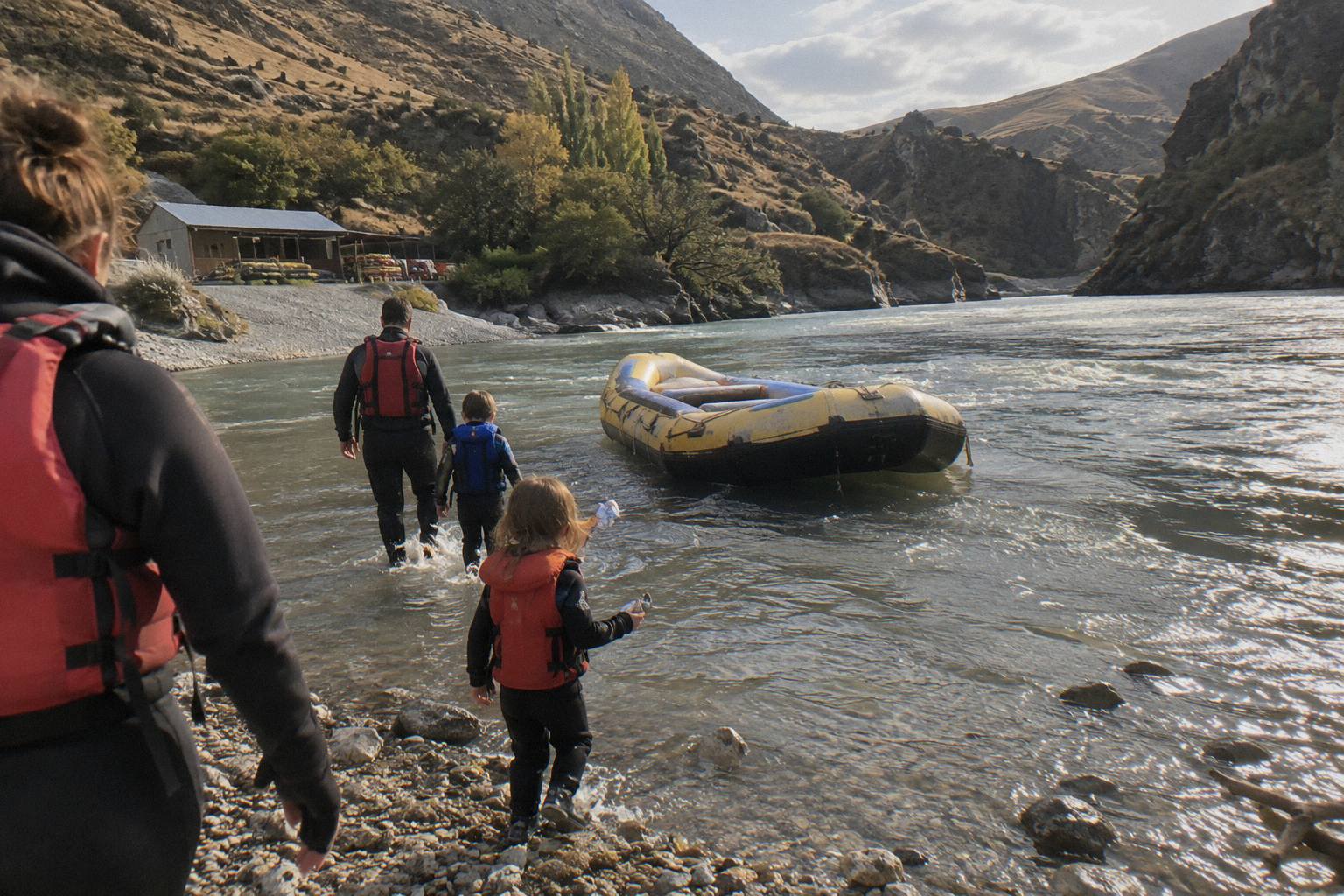
The gentler end of the spectrum opens wide by comparison. The Family Adventures trip through Skippers Canyon, a grade 1 and 2 journey rated 5.0 from 7 reviews from NZ$329 per person, is described as suitable for everyone from 3 years upwards, with water confidence described as unnecessary. That is the run for families with small children, and it pairs gentle rafting with gold mining relics and canyon scenery over 5 hours, snacks included, starting and ending at Camp Street in Queenstown. A small review pool deserves plain language: 5.0 from 7 reviews is a perfect score from a handful of guests, not a mass verdict.
| Trip | River and grade | Duration | From (per person) | Rating |
|---|---|---|---|---|
| Shotover River Whitewater Rafting Trip (Challenge Rafting) | Shotover, grade 3 to 5 | 4 hours | NZ$299 | 4.9 from 80 reviews |
| Shotover River Whitewater Rafting Adventure (RealNZ) | Shotover, grade 3 to 5 | 4.5 hours | NZ$299 | 4.8 from 346 reviews |
| Rafting Plus Jet Boat Combo (RealNZ) | Kawarau, grade 2 to 3, plus jet boat | 4.5 hours | NZ$329 | 4.8 from 151 reviews |
| Kawarau River Whitewater Rafting (RealNZ) | Kawarau, grade 2 to 3 | 4 hours | NZ$249 | 4.7 from 48 reviews |
| Rafting and Skippers Canyon Tour (Family Adventures) | Shotover canyon, grade 1 to 2 | 5 hours | NZ$329 | 5.0 from 7 reviews |
Underneath all the gates sits a regulatory floor. Adventure activity operators in New Zealand must be registered and must have passed a safety audit, and WorkSafe New Zealand runs a public register of adventure activity operators searchable by name, activity and location, where it is an offence to provide an adventure activity unless registered. You cannot see the river's grade from a booking calendar, but the audit system behind every legal commercial trip is the reason grade 5 water is runnable by ordinary travellers at all.
Common Mistakes When Picking A Hard Run
The biggest mistakes are chasing a grade as a badge instead of matching the river to your group, like booking the Shotover when everyone wanted the Kawarau or the reverse, and ignoring eligibility rules such as weight checks and waivers until check-in. Another is assuming harder means better value, when the gentler river has its own record-setting rapid, film history, and a lower from-price.
- Mistaking duration for difficulty. The hardest local water comes in a 4 hour package, while the gentlest family trip runs 5 hours. Hours measure the day out; the grade measures the river.
- Skipping the small print on age and guardianship. Under 16 must travel with a guardian on the RealNZ trips, under 17 with a guardian on the Challenge Rafting trip, and under 18 needs a guardian-signed waiver either way. Teenagers cannot simply be dropped at 88 Beach Street.
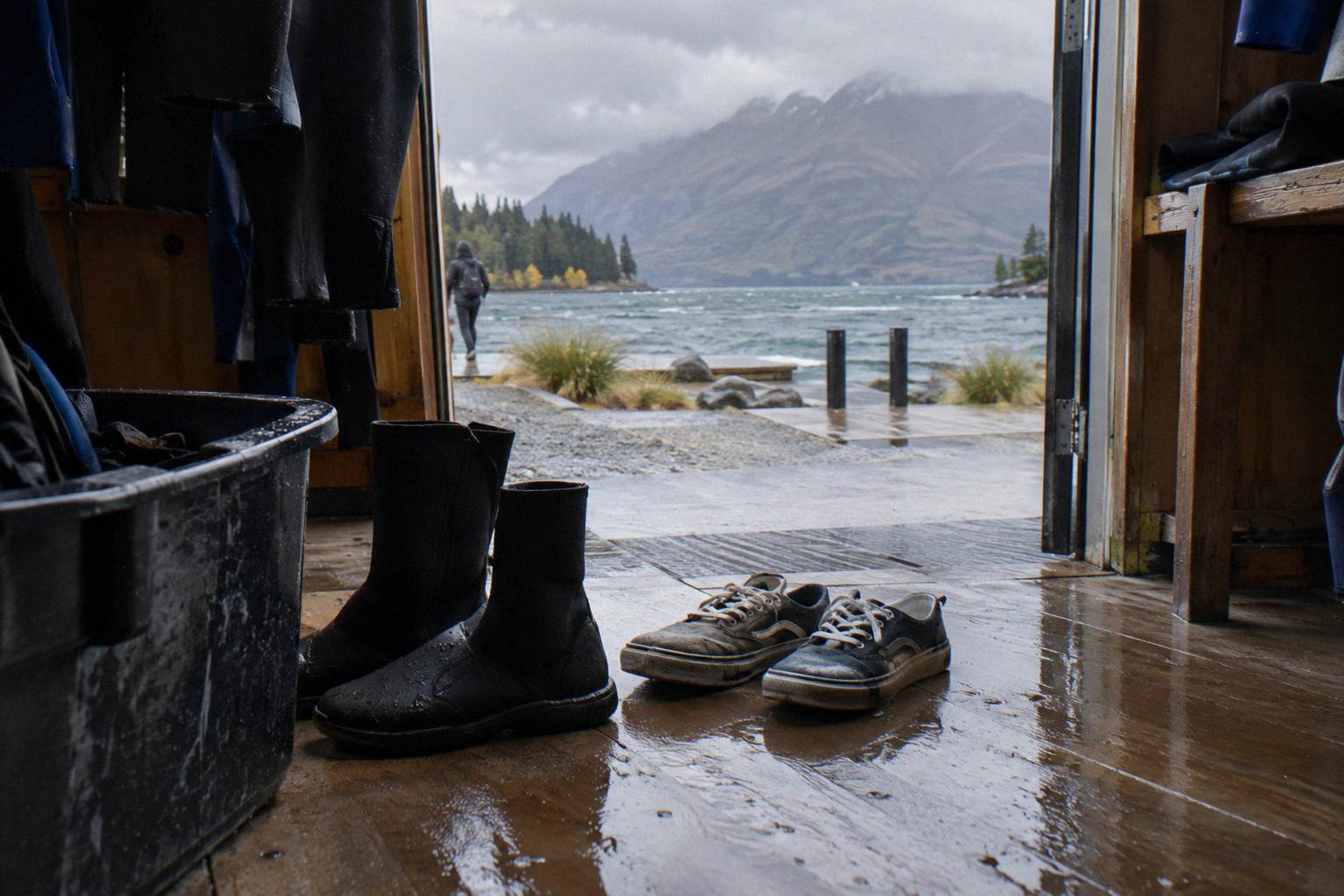
- Showing up with the wrong things. Swimwear only under the wetsuit, no cotton; glasses need a sports strap or stay behind; nothing, camera or GoPro, can be taken on the Shotover raft. Photos are included on the Challenge Rafting trip, so the memory survives even though the phone stays in the locker.
- Forgetting the season. Challenge Rafting runs November through April and does not raft in winter. If your trip falls in the May to early September window, the canyon family trip and planning flexibility matter.
- Expecting hotel pickup. It is excluded on the Shotover and Kawarau commercial trips: everyone checks in at 88 Beach Street at least 20 minutes before departure, or self-drives to the Arthurs Point base on the Challenge trip.
Each mistake is avoidable with one honest look at the grade table and the eligibility rules. Matching the river to the group, rather than the group to the river, is the whole game, and the range between NZ$249 and NZ$329 per person means the decision is about water, not budget.
Which Queenstown Trip Suits You
Pick the Challenge Rafting or RealNZ Shotover trip if you want the hardest water on offer, grade 3 to 5 with the Mother rapids and the tunnel, both from NZ$299 per person. Pick the Kawarau base trip, from NZ$249, for a first taste of white water, or the jet boat combo, from NZ$329, when speed matters as much as paddling. Families with children from 3 years upwards belong on the grade 1 to 2 Skippers Canyon trip.
The self-test is simple. If you can swim 25 m unaided, take instruction in English quickly, and the words Toilet and Pinball as rapid names make you grin rather than grimace, the Shotover is your river, and the question becomes only which packaging suits: the 4.5 hour RealNZ adventure with its 14 km of river, or the 4 hour Challenge trip with photos included and a November to April season. If any part of that sentence gave you pause, the Kawarau delivers genuine rapids, a record-setting long rapid, cliff jumping when conditions allow, and a Lord of the Rings river, with a friendlier relationship to your nerves.
Whichever way you lean, book the water that matches the group you actually have, not the group you wish you had. For a deeper look at the river that defines hard water around Queenstown White Water Rafting, the Shotover facts and flow guide traces the same 14 km the rafts run, from Deep Creek to the tunnel mouth.
Common Questions About Hard Rafting Rivers
What Is The Hardest River To Whitewater Raft?
Grade 5 is the highest grade commercially rafted in the world. Among Queenstown's rivers, the Shotover is the hardest: its operators describe it as grade 3 to 5, including the six grade 4 and 5 Mother rapids and the 170 m Oxenbridge Tunnel. The Kawarau usually runs grade 2 to 3.
Can A Beginner Raft Grade 5 Water?
The Shotover grade 3 to 5 trips take first-time rafters who meet the gates: 13 or older, 40 to 120 kg, able to swim 25 m unaided, moderately fit, and comfortable understanding safety briefings in English. The operator notes a higher risk of falling out than on the Kawarau, so beginners should want that, not merely tolerate it.
What Does Grade 5 Actually Mean?
Grade 5 is the top of the commercial scale: violent, complex water where precise handling and serious consequences define the run. Grade 6 is extreme and never commercially rafted. The grades are qualitative, moving from easy at class 1 to extreme at class 6, with no flow or drop figures attached.
Is The Kawarau River Hard?
Usually it is grade 2 to 3, and the operator describes it as suited to first-timers and less confident swimmers. At higher water levels it can reach grade 4, and The Dog Leg, its 400 m headline rapid, is described as grade 3/4 and called the longest commercially rafted rapid in New Zealand.
Why Is There A Tunnel On The Rafting Trip?
The Oxenbridge Tunnel was built from 1906 by the Oxenbridge Brothers to divert the Shotover away from the gold-rich Jeweller's Shop rapids. The mining scheme folded by 1912, but the 170 m tunnel still carries the river, and rafts float through it before the final rapids into Cascade.
What Is The Minimum Age For The Hardest Trips?
Thirteen for the Shotover and Kawarau commercial trips, with proof of age possibly required. Under 16s must travel with a guardian, under 17s on the Challenge trip must be accompanied, and under 18s need a guardian-signed waiver. The grade 1 to 2 Skippers Canyon trip takes children from 3 years upwards.