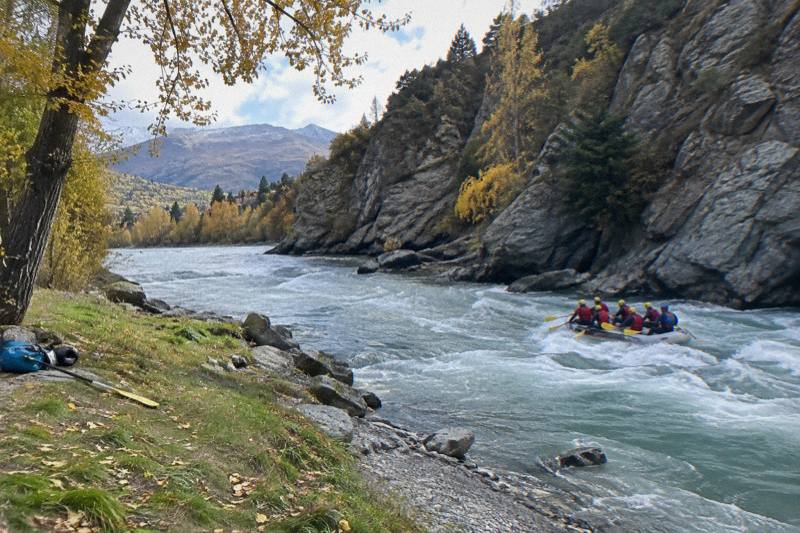
Do You Get Photos On A Queenstown Rafting Trip?
Photo arrangements on Queenstown rafting trips: which trips include professional photos, why cameras stay behind on the Shotover, and where spectators can watch.
On some trips, yes, and the difference matters when you book. The Challenge Rafting Shotover trip includes professional photos in the booking, so you paddle the rapids and the pictures come to you. On the RealNZ Shotover trip, nothing can be taken on the raft, no camera and no GoPro, so your photos have to come from elsewhere. For the remaining trips, photo arrangements are unknown, so ask the operator before you count on pictures.
That split surprises people. A rafting day in Queenstown looks endlessly photogenic from the bank: a turquoise river squeezed between canyon walls, a helter-skelter of foam at the rapids, a raft full of grinning people in matching wetsuits. The reality on the water is more complicated. Hands are on paddles, the guide is shouting commands, and on the Shotover the operator bans cameras on the raft outright. So the photo question is really three questions: does your trip include a photographer, can you bring your own gear, and who can photograph you from land. Each has a different answer, and each one changes which trip you should pick if pictures are the point.
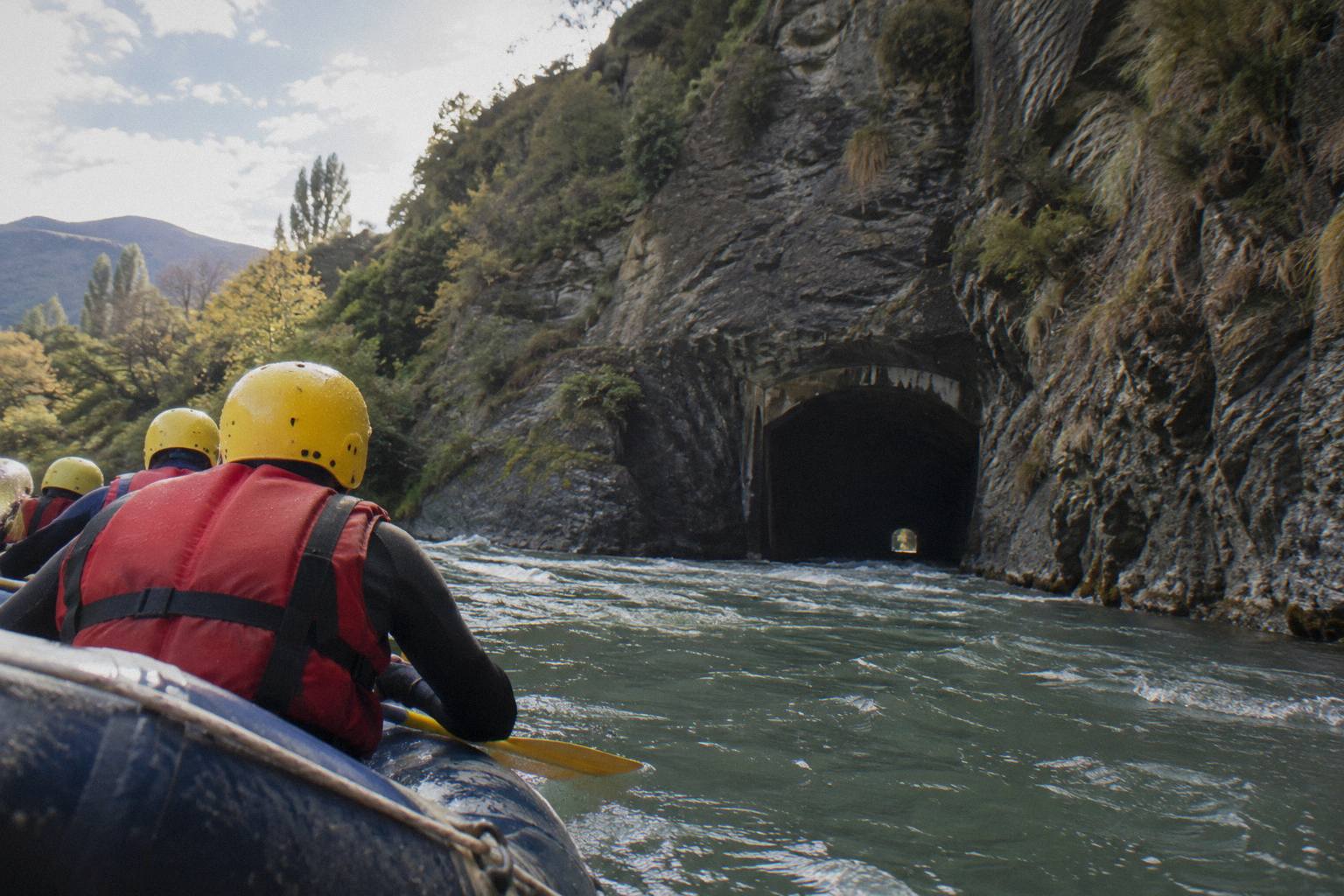
Start with the one firm yes. The Challenge Rafting Shotover trip, four hours from NZ$299 per person, includes professional photos in the booking. That covers the run through the Mother rapids, a series of six grade 4 to 5 rapids with names like Aftershock, Squeeze, Toilet and Pinball, then the 170 m Oxenbridge Tunnel and the drop into Cascade Rapid. It is the sort of stretch of water you will want evidence of, and on a trip where cameras stay behind, an included photographer is the whole solution. Prices on all these trips are in New Zealand dollars and change by date and group, and the booking page shows the price for your date.
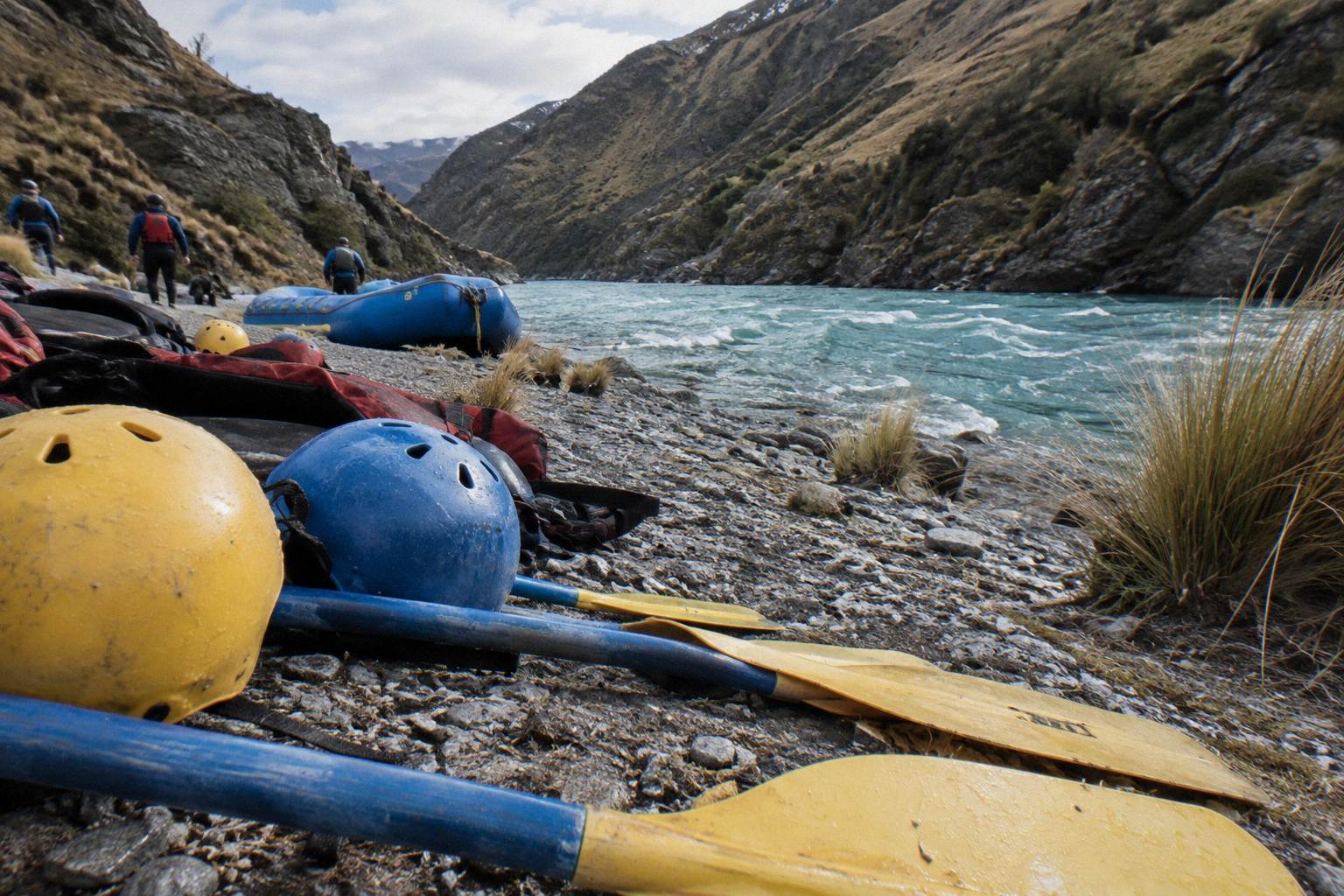
The contrast is the RealNZ Shotover trip, also from NZ$299 per person, also 4.5 hours door to river and back. Nothing can be taken on the raft there, and the rule is absolute: no camera, no GoPro, no phone in a pocket. The reasons are practical. Grade 3 to 5 water means the raft can buck hard, a loose camera becomes a projectile inside a boat carrying at most eight people including the guide, and anything not strapped to you will be in the river. The operator supplies everything you actually need on the water, a wetsuit, wetsuit jacket, spray jacket, paddle, helmet, booties and life jacket, and there is a valuables locker at the raft base for the things that must stay behind.
Which Queenstown Rafting Trips Include Photos?
Only one trip publishes photos as an inclusion: the Challenge Rafting Shotover trip, which includes professional photos in the booking. The four other Queenstown rafting trips do not list photography among their inclusions, so treat anything beyond that as unknown until you ask. The right move is a one-line question before you pay: does a photographer travel with the trip, and how are images delivered afterwards?
The clean way to see it is side by side. Photography sits differently on each trip, and the table below holds only what the operators themselves publish, with the gaps left as gaps rather than guesses.
| Trip | Photos in the booking | Cameras on the raft |
|---|---|---|
| Challenge Rafting, 4 Hours (Shotover, from NZ$299) | Professional photos included | - |
| Shotover Rafting, Half Day (from NZ$299) | - | Nothing may be taken on the raft |
| Rafting Plus Jet Boat Combo (from NZ$329) | - | - |
| Kawarau Rafting Only, Base Fare (from NZ$249) | - | - |
| Rafting And Skippers Canyon Combo (from NZ$329) | - | - |
Read the dashes honestly in the plain sense that nothing is promised there, not that photos are refused. On the Kawarau trips the operators publish their inclusions in detail, wetsuit, wetsuit jacket, spray jacket, paddle, helmet, booties, life jacket and hot showers, and photography simply is not on the list. That may mean a photographer sometimes rides along or that photos are sold separately on some departures, but a maybe is not a plan, so ask the operator if pictures matter to your choice.
The jet boat combo deserves a second look from the photo angle even without a published photo policy. Its first half is a 25-minute jet boat transfer covering 22 km of the Kawarau at 95 km/h with 360-degree spins, before an hour of grade 2 to 3 rafting. A river that wide, running east from Lake Wakatipu through the Gibbston Valley, photographs beautifully from the jet boat if cameras are allowed on that leg, which is exactly the question to put to the operator before booking.
For a fuller comparison of the two rivers before you commit, the Shotover versus Kawarau rafting comparison breaks down grades, ages and fit.
Will photos be part of the package on your date?
Free cancellation up to 24 hours before start applies to every trip, and payment terms are shown on each booking page before you confirm.
Why Can't You Take A Camera On The Shotover Raft?
Because grade 3 to 5 white water and handheld gear do not mix, and the operator says so plainly: nothing, no camera and no GoPro, can be taken on the raft. The Shotover runs six grade 3 to 5 rapids and a 170 m tunnel, and the operator describes grade 5 as the highest grade commercially rafted in the world. Anything unsecured ends up wet or gone.
The detail behind the rule is worth understanding, because it explains a lot about how a Shotover day works. Fourteen kilometres of river are rafted, finishing at the Arthurs Point rafting base, and the shuttle in reaches the put-in at Deep Creek via Skippers Canyon Road, about 40 minutes of driving on a narrow dirt road that, in the operator's words, hugs the canyon's sheer cliffs. Once you are on the water your hands belong to the paddle. The raft carries at most eight people including the guide, and a safety kayaker travels on each trip, so the boat is full of bodies and blades with no spare corner for a camera bag.
The water itself is the other reason. Through the Mother rapids and the tunnel the raft takes waves that soak everyone aboard, and the operator requires guests to be water-competent, able to swim 25 m unaided, precisely because the chance of ending up in the river is real. The operator also notes the Shotover carries a higher risk of falling out of the raft than the Kawarau. A phone in a chest pocket survives none of that reliably, and a GoPro on a short mount becomes a hazard to the person behind you. The rule protects you and your gear, and the locker at the raft base protects the camera you left dry.
What you get instead depends on the trip. On the Challenge Rafting departure the answer is simple: professional photos are included in the booking, shot by someone whose job is to be in the right spot at the right rapid. If you want to see what that trip involves beyond the photos, the Challenge Rafting Shotover trip page has the full rundown, and you can check availability alongside it.
That trip runs November through April; the operator does not run rafting in winter, which runs May to early September, so plan a photo-hunting visit inside those months.
Where Can Friends Photograph Your Rafting Trip From Land?
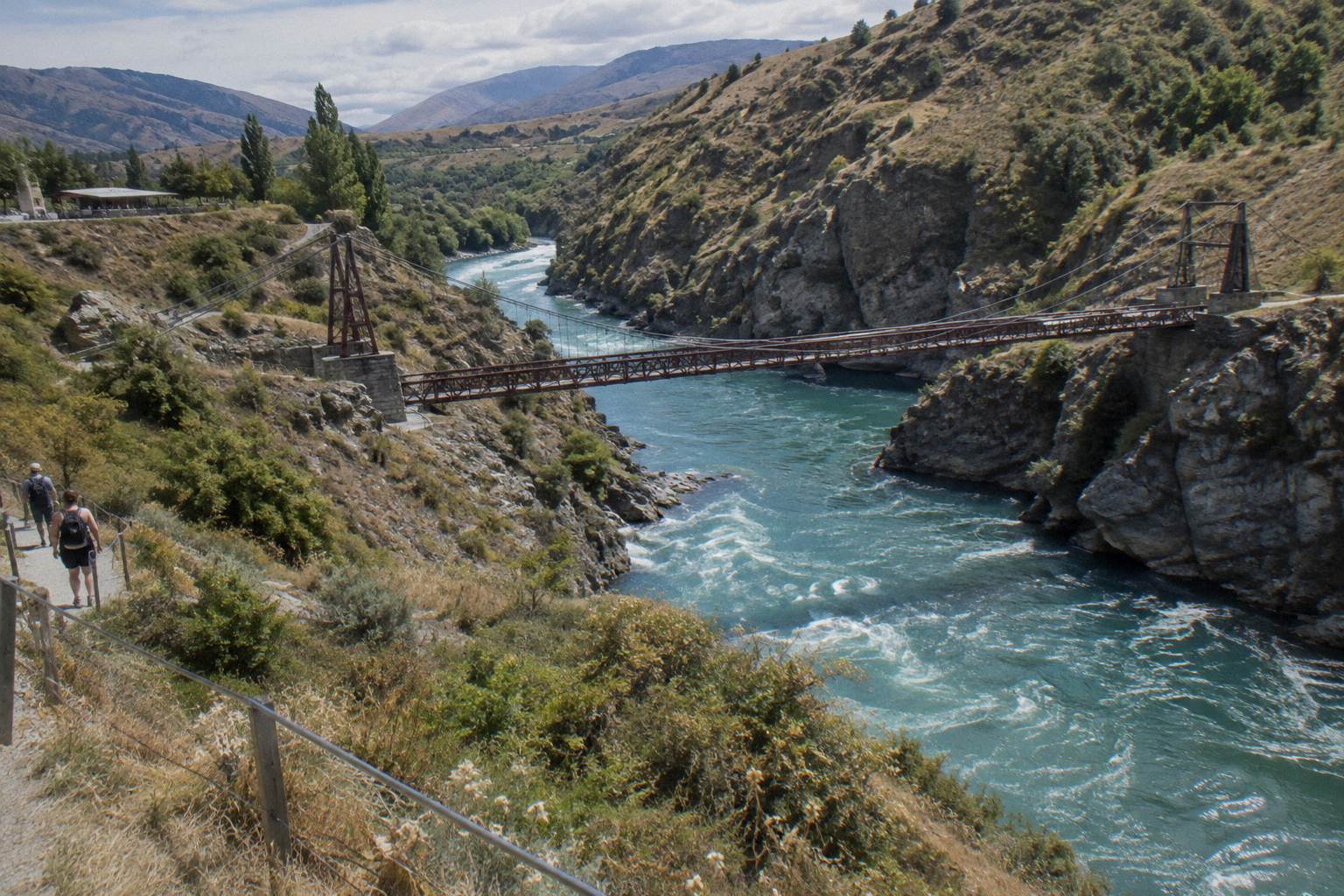
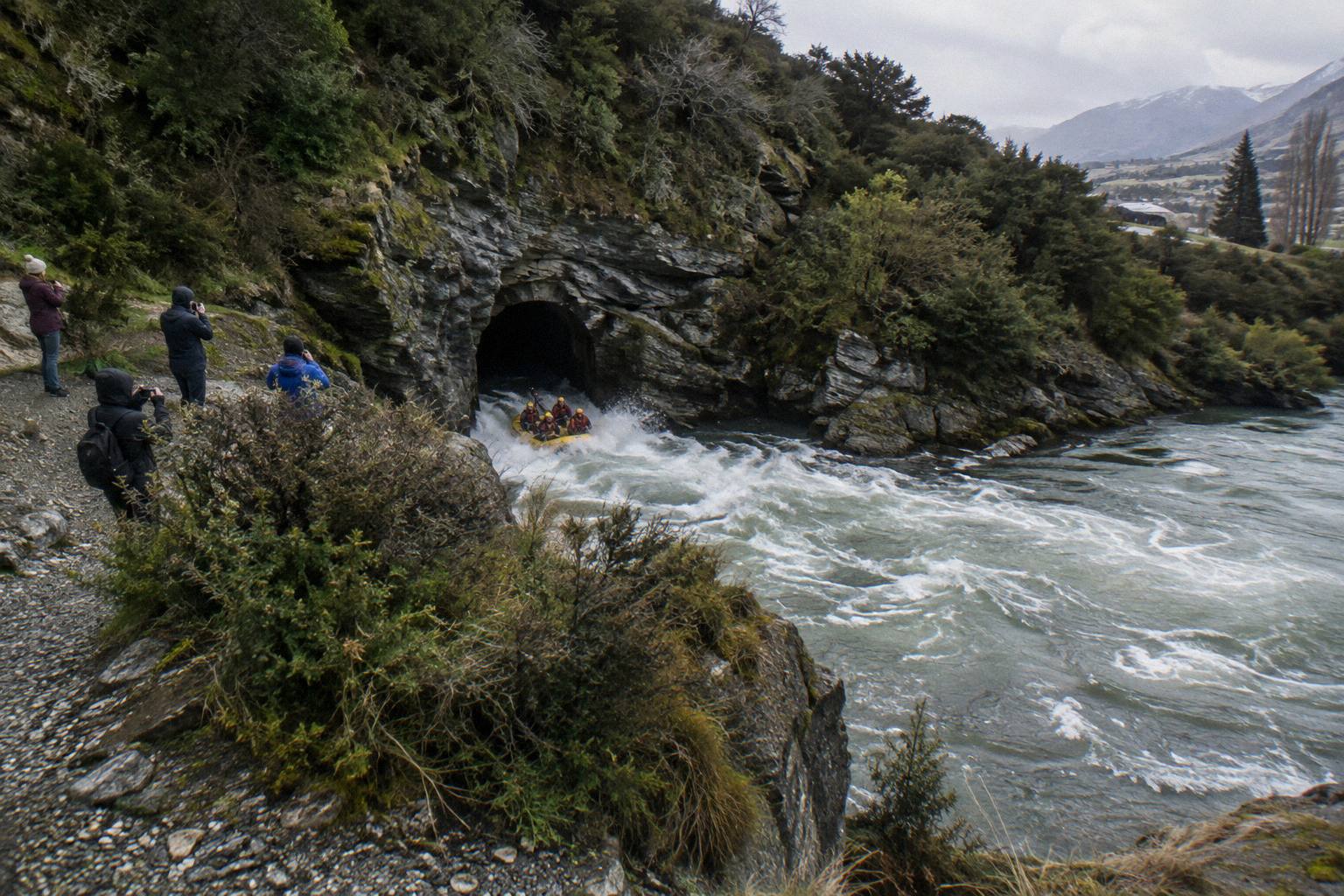
From one specific spot on the Shotover, and from the bridges and banks of the Kawarau. On the Shotover there are no spectators on the river itself, but viewers can stand near the last rapid as rafts exit the 170 m Oxenbridge Tunnel, and timing varies with each departure. On the Kawarau the gentler grade 2 to 3 water runs 8 km through open valley country toward Gibbston, with far more bank access.
The Shotover spectator spot is genuinely good when the timing works. Rafts emerge from the tunnel into the final rapid, which is the single most dramatic frame of the whole run, a boat bursting out of a dark 170 m bore into daylight foam. Because departures are chosen on the booking calendar and trips depend on weather, river level and water temperature, your friends cannot simply loiter for an hour; they need your departure window and a bit of patience. The Arthurs Point raft base is about a 10 minute drive from Queenstown, so it is an easy spot to reach. The wider set of guides lives on Queenstown White Water Rafting.
| River | Where spectators can shoot | What makes the shot | What to watch for |
|---|---|---|---|
| Shotover | Near the last rapid, as rafts exit the Oxenbridge Tunnel | A raft bursting from the dark tunnel into the final rapid | Timing varies; no spectators anywhere else on the river |
| Kawarau | Banks and bridges along 8 km of open valley toward Gibbston | The 400 m Dog Leg, the longest commercially rafted rapid in New Zealand | Rafts pass once; pick the spot before the bus does |
There is even a walk built around the view. The Department of Conservation's Oxenbridge Tunnel Track is a short, easy 20-minute walk to a viewpoint over the historic tunnel diversion and an old steam engine, starting where you turn left just before the Edith Cavell Bridge at Arthurs Point. Anyone waiting for a raft to appear can fill the time with a piece of mining history instead of standing in a car park.
The tunnel itself has a backstory worth a sentence in your caption. It was built from 1906 by the Oxenbridge brothers to divert the Shotover away from the Jeweller's Shop rapids, stretches of water above Arthurs Point that were fabled for gold after the 1862 rush that saw the Shotover dubbed the richest river in the world; the company behind it was liquidated in 1912, and today the tunnel primarily serves rafting companies. Heritage New Zealand records that history in its listing for the site.
On the Kawarau the mathematics favour the photographer. The river is the only outlet of Lake Wakatipu, and it appears on screen as the River Anduin in Lord of the Rings, so the scenery does half the work. The Dog Leg, 400 m long and described by the operator as the longest commercially rafted rapid in New Zealand, gives a long window in which to frame a raft, and the Kawarau Bridge Bungy site at Gibbston sits on the same river if your group wants a second spectacle. Your friends cannot follow the raft down the canyon, but they can beat the bus to the end.
How Should You Plan Photos Around The Parts You Can't Photograph?
Plan for three photo moments: before the trip at check-in, during the parts where cameras are allowed or a photographer is present, and after at the raft base, where hot showers give you a clean, happy crew shot. The one stretch you will never photograph yourself is the Oxenbridge Tunnel and the rapids around it, so decide in advance who captures those.
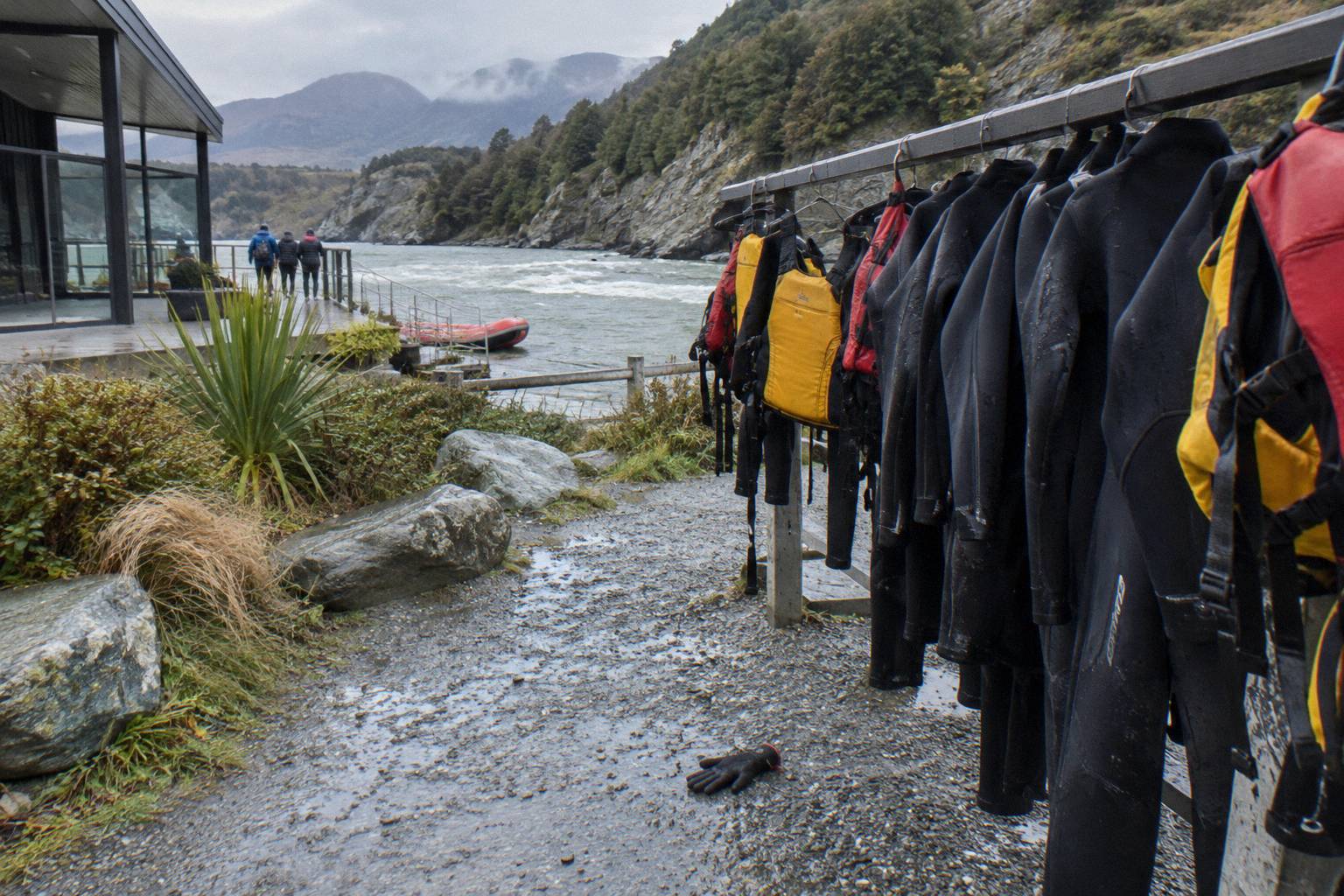
Check-in is the underrated photo op. RealNZ trips meet at the RealNZ Queenstown Visitor Centre at 88 Beach Street, while the Challenge Rafting booking lists Morning Star Reserve, 1 Arthurs Point Road, as the meeting point and the operator also checks guests in at 88 Beach Street, so central Queenstown still frames your before shots. A full crew kitted out in wetsuits, helmets and life jackets at the raft base is the classic after shot, and every trip supplies the wardrobe. Wear swimwear only under the wetsuit, no cotton, and give glasses a sports strap or leave them behind, one more thing that shapes what your photos can include. The what to wear rafting guide covers the full kit list.
Think about sequencing, too. On the Kawarau Rafting Only itinerary the day is broken into distinct blocks: a 20-minute bus ride to the base, a 30-minute safety briefing, another 20-minute bus ride to the river, an hour of rafting, then a 30-minute break before the run back to 88 Beach Street. Those bus and break blocks are where personal photos can happen, if the operator allows phones out at those moments, another detail worth one question when you book. The hour of actual rafting is the part you delegate.
There is also the discipline of not over-planning. The trips that include a photographer do so exactly because the best frames, a raft mid-drop into Cascade Rapid, a boat vanishing into the tunnel mouth, are impossible to take yourself. Treat your own camera as the tool for the calm moments and trust the professional, or the friend at the exit rapid, for the loud ones. If the calm moments are what appeal most, the gentler family-style trips suit camera carriers far better, and rafting with kids in Queenstown explains the grade 1 to 2 alternative, from NZ$329, open to everyone from 3 years upwards with no water confidence needed.
What Are The Common Photo Mistakes On A Rafting Day?
The three big ones: assuming every trip includes a photographer, planning to sneak a phone onto the Shotover raft, and forgetting that the best spectator spot needs exact timing. A fourth is turning up in cotton under a wetsuit, which makes every after-photo crew look frozen and miserable. Each mistake is avoidable with one question at booking and five minutes of packing discipline the night before.
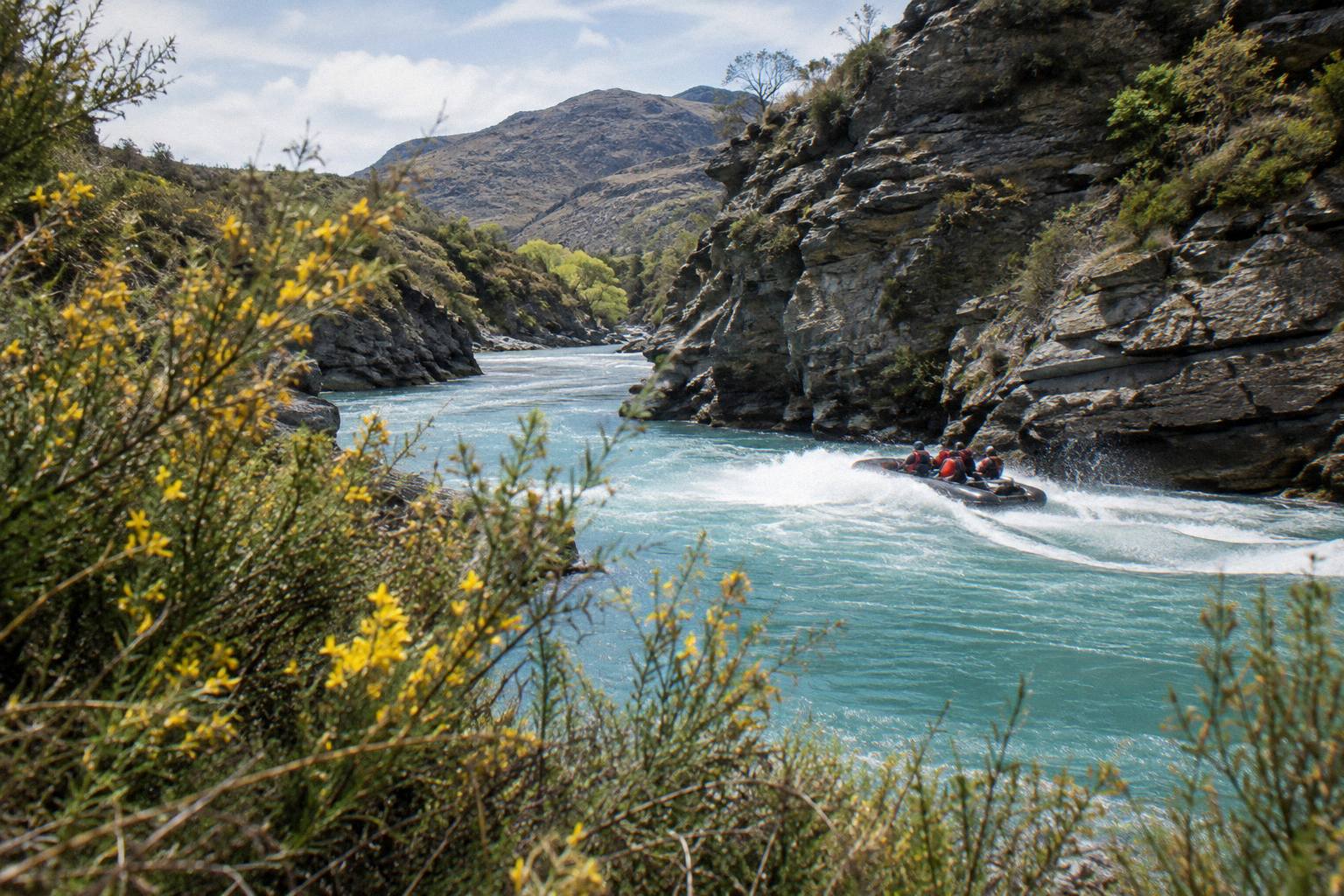
The assumption problem is the most common. People book the cheapest fare, Kawarau Rafting Only from NZ$249 per person, see the 4.7 rating from 48 reviews, and imagine a GoPro reel waiting at the end. Maybe it will be; the operator simply does not publish a photo inclusion, so plan for no photos and treat any as a bonus. The same caution applies to the Rafting Plus Jet Boat Combo from NZ$329, rated 4.8 from 151 reviews, where the jet boat leg is the more camera-friendly half of the day but nothing about photos is promised. Ask the operator once, in one line, and you have a real answer instead of a hope.
| Mistake | What goes wrong | The fix |
|---|---|---|
| Assuming photos are always included | Only the Challenge Rafting trip publishes photos as an inclusion | Ask the operator about photography before booking |
| Planning to take a phone on the Shotover raft | Nothing may be taken on the raft; gear ends up wet or lost | Use the valuables locker, rely on the operator's photographer |
| Sending spectators without timing | Rafts exit the tunnel at varying times; no spectators on the river | Share your departure window, wait near the last rapid |
| Wearing cotton under the wetsuit | Cold, slow-drying discomfort that ruins every after photo | Swimwear only under the wetsuit |
| Forgetting a glasses strap | Glasses need a sports strap or must stay behind | Pack a strap or spare contacts |
The discipline part matters more than it sounds. Swimwear under the wetsuit, no cotton, is an operator instruction, not a style tip, and glasses without a sports strap stay behind. For the full run-down on protecting the things you carry, the guide to glasses, cameras and valuables while rafting goes deeper. And remember that safety systems sit behind all of it: every guest signs a waiver, weight limits of 40 to 120 kg are verified at check-in, and New Zealand's adventure activity rules require operators to be registered and to have passed a safety audit, as WorkSafe's public register explains. Photos are the souvenir; the briefing is the reason you are alive to post them.
If photos are the deciding factor, weigh the two Shotover options against the Kawarau combo below.
Common Questions About Rafting Photos
Do You Get Photos On A Queenstown Rafting Trip?
On the Challenge Rafting Shotover trip, yes: professional photos are included in the booking. On the RealNZ Shotover trip nothing can be taken on the raft, so your photos must come from a spectator near the last rapid or not at all. For the other trips, photo arrangements are not published, so ask the operator.
Can I Take A GoPro On The Raft?
Not on the RealNZ Shotover trip: the operator's rule is that nothing, camera or GoPro, may be taken on the raft. For the other trips, camera rules are not published, so ask the operator before planning to film.
Which Trip Guarantees Photos?
Only the Challenge Rafting Shotover trip, four hours from NZ$299 per person, lists professional photos as an inclusion. No other Queenstown rafting trip publishes a photo inclusion.
Where Can My Friends Take Pictures Of Me Rafting?
On the Shotover, spectators can stand near the last rapid as rafts exit the 170 m Oxenbridge Tunnel, though timing varies. There are no spectators anywhere else on that river. On the Kawarau, the gentler open valley gives far more bank access, including around the 400 m Dog Leg rapid.
Do Photos Cost Extra?
No photo price is published for any Queenstown rafting trip. The Challenge Rafting trip includes photos in the booking price of from NZ$299 per person; for the others, ask the operator about how any photos are priced and delivered.
What About Photos With Kids On The Water?
The Rafting And Skippers Canyon Combo, from NZ$329 per person, takes everyone from 3 years upwards on grade 1 to 2 water, and no water confidence is necessary. Its photo arrangements are not published, so ask the operator; the gentler water at least makes cameras easier to manage than the Shotover.