Do They Weigh You Before White Water Rafting?
Yes, weight is verified at check-in for Queenstown rafting trips. Here is how the weigh-in works, the 40 to 120 kg limits, and what happens if you fall outside them.
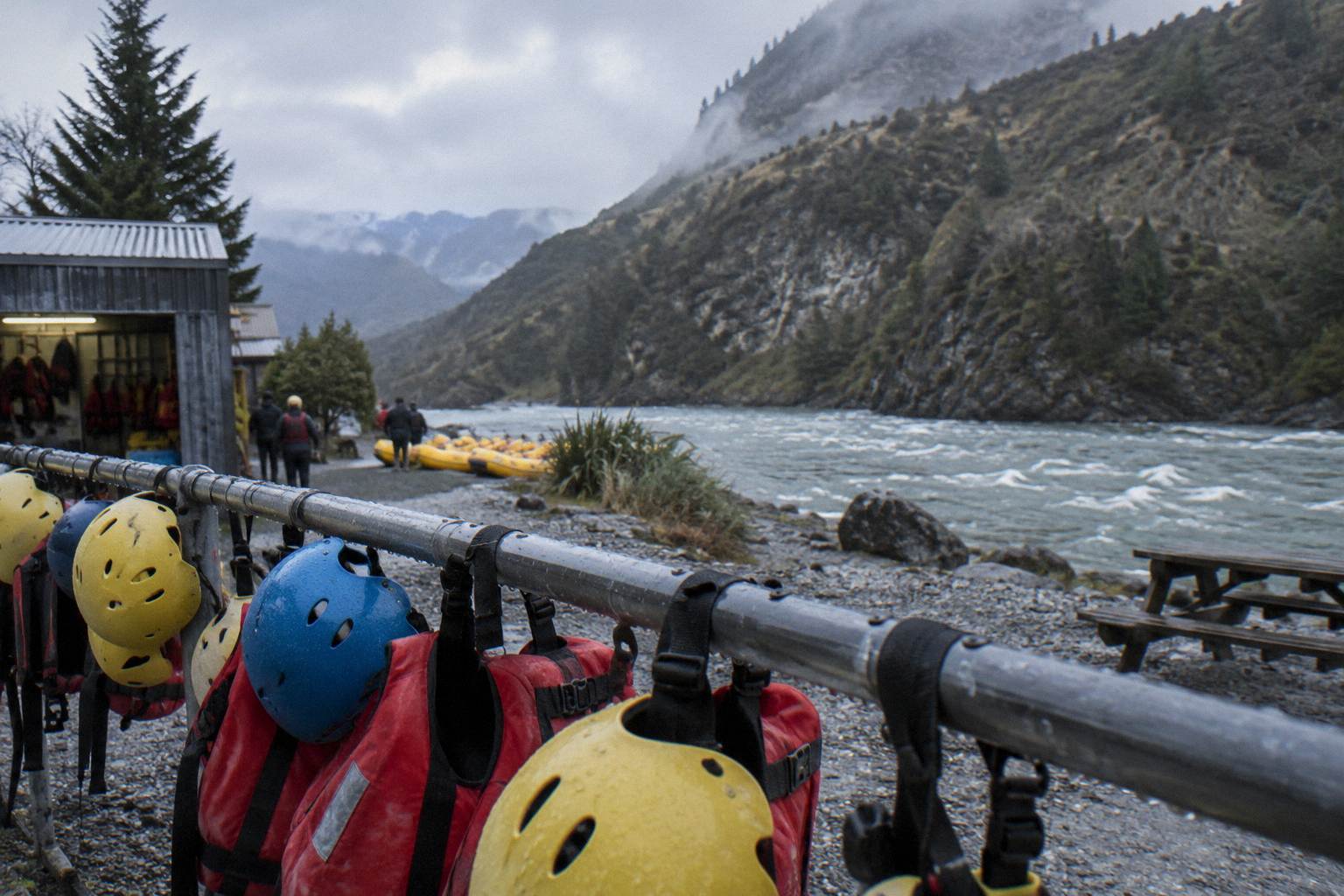
Yes. On Queenstown's grade 3 to 5 rafting trips, weight is verified at check-in before you are issued a wetsuit or allowed on the bus. RealNZ sets a minimum of 40 kg (88 lb) and a maximum of 120 kg (264 lb), and states plainly that weight is checked at check-in rather than taken on trust from the booking form. Challenge Rafting's Shotover trip carries the same 40 kg and 120 kg limits.
It is a quick, practical step, and it is not a judgement about fitness. The number matters for two reasons that have nothing to do with appearance. First, every piece of equipment on the trip is sized, and a life jacket that does not match your body cannot do its job in moving water. Second, a raft performs differently depending on the load distributed across it, and operators balance crews deliberately. On the Shotover, rafts carry a maximum of eight people including the guide, so every kilogram counted at check-in feeds into how the crew is arranged.
The check happens at the point where you also collect your gear. For the RealNZ trips, that means the RealNZ Queenstown Visitor Centre at 88 Beach Street, where guests are asked to arrive at least 20 minutes before departure. For Challenge Rafting's Shotover trip, check-in is also at 88 Beach Street, opposite the Crowne Plaza Hotel, or you may self-drive to the raft base at 1 Arthurs Point Road, Arthurs Point. Either way, the scale comes before the river.
If the question is on your mind because you are close to a limit, the short version is that the bands are wider than most people expect, and the weigh-in itself takes seconds. The sections below cover exactly which trips carry which limits, why the numbers exist, what the check-in process looks like in practice, and what your options are if you sit near either edge of the range. For a broader look at how weight and fitness interact with the eligibility rules, the rafting weight and fitness limits guide walks through every restriction in detail.
Why A Rafting Operator Checks Your Weight
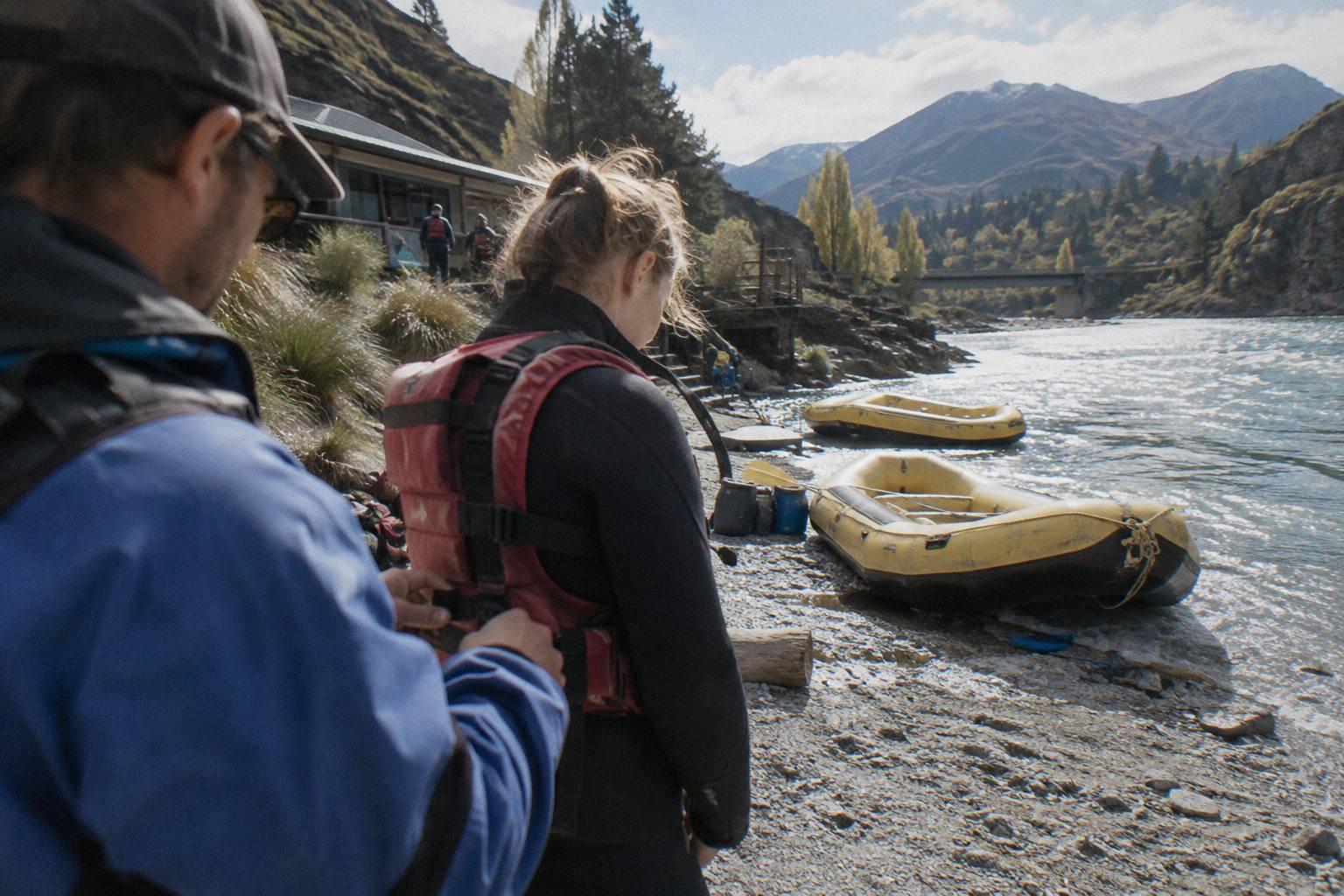
Weight is checked because safety equipment is size-matched and because rafts are loaded to a calculated balance. A life jacket rated for your weight range and a wetsuit that fits correctly are the two pieces of gear the number protects, and both fail to function if the sizing is wrong. The 40 kg floor exists so jackets fit small teenagers properly, and the 120 kg ceiling reflects what the equipment is tested to carry.
Think about the equipment list. A Queenstown rafting trip provides a full wetsuit, a wetsuit jacket, a spray jacket, a paddle, a helmet, wetsuit booties and a life jacket. Every one of those items is issued in a size. RealNZ notes that extra-large and child-size wetsuits are available, which tells you the operators are genuinely fitting a wide range of bodies rather than handing out one-size garments. A life jacket in particular is a load-rated item: it is designed to float a person within a stated weight band, and a jacket worn by someone outside that band may not hold their head clear of the water.
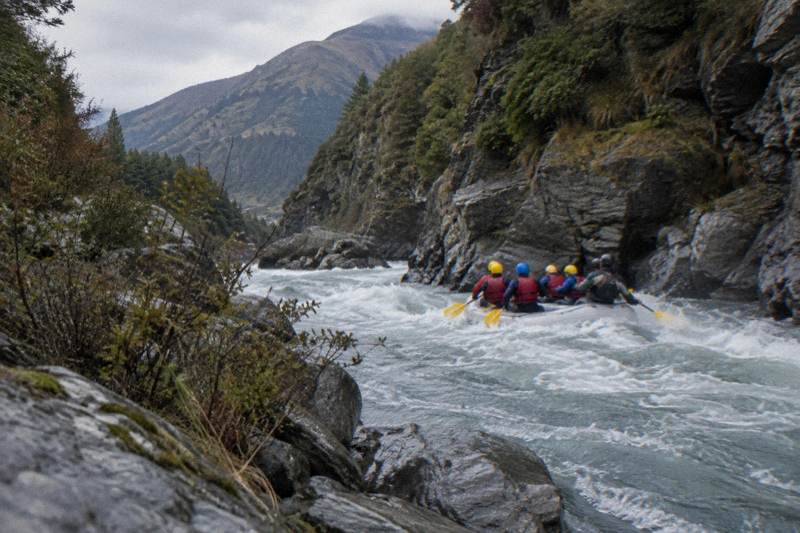
The second reason is the raft itself. On the Shotover River trips, rafts carry at most eight people including the guide, and a safety kayaker travels with each trip. Where each person sits matters. Heavier paddlers placed on one side, or all placed at the bow, change how the raft carves through a grade 4 rapid. Guides read the weigh-in numbers the way a crew chief reads a loading sheet, and they position the crew before the raft ever touches the water. On the RealNZ Shotover run, six grade 3 to 5 rapids and the 170 m Oxenbridge Tunnel come at the crew fast, and the operator describes grade 5 as the highest grade commercially rafted in the world, so a balanced boat is not a nicety.
There is also a swimmer-weight interaction. The operator states that guests must be water-competent, able to swim 25 m unaided, and that the Shotover carries a higher risk of falling out than the Kawarau. A person in the water is a recovery problem that scales with weight: heavier guests are harder to pull back over the tube of a raft, lighter guests are easier but can be moved around by the current more. The weigh-in tells the guide, before departure, what the recovery plan looks like for every single person on board. That is the whole point of the number.
Weight Limits On Every Queenstown Rafting Trip
Four of the five Queenstown rafting trips enforce the same band: 13 years minimum age, 40 kg minimum weight, 120 kg maximum weight. The gentle Skippers Canyon family trip lists a minimum age of 3 years and states it is suitable for everyone from 3 years upwards, with no weight limit published for it. Prices run from NZ$249 to NZ$329 per person across the five trips.
The table below sets out the verified numbers side by side. Where a cell is blank, no figure has been published, so treat it as something to raise with the operator when booking rather than a number to assume.
| Trip | River and grade | Min age | Weight range | Duration | From (per person) |
|---|---|---|---|---|---|
| Shotover Rafting, Half Day | Shotover, grade 3 to 5 | 13 | 40 to 120 kg | 4.5 hours | NZ$299 |
| Challenge Rafting, 4 Hours | Shotover, grade 3 to 5 | 13 | 40 to 120 kg | 4 hours | NZ$299 |
| Rafting Plus Jet Boat Combo | Kawarau, grade 2 to 3 | 13 | up to 120 kg | 4.5 hours | NZ$329 |
| Kawarau Rafting Only, Base Fare | Kawarau, grade 2 to 3 | 13 | up to 120 kg | 4 hours | NZ$249 |
| Rafting And Skippers Canyon Combo | Shotover, grade 1 to 2 | 3 | none published | 5 hours | NZ$329 |
Two details are worth pausing on. The two Kawarau trips publish their weight range only at the top end, with no minimum stated, which reflects the calmer grade 2 to 3 water: the Kawarau is the river RealNZ recommends for first-timers and less confident swimmers. The family trip through Skippers Canyon runs grade 1 and 2 rapids on a gentle section of the Shotover, needs no water confidence at all, and takes children from 3 years up, which is why it has no published weight floor.
The Challenge Rafting Shotover trip shares the same 40 kg and 120 kg limits and the same minimum age of 13 as the RealNZ Shotover trip, and both check in at 88 Beach Street, but they remain separate products with different framing. Challenge Rafting's own site says its Shotover trip is operated by RealNZ, and both run the tunnel section, yet Challenge Rafting sells its version around the Mother rapids, a series of six grade 4 to 5 rapids with names like Aftershock, Squeeze, Toilet and Pinball, finishing with the drop into Cascade Rapid. Challenge Rafting runs November through April and does not operate in winter. Its photos are included in the booking, and it rates 4.9 from 80 reviews.
The RealNZ Shotover trip, for comparison, is the one most guests picture when they think of Queenstown rafting: 14 km of river, the 170 m Oxenbridge Tunnel, and a 4.8 rating from 346 reviews at from NZ$299 per person. Whether the weigh-in worries you or not, that trip is the reference point for what a Queenstown half day on the water looks like.
How The Check-In Weigh-In Actually Works
You step on a scale at check-in, usually right before you are handed a wetsuit, and the staff member records the number against your booking. RealNZ states that weight is verified at check-in, and asks guests to arrive at the Visitor Centre at least 20 minutes before departure, which is when the fitting and weighing happen. Nobody announces your weight to the group.
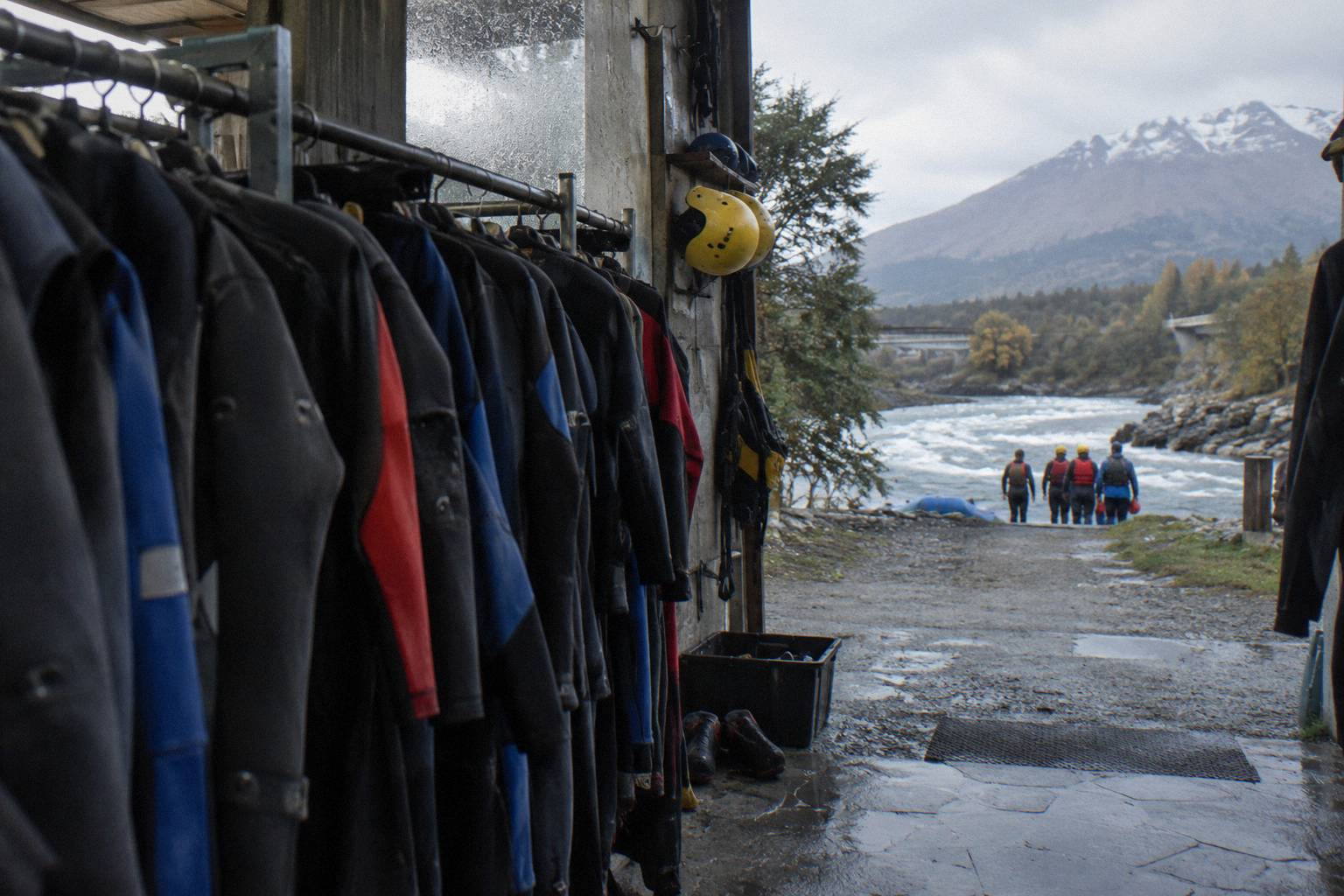
The sequence on a RealNZ trip is straightforward. You check in at 88 Beach Street, you are weighed, you are issued a wetsuit in the size the number suggests, and you change. Swimwear only goes under the wetsuit, and no cotton, because cotton holds water against the skin and loses any insulating value it had. Glasses need a sports strap or they stay behind. Nothing can be taken on the raft, no camera and no GoPro, but there is a valuables locker at the raft base and hot showers waiting when you come off the water.
The steps from arrival to river look much the same whichever grade 3 to 5 trip you book, and the table below shows the shared sequence against what each step is actually for.
| Check-in step | What happens | Why it matters |
|---|---|---|
| Arrival at 88 Beach Street | Check in at least 20 minutes before departure | Leaves time for weighing, fitting and the safety briefing |
| Weigh-in | You step on the scale and the number is recorded | Confirms you are inside the 40 to 120 kg band and sizes your gear |
| Wetsuit fitting | You are issued a wetsuit, booties, jacket, helmet and life jacket | Every item is size-matched, with extra-large and child sizes available |
| Changing | Swimwear only under the wetsuit, no cotton; glasses secured or left | Cotton soaks and ruins the wetsuit's insulating layer |
| Valuables | Cameras, GoPros and phones stay off the raft | A locker is provided at the raft base |
| Departure | Bus to the put-in, safety briefing on arrival | The crew placement decided at check-in is settled on the water |
Because the weigh-in and the wetsuit fitting are the same moment, the number does quiet double duty. Staff are matching you to equipment, and the extra-large and child-size wetsuits exist precisely so the range of bodies between 40 kg and 120 kg can all be kitted out properly. If the first wetsuit does not sit right, the fitting continues until one does; that is normal and expected, and it is a better use of your 20 minutes of buffer than standing around in the shop.
On the Challenge Rafting Shotover trip the process is similar, with the same limits applied at check-in at 88 Beach Street or at the raft base at 1 Arthurs Point Road if you self-drive. The base is about a 10 minute drive from central Queenstown. For anyone mapping the whole day, the rafting trip timeline and pickup guide breaks the schedule from check-in to shower.
What Happens If You Sit Near A Weight Limit
If the scale reads outside 40 to 120 kg on a grade 3 to 5 trip, you cannot board that raft, because the equipment is not rated beyond the band. There is no flexibility at the top end on the Shotover or Kawarau trips, and the practical move is to check your options before booking day rather than at the counter. The family trip through Skippers Canyon is the one Queenstown rafting option that publishes no weight limit at all.
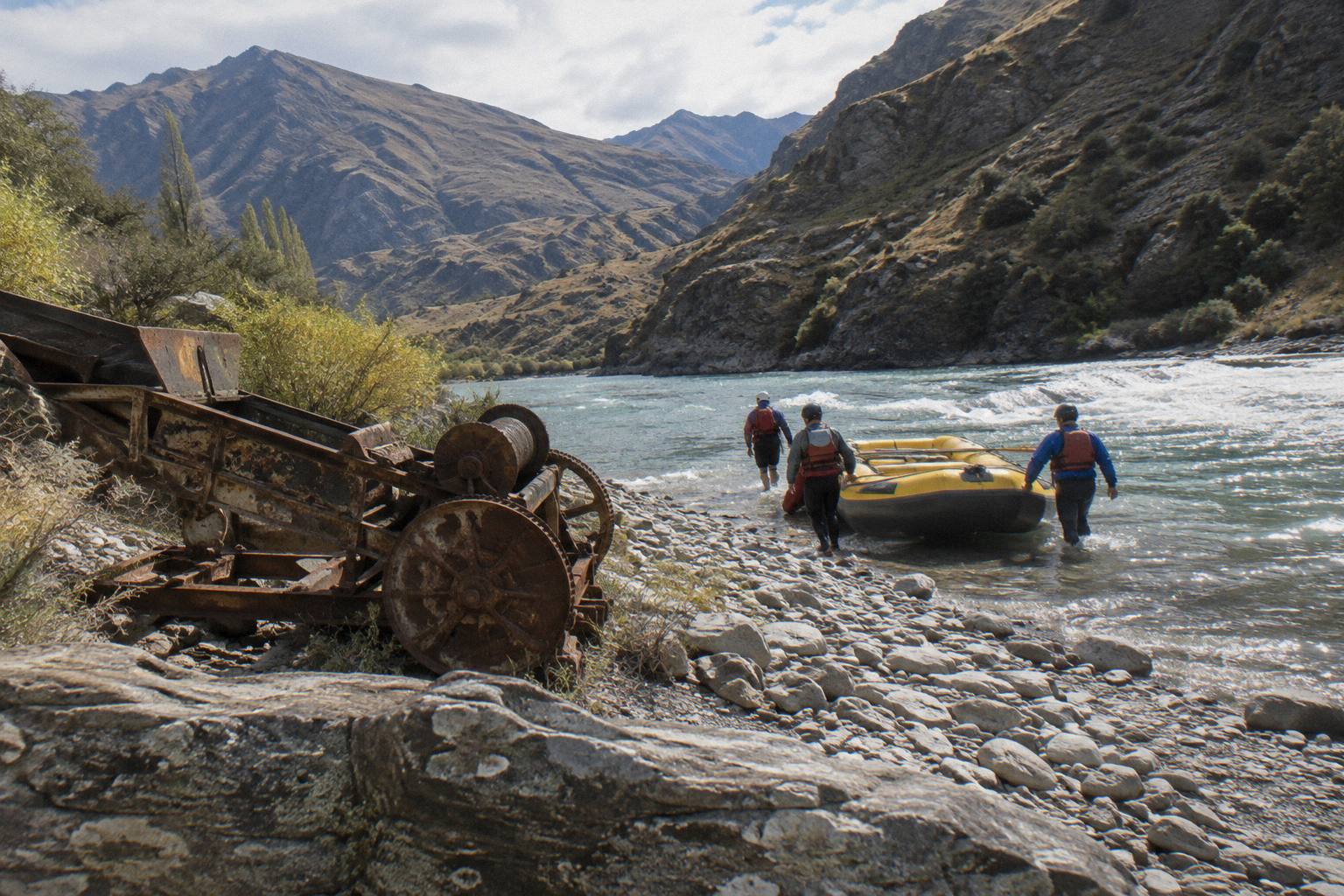
Start with the honest cases. Guests over 120 kg sometimes hope the limit is soft, and it is not: the life jackets and the rafts are the constraining factors, not the attitudes of the staff. Under 40 kg is mostly a question for lighter teenagers, and it interacts with the minimum age of 13, since a 13-year-old under 40 kg would be excluded on weight alone. If a younger or lighter family member is the reason for the trip, the Skippers Canyon option is designed exactly for that: suitable for everyone from 3 years upwards, grade 1 and 2 rapids, no water confidence needed, 5 hours including a 45-minute drive into the canyon and 1.5 hours of rafting past gold mining relics, at from NZ$329 per person.
For guests inside the band but close to its edges, the weigh-in rarely changes anything except seating. Heavier paddlers may be placed where their weight stabilises the raft, and lighter paddlers where the guide can reach them quickly. Nobody is singled out. If the worry is more about fitness than the number on the scale, the Kawarau is the softer choice: grade 2 to 3, described by the operator as suited to first-timers, with an optional cliff-jumping section and a chance to swim a rapid. It runs 8 km of river ending in the Gibbston Valley, at from NZ$249 per person for the rafting-only version.
One combination worth flagging for guests who want the Kawarau but a bigger day: the rafting and jet boat combo pairs the same grade 2 to 3 rafting with a 25-minute jet boat transfer covering 22 km of the Kawarau at 95 km/h with 360-degree spins, at from NZ$329 per person. The rafting versus jet boat guide compares the two ways to meet the same river.
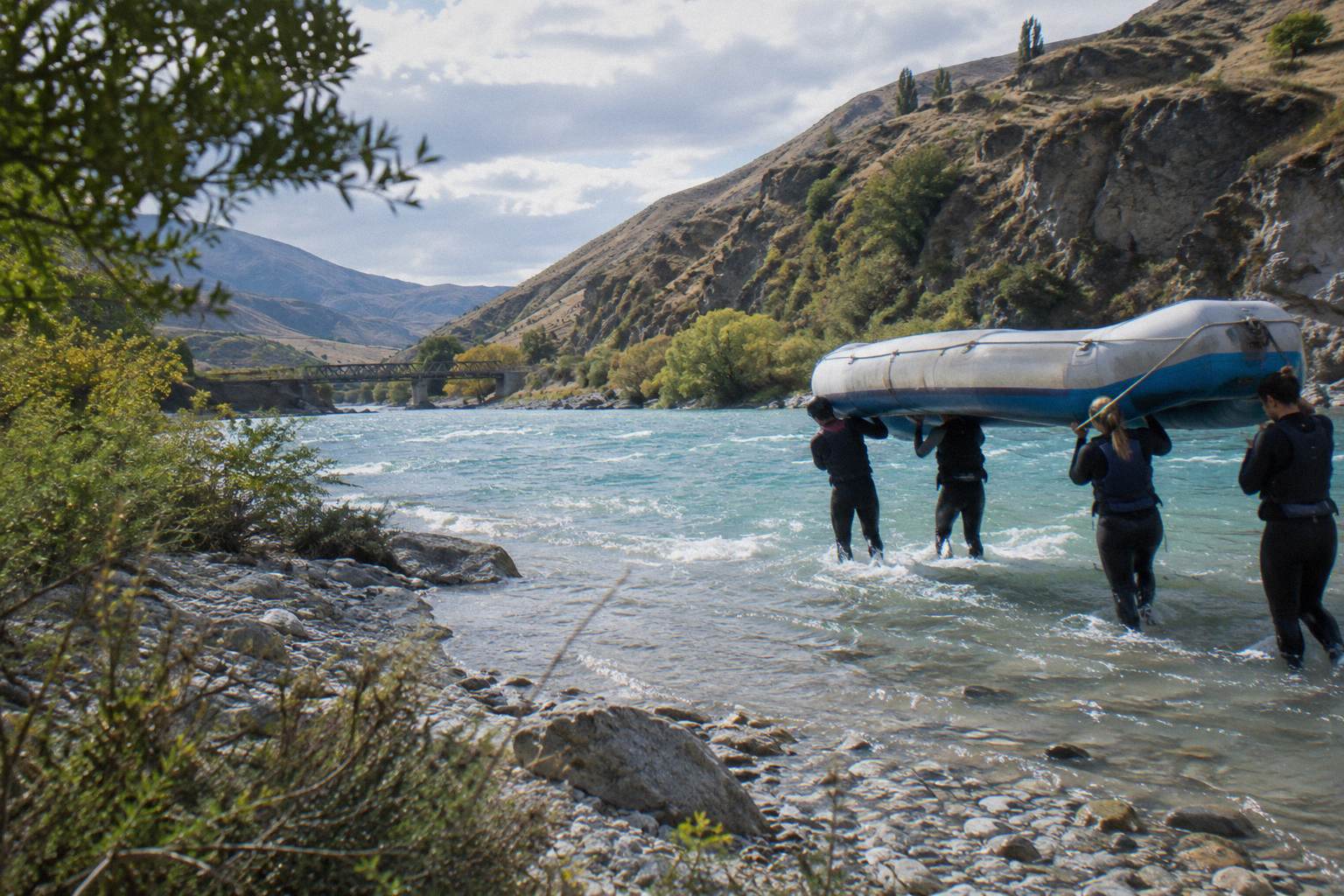
Weight Rules Sit Inside A Wider Set Of Eligibility Checks
Weight is one of six gates you pass at check-in, alongside age, swimming ability, fitness, medical conditions and pregnancy status. RealNZ sets 13 as the minimum age with proof of age possible, requires guests to understand safety briefings in English, excludes any heart condition except blood pressure managed with medication, and excludes pregnant guests on grade 3 water and above. There is no maximum age, and disabilities are assessed case by case.
The full picture matters because a guest can clear the scale and still be unable to board. The table below gathers the published eligibility rules for the Queenstown trips in one place, so you can check yourself against every gate before you book rather than discovering the fourth one at the counter.
| Check | RealNZ Shotover and Kawarau trips | Challenge Rafting Shotover trip | Skippers Canyon family trip |
|---|---|---|---|
| Minimum age | 13, proof of age may be required | 13 | 3 |
| Weight | 40 kg to 120 kg, verified at check-in | 40 kg to 120 kg | none published |
| Guardianship | Under 16 travel with a guardian; under 18 need guardian consent and a signed waiver | Under 17 accompanied by a guardian; under 18 need a guardian-signed waiver | Suitable from 3 years upwards |
| Swimming | Water-competent, able to swim 25 m unaided; moderate fitness | Water competence and moderate fitness required; non-swimmers not suitable | Water confidence not necessary |
| Medical | Any heart condition except managed blood pressure excludes; pregnancy excludes | Heart condition or heart medication excludes; pregnancy excludes on grade 3 or above | Gentle trip, grade 1 and 2 |
| Language | Must understand safety briefings in English | Must understand the safety briefing | Gentle trip, grade 1 and 2 |
Two softeners sit inside those rules. There is no upper age limit, and RealNZ asks only for a good level of physical fitness, which is a lower bar than many guests assume: moderate fitness, the ability to swim 25 m, and the willingness to paddle when told to. The fitness question in particular deserves its own reading, and the guide on whether you need to be fit for white water rafting covers how hard the paddling actually is.
Every guest signs a waiver, on every trip. That is standard for adventure activities in New Zealand, and it sits inside a wider regulatory frame: WorkSafe New Zealand runs a public register of adventure activity operators who have passed a safety audit and are authorised to provide adventure activities, and it is an offence to operate without registration. The eligibility gates at check-in are the operator-side expression of that audit culture, and the weigh-in is the simplest of them to pass.
Does The Weigh-In Affect What You Should Wear Or Bring?
No, the weigh-in changes nothing about your kit: swimwear only under the wetsuit, no cotton, a towel and dry clothes for after, and glasses left behind or secured with a sports strap. The scale decides which wetsuit size you are handed, not what goes underneath it. Bring nothing on the raft at all, since cameras and GoPros stay on shore and a valuables locker waits at the base.
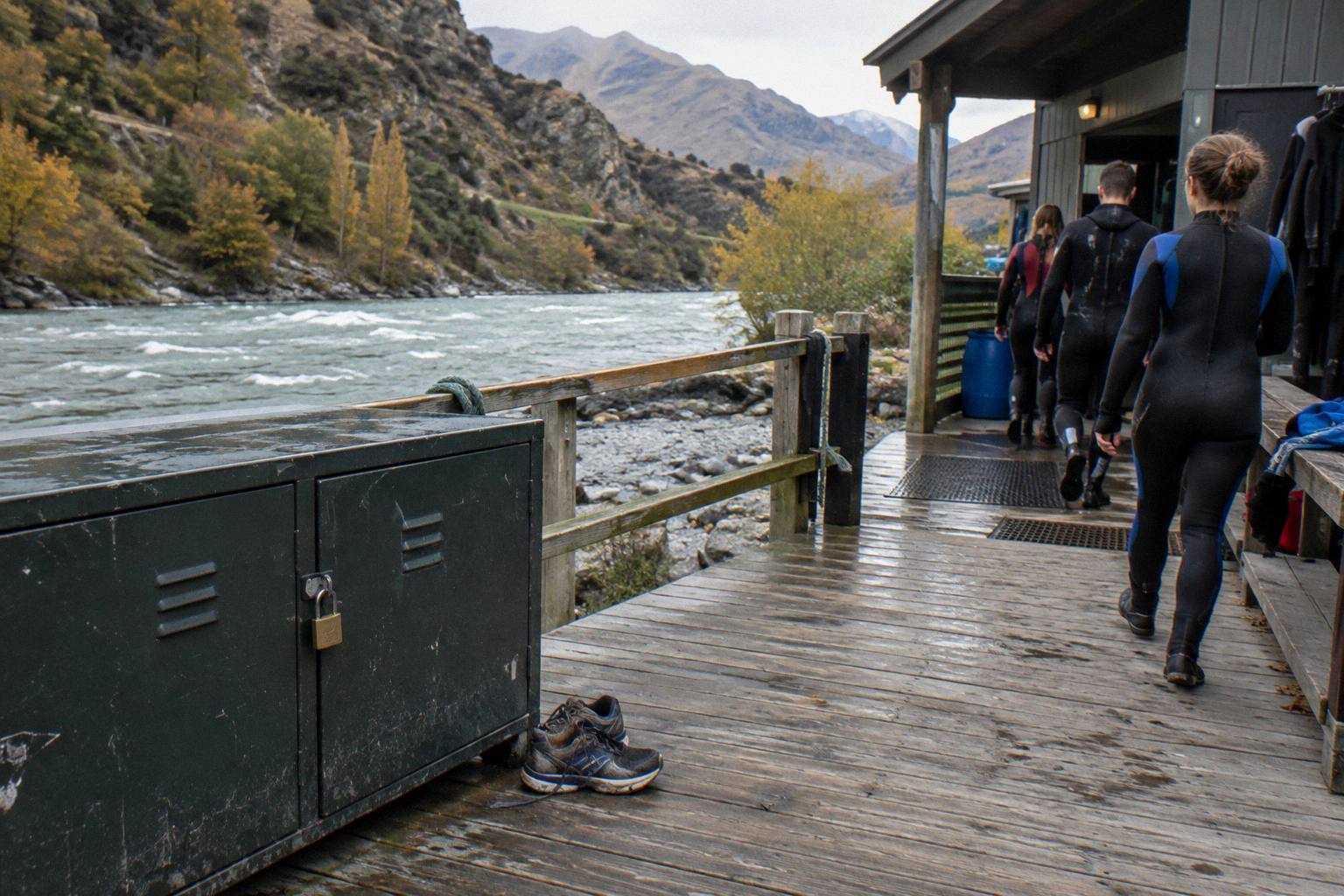
The reason swimwear is the rule is practical. A wetsuit works by trapping a thin layer of water against the skin, which your body warms; cotton soaks through, stays sodden and kills that layer, so it is banned under the suit. On the family Skippers Canyon trip the instruction is simpler still: wear a swimsuit under your clothes. Footwear is handled for you on all trips, with wetsuit booties provided, though the finer points are worth a read in the rafting shoes and Crocs guide.
After the trip, hot showers wait at the raft base on the RealNZ Shotover and Kawarau trips and at the Rafters Lodge on the Challenge Rafting trip, so a towel and warm layers for the ride back are the two items guests most often wish they had packed. Toilets are available at the raft base and at Deep Creek, the Shotover put-in reached after about 40 minutes driving Skippers Canyon Road, so there is no need to ration the pre-trip coffee. For the complete packing picture, what to bring rafting lists it item by item.
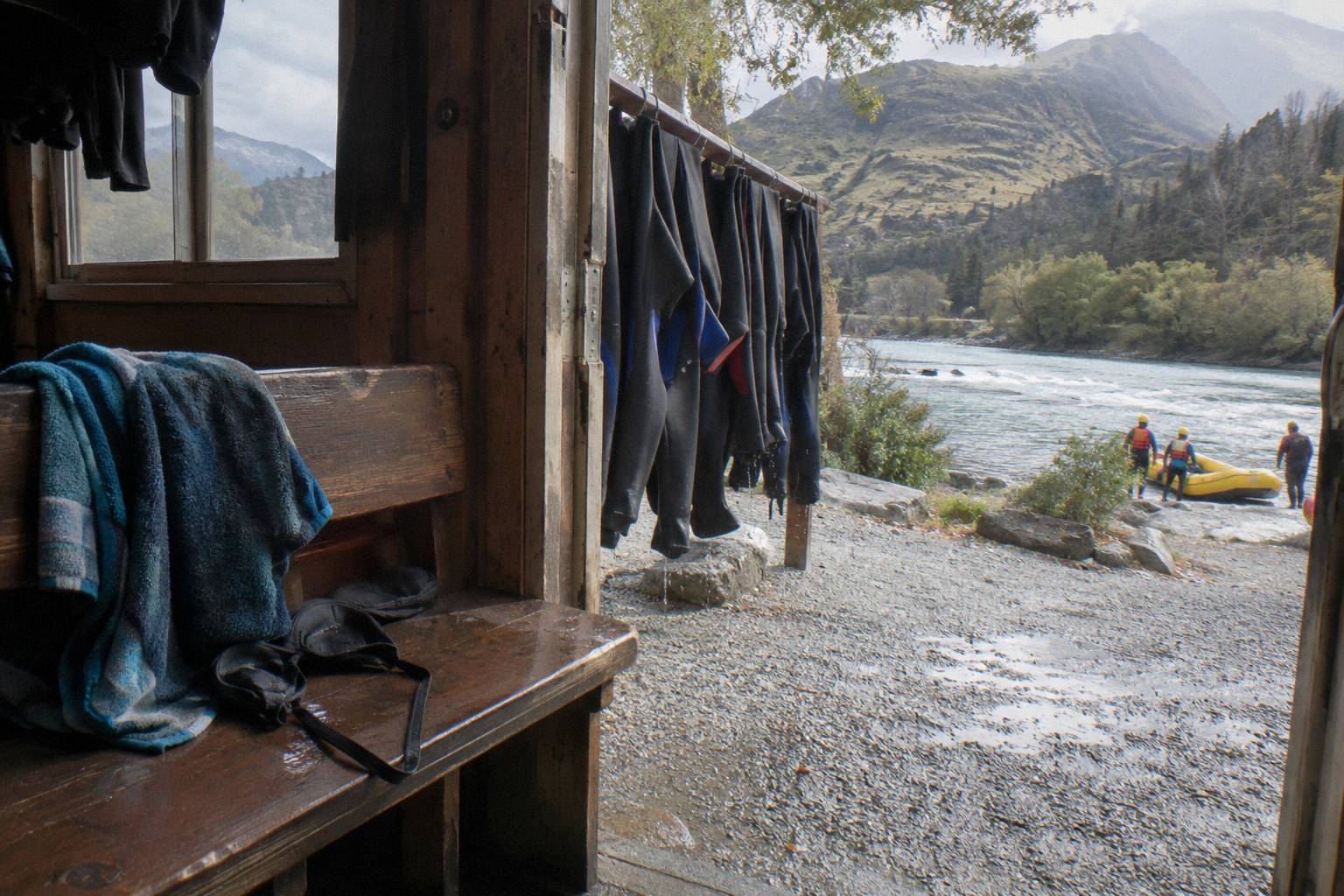
One last thing the weigh-in connects to: sizing. Because the number is recorded before gear is issued, there is no need to guess your wetsuit size when you book, and no need to mention weight in any special request field. The system is built so that the scale at 88 Beach Street does the talking, quietly, and the correct wetsuit comes off the rack a minute later. All Queenstown rafting trips book through the Queenstown White Water Rafting roster, where each trip's current price and calendar sit beside the details above.
For background on the river you would actually be weighing in for, RealNZ describes its Shotover rafting trip in full on its own site, and Challenge Rafting answers common questions on its FAQ page, including its check-in arrangements and season.
Common Questions About Being Weighed For Rafting
Do They Weigh You Before White Water Rafting?
Yes. On Queenstown's grade 3 to 5 rafting trips, weight is verified at check-in before gear is issued. RealNZ applies a 40 kg minimum and a 120 kg maximum, and Challenge Rafting's Shotover trip carries the same band.
Can They Refuse To Take Me If I Am Over 120 Kg?
Yes, on the Shotover and Kawarau trips the 120 kg maximum is firm because the life jackets and rafts are rated to that band. The Skippers Canyon family trip publishes no weight limit, so it is the one option to discuss with the operator if you are over the ceiling.
Is There A Minimum Weight For Rafting?
Yes, 40 kg on the Shotover and Kawarau trips. The floor exists so life jackets fit correctly, and it sits alongside the minimum age of 13. Lighter children can still raft the gentle Skippers Canyon trip from 3 years upwards.
Do They Weigh You In Front Of Other People?
The check-in is quick and handled at the counter when you collect your wetsuit, and your weight is not announced to the group. It is a sizing and safety record, not a public moment.
Why Does Weight Matter On A Raft?
Life jackets are rated for weight bands, and rafts are balanced according to where each paddler sits. On the Shotover, rafts carry at most eight people including the guide through six grade 3 to 5 rapids, so crew placement is planned before launch.
Do The Weigh-In Rules Differ Between The Shotover And The Kawarau?
The same 13 years and 40 to 120 kg band applies to the RealNZ and Challenge Rafting Shotover trips. The Kawarau trips publish a maximum of 120 kg with a gentler grade 2 to 3 river, and the family Skippers Canyon trip publishes no weight limit at all.